


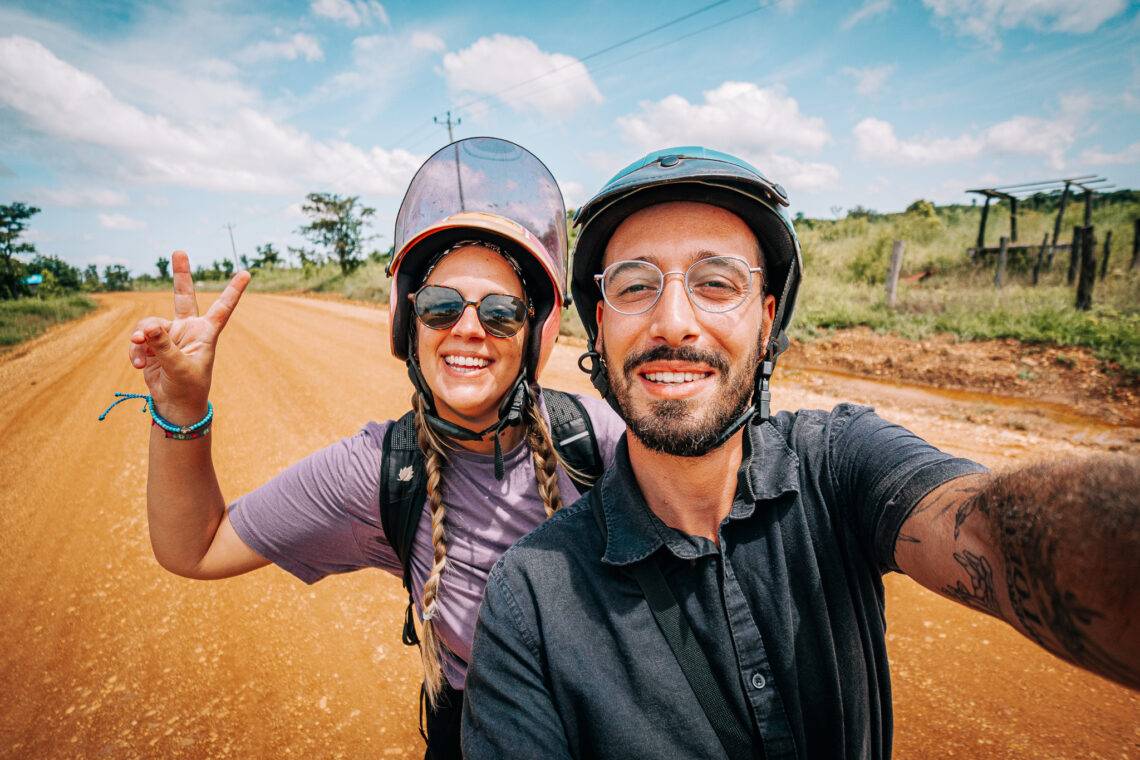
Trip to Cambodia off the beaten track
After presenting you with 🔗 2 and 3-week itineraries in Cambodia and top destinations for a first trip, I was very eager to write you this second article on the wonderland. In this article, we are going to talk about a Cambodia different : less touristy, more discreet and which reflects just as much the soul of the country as the destinations presented in the first article, if not more.
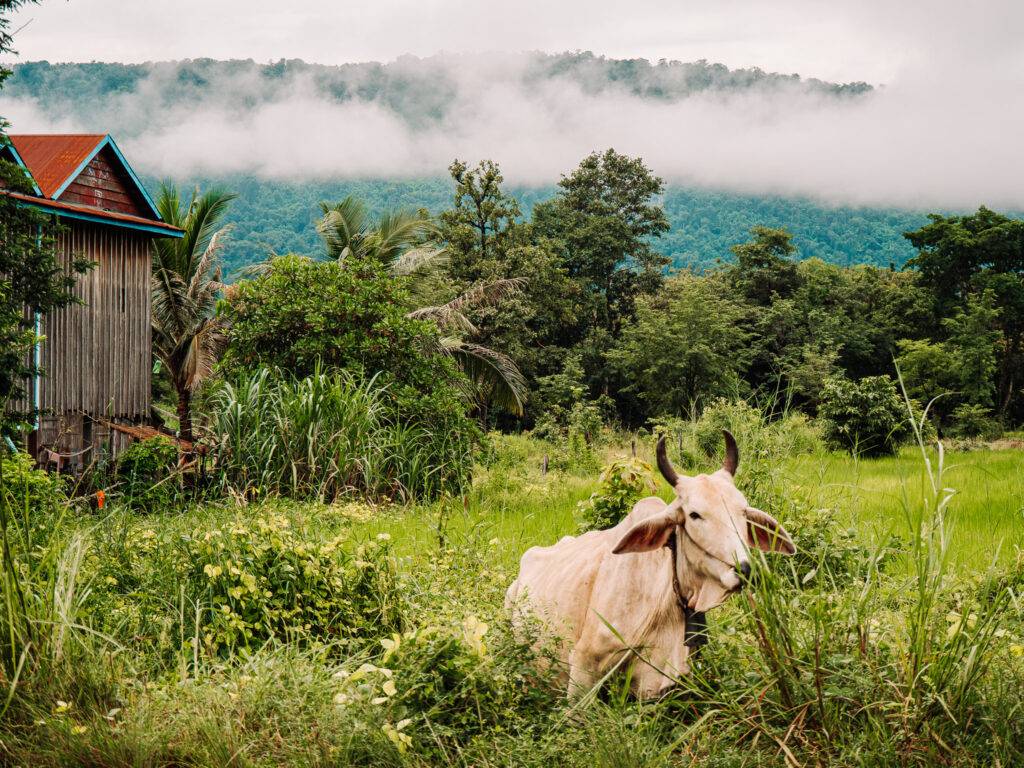
How to discover Cambodia differently?
This article is aimed at those who wish to discover the countryside of Cambodia off the beaten track, less touristy destinations (although, by definition, it is not the most visited country in the world). These destination tips may be more suitable for a second trip to the country than a first (even if it is quite possible to mix the two items to create a tailor-made itinerary according to your tastes and desires!).
summary
To better understand the article and easily find the sections that interest you, do not hesitate to use this summary:
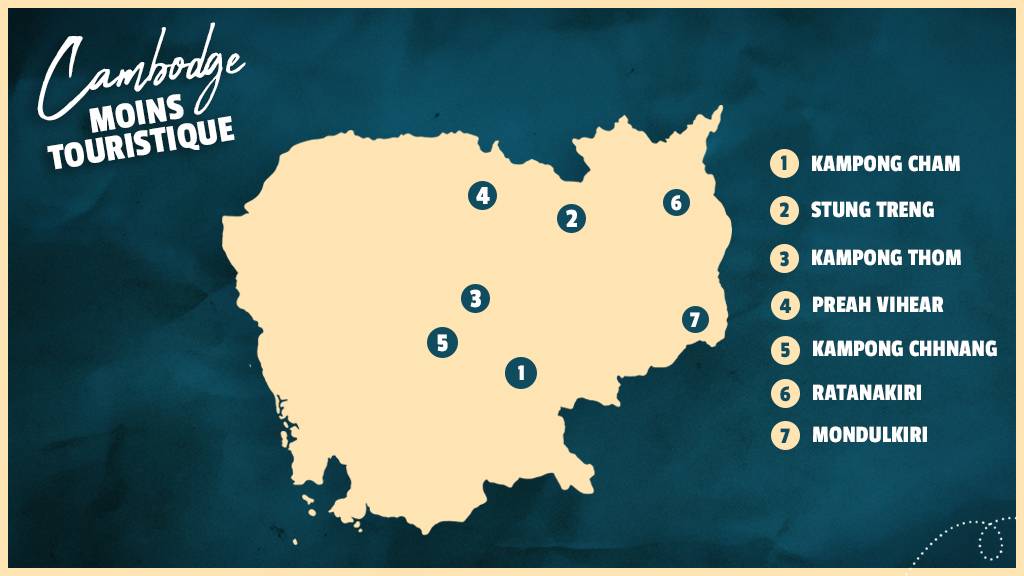
- Cambodia less touristy (map + practical information)
- Kampong Cham
- Stung Treng
- Kampong Thom
- Preah Vihear
- Kampong Chhnang
- Ratanakiri
- Mondulkiri
📌 Cambodia off the beaten track, less touristy
Before presenting the destinations one by one, I prepared a small map so that you can place them:
Practical information to prepare your trip
🚗 How to move around the countryside in Cambodia? <
Although these destinations are less renowned as touristic than others, I selected them for this article because they still remain quite accessible. You will therefore be able to reach these cities or regions in the same way as the destinations in the first article:
- Between cities/regions: There are many specialized agencies in Cambodia, but I highly recommend Vireak Buntham Express. This is the number one transport company in the country, and I have personally never encountered any problem with them during my four months of travel. You can book your vans or buses directly at their website or via the mobile application VET Express. Also and as everywhere in Asia, it is possible to organize your transfers directly via your guesthouses or hotels.
The only difference with the latter is that within cities themselves, transport applications like Grab or Passapp do not work, their network remaining for the moment limited to the largest agglomerations. Nevertheless, and it’s a chance, the cities presented in this article are all full of hundreds of tuk-tuks ready to take you everywhere and at any time. Exploring these places does not represent any difficulty, quite the contrary!
🚨 Security in Cambodia:
This point mainly relies on my personal experience, because I can only tell you from what I have experienced to remain totally objective. I have spent a total of more than four months in the country over the last two years, travelling through major cities, key destinations and a good number of countryside and villages. I have simply never encountered the slightest security issue in Cambodia. I have not been the victim of any scam (speaking a little Khmer helps me, it is true) and, to be honest, I have rarely felt as safe as here.
That said, it is important to remember that no country is 100% safe (whether in Europe or on the other side of the world). Other travelers may have encountered problems in Cambodia, whether they are scams or flights. My best advice is to be as respectful as possible, to smile and to remain humble in all circumstances: this already contributes to establishing a climate of trust with the people you meet.
➡️ The importance of travel insurance
When travelling outside the EU and especially when riding a scooter in Asia, it is strongly recommended to take out travel insurance in case of health issues. For this, the traveler’s favorite is without hesitation Chapka Assurances.
The Cap Assistance 24/24 contract covers notably your medical/ hospitalization expenses, repatriation and the possibility of tele-consulting a French doctor. It also insures your luggage and provides you with civil liability!
To receive a discount on Chapka Assurances, book via the link below or enter the promo code AMOUREUX5:
📌 Currencies, Sims cards, Visas, Weather…:
For all other information related to a trip to Cambodia, I have prepared in the first part of my first article a small guide that may be useful to you. In order to avoid duplication here, I therefore refer you to this dedicated article.
👉 Routes of 2 or 3 weeks for travel to Cambodia
❤️ The best less touristy destinations in the country : Cambodia off the beaten track
Kampong Cham : what to do and what to visit?
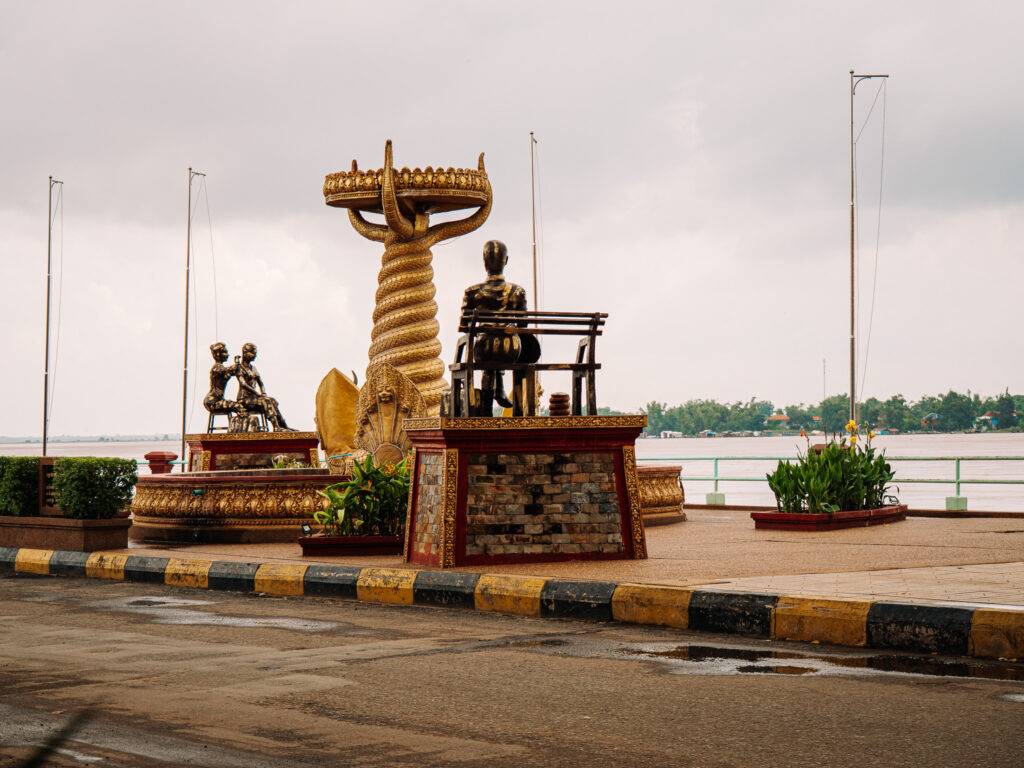
Kampong Cham is a small peaceful city on the edge of the Mekong. Located slightly to the northeast of the capital Phnom Penh, it remains very accessible by transport. It is best known for its famous bamboo bridge that connects it to the small island of Koh Pen. This bridge is rebuilt every year during the dry season, when the level of the Mekong falls, in order to allow the passage towards the island. Rest assured, today a hard bridge has also been built and this one is permanent!
📍Wat Nokor BaChey
First activity to do in Kampong Cham : visit the Wat Nokor ! The temple is located slightly on the outskirts of the city and remains very accessible by scooter or tuk-tuk. The peculiarity of this Buddhist complex (which I find incredible) lies in its main structure in black sandstone dating back to the time of Angkor, to which several more recent constructions have been added over time. The contrast between ancient and modern is striking: they blend surprisingly well, and one is quickly amazed by the entire complex.
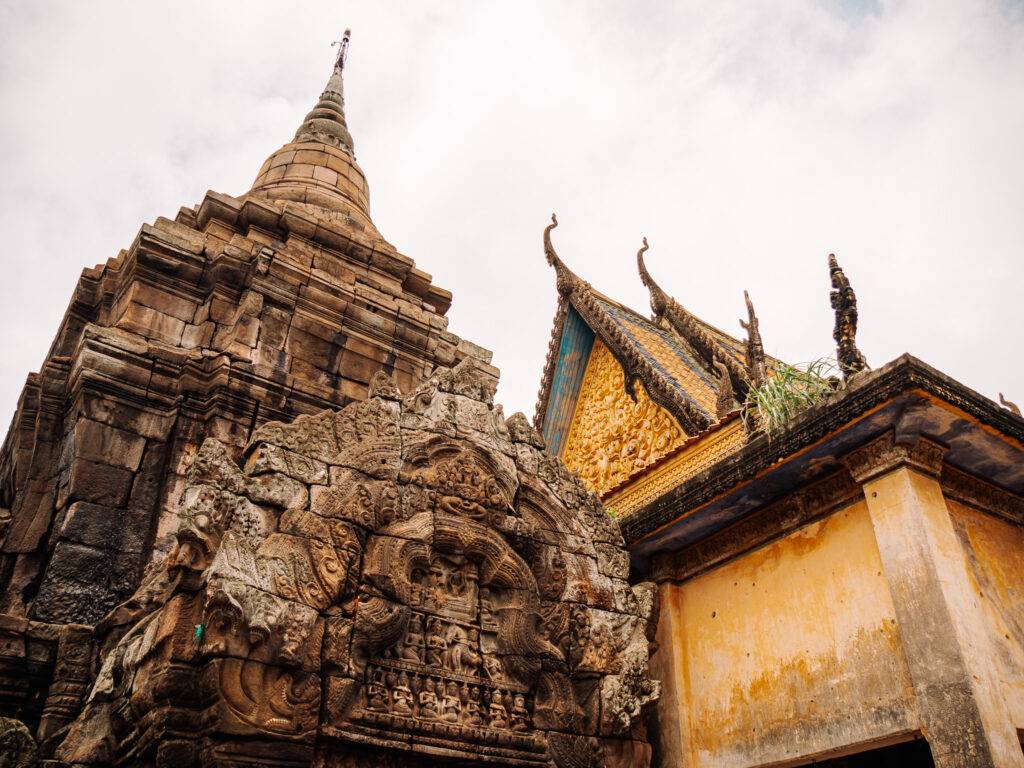
The complex visit is normally free, but with the rise of tourism, it’s not uncommon for a gentleman in uniform to ask you for between $1 and $3 for the tour. He can also offer a “pass” at $10 to visit all the sites in the region. I am not sure that it is an official pass, and I have several reasons to believe it. For our part, we gave $2.5 to visit the Wat Nokor. It’s up to you to judge and decide what you want to give or not. In any case, remain smiling and respectful: the more friendly you are, the more likely you will be to access the site cheaply, even for free.
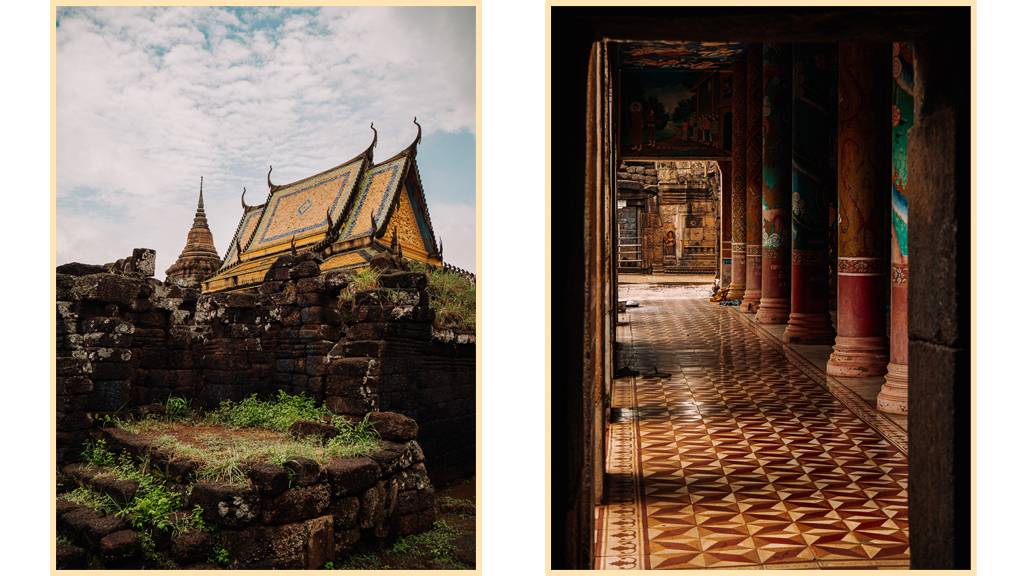
For the little story, and what makes the site even more fascinating, the Wat Nokor was built by Jayavarman II, the Khmer king considered the founder of the Khmer Empire. It is therefore one of the oldest temples dating from the time of the empire!
📍Phnom Pros & Phnom Srei
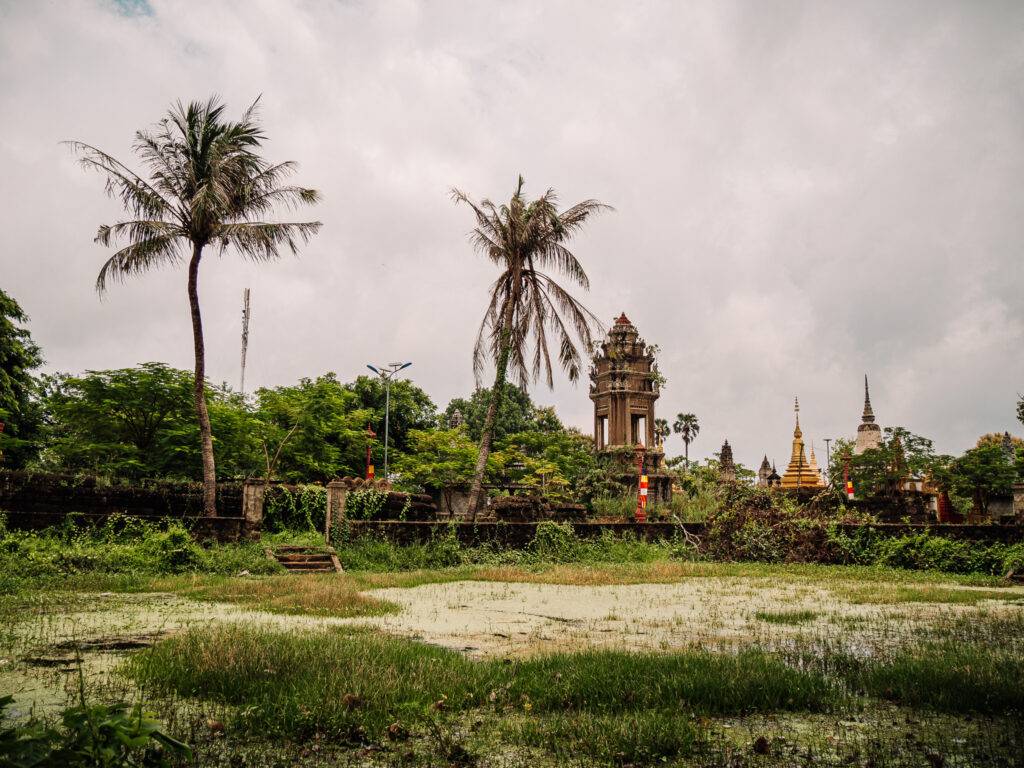
Located about 7 km northwest of Kampong Cham, Phnom Pros and Phnom Srei are two must-visit sites in the region.
- “Phnom” means “Hill” in Khmer
- “Pros” means “Man”
- “Srei” means ‘Woman’.
These are therefore two hills: The hill of men and the hill of women.
These two hills offer a panoramic view of the region, and magnificent temples were built at their summit. A fascinating legend surrounds the birth of these hills: I invite you to look at our YouTube video or to inquire on site to not spoil the surprise!
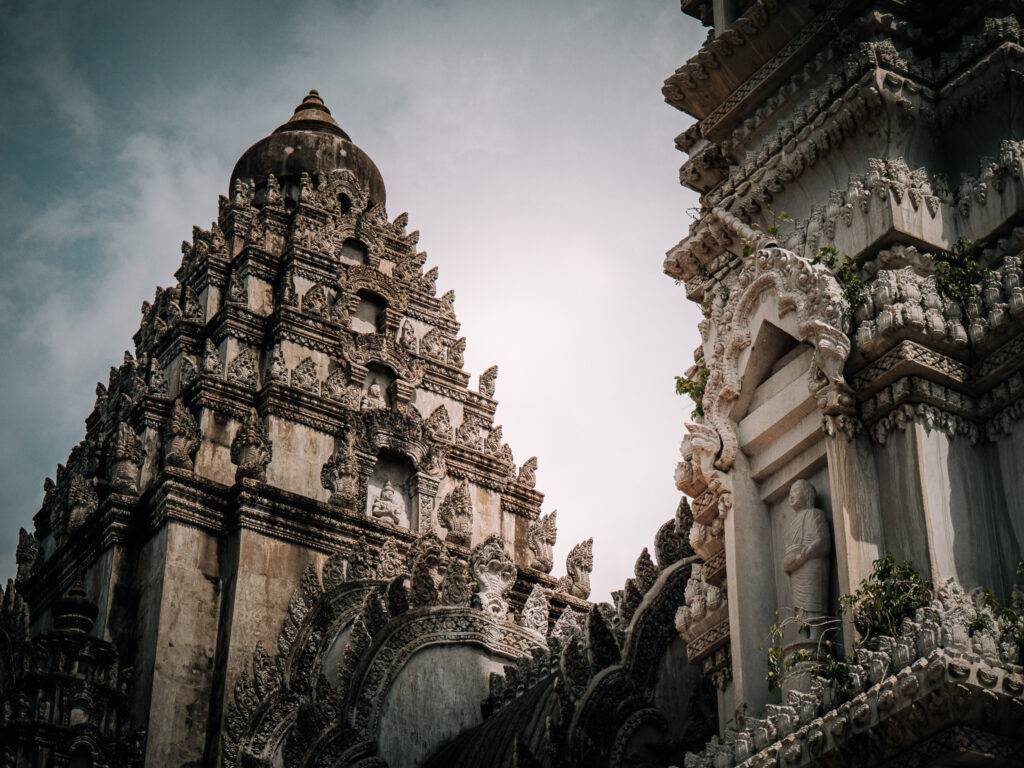
Access to the sites is very simple by scooter, motorcycle or tuk-tuk, and you will be able to walk freely in the enclosure of the two temples. The temples are magnificent, finely carved, and as is often the case in Cambodia, these sacred hills exude an indescribable aura that makes you want to stay there for long hours!
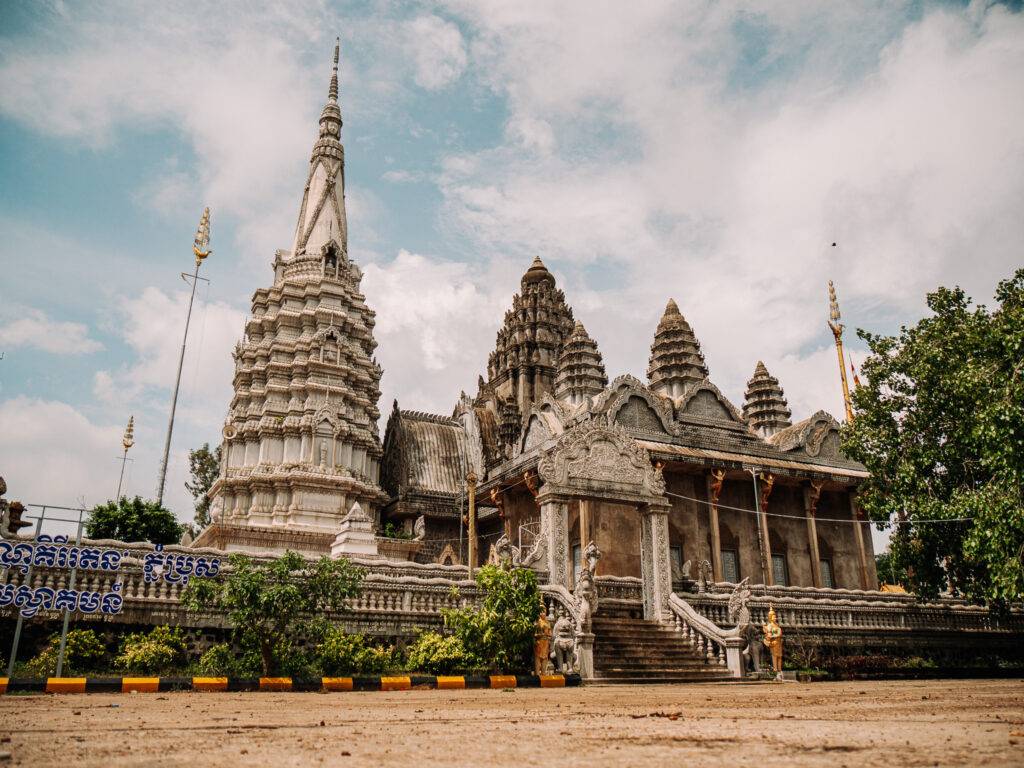
📍The library of Phnom Pros
Here, I had an incredible experience, which I remember very strongly! At the foot of Phnom Penh Pros, continuing your visit down below the temples, there is a hidden library on the ground floor of a Buddhist monument. According to several travelers and testimonies that I have collected, this library is often closed, I may have been lucky that day!
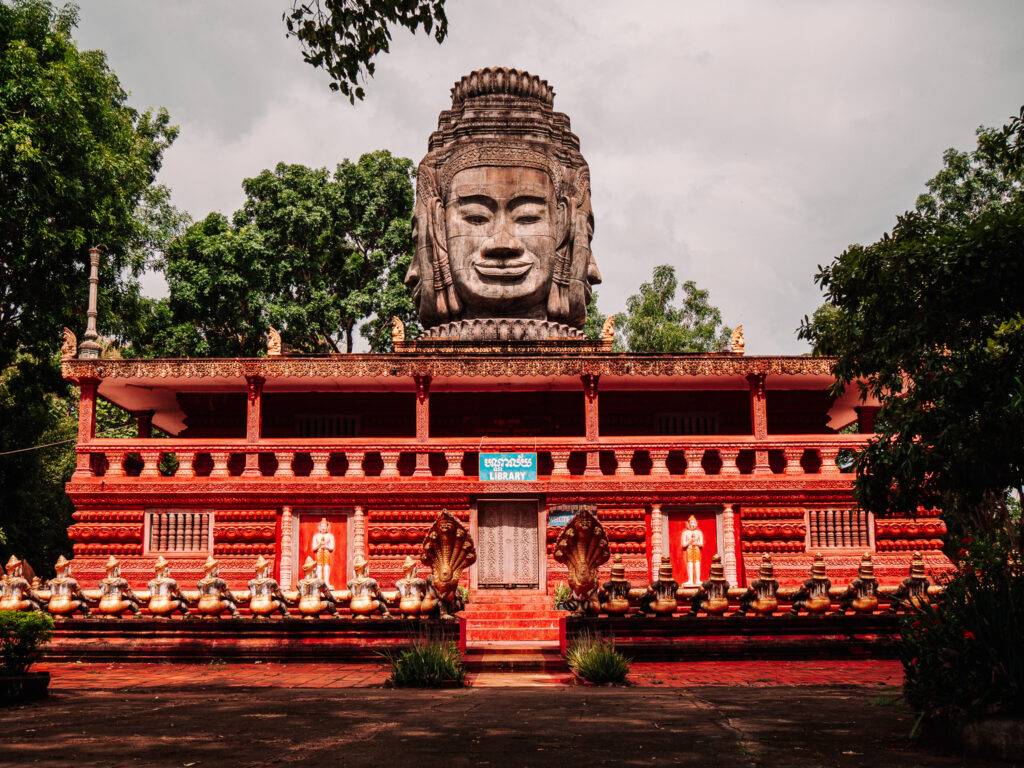
As we walked with my partner around the library, I saw a “Library” sign (see photo above) and a door ajar. I didn’t need more to take off my shoes and enter respectfully. We were greeted by a lady who did not speak a word of English, but who was very smiling. She seemed delighted and proud to show us all the books and works that the library contained.
Passionate about the Khmer Empire and Cambodia, I discovered there an incredible number of works (including several in French!) and I would have liked to stay there for hours to read everything. It was a moment out of time, with the impression of penetrating a place full of secrets. If you happen to be there, take a look at the door: if it’s open, try the experiment!
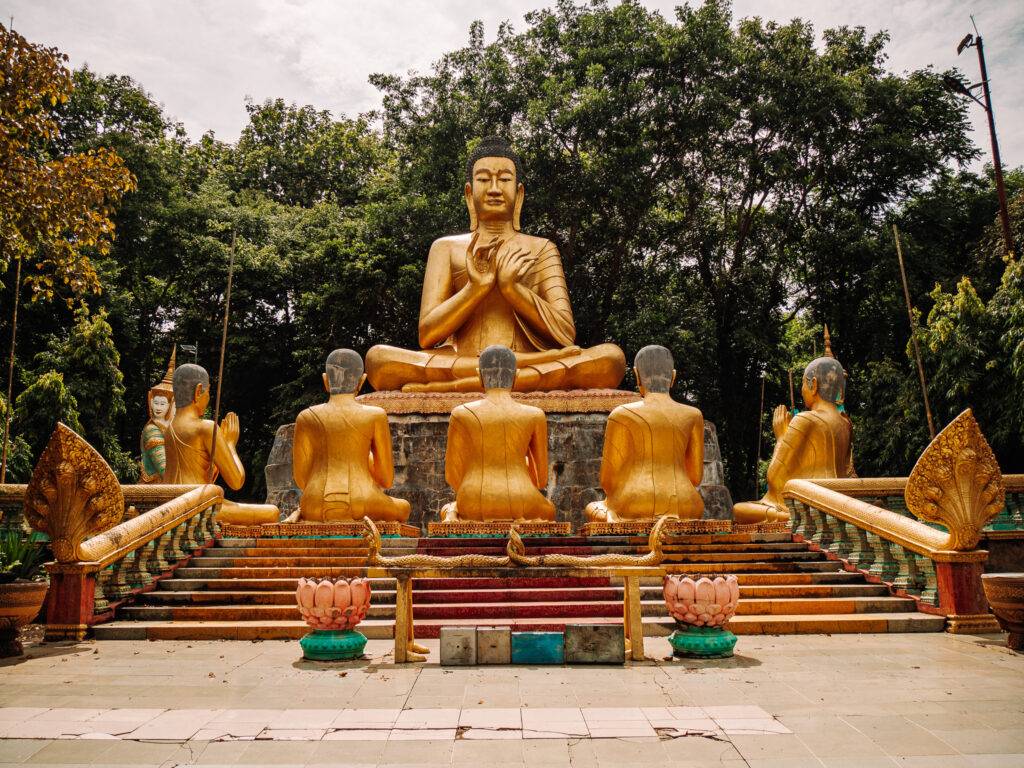
📍Koh Pen
Koh Pen is an island located at south of Kampong Cham. As I mentioned earlier, the peculiarity of the city is that a bamboo bridge is built every year during the dry season to connect the island to the city. This bridge is deconstructed every rainy season, but you can now reach the island very easily thanks to the new concrete bridge that has been built.
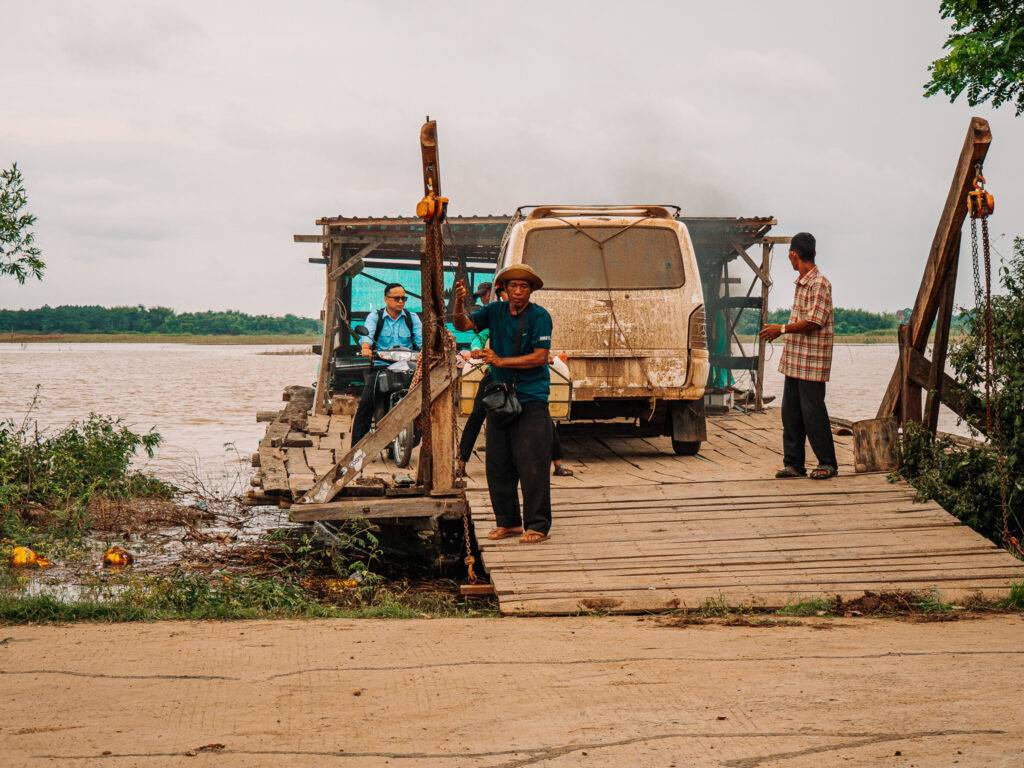
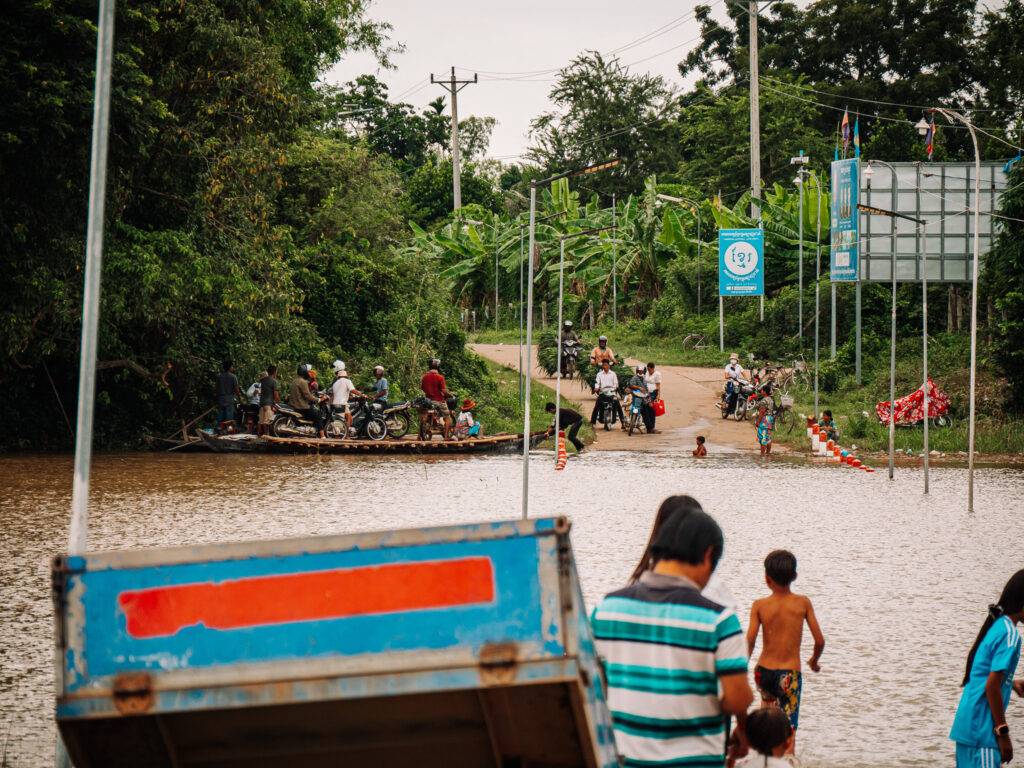
The scooter ride on the island of Koh Pen is extremely pleasant: one passes from small villages to small villages, a perfect opportunity to discover another way of life in Cambodia and immerse oneself in the local culture. As you can see in the photos, we were there during the rainy season, and the island was therefore partially flooded… an incredible show. The roads were covered with water in places, road signs barely stuck out, residents improvised bins to cross and children played in the water. A unique moment, once again.
🛌 Where to stay and eat in Kampong Cham?
At Kampong Cham, we stayed with Thomas, a Franco-Khmer who built a guesthouse northeast of the city. It was a real pleasure to be able to discuss with him and learn a lot about the region.
- The GuestHouse is called Phalla Riverside and offers several modest, but utterly comfortable rooms. It is also equipped with air conditioning, which is very appreciable, especially in the rainy season! The price is very low and Thomas even offers breakfast in the morning!
➡️ To eat in Kampong Cham :
- The market in the heart of the city
- Smile Restaurant (a little more expensive but very good food and very interesting charity angle)
- River Grass (Small, friendly restaurant on the banks of the Mekong).
📍Visit Stung Treng (or Steung Treng)
Stung Treng is a city and province located in north-central Cambodia, about 50 km from the border with Laos. The city is best known as a simple crossing point between the two countries: travelers often stop there just one night before continuing to Laos or, in the opposite direction, to Siem Reap. And yet… we have titled our YouTube video on Stung Treng “Cambodia that we love so much! ” and it’s not for nothing. We loved this province, which remains perhaps one of our best memories of riding a scooter in the country!
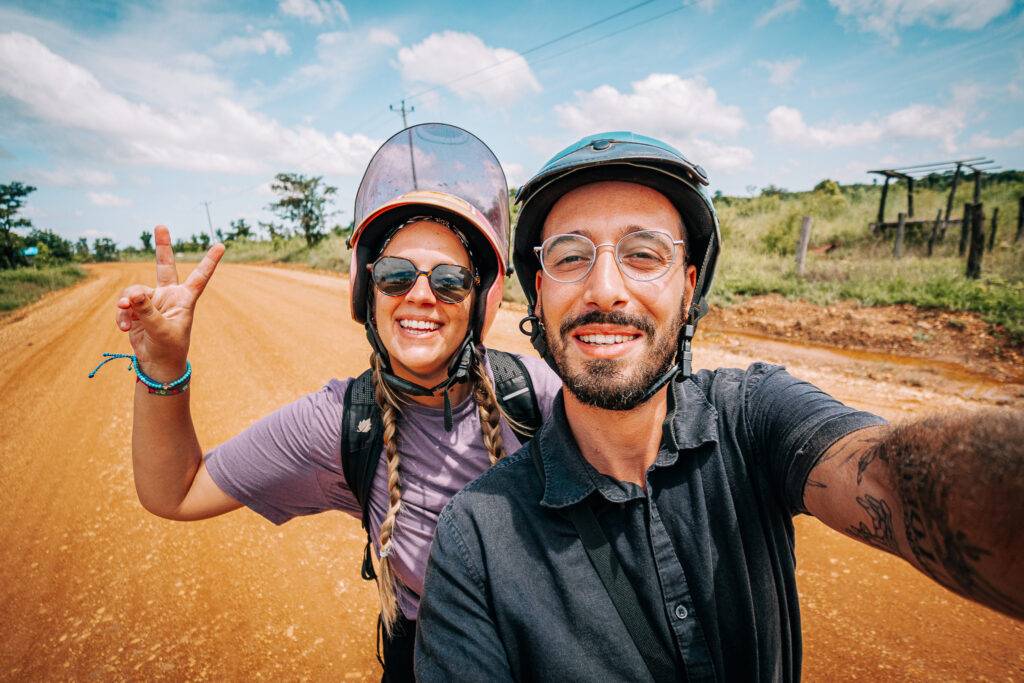
Riding a scooter in the province
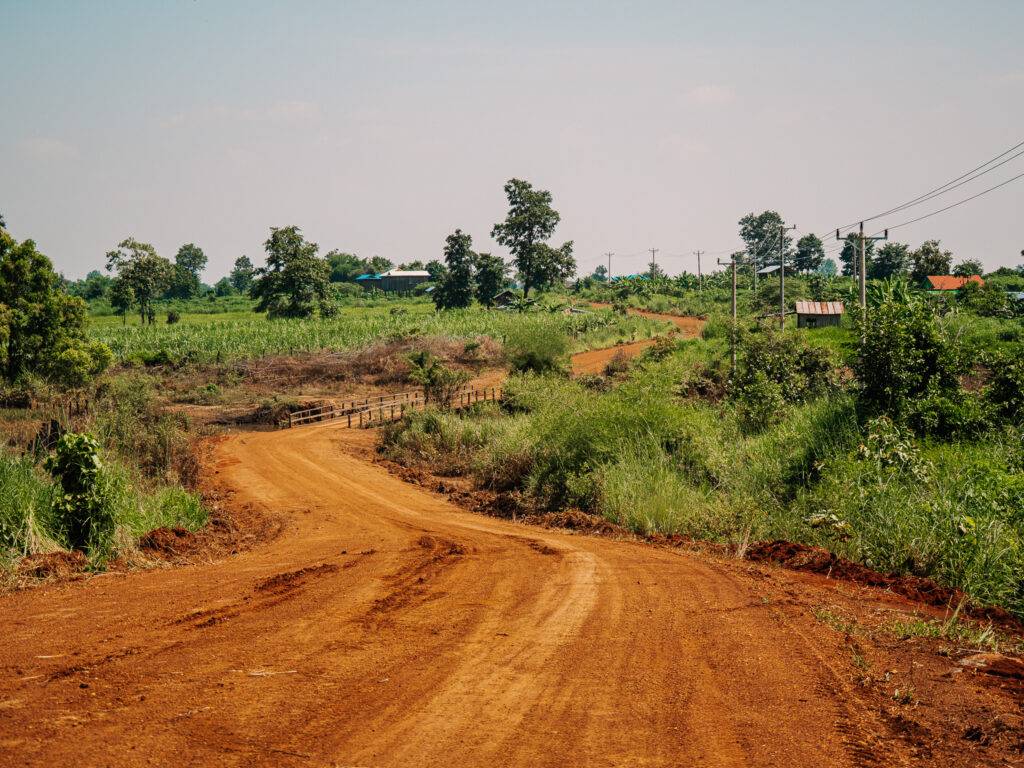
We spent three whole days at Stung Treng, and each day had a single goal: to get on our scooter and “lose oneself” in the countryside. One day towards north, one day towards south, and the third one a bit everywhere… and it was great. Everywhere, you will find small stalls to drink a cane juice or a coffee, to eat… everything seems so simple in Cambodia when you let yourself go!
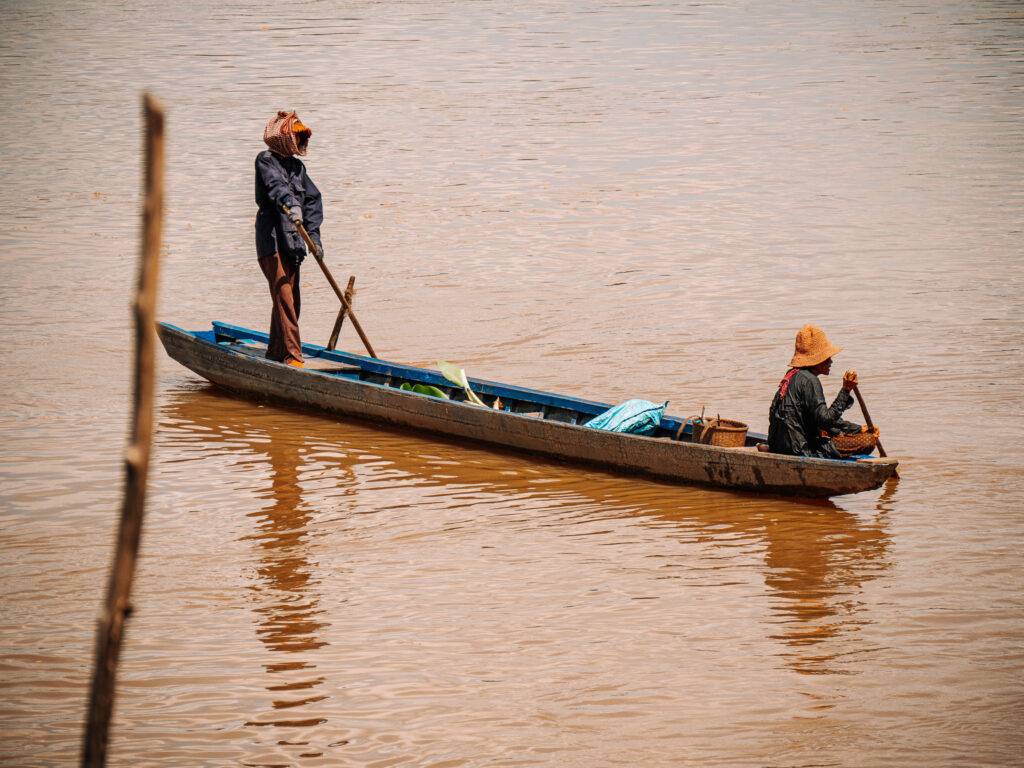
It is difficult to give you details about our little adventures on two wheels here, because I myself do not know exactly where we were at each moment. But if you want to start gently, take the road that goes down towards the south along the Mekong from Stung Treng. That’s where we started, and believe me, the Mekong never disappoints!
📍Sokha Phi Rea Ream Pagoda
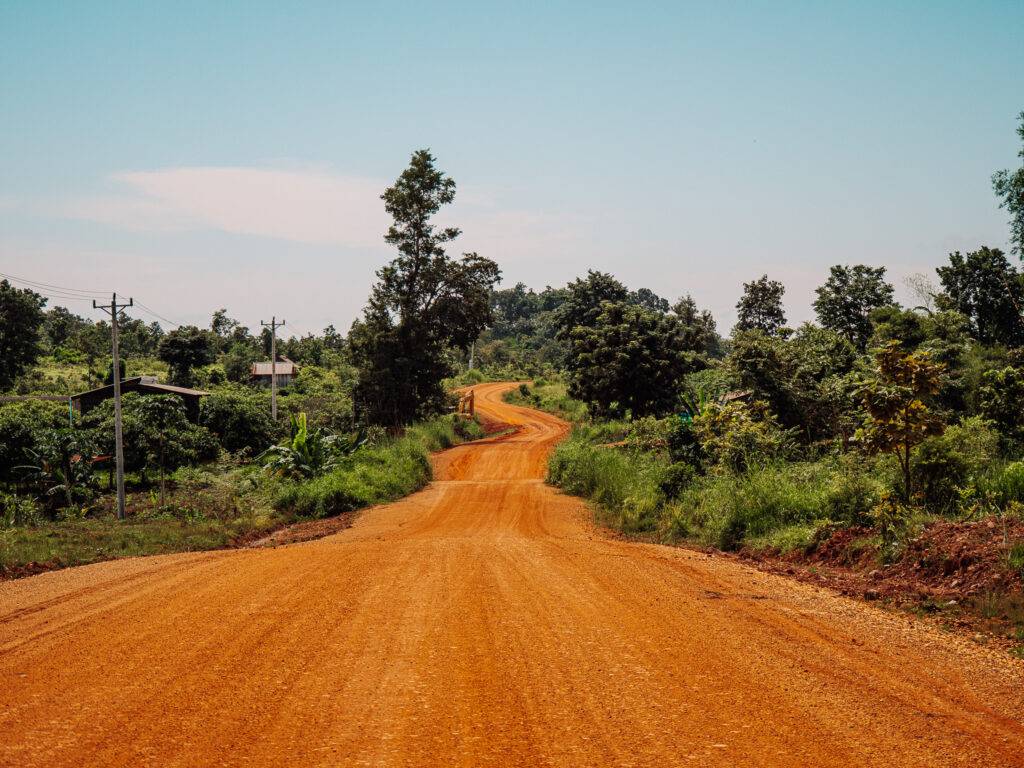
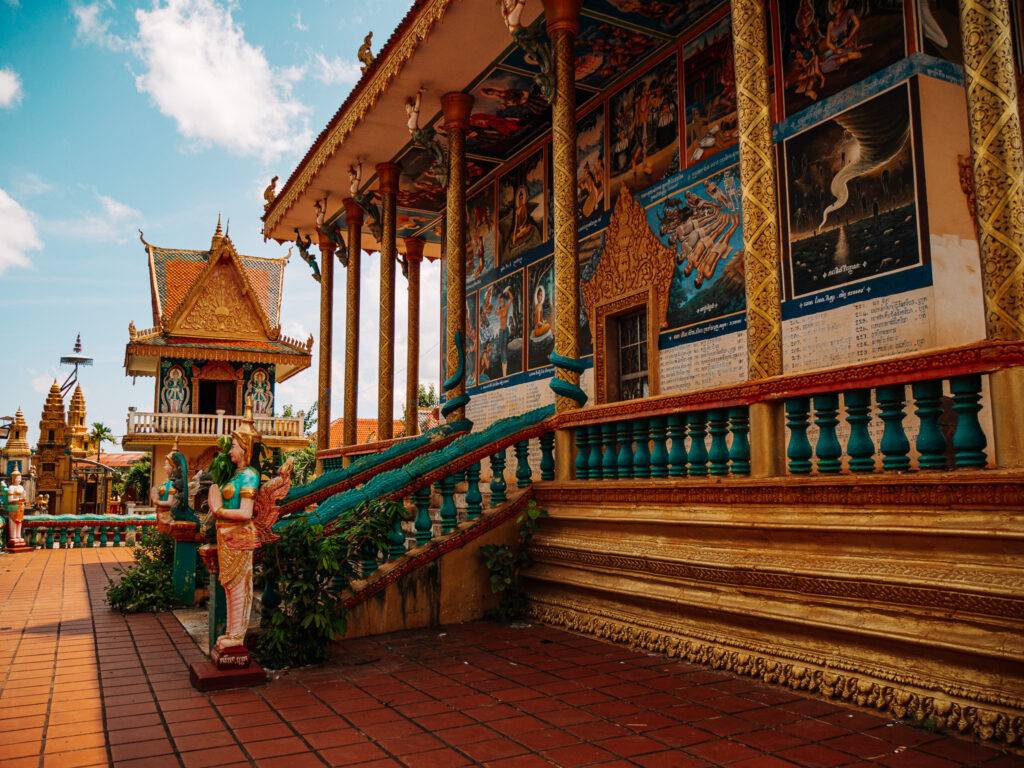
If you are going down to the south on two wheels (or with a Tuk-Tuk driver), do not miss the Sokha Phi Rea Ream Pagoda (its name on Google Maps). It is a small Buddhist complex built in the village of Koh Sampeay on roads in magnificent ochre lands (be careful by scooter). The main pagoda is very beautiful and is quite original since it is covered with frescoes illustrating scenes that are unusual in Cambodia. The frescoes depict quite dark scenes of Buddhism, which contrasts very strongly with the bright and colorful side of the temple.
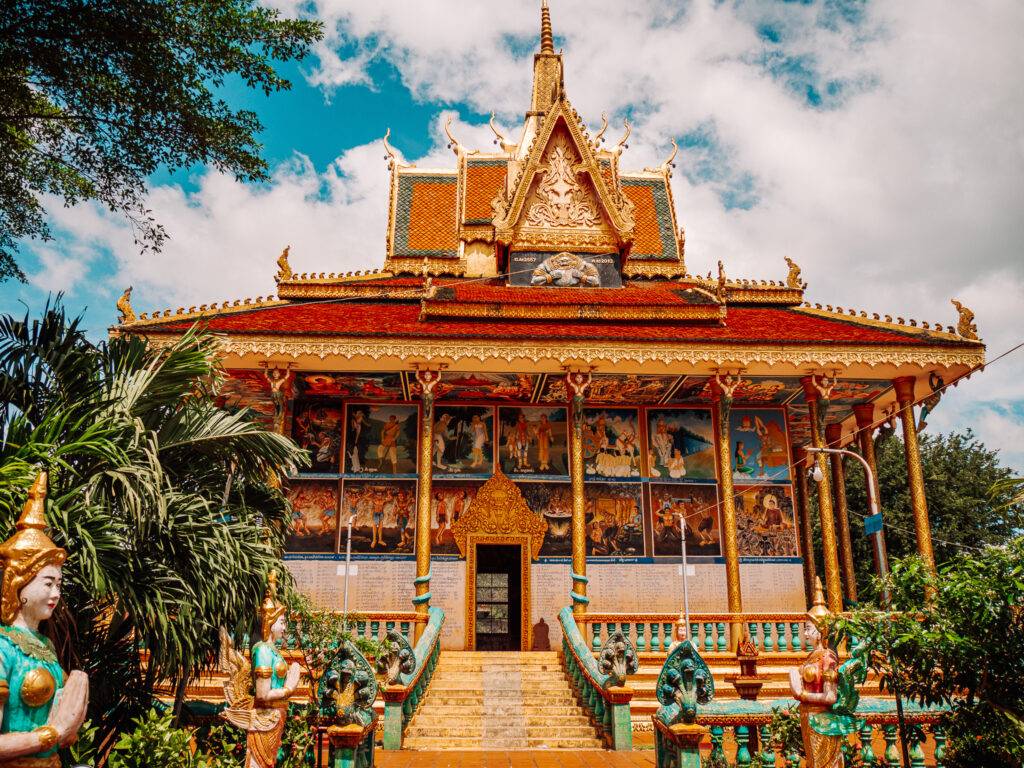
As is customary in Asia, if you wish to visit this place, take off your shoes, remove your headgear and cover your shoulders. Monks and locals also live here, so be sure to stay as respectful possible.
🌅 Watch the Mekong River ignite
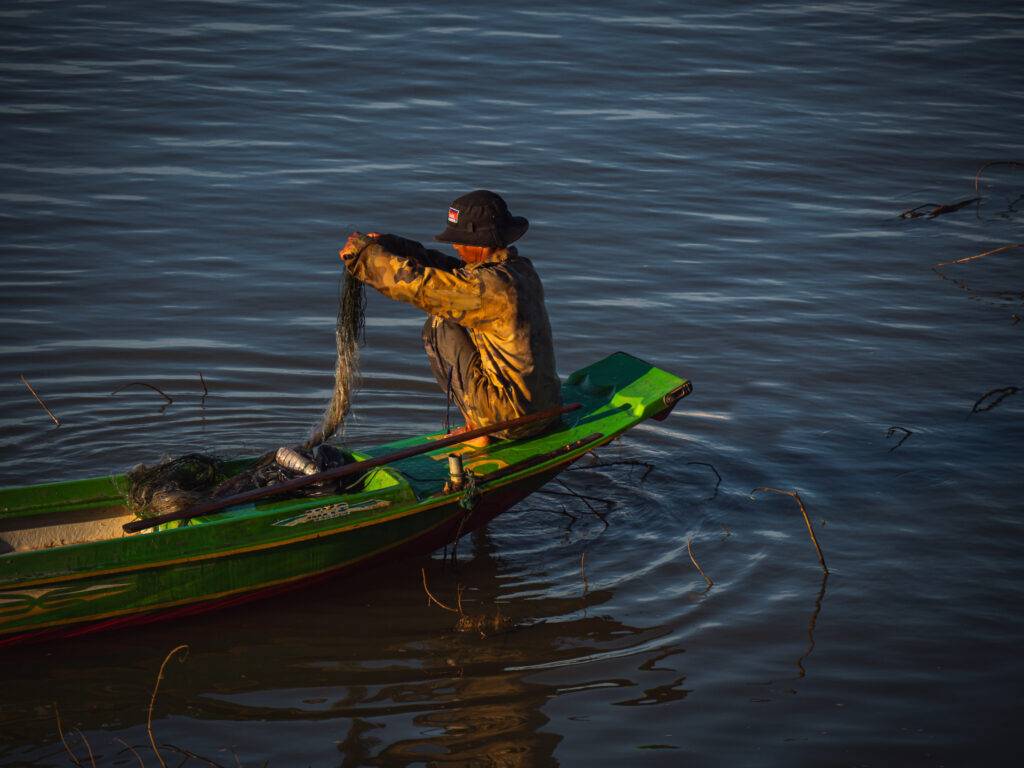
Having traveled along the Mekong in Thailand, Laos, Cambodia and Vietnam, I can say that the sunsets on this mythical river are always a unique spectacle. But the one east of Stung Treng will remain engraved in my memory. It’s not necessarily the most spectacular place to admire the sun setting over the Mekong, but that day it was so bright orange that I almost thought the river would ignite in front of my eyes!
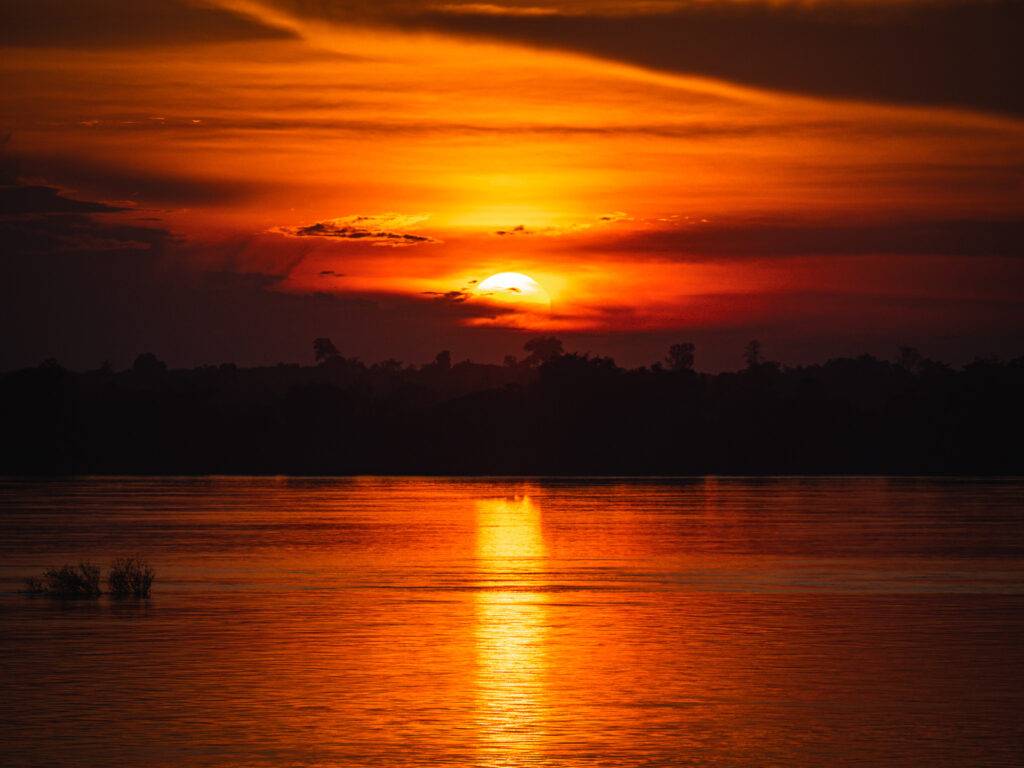
Do you say that in this photo, the colors are barely retouched. Seeing the sun gradually descend, illuminating the river until it ablaze with its color, always remains magnificent. Moreover, it is often at this time that the banks of the Mekong come to life the most, with many food and drink stalls!
📍Visit the surroundings of the village Thala Borivat
At north of Stung Treng, you can take a bridge over national road 64 which will then lead you, towards the east, to the village of Thala Borivat. We loved walking in this area: the village reminds us of the 4000 islands of Laos, with a very peaceful atmosphere, coconut trees everywhere and typical houses.
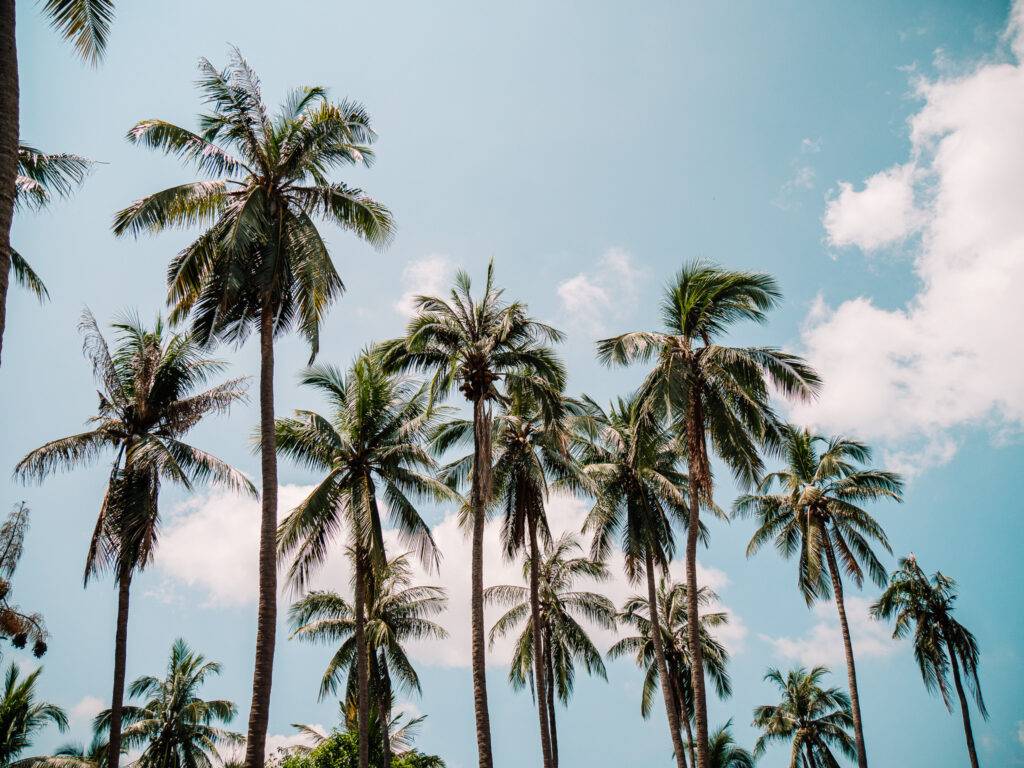
That day, we actually continued very far to the north, without being very far from the border with Laos, and we found ourselves literally alone in nature for long hours. I remember that, on the scooter, we spoke little during the journey, as if we should not break the silence of this so precious moment.
📌 Where to stay and eat in Stung Treng?
There are not many accommodations available on Booking.com in Stung Treng, so we chose an iconic place of the city, frequented by many travelers passing through.
- This is the Savet GuestHouse, a simple but very well appointed guesthouse, with everything needed for a comfortable stay in the city!
➡️ To eat in the city, I don’t have specific addresses to recommend to you. We often had lunch all over the countryside, and in the evening, we mainly dined in the northern part of the city, on the banks of the Mekong. Tables and chairs are installed on the docks, offering a magnificent setting to enjoy the meal.
Trip to Cambodia off the beaten track: stop at Kampong Thom
Kampong Thom is one of my favorite destinations in Cambodia, and it’s probably the most accessible province on this list, since it is located on the National 6, the iconic road connecting Phnom Penh (the capital) to Siem Reap (the temples of Angkor). Yet, few travelers stop there, even for 2 or 3 days. My mission here is to show you that stopping there is well worth the trip!
Kampong Thom is the 10th most populous city in Cambodia, with about 46,000 inhabitants. Located by the river Stung Sen, it offers a nice range of accommodation and restaurants for travelers.
📍Wat Sampov Trailok Traileak
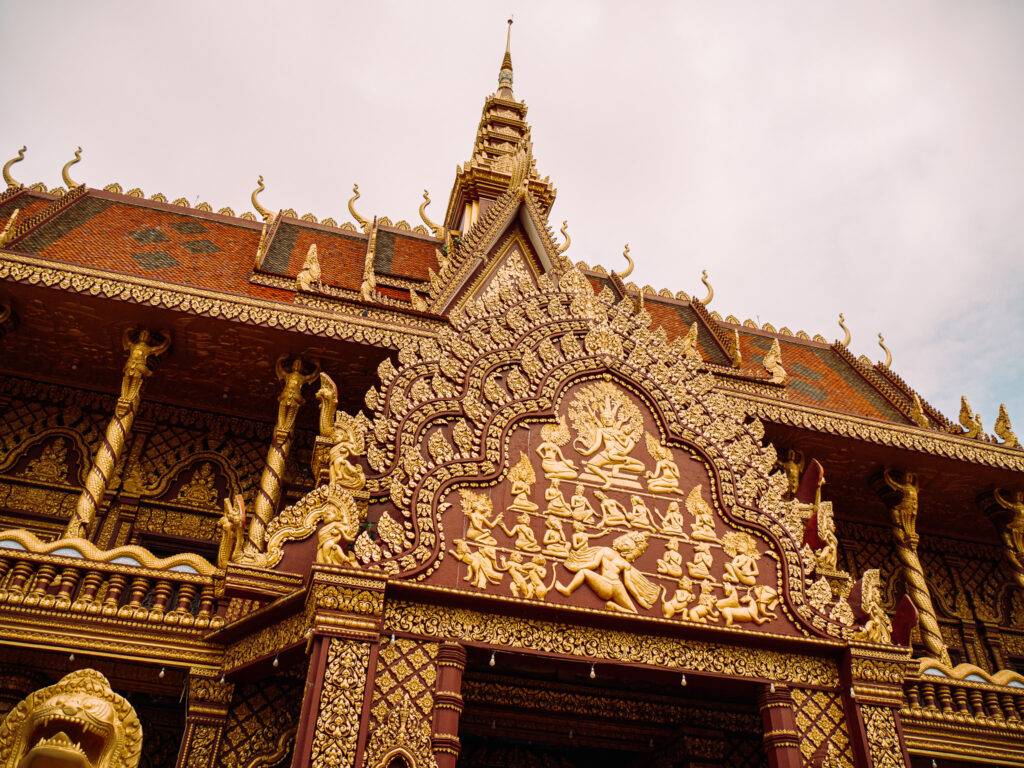
Without context, it is the most beautiful and majestic modern Khmer temple that I have had the opportunity to see in the country. Wat Sampov is located a few kilometers west of Kampong Thom and is built literally in the countryside! As usual, you can go there by scooter on your own or call upon a driver or guide, available everywhere in the city.
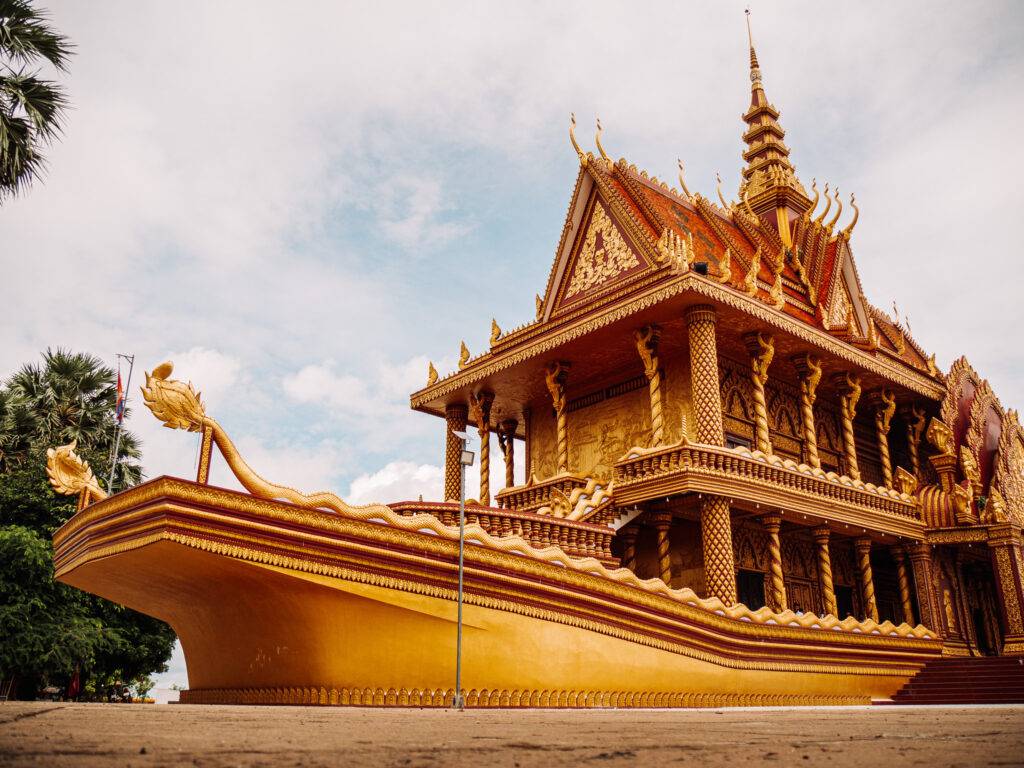
As you can see in the photo above, the peculiarity of the temple is its boat shape. The architecture is impressive: it respects the traditional Khmer codes while adopting a contemporary approach. The temple is fully visitable, whether on the ‘boat deck’ or inside the ‘cabin’. Little information is available about it, but one can reasonably assume that it was built in this way to protect against the frequent floods and floodings in the region.
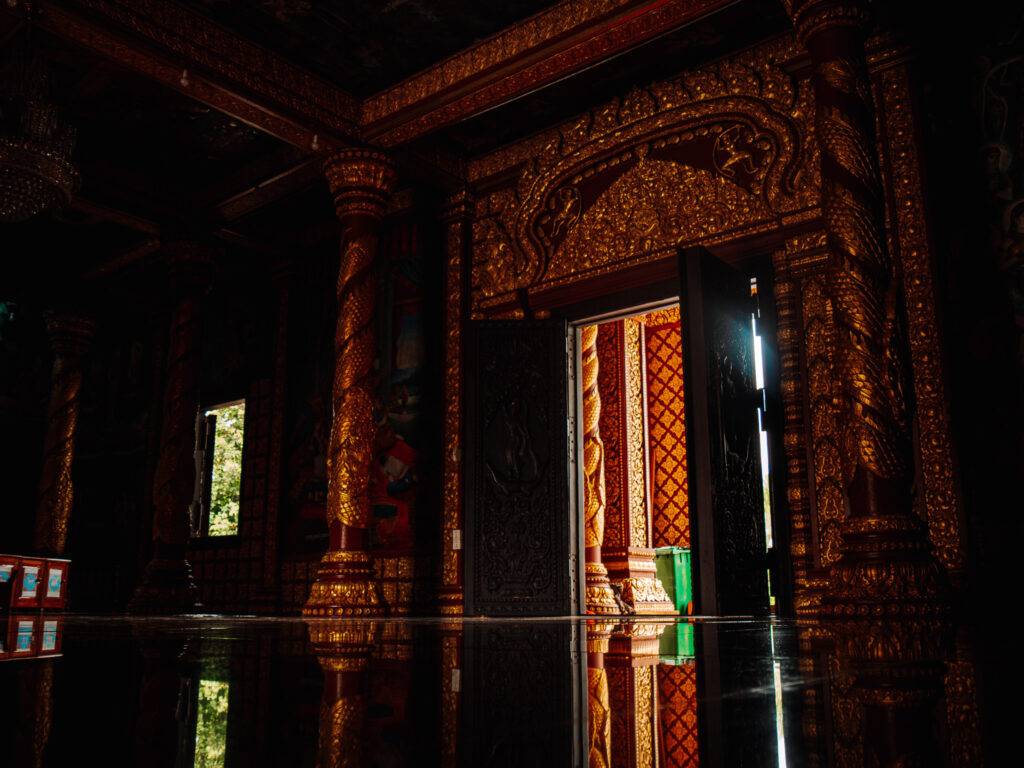
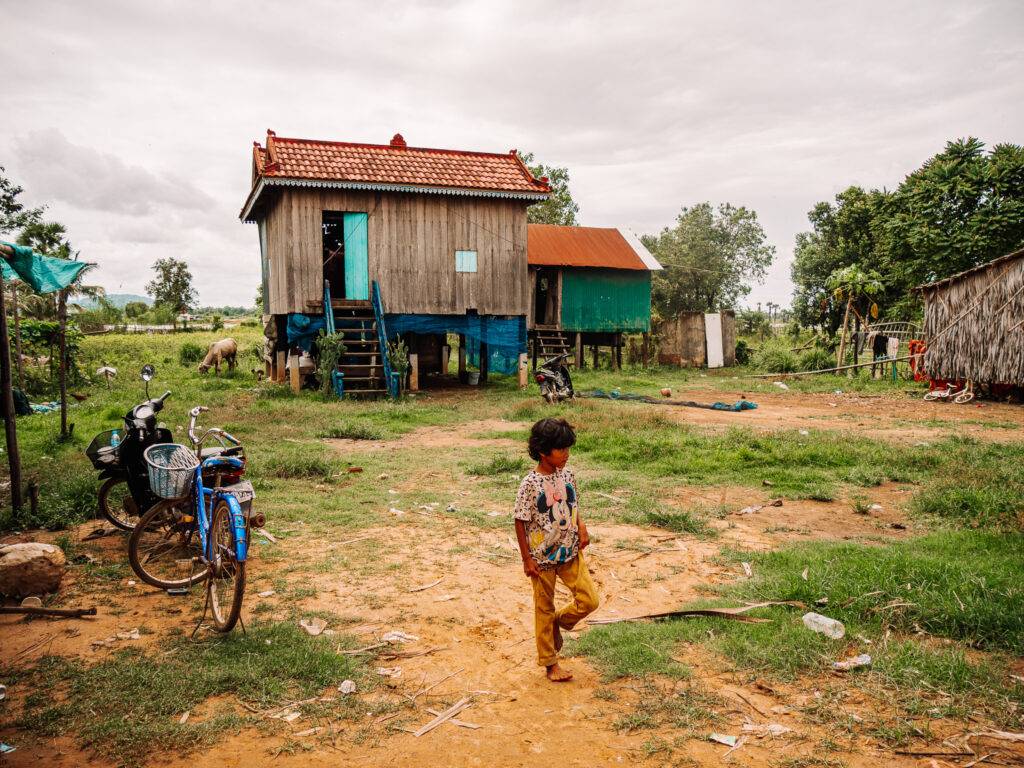
The temple is resplendent and very bright. The paradox is that it is located in the countryside, surrounded by neighboring villages and vast fields. For the anecdote, I tasted one of my best cane juices (‘Teuk Ampov’ in Khmer), right in front of the temple entrance! The photo below was taken right in front of the resort doors.
📍Phnom Santuk
Another sacred hill of the country, located 20 km south of Kampong Thom. The day of our visit, took place the Pchum Ben, one of the most important Buddhist festivals in Cambodia, so imagine the incredible atmosphere! Beyond the Pchum Ben, the hill is home to magnificent temples and very beautiful statues of Buddha carved directly into the rock. It’s a place not to be missed in the province of Kampong Thom !
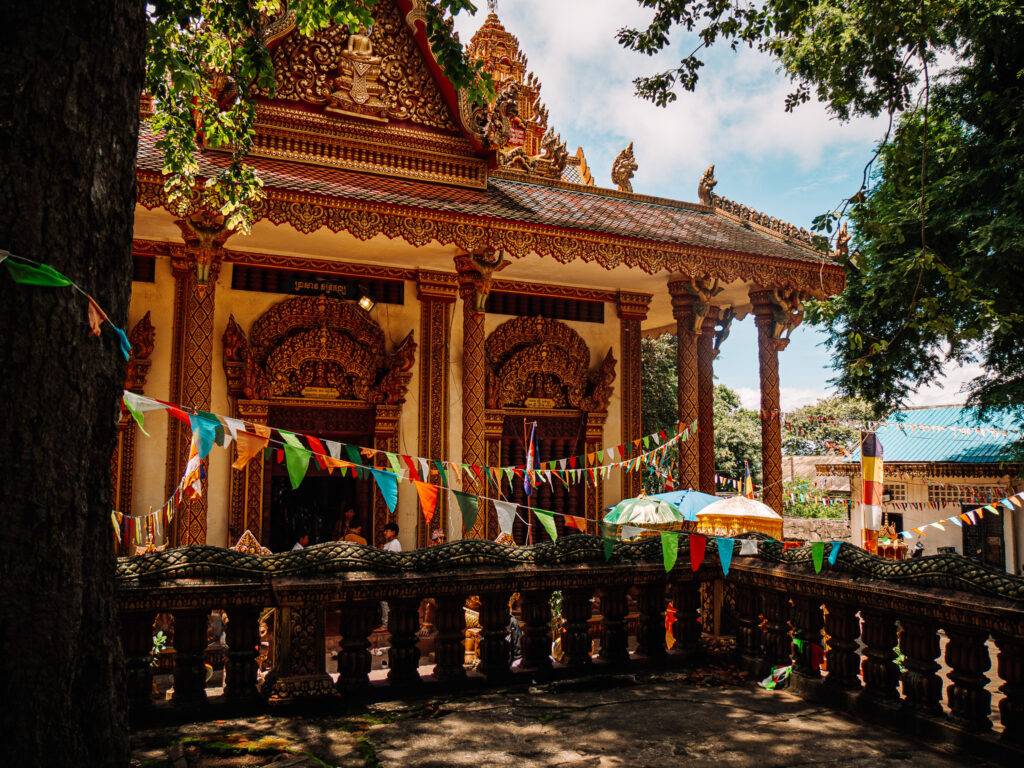
The place is surrounded by many myths and legends, which makes it even more unique. Do not hesitate to inquire in the city or on the Internet before starting your walk! The complex is full of buildings and temples, and you can easily spend half a day exploring it all, so take your time, it’s really worth it. As with any sacred hill, the view from the top is breathtaking on the region.
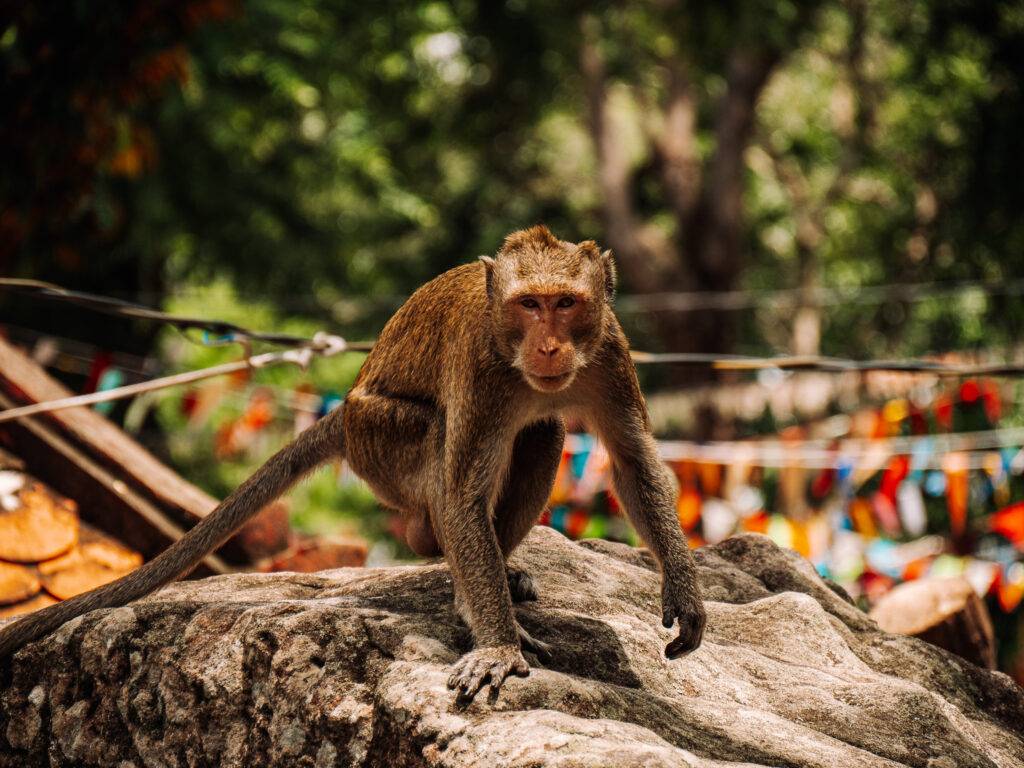
⚠️ Small warning: beware of monkeys, who are literally legion in Phnom Santuk. You will inevitably see several dozen of them everywhere. There is no need to be afraid, but keep your distance and avoid trying to take pictures with them, as they can become aggressive suddenly.
📍The market and the docks
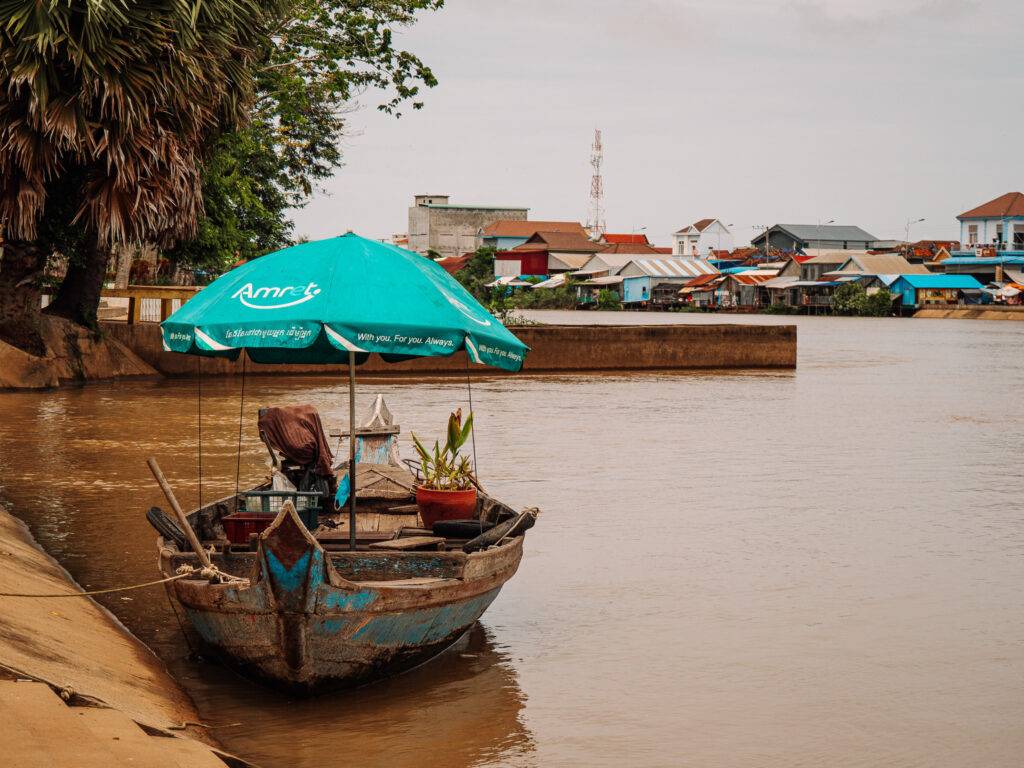
If you are in the city, also take the time to visit the large main market, which is full of local dishes and drinks to taste. It is not very far from the quays of the river Stung Sen, where you can take your purchases to enjoy them by the river without problem.
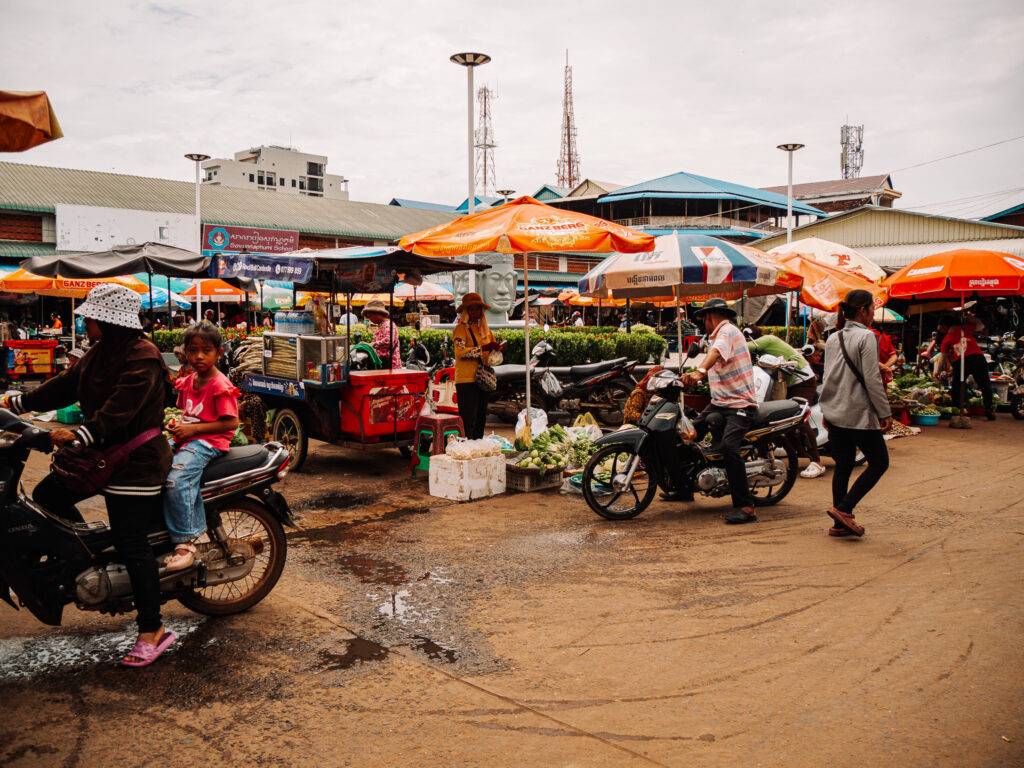
The docks are very well arranged and pleasant. We stayed there for a while to enjoy the atmosphere of the city. In the evening, several stands are set up there to eat, and the atmosphere is always friendly and lively!
📌 Where to stay and eat in Kampong Thom?
On our side, we were very lucky with our accommodation in Kampong Thom. We visited Cambodia exclusively during the monsoon, a period when prices are often much more attractive and which allows to unearth small nuggets.
- We stayed at Glorious Hotel & Spa, a 4-star hotel with a gigantic pool. It was way above the type of accommodation we usually take in the country, but with a rate of $20 per night… hard to resist!
- For a more standard range of guesthouses (prices between $12 and $15 all year round), I heard lots of good from Sokchea Chantha and Vimean Sovann. I don’t believe it is possible to book online, feel free to call or send a message: contact details are available directly on Google Maps.
➡️ To eat in the city, do not miss the market and Arunras Restaurant, delicious food and very local. Otherwise, there is a big 7 Eleven in town to do some shopping!
Preah Vihear : land North of Cambodia
Preah Vihear is a small town located in north of Cambodia, halfway between Siem Reap and Stung Treng. The city itself resembles many others in Cambodia, with some shops and a central market, but the main interest to stop there lies mainly in the surroundings, you will notice it.
📍Koh Ker
Real treasure, Koh Ker is a archaeological site and former capital of the Khmer empire dating from the 10th century, before it moved to Angkor. This historic site is a jewel, similar to Angkor and contains several temples (180!) scattered over 81km 2. The most well-known temple in Koh Ker is undoubtedly the Prasat Thom. Nestled in the middle of the jungle, it is the only Khmer temple built on a pyramidal base.
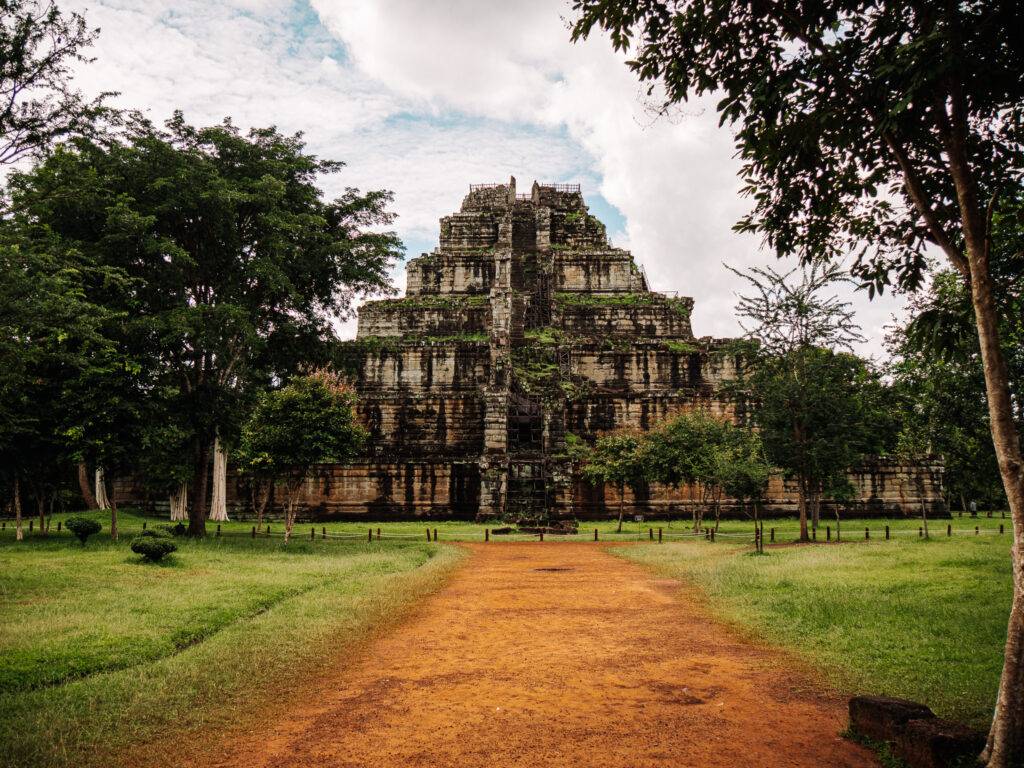
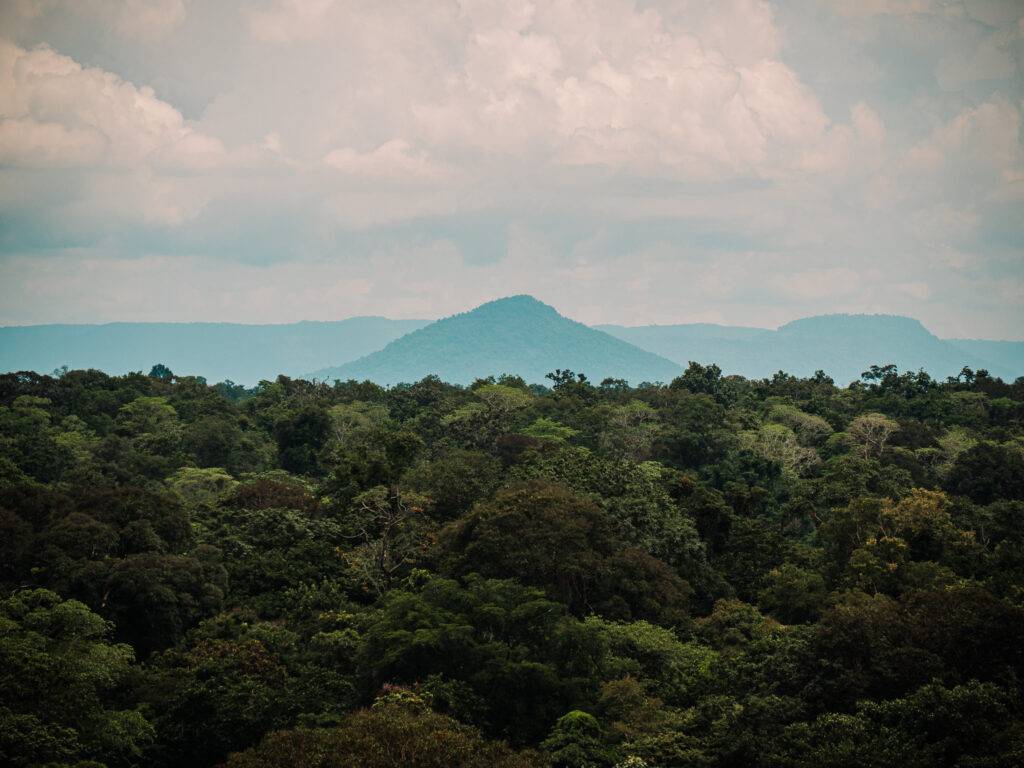
The temple is immense and it is possible to walk all around, as well as climb to the top. As much to tell you that once at the top of the pyramid, the view is breathtaking on the jungle, the surrounding mountains and all the region. However, plan for water, because it is quickly hot up there!
To talk about Koh Ker more broadly, it is an extensive site that you can explore in the way of Angkor : in scooter, tuk-tuk or private vehicle. Exploring it entirely on foot is almost impossible as the complex is vast. The Prasat Thom constitutes the highlight of the visit.
📍Prasat Pram
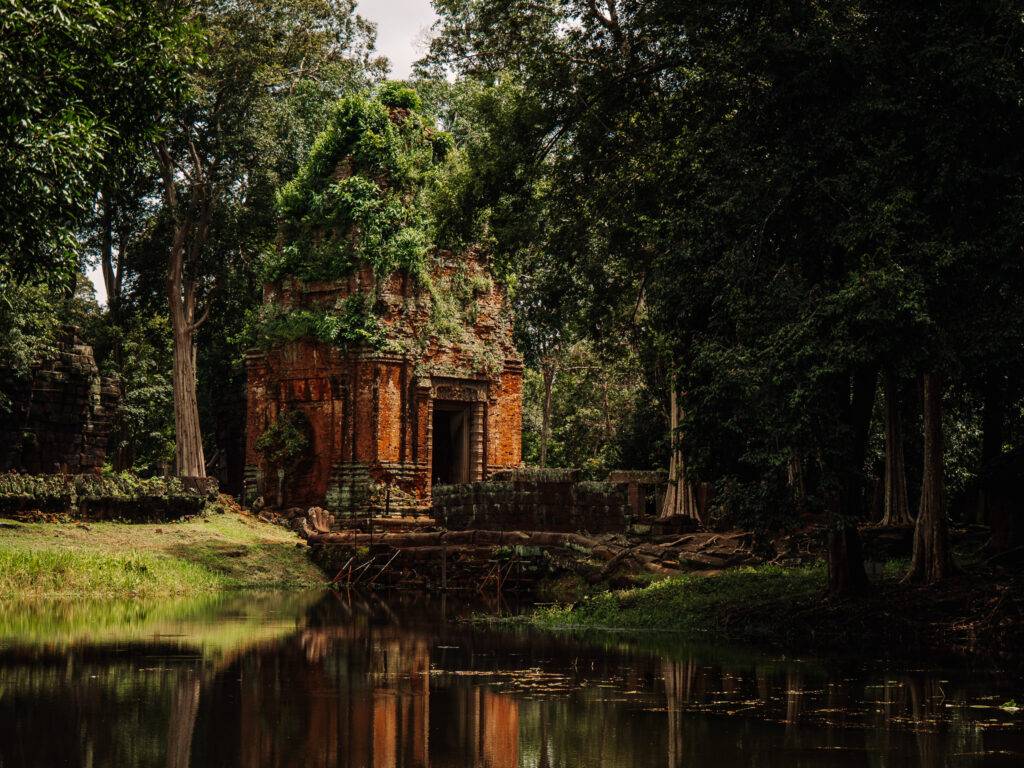
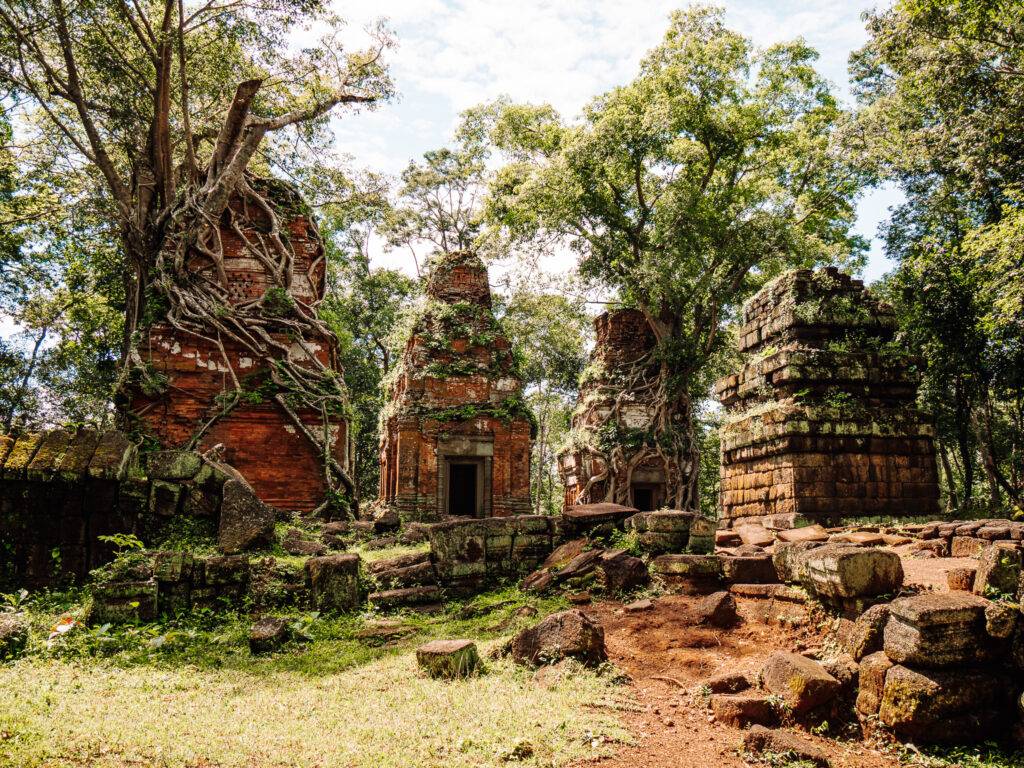
Other hidden treasure at the heart of the Koh Ker site: the Prasat Pram ! It is one of the most mystical places that I have been able to see while visiting Khmer temples dating from the time of Angkor. A bit like the Ta Prohm temple in Angkor, the Prasat Pram are a set of five “Prasat” covered by immense tree roots. It is about cheesemakers, emblematic trees of Cambodia. This phenomenon occurs when birds ingest cheese seeds and disperse them by flying. Some seeds fall on the temples and, over the years, the roots spread to reach the earth, creating this unique spectacle and forming a kind of natural armor protecting the temple.
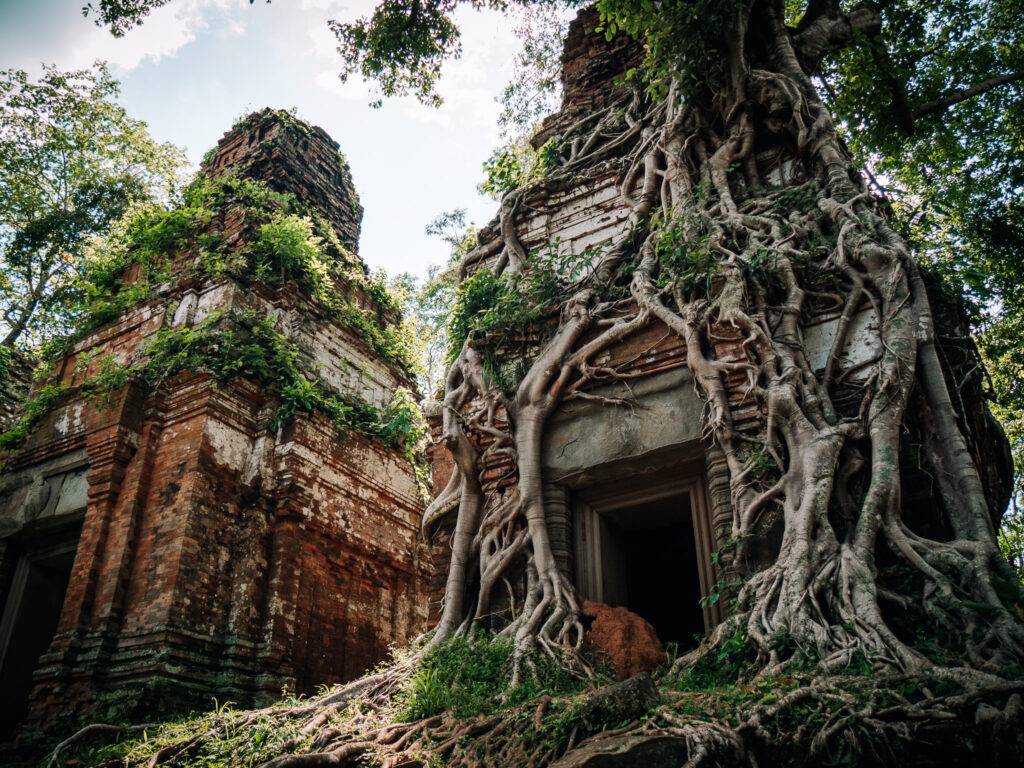
When we visited Koh Ker, we were alone. Literally alone. It’s quite incredible to think that it is possible to not come across anyone, when this site is, in many ways, comparable to Angkor. This is what makes Cambodia off the beaten path fascinating: it holds places like Koh Ker, just waiting to be discovered.
🎟️ To visit the Koh Ker resort, expect around $15 per person for the one-day pass (to be purchased directly at the on-site counter, as it is not included in the Angkor pass).
Before proceeding, know that there is an iconic temple in the region: the temple of Preah Vihear. It is located north of the city, on the border with Thailand. It looks exceptional and culminates at the top of a small mountain offering a majestic view over the entire Thai valley. We did not have the opportunity to visit it due to lack of time, so I cannot tell you about it in detail. Just know that the border with Thailand is quite tense, which may not be the best time to go there.
🛵 Travel across the province
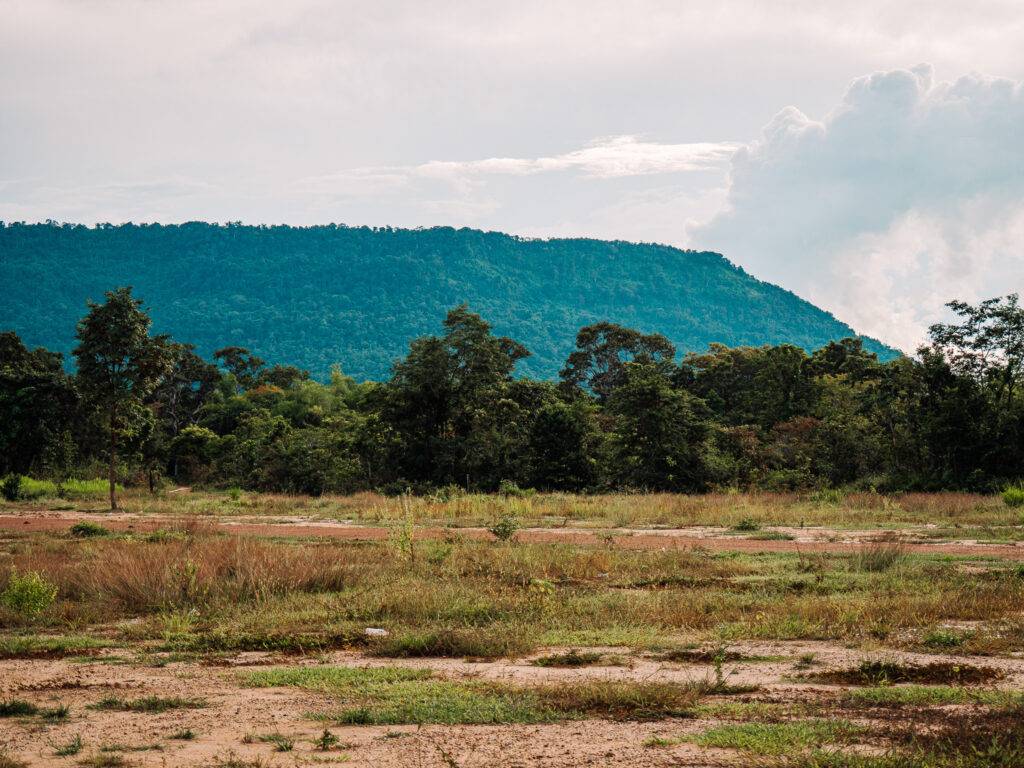
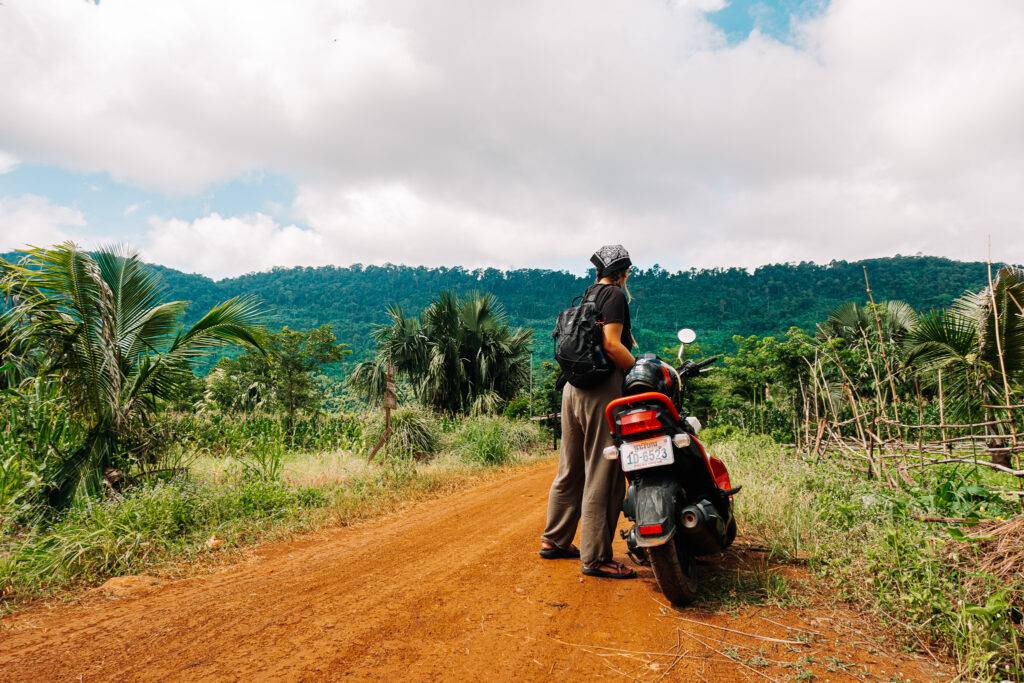
As usual, we also rode the province in scooter, and it was definitely worth the trip! Know that it takes about 1h30 of driving between Preah Vihear and Koh Ker on two wheels, which is already a nice walk and an excellent opportunity to discover the region. You will walk along large mountains, including the Tbaeng Mountain, which will accompany you on your left throughout the journey to Koh Ker.
I take this opportunity to share with you a valuable tip :
💡 It is very complicated to rent a scooter in Preah Vihear. To our knowledge, there is only one place, which we found through word of mouth. To the right of Virak Buntham’s only shop, in Preah Vihear, is a shop with two large wide garage doors. A man rents scooters there for about $10 per day.
I don’t know of any other methods at the moment, if you have any tips feel free to share them with the community in the comments area at the bottom of the article 💬 !
📌 Where to stay and eat in Preah Vihear?
To sleep in the city, there is a very friendly guesthouse called: Sokha Home. It is not very far from the Virak Buntham station so easily accessible on foot when the van drops you off. Good value for money and comfortable room.
➡️ To eat, we mainly tested two addresses:
- Ly Hout Coffee & Cake : perfect for having coffee or lunch at noon.
- Derm Mean : located south of the city, it is a very charming restaurant.
Kampong Chhnang : what to do and what to visit?
Third and last “Kampong” of this article, Kampong Chhnang. In Khmer, “Kampong” means ‘city by the water’. Kampong Chhnang can therefore be translated as ‘pottery city by the water’. The city is naturally located at the edge of the the Tonlé Sapriver, the largest freshwater lake in Southeast Asia and a true economic engine of Cambodia. Its level fluctuates over the year, which explains the presence of many floating villages in the country.
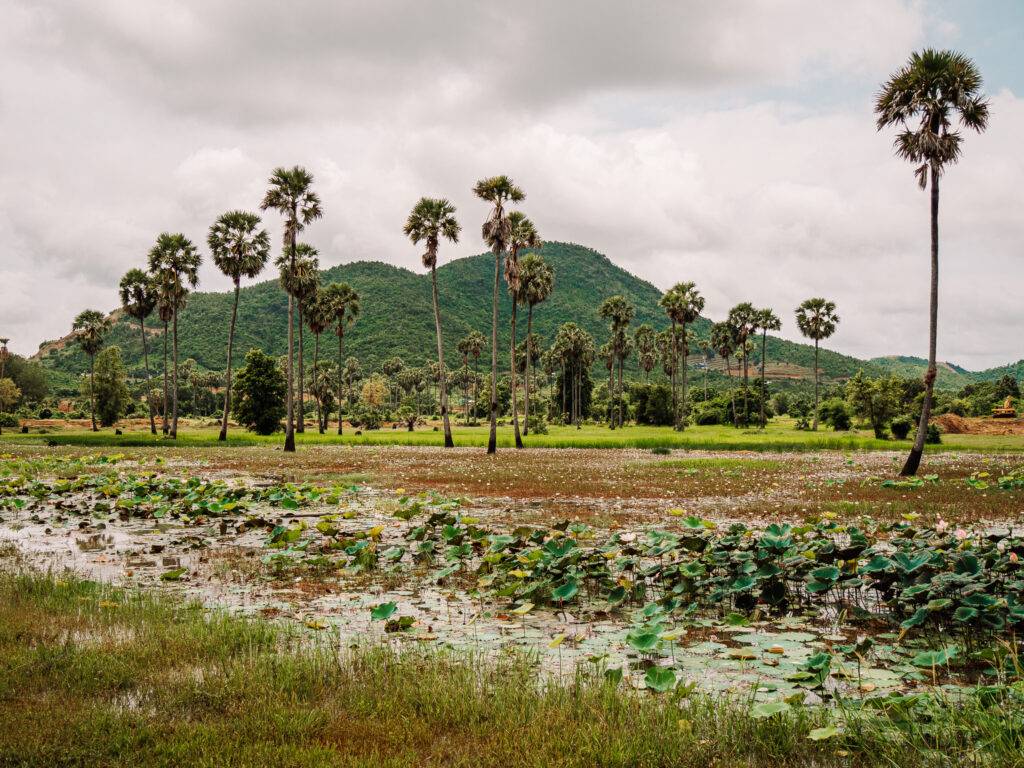
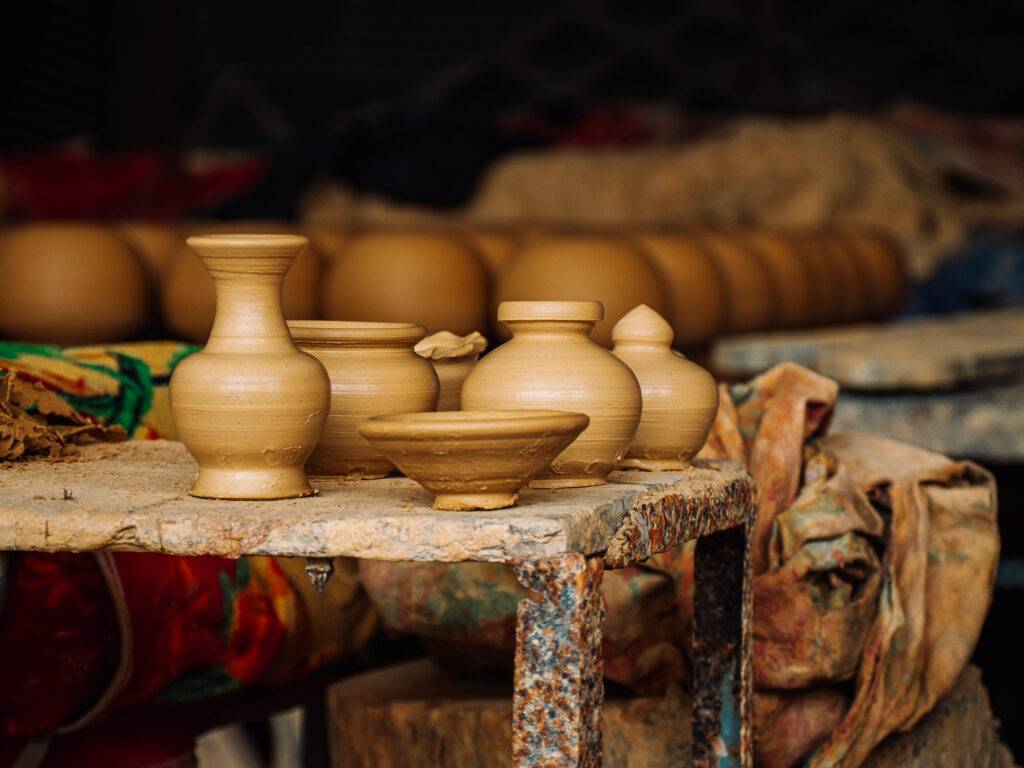
Kampong Chhnang is therefore known for its floating village but also for its artisanal pottery which is exported throughout the country and which has the reputation of being very solid.
📍Wat Thoam Mavoan
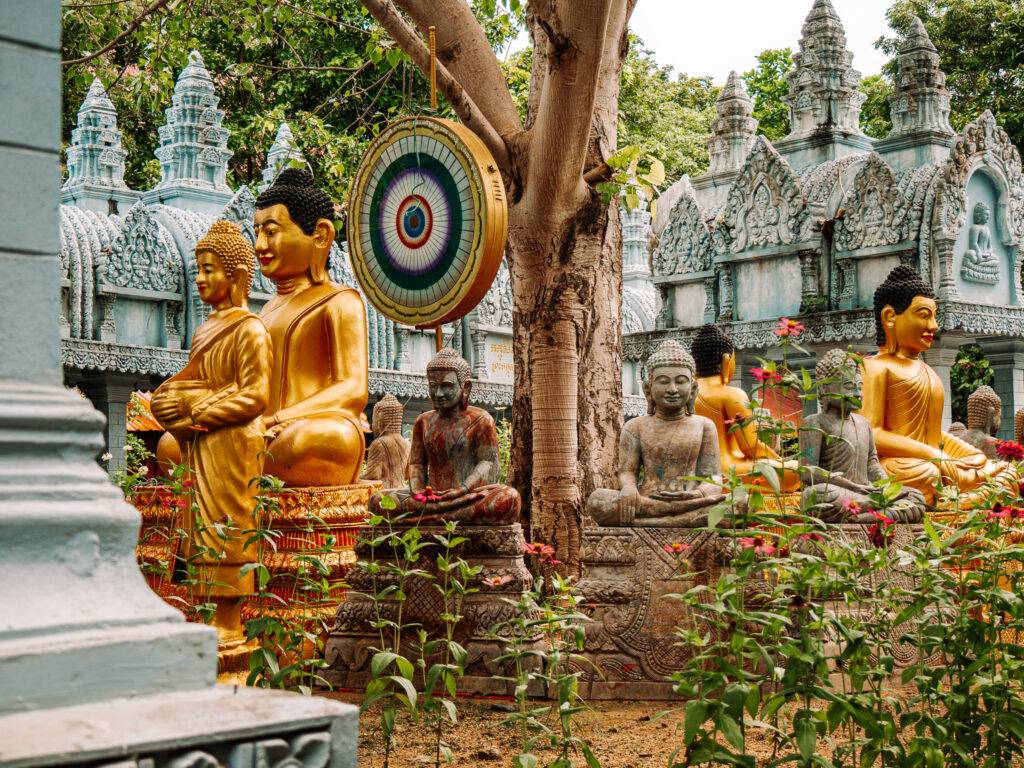
First stop at Kampong Chhnang, a small hill topped by Wat Thoam Mavoan. The site houses several temples and exudes an almost unreal atmosphere. Walking through the place, one sometimes gets the impression that it is abandoned, as the silence of the forest reigns and the place seems frozen in time. Yet, some monks still live here and strive to maintain the buildings as best they can.
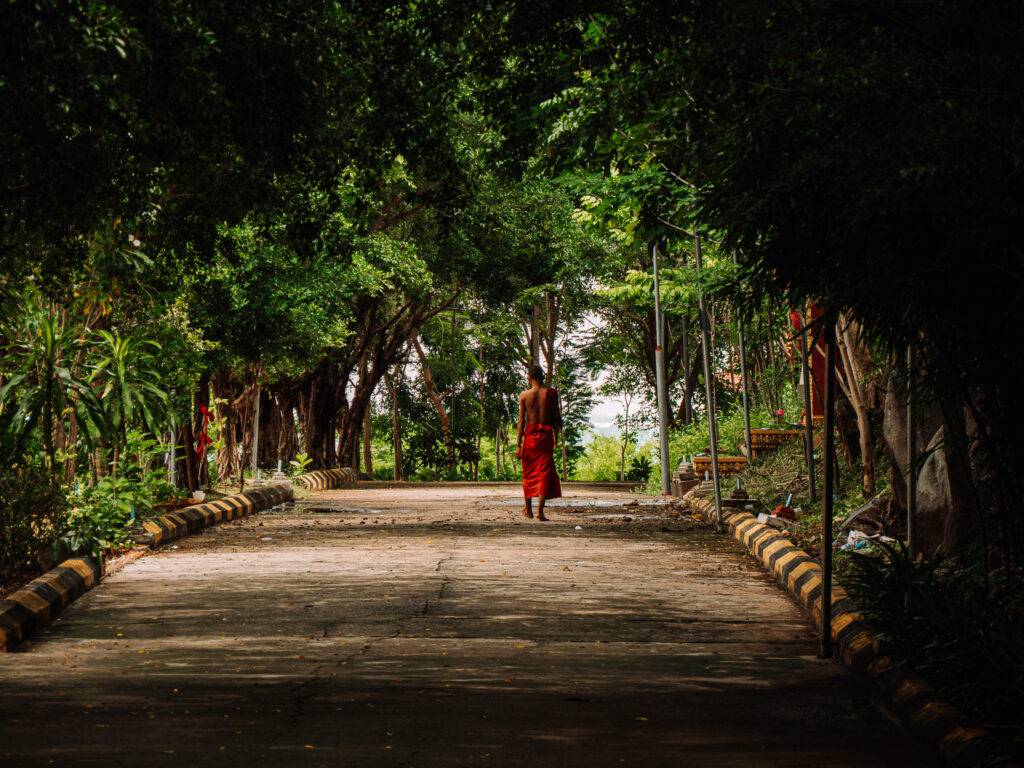
Allow about two to three hours to browse the site. The path will lead you to several atypical temples and places of worship, one of which is particularly striking, concentrically organized around several statues of Buddha. A surprising and impressive ensemble to discover.
📍Visit a pottery workshop
A little everywhere around the city, you will find craft pottery workshops. Observing the potters at work is a real spectacle, an impressive hand dance. Two main techniques coexist: the traditionalmethod, which consists of hitting the clay with a stick until it forms before firing, a physically demanding technique but considered the best by the artisans and the more modern method, using a potter’s wheel operated by foot, closer to what is known in the West.
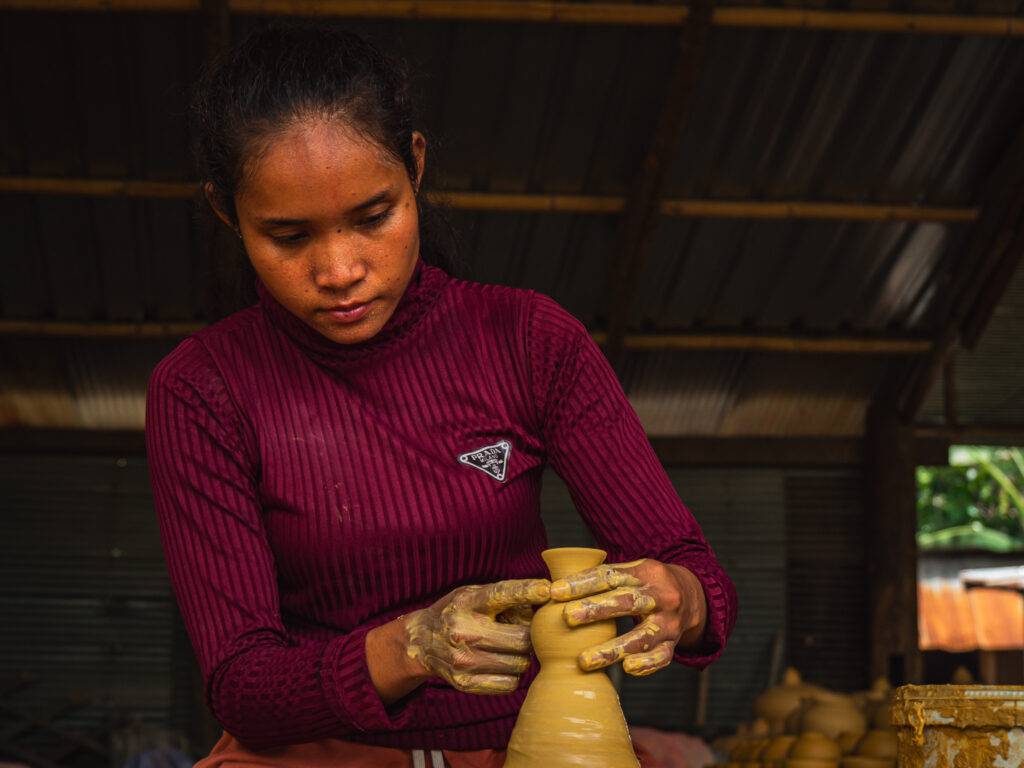
If you attend these demonstrations, it is customary to leave a small ticket as a thank you. This allows to support the artisans while thanking them for having welcomed you during their work. You will generally have no problem going to these workshops, the inhabitants are very welcoming, but this little attention is always appreciated.
📍Explore the city center
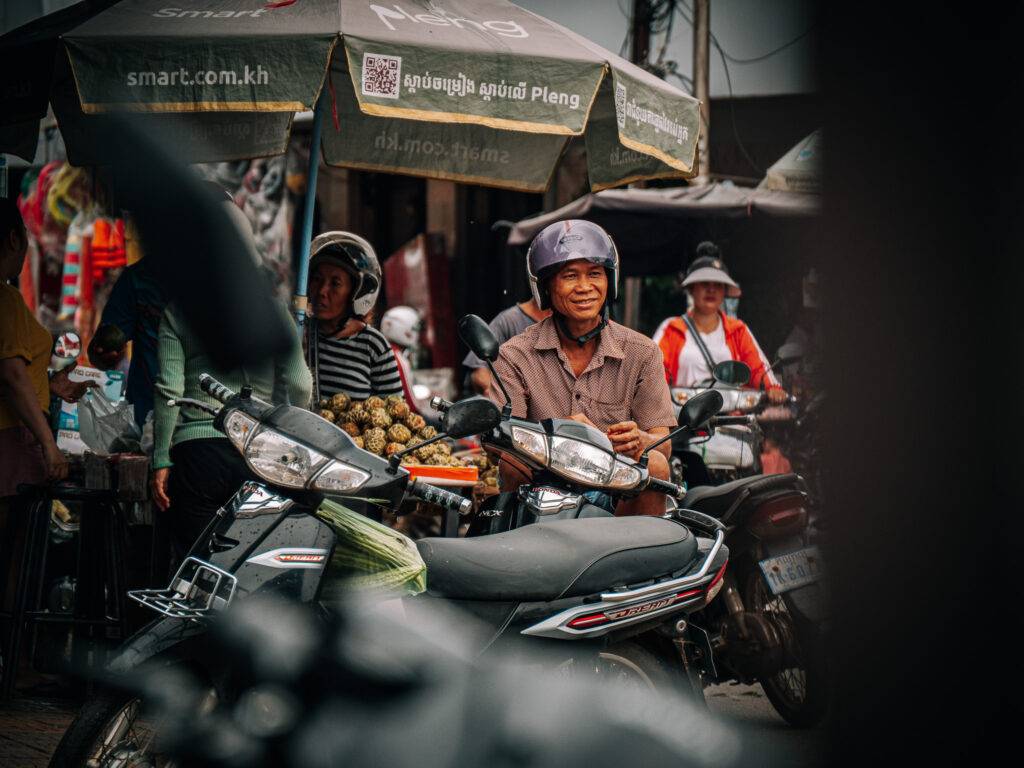
The central market of Kampong Chhnang is undoubtedly one of the most typical that I could visit in Cambodia. Here, no embellishments: life and commerce unfold there every day in an impressive effervescence. For a visitor who is not used to it, the intensity of the place can make you want to come out after 5 or 10 minutes so much everything seems raw and fast. Yet these markets are the true beating heart of Cambodian cities and if you’re looking for a concentration of authenticity, it’s one of the best places to dive into the local ambiance.
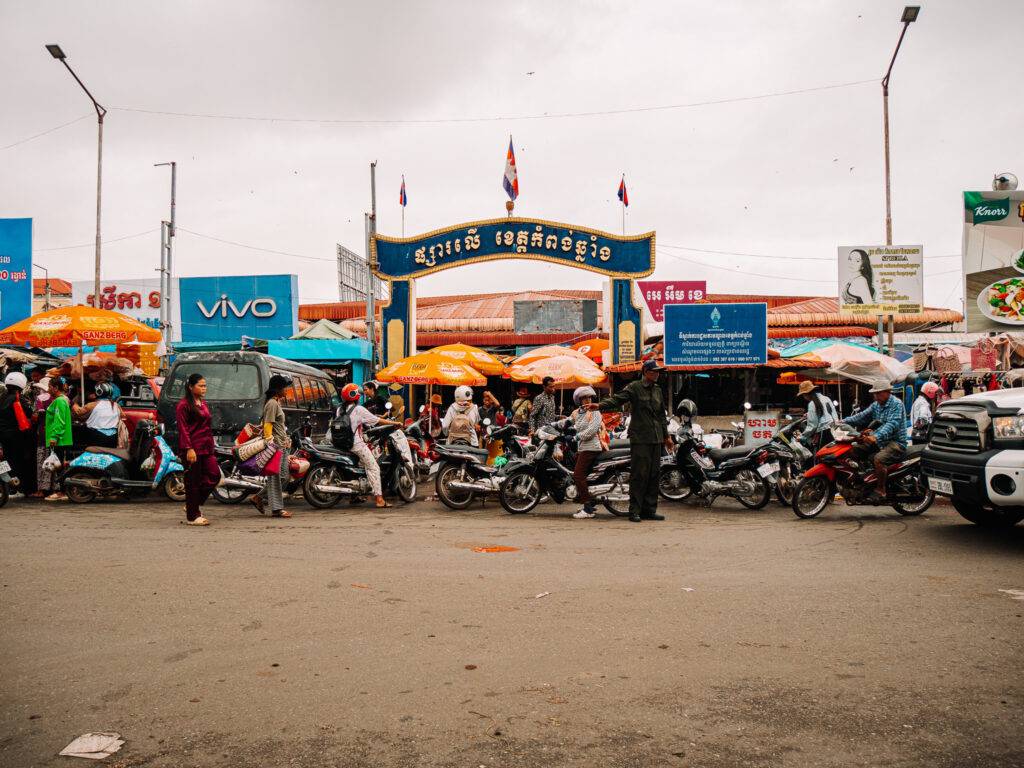
Beyond the market, the city is full of small shops and businesses of all kinds. Small personal mention for an adorable optician who fixed my broken glasses for only $2! Right in the city center, you will also find a small pleasantpark, perfect for a walk if you have some time ahead.
📍Kampong Chhnang floating village
The most iconic place to discover in Kampong Chhnang is undoubtedly its floating village. Unfortunately, due to the heavy floods of the previous days, we could not get there: the road leading to it was completely muddy and impassable. That said, if you have never visited a village or floating market in Cambodia, this one seems ideal to me, because it still remains very authentic and preserved.
📌 Where to stay and eat in Kampong Chhnang?
Few places to sleep in the area so we stayed at a mythical guesthouse of the city, la Garden Guesthouse. To be transparent, the comfort is quite basic and extremely basic. The landlady and the staff are, as often in Cambodia, very kind. On the other hand, staying there for more than two or three days can quickly become tiring for the back
➡️ To eat, we mainly went to the Vann Sokleap Restaurant, located right in front of the Garden Guesthouse. Convenient in the morning for a coffee or in the evening for dinner. The cuisine is simple but good, and the prices are very reasonable!
Ratanakiri (Banlung) : let’s continue the unusual trip to Cambodia
The two last destinations of this article are not necessarily unknown or lost in the depths of the country. Their names may already be familiar to you. However, even if some travelers stop there, these places remain relatively preserved from tourism, as they are a little more difficult to access and located on the outskirts of the rest of the country.
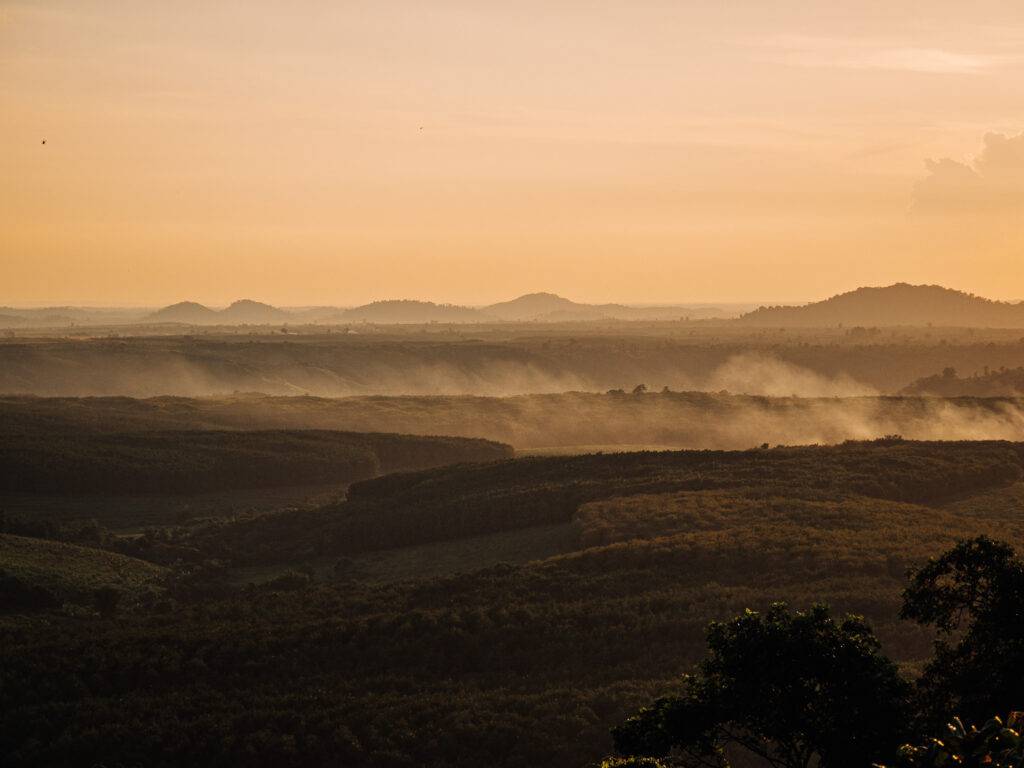
Let’s start with the region of Ratanakiri, nicknamed “the Far West Khmer” and located in the northeast of Cambodia, not far from the Vietnamese border. The provincial capital, Banlung, will most likely be your base if you choose to explore the region. The Ratanakiri is particularly renowned for its dust and its ubiquitous ochre earth. In the city as in the countryside, everything seems covered with this fine orange powder: buildings, roads, cars and even animals. It is not uncommon to come across a dog or cat entirely tinged with dust, a symbol of the unique identity of this province. Its nickname also comes from the fact that, for a long time, it did not have real roads and remained more isolated than its neighbors. There is also an impressive mosaic of highland Khmer ethnic groups that retain their original customs and live mainly here.. The most well-known is the ‘Khmer Loeu”.
📍The Kachanh Waterfall
All around Banlung, the provincial capital, are waterfalls scattered throughout the jungle. Many of them are easily accessible by scooter. The Kachanh Waterfall is reputed to be the most spectacular of the Ratanakiri.
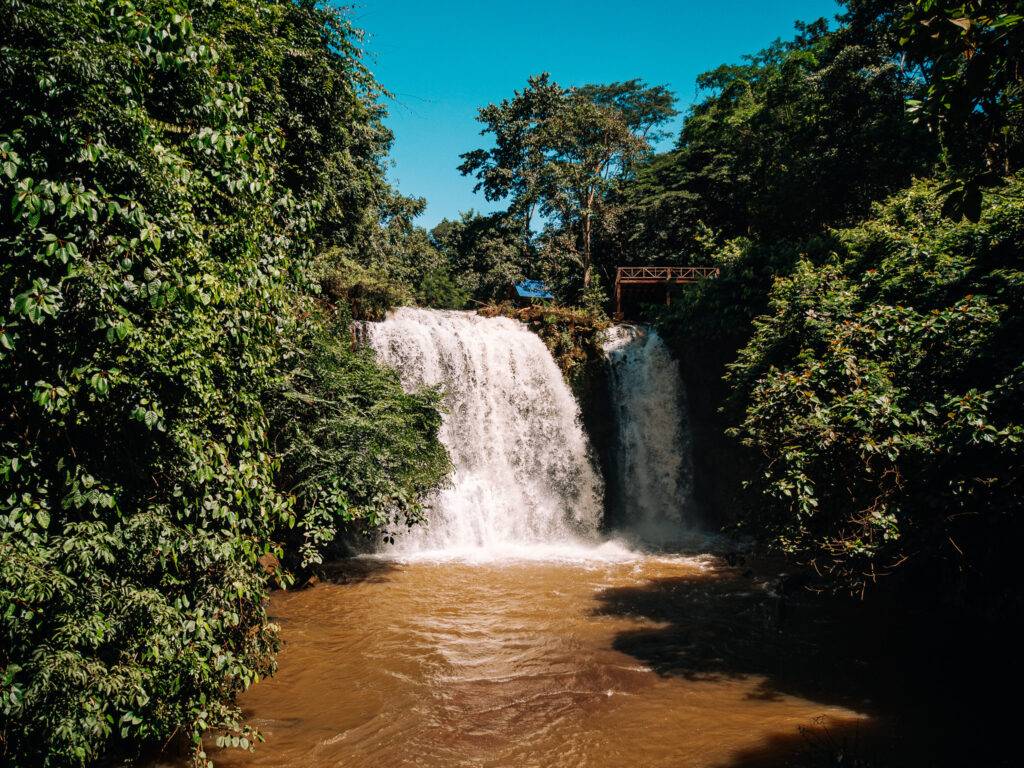
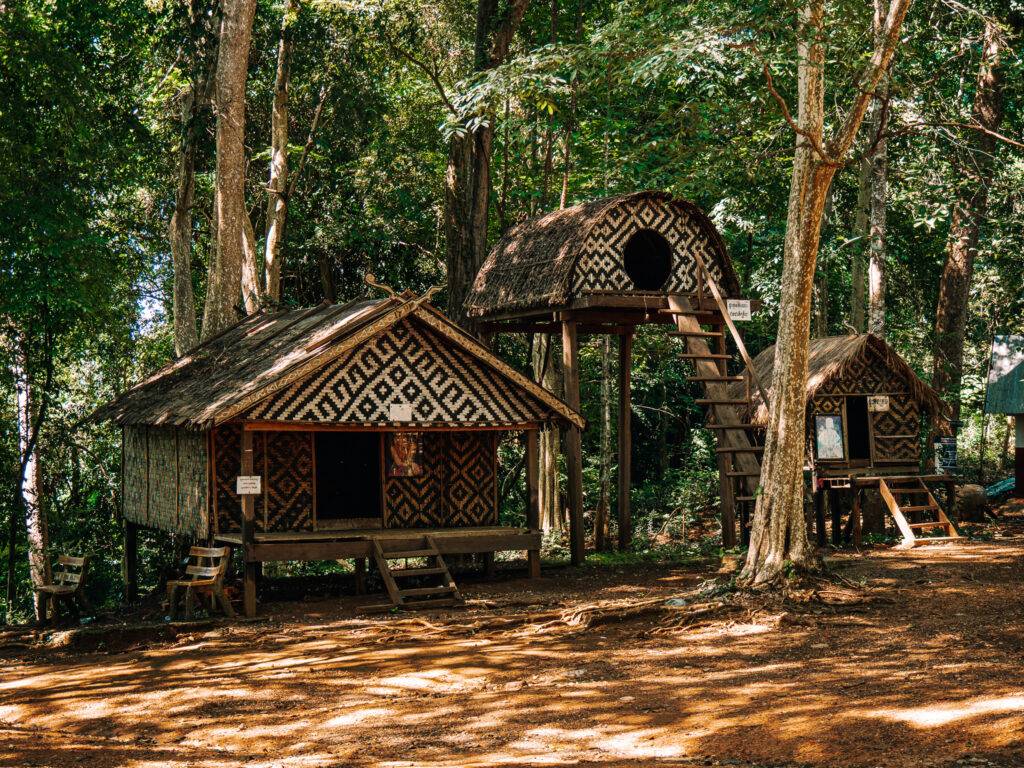
One of the most interesting aspects of the tour is the Khmer Loeu village located just above the waterfall. This reconstructed village allows you to learn more about the mountain communities that preserve their ancestral traditions and live in harmony with nature. After discovering the village, you can go down to the natural basin of the waterfall by crossing a wooden bridge (not very reassuring haha).
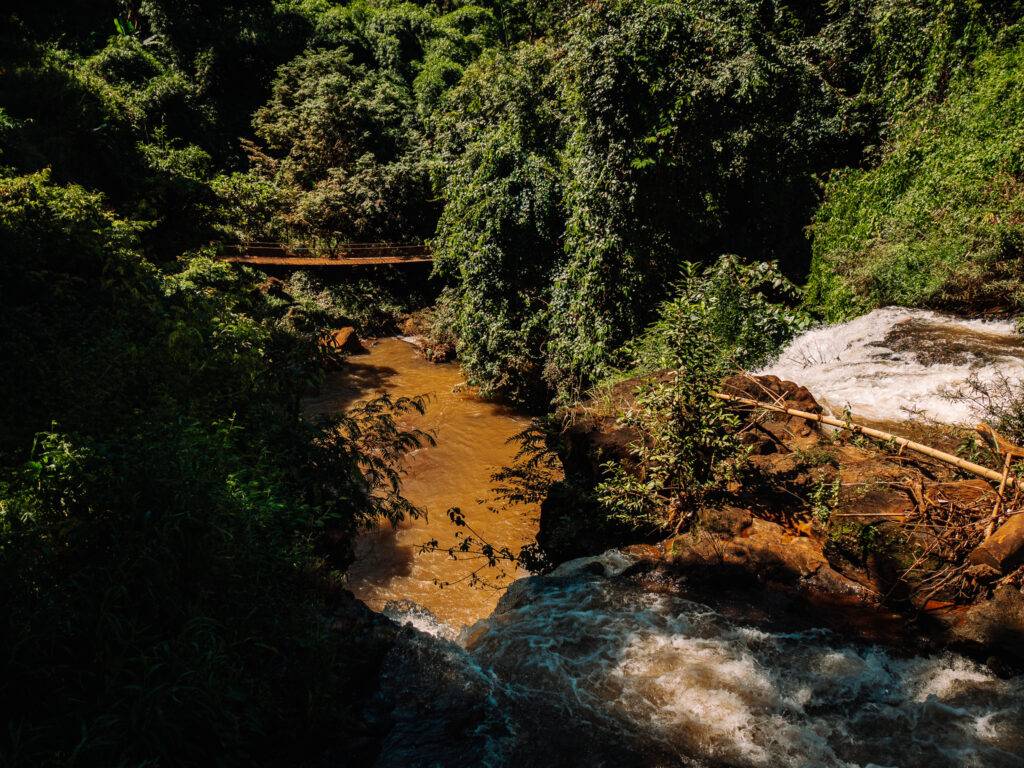
📍Phnom Svay
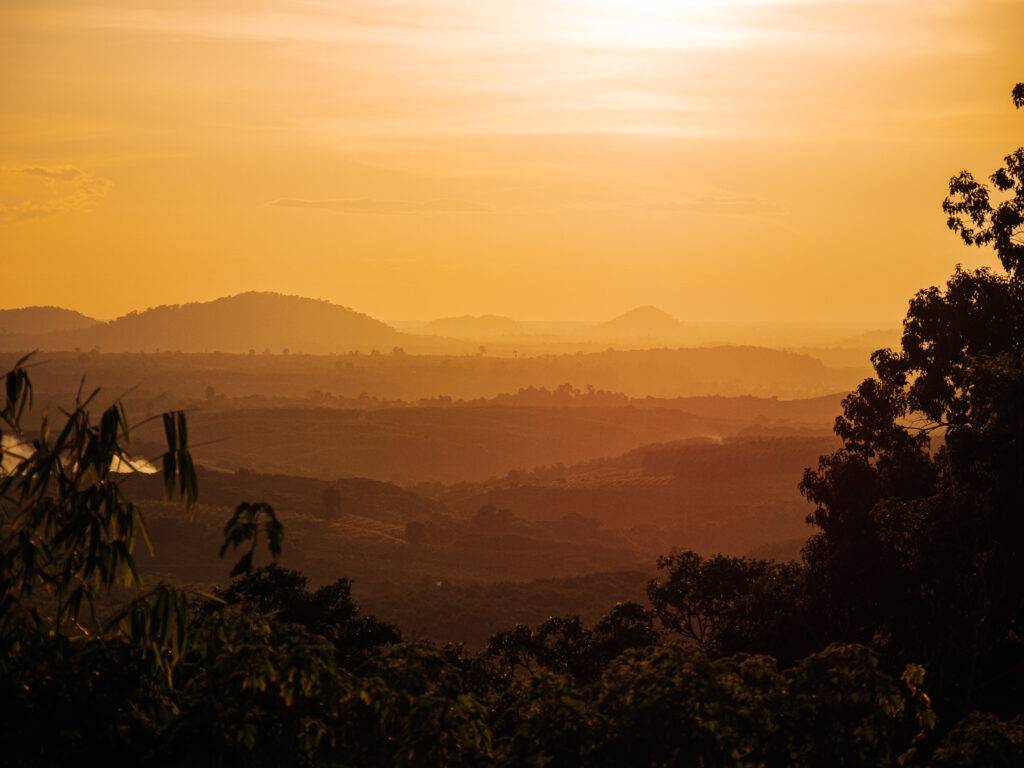
Craving a sunset with a spectacular sight ? Don’t miss the hill of Phnom Svay ! Located near Banlung, it offers a breathtaking panorama of the entire province. At the end of the day, the ocher dust that floats above the ground seems to move like clouds, creating an impressive and unique natural spectacle.
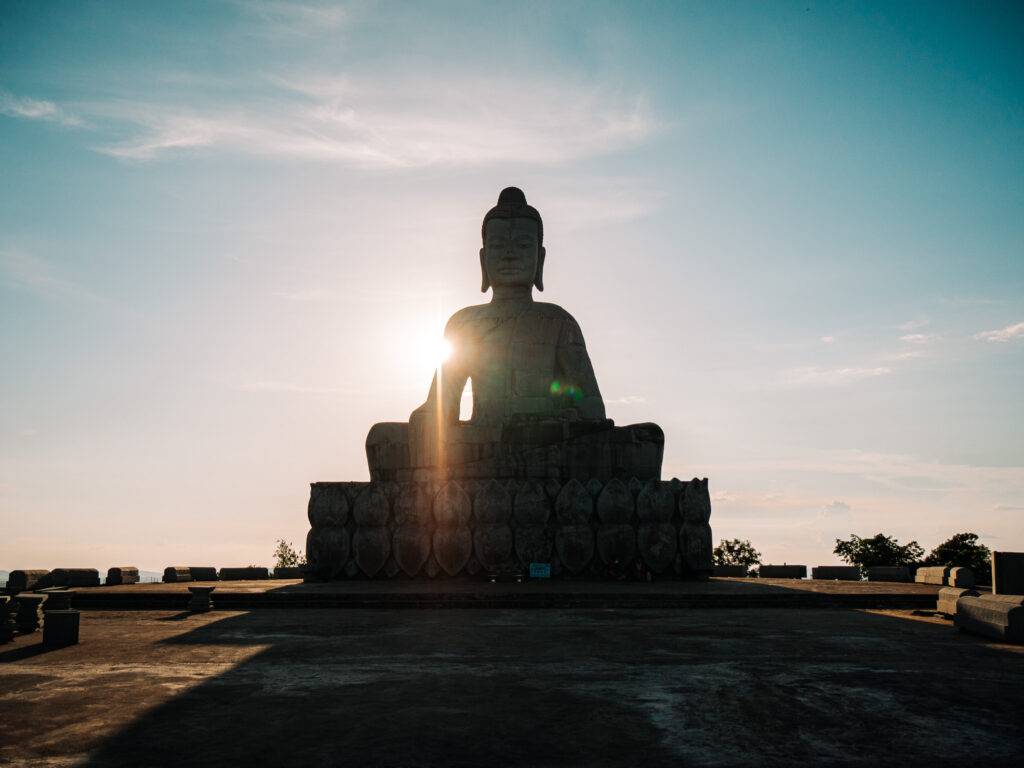
Admiring the landscape from Phnom Svay, one quickly understands why the province is nicknamed the “Far West Khmer”. The wilderness stretches as far as the eye can see between mountains, hills and plains, recalling the time when difficult access to Ratanakiri reinforced its image as an isolated and still wild territory.
When we were at Phnom Svay, workers from Kampong Thom were working on the construction of several statues of Nagas and Buddhas to beautify the summit. While discussing with them, they told us that the construction site should still last about a year. If someone reads this article and has had the opportunity to go there since, I would be very curious and grateful to see a photo of the summit once the work is finished!
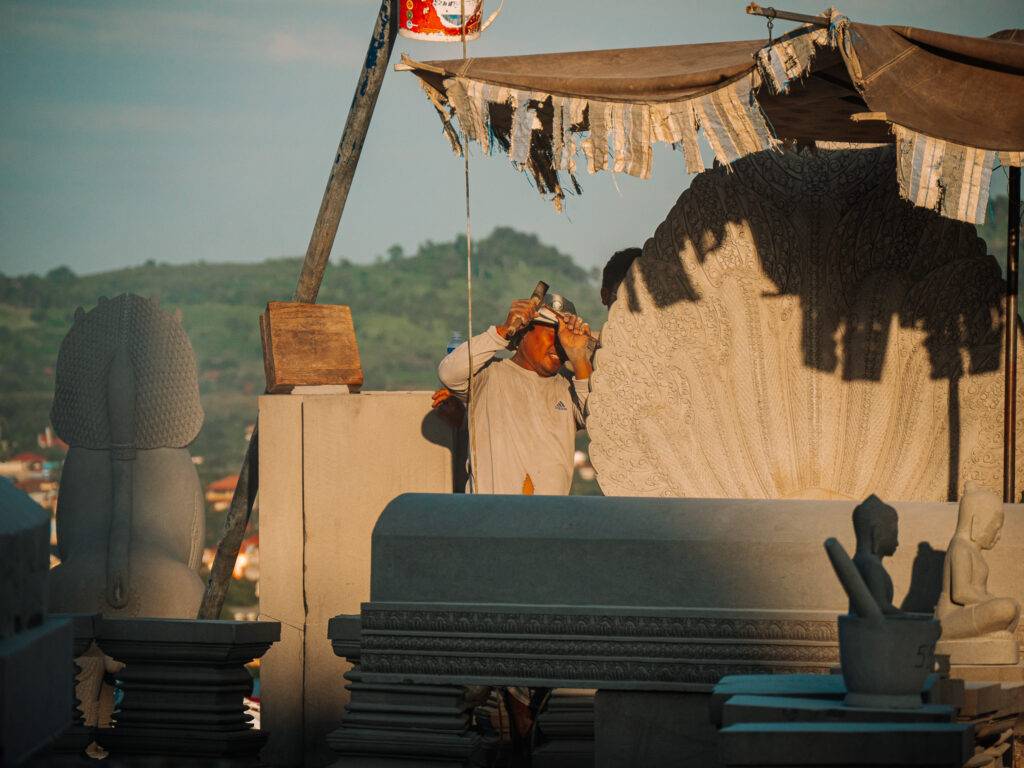
📍The surroundings of Banlung
Probably our longest scooter tour of our entire year in Asia. One morning, we decided to take a random direction and go as far as possible to explore the Ratanakiri. We drove all day through the dusty roads of the province, and it was an incredible experience. If you decide to do the same, be extremely careful: the roads are precarious and the dust makes the ground slippery. An accident can happen very quickly. Moreover, I couldn’t illustrate this day because there was so much dust, I preferred to avoid taking out my device.
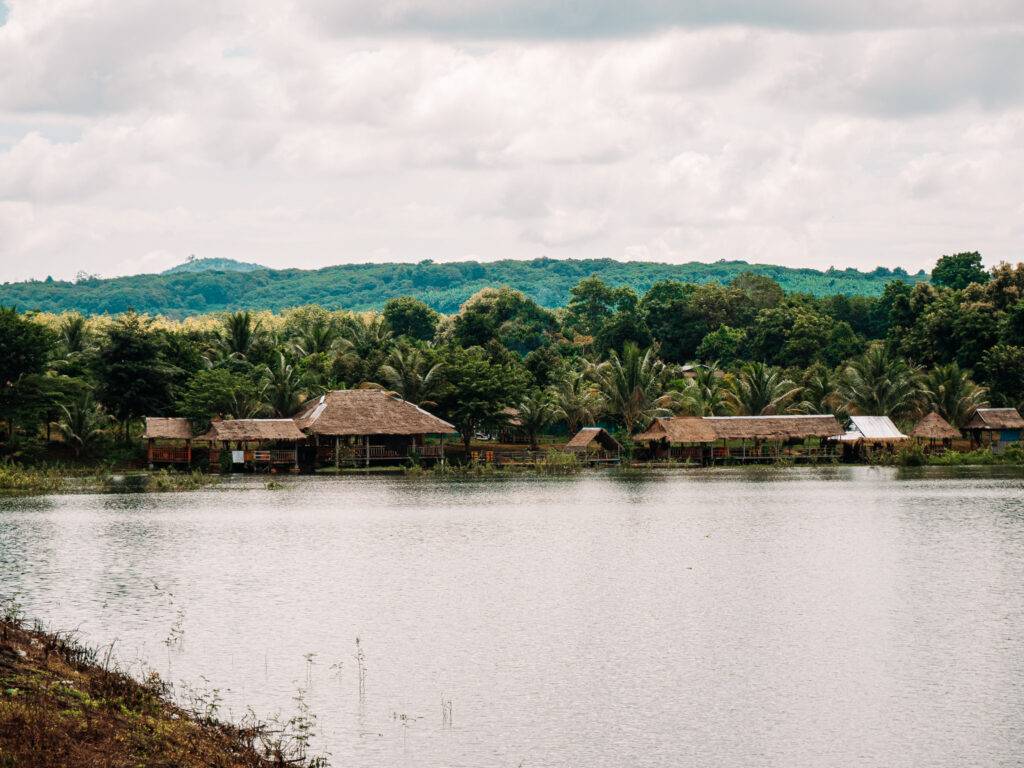
Beyond the countryside, there are several lakes around Banlung, including a volcanic lake that forms a perfect circle: the Yeak Laom ! If you are in the area, the walk around the lake is really worth the detour.
📌 Where to sleep and eat in Banlung?
In Banlung there are several accommodation options, and we have chosen the Green Plateau Lodge. The establishment is very basic, but the house, typically Khmer, is magnificent. Nestled in the heart of a large garden, the setting is exceptional. Unfortunately, the guesthouse has obviously had its glory days in the past: today, the site is a bit worn out and comfort can be basic, especially regarding the mattresses.
➡️ To eat in Banlung, I have a great address. To be transparent, we ate there for lunch and dinner every day of our stay in the province! It is the Green Carrot Restaurant. The food is very varied, local or western, and everything is really delicious at a low price. On site, they also rent scooters and can even deliver the vehicle directly in front of your guesthouse if needed.
Mondulkiri (Saen Monorom) : a low-tourism destination in Cambodia
Last step of this short guide to the less known destinations of Cambodia : the province of Mondulkiri and its provincial capital, Saen Monorom. In my opinion, it is the most original province of the country, because it literally contrasts with all the rest of Cambodia. I recommend you to stop there rather towards the end of your stay to enjoy a striking contrast. No more sandy slopes, the tropical climate… and hello… Switzerland?
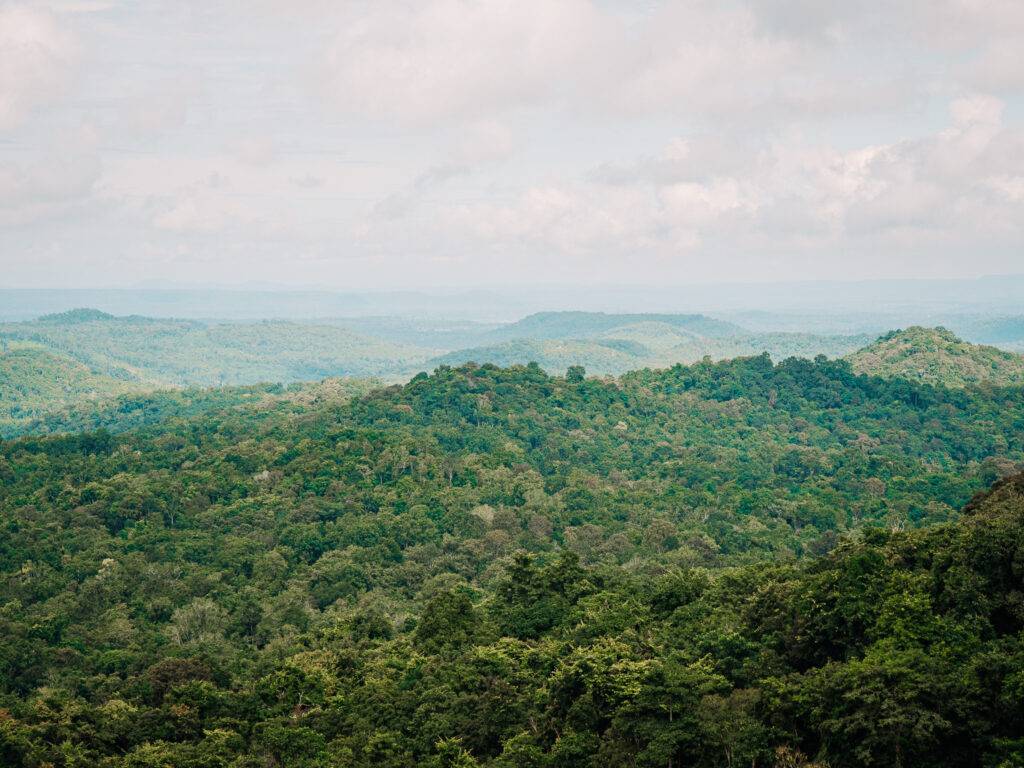
The Mondulkiri is a province located in the extreme east of Cambodia, on the border with Vietnam. It is nicknamed the ‘country of the hills” due to its hilly landscapes and dense tropical forests, very different from the plains in the center of the country. It is a very sparsely populated region overall and the climate there is much cooler than elsewhere in Cambodia!
📍Bousra Waterfall
The most beautiful waterfall I have ever seen in Cambodia, and which rivals all those I have discovered in Asia, is located northeast of Sen Monorom, about 35 km from the provincial capital. The entrance to the site costs 2.5$ per person, and believe me, it’s worth ten times! On top of that, if you have a chance to go during the rainy season, you will witness an absolutely amazing show.
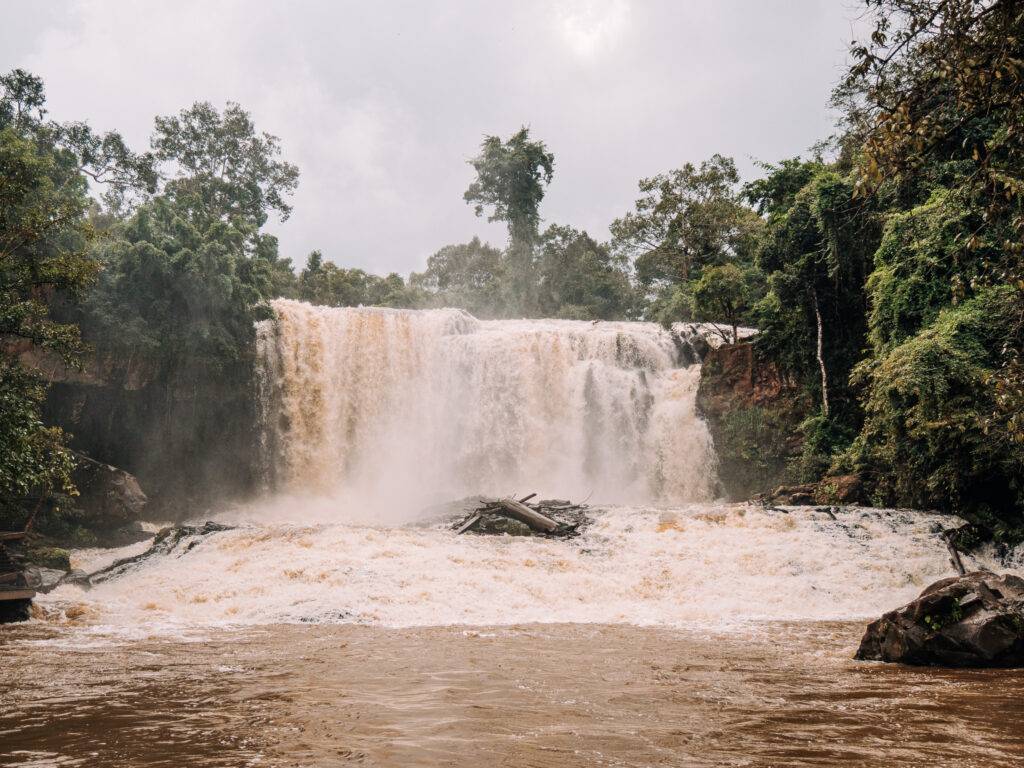
Over 25 meters high, the Bousra Waterfall is a true jewel of nature. In the rainy season, no less than 400,000 liters of water pour out every second. I had never seen such power before. One remains open-mouthed in the face of the force of nature and one must be very careful not to slip! The site is very well maintained and well thought out facilities mark the way to the waterfall. Everything is designed for the safety and comfort of visitors, without ever harming the majesty of the show.
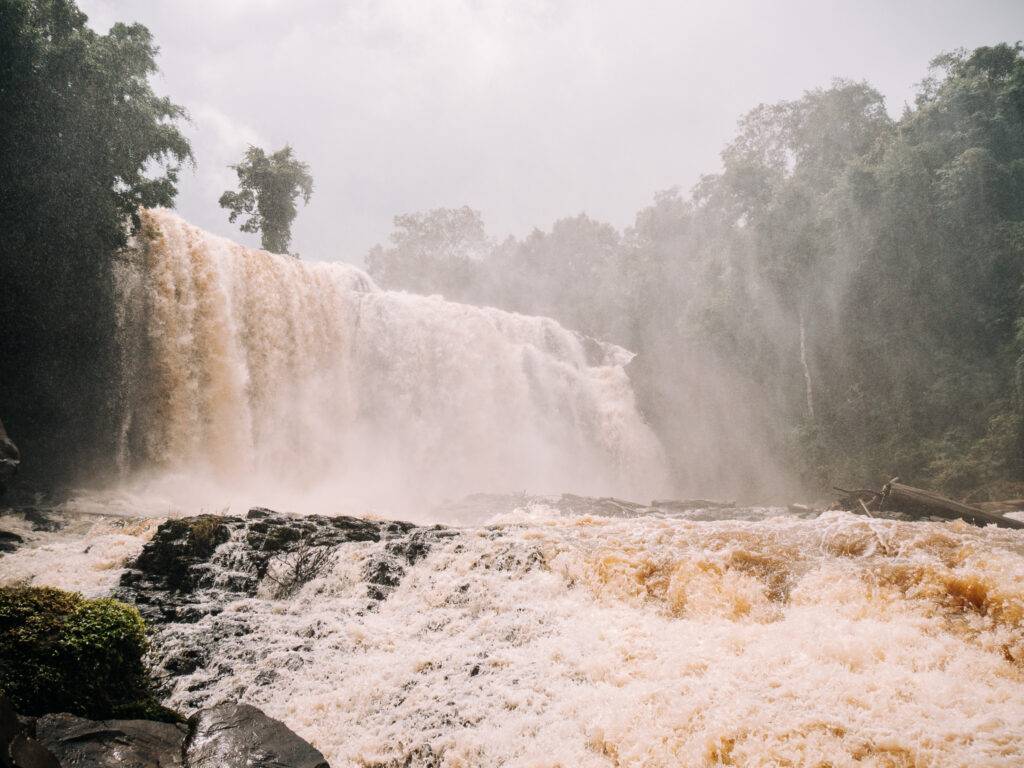
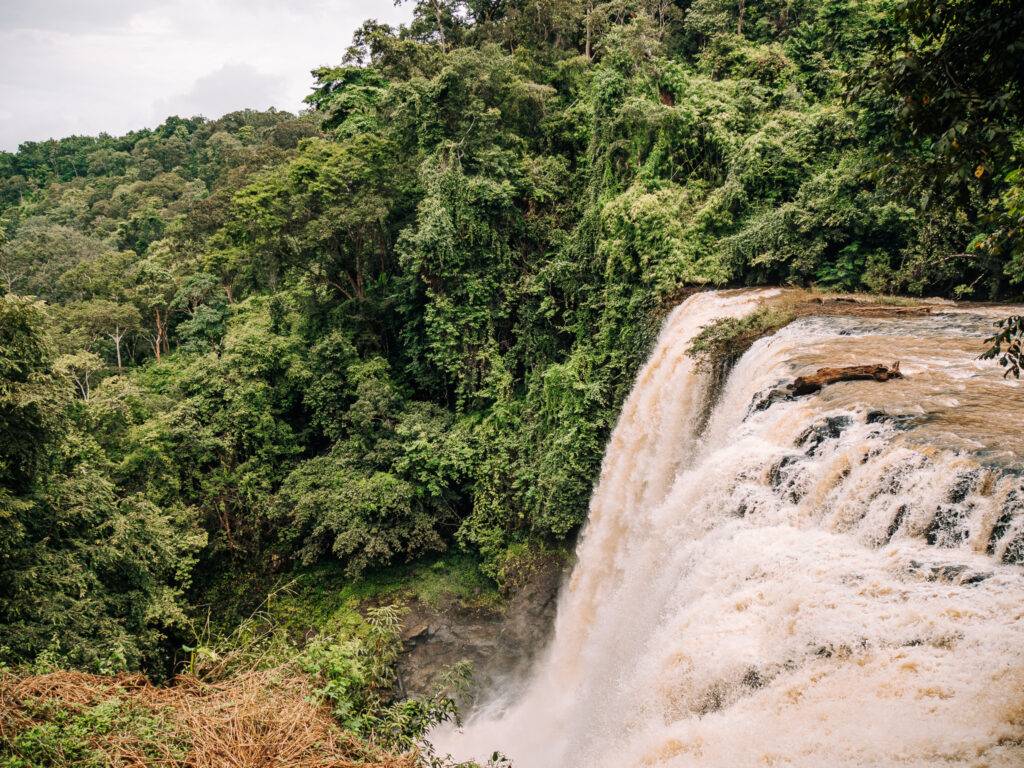
On the way and around the waterfall, you will find several stands to eat or just enjoy a juice or a coffee. If you are in the province, I strongly encourage you to come and admire this show with your own eyes!
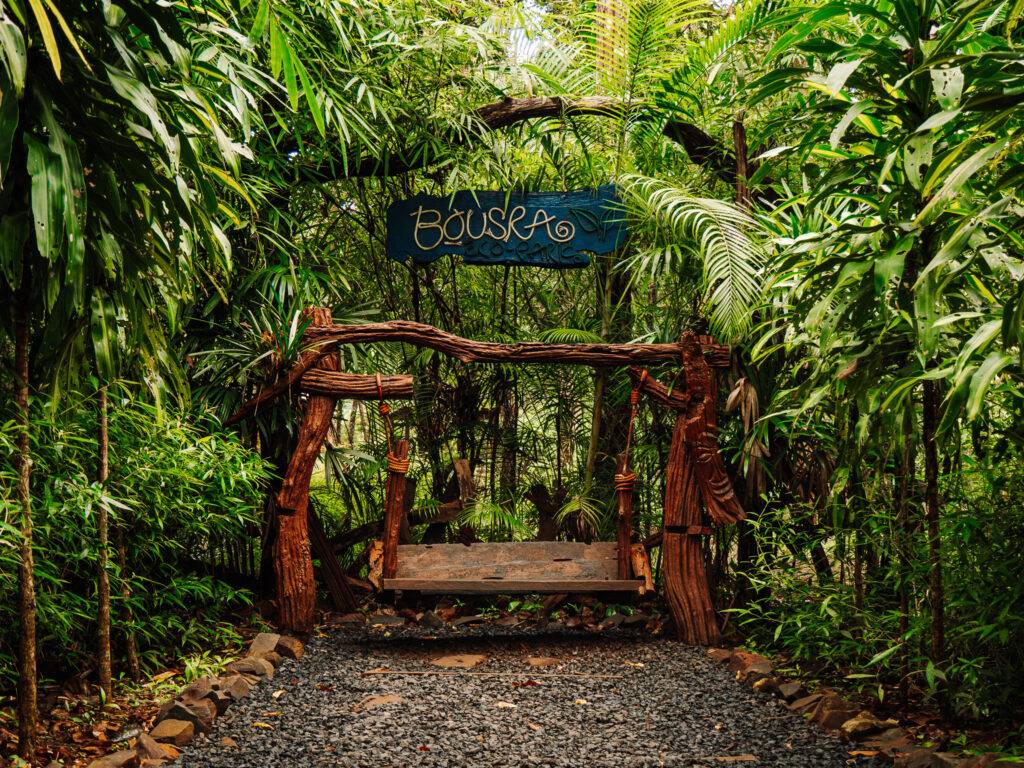
📍Phnom Baichow
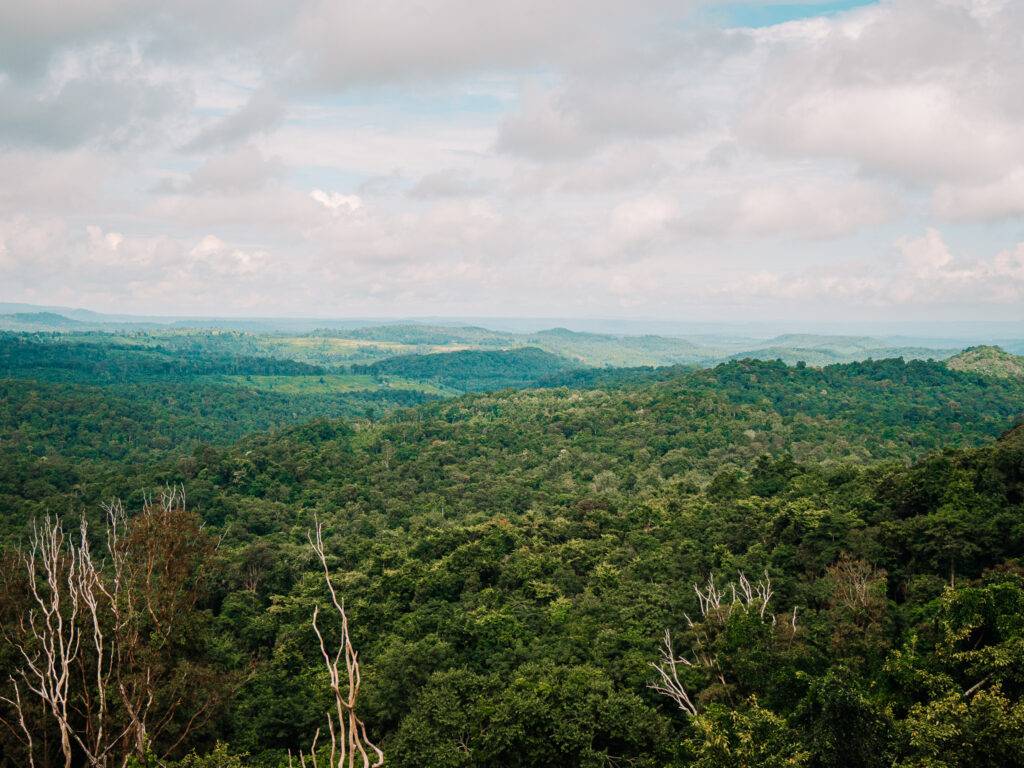
Located on a fork in the road leading to the Bousra Waterfall, Phnom Baichow is a small developed hill offering a superb viewpoint of the province. This is an opportunity to realize that one would almost feel like being in another country, as the landscape differs from the heart of Cambodia!
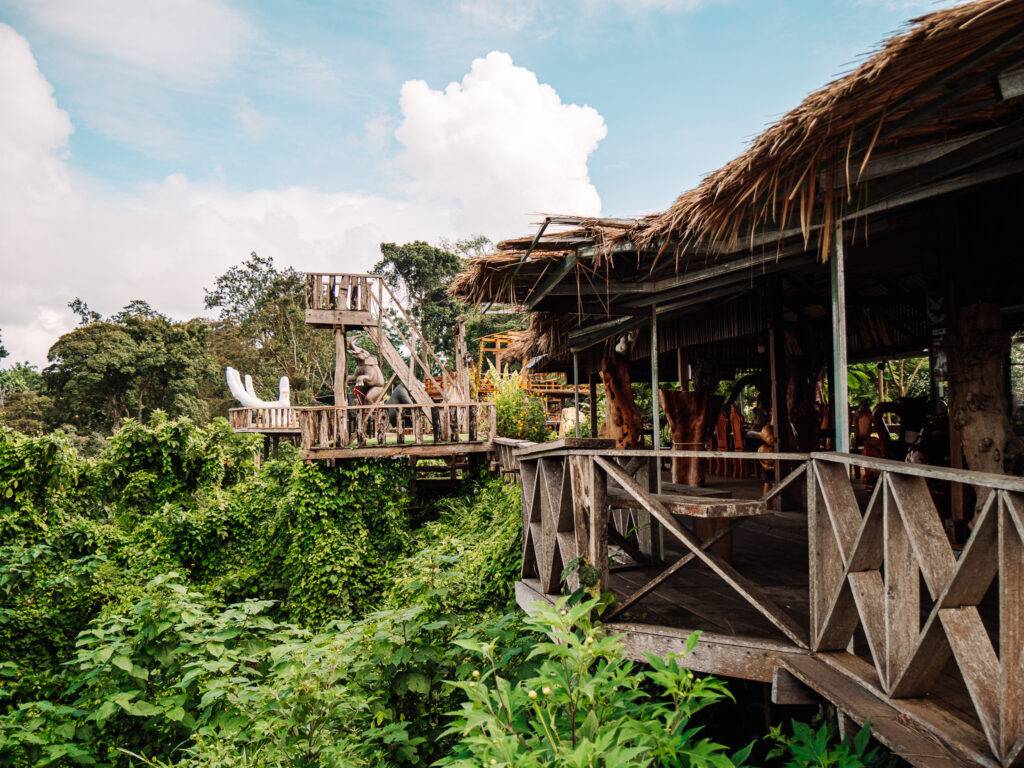
The place, also called “Sea Forest” due to the forest sea that can be seen in the valley, is very well appointed with restaurants, many tables to sit and several viewpoints. Take advantage of your stop to have a coffee or eat a bite, the setting is well worth it!
🛵 Drive to the Vietnamese border
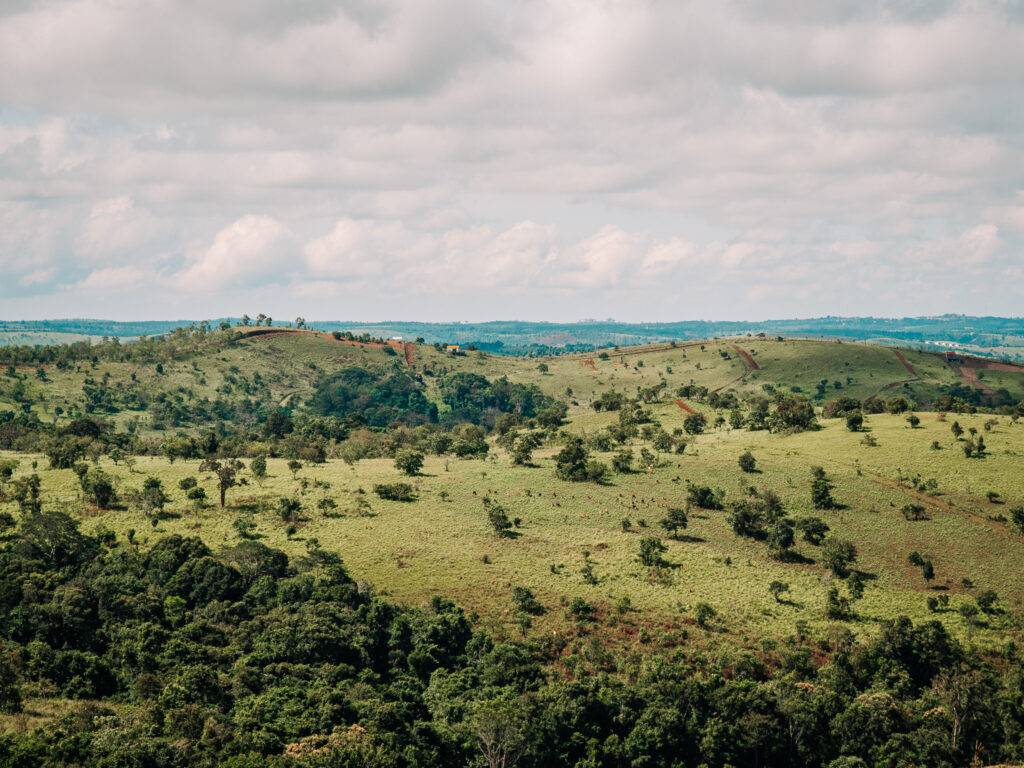
If you are on two wheels, head south to the Vietnamese border promises a beautiful day! You will cross several different landscapes, ranging from the forests and great green plains to the characteristic hills of the region. Several small hills are home to restaurants and hotels, offering the opportunity to make the road by stopping at different points, in always calm and uncrowded settings.
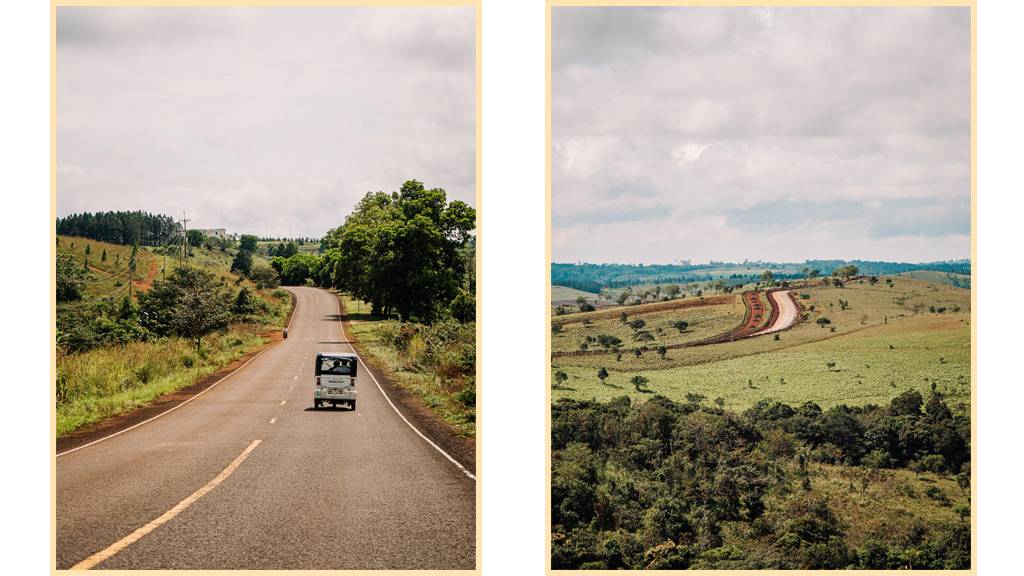
There is approximately 30 km of road to the border, which allows for an easy round trip in half a day, stopping regularly to enjoy the scenery.
📌 Where to stay and eat in Sen Monorom?
For the moment, there are many accommodations available for travelers in the region of Mondulkiri. I have a nice recommendation, maybe our most comfortable accommodation in Cambodia.
This is the Chomkatae Bungalows. A set of brand new Bungalows, very well maintained, very charming and well equipped. Located in a very peaceful and pleasant setting, for about $15 per night, it’s unmissable!
➡️ To eat, I also have a good address in the heart of Sen Monorom, it is the Bamboo Café which, for a very reasonable price, cooks very tasty local and Western dishes!
There you go, this new article about my heart country, the Cambodia, is over! I once again had a lot of pleasure in diving back into this journey and I hope I have made you want to leave the traditional circuits of the country !
A big thank you to Aurélie and Yann for allowing me to write on their blog and share with you the photos of my trip, it’s a real pleasure.
If you would like to discover more about these destinations, as well as many others in Asia, my partner and I also share our adventures in video on our YouTube channel: Tales of adventures. You will find practical guides and a video for each destination visited.
See you soon and have a good trip to Cambodia!

Adepte du slow travel, je ne vois pas le voyage comme une simple liste à cocher. J’aime prendre le temps de m’immerger dans un pays, de m’imprégner de sa culture et de son essence. J’ai récemment passé plus d’un an en Asie du Sud-Est avec ma compagne, notre plus belle aventure à ce jour ! En parallèle du voyage, je suis professionnel de la communication, spécialisé en graphisme, photographie et montage vidéo.


No Comments