


3-week itinerary in South Korea: what to visit to explore the country in depth
3 weeks in South Korea, this is the ideal format to discover the country without running. Where a two-week itinerary already allows you to see the highlights, 21 days offer a more complete experience, more nuanced and above all more immersive. We no longer just keep chaining Seoul, Jeju and Busan : we take the time to explore less touristy regions, slow down the pace and really immerse ourselves in Korean culture.
If you are planning a first trip to Korea and hesitate between 14 or 21 days, this article will help you understand what three weeks concretely change in the organization and experience on site. The first two weeks follow the itinerary with must-do in South Korea 🔗, that I already detail in my dedicated guide. Here, the goal is to go further : optimize your route over 21 days and take full advantage of this extra time.
Why plan 3 weeks in South Korea?
A discovery of the country off the beaten track
3 weeks in Korea allow to transform the trip into a real immersion. You can slow down, spend more nights in the same place, explore lesser-known neighborhoods or dedicate a whole day to a hike, activity or local market.
South Korea is a dense country: the contrasts between tradition and modernity, mountains and sea, megacities and countryside are striking. By staying longer, you have time to appreciate these nuances rather than just checking places off a list.
21 days on-site offer the opportunity to explore regions often absent from shorter itineraries: historic cities like Gyeongju, traditional villages, natural landscapes or more confidential coastal towns. It is in these places that we discover another side of the country: more authentic, more local, sometimes more peaceful. The exchanges there are often different, and the experience more personal.
More flexibility
On the one hand, you will be less tired by the journeys. Although the transport network is efficient in South Korea, you will be able to take your time and enjoy.
On the other hand, as the weather can be capricious, you will be more able to reorganize your days in case of bad weather.
If you have only 14 days, check my detailed 2-week itinerary in South Korea 🔗.
Quick 21-day route overview
- Week 1 : Seoul
- Week 2 : Jeju + Busan
- Week 3 : Gyeongju, Pohang and Gangneung
What to do in weeks 1 and 2: the classic and balanced route
Visit Seoul and its iconic neighborhoods (week 1)
Upon arrival at Incheon International Airport, located in the west of Seoul, several solutions will allow you to reach the city center: taxi, limousine bus or metro. To compare these options and best organize your transfer, I detail everything in my dedicated guide to unmissable from Seoul.
How long to plan to visit Seoul?
As part of a 3-week itinerary in South Korea, I recommend spending 5 to 6 full days in Seoul. The city is vast, intense and extremely varied: a few days are necessary to discover its multiple neighborhoods without running constantly.
The must-see neighborhoods to discover


For a first visit, start with the iconic places of traditional Seoul: the Gyeongbokgung Palace, the preserved village of Bukchon Hanok Village and the Insadong district, ideal for experiencing the Korean cultural heritage. Then continue towards a more contemporary atmosphere with Hongdae, a young and lively district, or Seongsu, which has become one of the trendiest sectors of the capital thanks to its design cafes, trendy boutiques, and pop-up stores.
On the nature side, the city will amaze you with its parks, walks along the Han River and large spaces like the Seoul Forest.
This city that I love surprises with its contrasts, between tradition and modernity. The energy that reigns there is unique in the world!
If you would like a detailed itinerary to visit Seoul in 5 days 🔗, click on the link for a complete guide with itinerary day by day.
Visit Jeju Island and Busan: Seaside trip (week 2)
The must-sees of Jeju in 4 days: nature, temples and magnificent landscapes


Located to the south of the Korean peninsula, Jeju Island is a must stop of a 3-week itinerary in South Korea. Wilder, less polluted and with a milder climate than Seoul, it offers a striking contrast with the capital. Between traditional villages, seaside temples, beaches, preserved forests and natural landscapes, Jeju allows you to discover a more natural and peaceful Korea.
To optimize your stay, I really recommend you to rent a car. Public transport remains limited outside of large urban areas and the car allows easy exploration of the different parts of the island: southeast, southwest, northwest and northeast.
Among the unmissable that I recommend to you after several stays on the island of Jeju, there are:
- The traditional village of Jeju Folk Village
- The temple Yakcheonsa facing the sea
- The Cheonjiyeon waterfalls
- The Seogwipo Healing Forest
- The beaches of Hyeopjae and Jungmun
- The famous Seongsan Ilchulbong
- The Haenyeo Museum
- The O’sulloc tea fields.
In terms of gastronomy, Jeju is renowned for its black pork, its mackerel and more generally the seafood. I also found you plenty of coffee spots not to be missed, with or without a sea view. The island is perfect for a first trip to South Korea. Discover my detailed itinerary to visit Jeju in 4 days in my article 2-week itinerary in South Korea “.
Visit Busan in 3 or 4 days: between sea, temples and local atmosphere


Second largest city in the country, Busan is an essential stop on a route in South Korea. Less suffocating than Seoul thanks to its proximity to the sea, it combines lively neighborhoods, bustling beaches, spectacular temples and colorful villages.
In 3 to 4 days, you will have time to discover the unmissable, notably:
- The Gamcheon Culture Village and its colorful houses
- The Busan Tower and theBIFF Market
- The temple Haedong Yonggungsa built facing the sea
- The beaches of Haeundae and Gwangalli
- The bustling Seomyeon
- The coastal village of Huinnyeoul
- The unusual experience of Mipo capsules
Busan is also renowned for its products around the sea. I recommend plenty of addresses to feast on in my dedicated guide for visit the must-sees of Busan 🔗.
From Busan, I therefore offer you additional steps to travel with a 3-week itinerary in South Korea !
Exploring a more authentic Korea (week 3)
For this third week, we will focus on the east coast of South Korea. To do this, several possibilities are available to you. The majority of me advise taking the train from Busan to the next city (Singyeongju station for Gyeongju city). The journey will take less than 30 minutes. Otherwise, you can also take the bus. Just note that Busan bus station is located further north than the railway station.
Gyeongju: the city center and historical heritage (2 days)
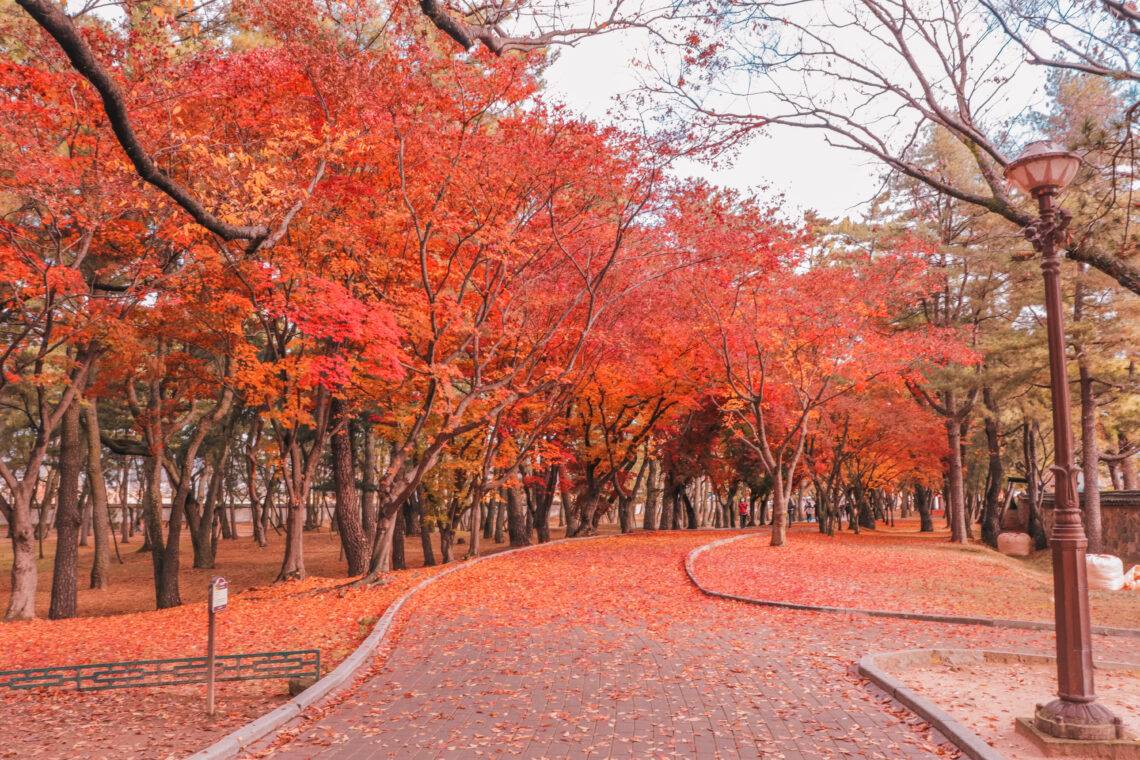
First stop this week on the Korean east coast with Gyeongju. City well known to the Koreans, it was the capital of the country during the Silla era between 57 BC and 935 AD. Located just over 3 hours from the capital, I visited it twice, once in spring and again in autumn. I highly recommend visiting Gyeongju in autumn, I saw incredible colors there.
Gyeongju is known for its royal tombs, the temple Bulguksa and the caves of Seokgaram. All these historic places are registered as UNESCO World Heritage. This city is simply superb. I recommend you stay there for 2 days, but you can easily dedicate one more day to it.
I will speak to you here only of the ancient part of the city. Indeed, I don’t know the other side that looks rather modern and similar to other medium-sized Korean cities.
Go from Singyeongju station to the historic center of Gyeongju:
Every 30 minutes, a bus leaves from the station to the historic center. The journey takes about twenty minutes. If you miss it, you can always take a taxi (fare: 20,000 won, about €12).
If you opt for the bus option from Busan to Gyeongju, the arrival will be at the Gyeongju Bus Terminal which is located in the historic center. You will then be able to reach your accommodation and/or the interests of the city on foot.
How to get around in Gyeongju?
Buses circulate in the city, but be aware that the information provided by GPS applications (Kakaomaps and Naver), as well as the signs available in the bus shelters are unfortunately not very reliable. It will therefore not be uncommon for you to wait 20 or 30 minutes for your bus. The discovery of the city remains possible by public transport, but it will be a bit restrictive.
The simpler alternative is to rent a car if you want to save time. That said, the historic center is relatively small: you can do everything on foot.
What are the must-sees to visit in Gyeongju? (day 15)
The city of Gyeongju offers more than cultural visits. As you stroll through the historic centers, you will see hanok housestransformed into cafes, restaurants… You will then be immersed in an atmosphere out of time, surrounded by the famous tombs. It’s iconic!
The Geumgwanchong complex (금관총)


➡️ Access: free
Geumgwanchong is a complex of royal tombs not to be missed, with in its heart a small historical and explanatory center of the places. You will be able to see some treasures that belonged at that time, thanks to the excavation of tombs.
This place is truly stunning and iconic, especially on social media. I strongly advise you to stroll there, which is pleasant regardless of the season. Benches are even available to enjoy the view of the trees leaning over the royal tombs, giving a very special impression. Right next to it is another complex of royal tombs, direction…
Daereugwon (대릉원)
➡️ Access: 3000 won per person (less than €2)
The complex of Daereugwon is an absolutely amazing place. It particularly marked me in the autumn when the colors were at their peak. A magical visit that you will not forget. There is even a small lake in the complex.
Allow about 2 hours to walk quietly without rushing and explore the two tomb sites. The first complex is accessible at all hours. The second opens from 9 am to 10 pm every day.
Have some change with you, from memory, Daereugwon does not accept foreign cards.
The Cheomseongdae Astronomical Observatory (첨성대)
Located just to the east of the tombs, it is the oldest astronomical observatory still existing in Asia. Cheomseongdae has been designated a national treasure and is part of the UNESCO World Heritage.
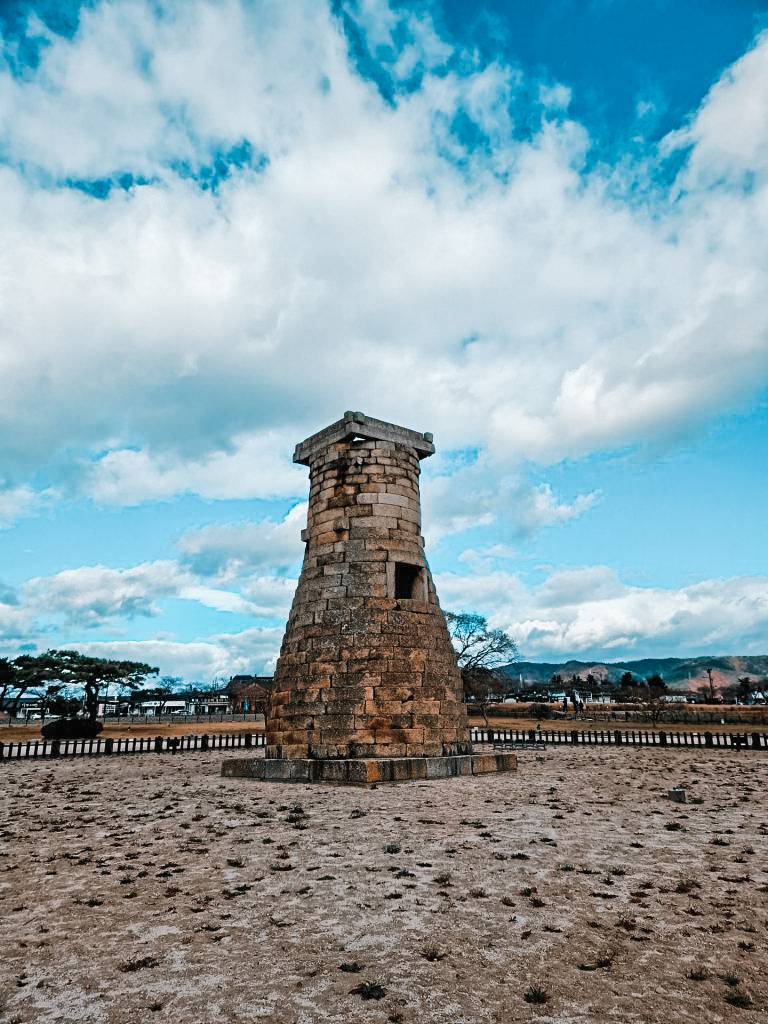
It is presented under a kind of tower, 9 m high, built with 365 pieces of granite symbolizing the 365 days of the year. It is said to have been built during the reign of Queen Seondeok between 632 and 647 AD. Walk around the surroundings, nature in spring and autumn is particularly pretty. Then you can easily walk to the next step.
It is presented under a kind of tower, 9 m high, built with 365 pieces of granite symbolizing the 365 days of the year. It is said to have been built during the reign of Queen Seondeok between 632 and 647 AD. Walk around the surroundings, nature in spring and autumn is particularly pretty. Then you can easily walk to the next step.
Gyeongju national museum
Open every day from 10am to 6pm, this museum will present the treasures of the Silla era, when Gyeongju was the capital of the Kingdom of Korea. The in love and curious about history will be delighted by the collection of the Gyeongju national museum which is absolutely sublime.
Do not hesitate to check the schedules on the apps Naver maps or Kakaomaps. It may exceptionally close earlier, or on the contrary, it offers nocturnes. Admission to the permanent exhibitions is free, but some temporary exhibitions may be chargeable. The museum is very well designed, there are also lockers to drop off your things for free. If you would like to visit it, I can recommend a good hour and a half at two o’clock.
Anapji pond


Another magnificent must-see place to visit is Donggung palace and Wolji pond, a ancient palace and an artificial pond built by order of King Munmu in 674.
➡️ Access : 3000 won (less than €2). Open every day from 9am to 10pm. I was able to visit it during the day as well as at nightfall. I particularly recommend at night, the decor becomes downright magical.
What to do around the center of Gyeongju?
For this start of the day, we will move away from the city center and head towards the east of the city. To get there, it is possible to take the bus or your car if you have rented one.
Bulguksa temple (불국사)
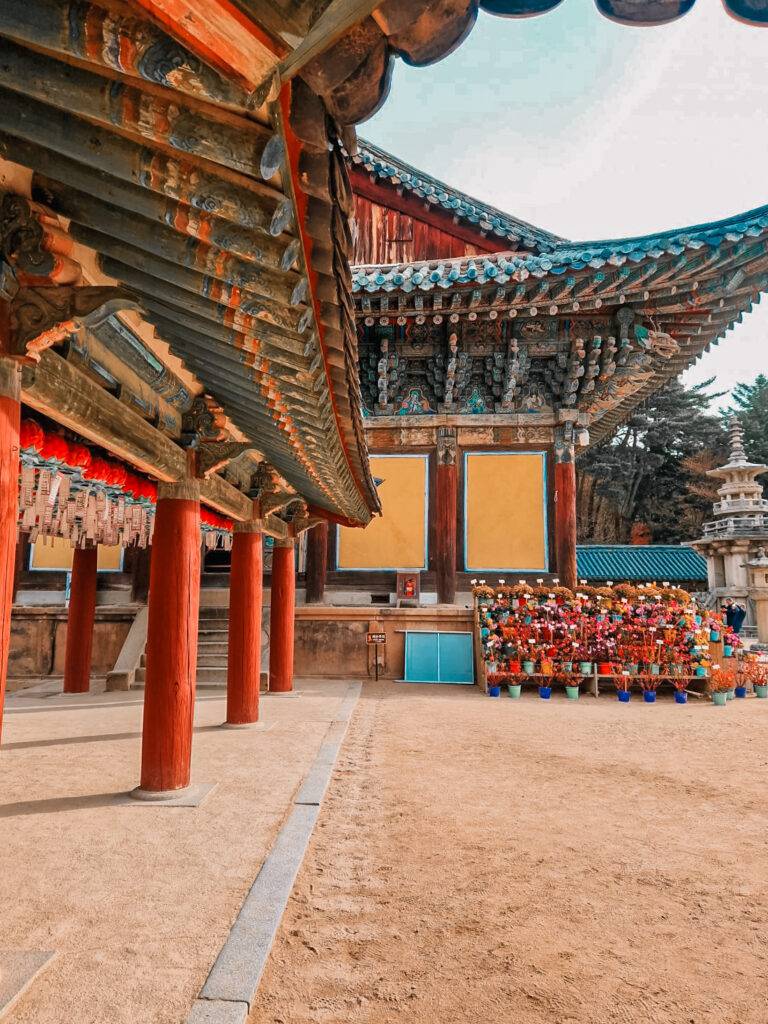
The construction of this magnificent temple was completed in 774, during the reign of King Hyeyong. In 1593, it was burned by the Japanese, then rebuilt. Bulguksa Temple is also a UNESCO World Heritage Site and is one of the oldest temples in Korea.
To visit this very well-known place, you will need to pay 6000 won, which is about €3. A superb religious building, which I loved visiting. The first time, it was in autumn with sublime colors, which added beauty to the place. Count easily 1h to 1h30 if you want to soak up the atmosphere.
Seokguram Caves
They are also listed as UNESCO World Heritage, you will need to take bus 12 located just opposite the temple to reach the Seokguram Caves. The bus can take 15 to 20 minutes to arrive, be patient. You will then have a zigzag journey, the road is not very nice.
You then pay 6000 won to access the caves, which I liked but honestly no more. Inside is a Buddha, deemed mystical. As usual, it is forbidden to photograph the statues.
I think we barely stayed 30 minutes… The place is relatively small and not particularly interesting from my point of view. I don’t necessarily recommend you to go there!
The contemporary art museum of Wooyang and its lake
This large complex consists of a lake, museums, an amusement park, hotels and other infrastructure. It is not necessarily essential to visit… But if you like museums and art, I recommend the contemporary art museum Wooyang, located in this area. The entrance ticket costs 15,000 won for an adult. I recommend it only to art lovers, it is in no way a mandatory passage.
Historic Downtown Gyeongju
Near the places recommended in day 15, do not miss the shopping streets of the historic city center. With its traditional appearance, it is very pleasant to walk there.
You will find good restaurants, cafes, and even pretty shops of all kinds. The culinary specialty of Gyeongju is bibimbap, a typical Korean dish mixing rice, vegetables, egg. A healthy, balanced and delicious dish.
The Weoljeonggyo bridge
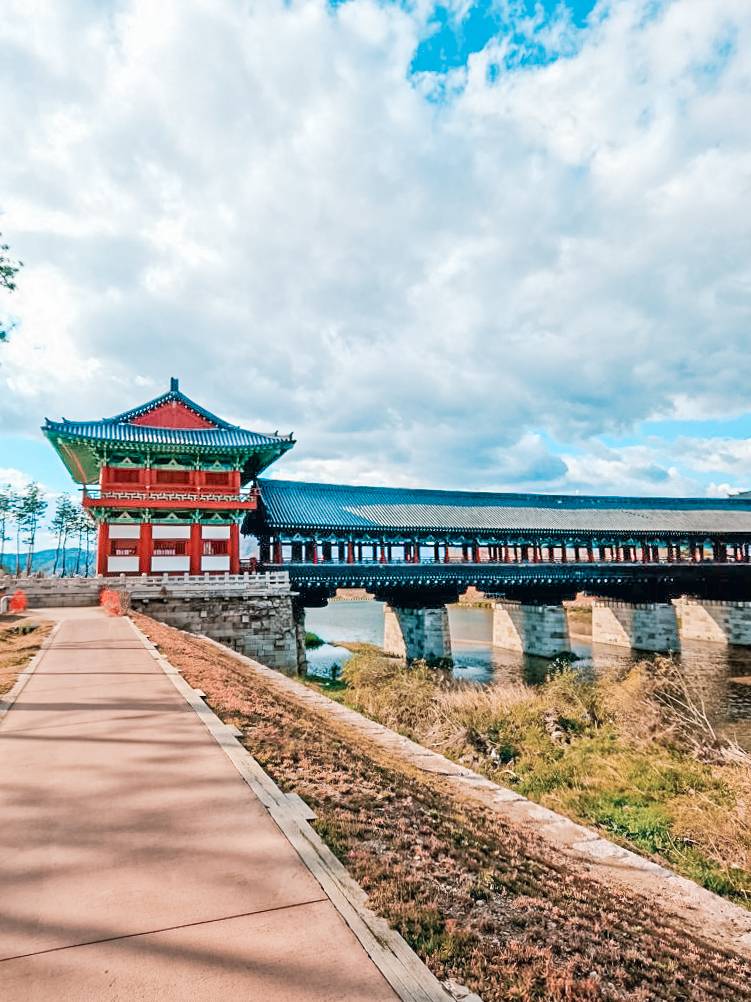
This superb bridge crosses a small river. It was built during the Silla era and destroyed by the Japanese invasion during the Joseon era (1392 to 1897). Rebuilt very recently in 2018, it then became the most important wooden bridge in Korea. It is particularly magnificent during the night with its lighting. You can walk through it and take nice photos.
Where and what to eat in Gyeongju?
- For taste bibimbap, two recommendations: the 향화정 or my favorite address, Hyanghwajeong restaurant (address: Gyeongju Sajeong-ro 57 beon-gil 17).
- Traditional Tea Room : the 빛꾸리 (Bit Gguri), a beautiful place where you can enjoy teas as well as traditional Korean pastries. The owner is adorable and you will eat Korean-style on cushions placed on the floor. An experience that you will not forget
- Hwangnam bread, a typical specialty of Gyeongju hardly found elsewhere. It is a kind of bread filled with red bean paste. This dish is sweet and particularly hearty for cold days. I really liked this pastry that you can bring back individually or even in boxes.
Where to stay in Gyeongju?
I recommend you the Hotel No. 25 Gyeongju bus terminal. It is very well located, remains very reasonable in terms of price and good quality!
Visit Pohang during your 3 week itinerary in South Korea (2 days)
How to get there?
To go to Pohang, the easiest way is to take the bus from Gyeongju. The journey takes between 20 to 25 minutes for only 4000 won. According to the information I found, there is a bus every 30 minutes. Be careful, there are several bus terminals in both cities, the one from Gyeongju is located next to the Ediya Coffee: it’s called Intercity and it will take you to Pohang bus terminal.
What to do and see in the city of Pohang? (Day 17)
I enjoyed discovering this medium-sized and somewhat well-known city in Korea, but it is not at all the lair of most tourists. So don’t be surprised if some locals look at you curiously enough or even not very kindly, it has happened to us several times. I think two days are enough to visit the majority of places in the coastal city, however the distances by bus will be relatively long, and sometimes you will even need to make a transfer.
Homigot, the symbol of Pohang
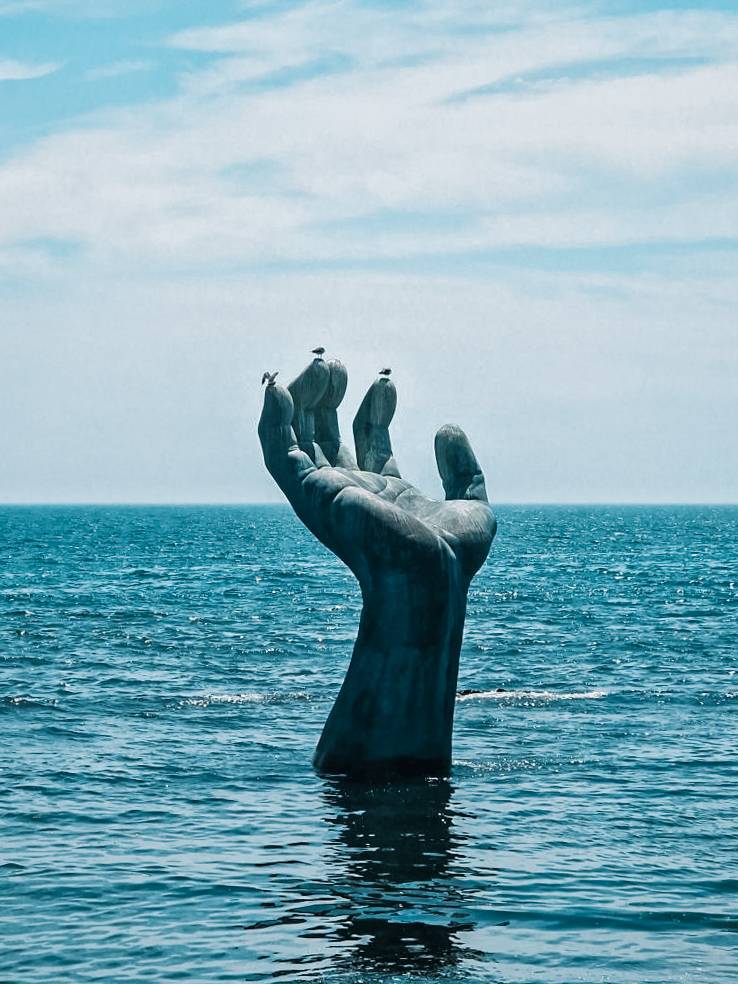
The first place I recommend visiting is Homigot, the famous hand in the water which is a bit the emblem of the city. There is even a second hand on terra firma, not far from the first. To get this far, you will need to take one bus, or even two depending on where you are leaving from.
Nearby, there is a museum and a lighthouse (the highest in all of South Korea with a height of more than 26 meters) to visit. This area is very pleasant, but expect to see people there during the summer. If you are the only strangers, don’t be surprised.
Yeongildae Observatory
📖 Name of the place in Korean : 영일대 전망대
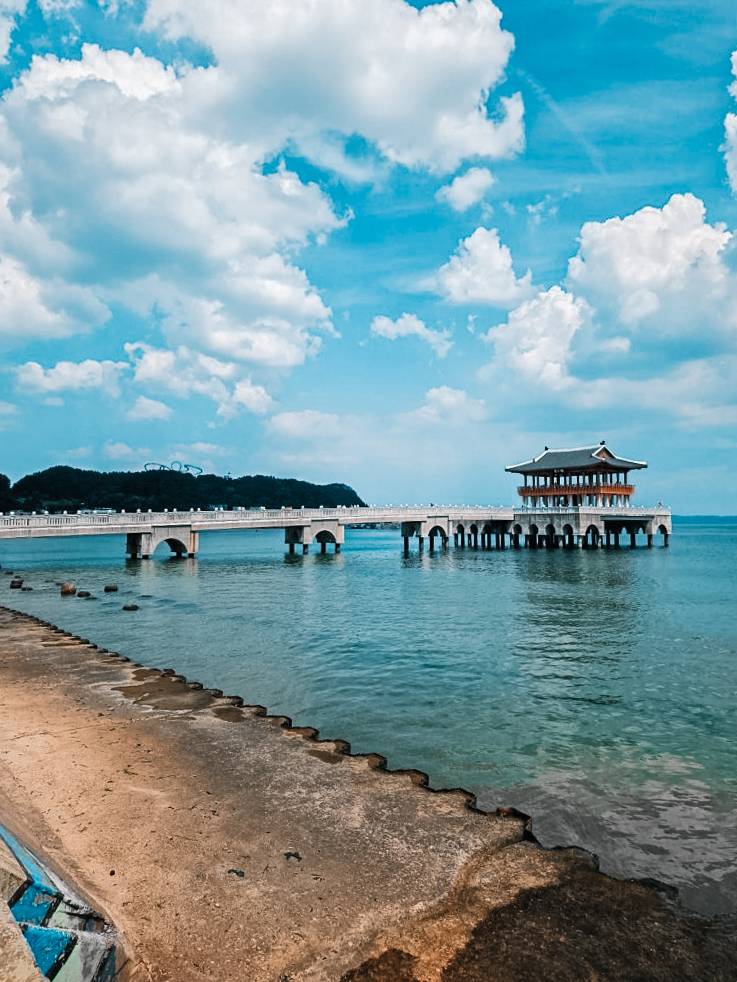
To join this very pretty observatory on the water, you will need to be a little patient. Count once again two buses, and almost 1h30 of journey.
Once arrived on the beach, it is possible to eat. We came across a small typically Korean restaurant, run by two ajumma (a term referring to an elderly woman). The food was delicious!
We then walked along the beach, and went to the famous Yeongildae Observatory, as pretty by day as by night. From there, you can take lots of photos because the view is really superb. An ideal place to rest.
Yeongildae Beach
Pohang being a seaside city, we still wanted, especially in the middle of summer, to take a little dip. As I told you in my previous two-week itinerary in South Korea, you will be able to see people swimming, but much less than in France. Indeed, quite a few Koreans do not know how to swim, or simply don’t feel like it. Otherwise, when they bathe, it’s fully dressed to avoid the sun and therefore to tan. Nothing to do with Western culture!
On our side, we were in the usual swimsuit at Yeongildae Beach and nobody told us anything. I obviously advise you to swim only in the summer. Out of season, you can just walk around the corner, the beach is always enjoyable no matter the time of year.
Pohang Greem café
The Greem Café is a rather emblematic coffee chain that used to be found in Seoul and which is still present in Jeju, Pohang, and Gangneung. The peculiarity of this establishment is that it is bicolored (black and white) and everything seems to be in two dimensions. It’s very particular but frankly nice. In addition to an aesthetic coffee, it’s relatively good.


Other places to visit in Pohang (day 18)
Spacewalk, the futuristic sculpture
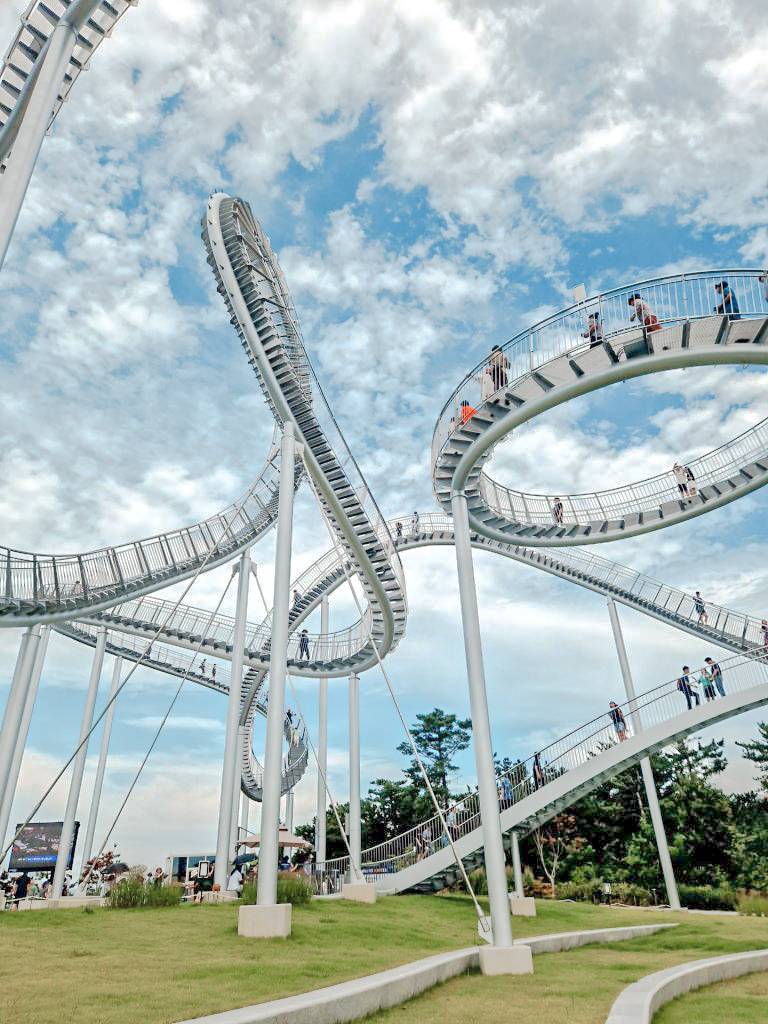
Looking for a unusual visit to Pohang ? Spacewalk is a metal installation created by a couple of Germans, which resembles a roller coaster. This sculpture is very well known in the city, and access starts at 10am every morning. You can go there for free. Attention, if you have bags or suitcases like us, you won’t be able to take them with you because it’s too dangerous, but you can leave them downstairs.
I had seen this place a lot on social media as well as in Korean dramas, and was looking forward to seeing it with my own eyes. Spacewalk is frankly very stylish, I don’t regret going there at all. On the other hand, if you have vertigo, I think you will find it difficult to get well up. That was exactly my case: I quickly returned to the path, especially since it moves quite a bit when you walk on it…
Igari Anchor Observatory
📖 Site translation in Korean: (이가리 닻 전망대)
This observatory, which is located on the sea, was made famous by a Korean drama. Access is via a large walkway. I loved this place which is superb. I am happy to have managed to find the address!
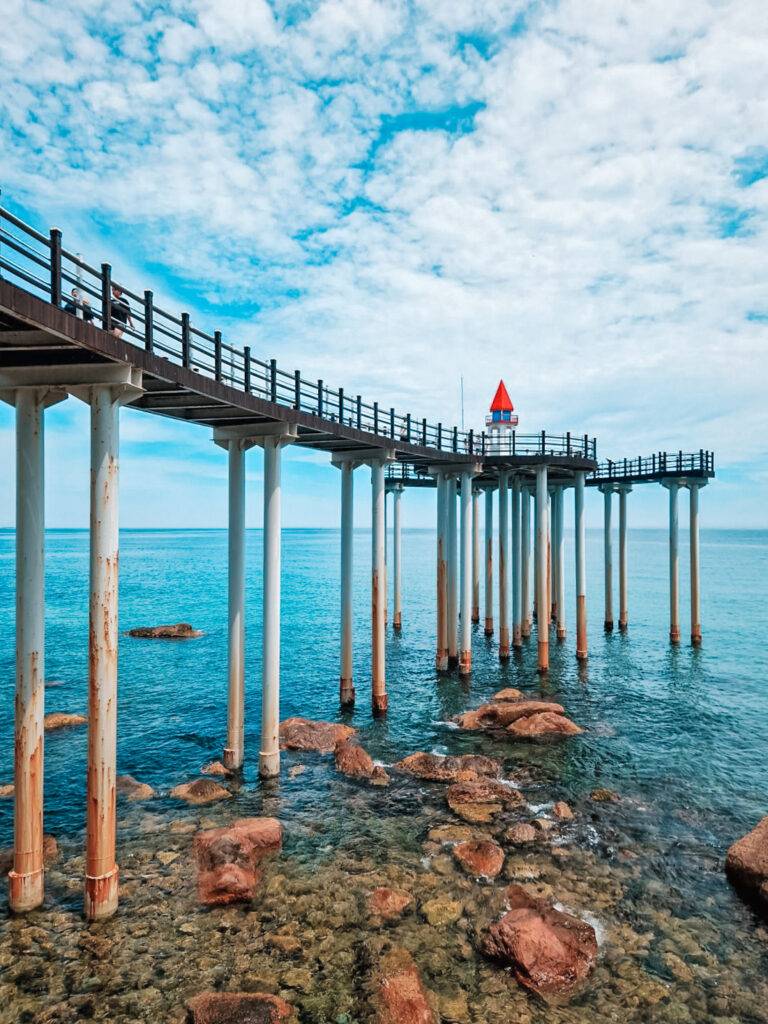
It is located north of Spacewalk, about 20 to 25 minutes by taxi. I widely recommend this means of transport rather than the bus. The price is not very expensive and if you are several it’s really worth it. For the return, take the taxi too while waiting for someone to arrive! Some places in Korea are indeed very difficult to access if you don’t have a car.
Seen from above, the Igari Anchor Observatory has the shape of an anchor, hence its name. The view and landscape from this place are absolutely incredible. Completely exotic, it was my favorite of Pohang.
🎟 Access is free with a fairly wide range of hours, from 9am to 8pm in summer and until 6pm the rest of the year.
Where to stay in Pohang?
The Comport Hotel is the best value accommodation in Pohang. There is a breakfast à la carte included in the rate.
3-week itinerary in South Korea: the last leg in Gangneung
How to get there?
To reach Gangneung, 3 options are available to you :
- The train : a little more expensive, the journey lasts between 2h30 and 3h30.
- The car (international license required): the journey takes a little less than 3h.
I advise you to leave Pohang in the late afternoon or evening of the second day, to arrive in Gangneung that same evening.
2 days in Gangneung: what to do and what to visit?
Gangneung is one of the most popular Korean coastal cities for Koreans. The presence of the sea and the fact that the city is not very big really bring a holiday atmosphere. No matter the season, it’s always nice to spend a few days in Gangneung. In three stays on site, I was able to test several nice places, both near the sea and in the city center. With or without a car, it’s possible.
I will therefore offer you a mix between unmissable places to see with a car and places accessible without. I will specify each time if it is necessary to have a car or not!
Rent a car in Gangneung
Every time I rented a car in Korea, I went through Lotte rent a car. Their website is in English and you can book online. The value for money is good and the Gangneung branch is located not even five minutes walk from the bus station. They are, on the other hand, a bit light-handed when it comes to explaining how the car works, knowing that almost all Korean cars are automatic. Do not hesitate to look on the internet for the driving modes present on your gear lever which, unlike most cars in France, is not used to shift gears but to start, park…
Gangneung’s must-see places to visit (days 19 to 20)
Ojukheon House
➡️ Access: by taxi or bus
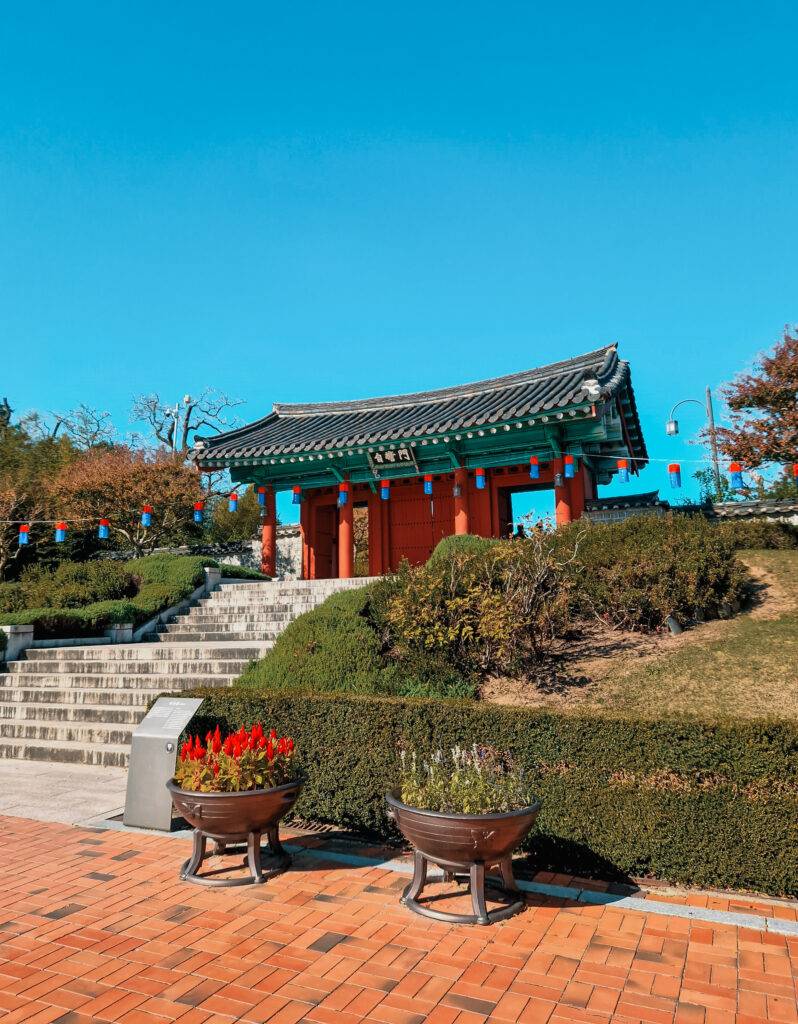
The Ojukheon House is an old Confucian school of the Yidynasty, under the Joseon era. It’s a very beautiful place to visit! The artist Shin Saimdang, present on 50,000 won banknotes with his son Yi I, lived in this magnificent residence.
The venue is quite extensive, but you can take the full tour including the house, exterior as well as a small museum about Korean currency. Allow about 1h30 on site. A fairly quick visit, not necessarily well known by tourists, but which remains interesting in my opinion.
Gangneung Daedohobu Governement
➡️ Access: by taxi or bus
In most Korean cities, you will find representative places of their history such as ancient Confucian schools, temples or hanok villages. They are useful for delving into the vast history of Korea, which has not always been what it is today.
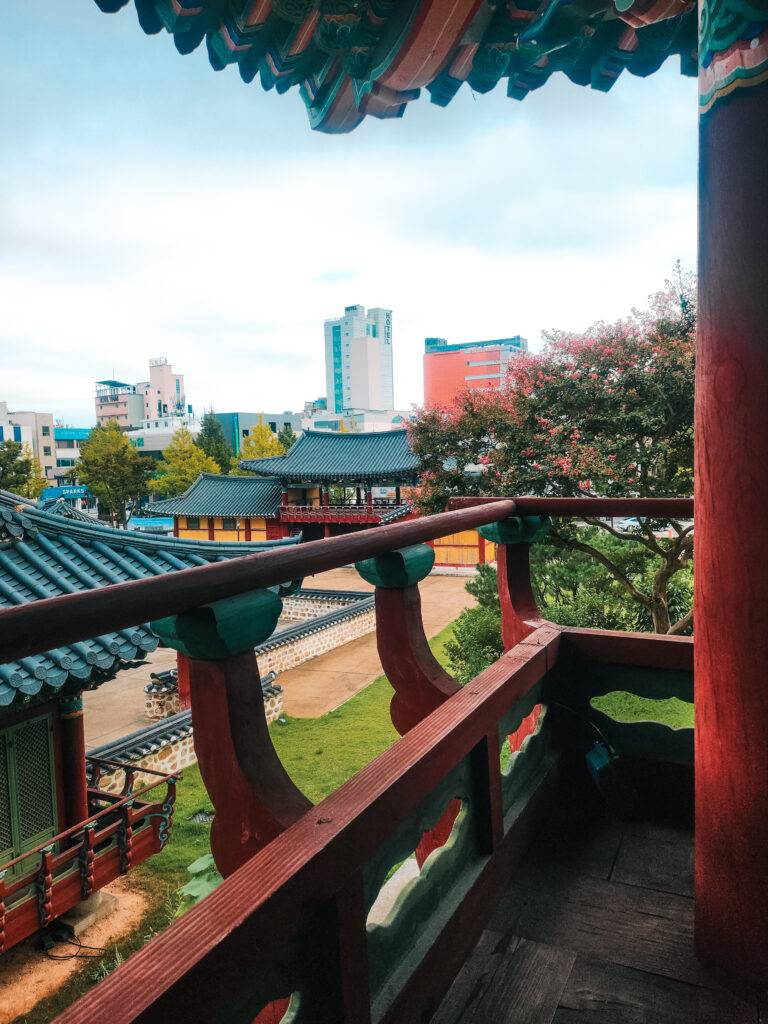
Generally, these places are open to the public free of charge with a significant time span. This is the case of Gangneung Daedohobu Governement (강릉대도호부 관아), a complex dating back to 936 (Goryeo era). This government institution welcomes foreign envoys and members of the government.
The place is very nice to walk around, there was no one when we were there. We stayed for a good hour, enjoying a pavilion of the complex on which we could go (provided you take off your shoes and put on the slippers provided). You can stay for hours to take a nap, read or simply enjoy the beauty and tranquility of the pavilion.
Bookstore Yunseulseolim (윤슬서림)
➡️ Access: on foot
Spotted at random while going to the previous location, we entered this superb small independent bookstore which also serves as a coffee shop. It offers plenty of Korean titles. You won’t find foreign-language titles there, but just wandering around for 10 minutes is pleasant. On the wall, customers can leave their mark on post-its. Mystery books with only a few words describe the book without knowing what it is about. In short, it was a special moment.
📍 Adress : Gangneung Imyeongro 138.
Greem Coffee
Access: by bus or taxi
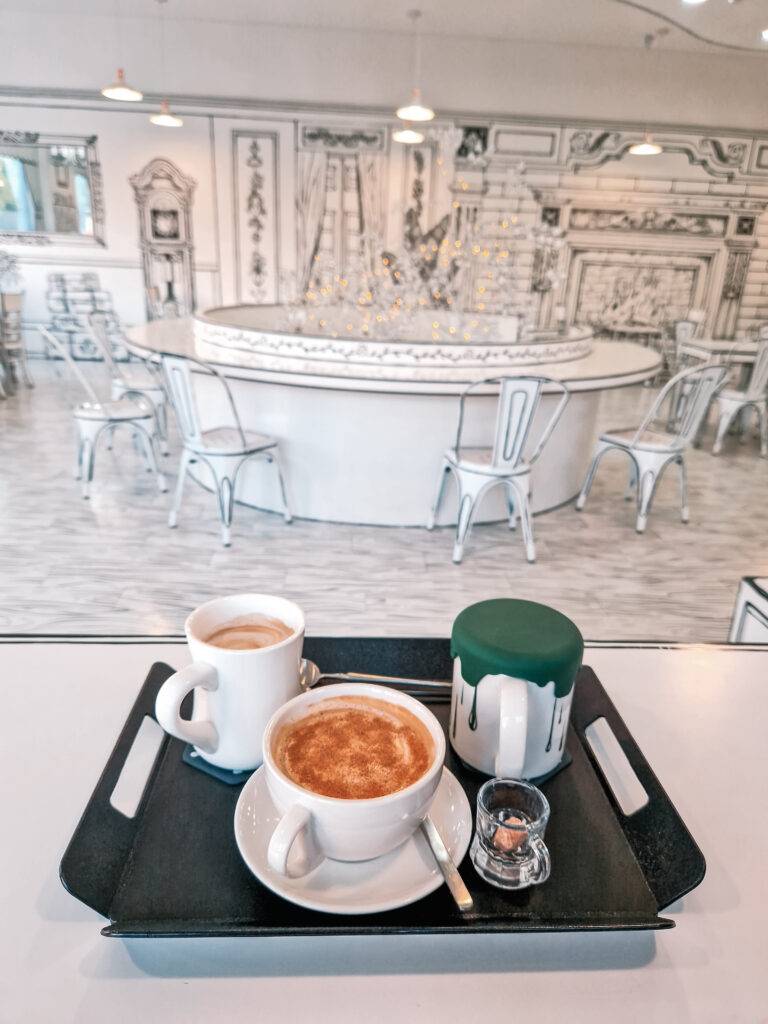
One of the most original coffees that you will have to see, all in black and white 2D effect. There is also one in Pohang and Jeju (the one in Seoul has closed). I really liked the one in Gangneung because it was little attended during our visit.
A bit out of the city center, allow about 20 minutes by bus. Everything is in the colors of the coffee, even the cups and furniture. We had fun taking lots of photos. The drinks are good, but I can’t tell you if the cakes are too.
Gangneung Seongyojang (강릉 선교장)
➡️ Access: by bus or taxi
The Gangneung Seongyojang residence is among the best preserved in Korea. It belonged to the noble family of Lee Naebeon at the beginning of the 18th century. Ideally located opposite Gyeongpo Lake, it is surrounded by a pond.


For 5000 won (3€), you can tour this large residence, designated as a national treasure. It is particularly pleasant to walk around and very well maintained. We arrived shortly after opening around 9am and we were alone for a little while. The site closes at 6pm (in winter at 5pm).
You will therefore have all the leisure to discover an ancient dwelling within yourself diving into the Joseon era. The buildings are quite numerous, varied and very beautiful. I think it took us quite 1h30 to go around it, taking photos and observing every corner. You can even go a little higher, to have a view from the top.
Gangmun Beach (강문해변)
➡️ Access: by bus or taxi
Gangmun Beach is one of the most well-known beaches in Gangneung. Very well located, it is as pleasant during the day as in the evening. At nightfall, you will be able to see people shooting small fireworks.
BTS Bus Stop, for fans of K-Pop
➡️ Access: by bus or taxi
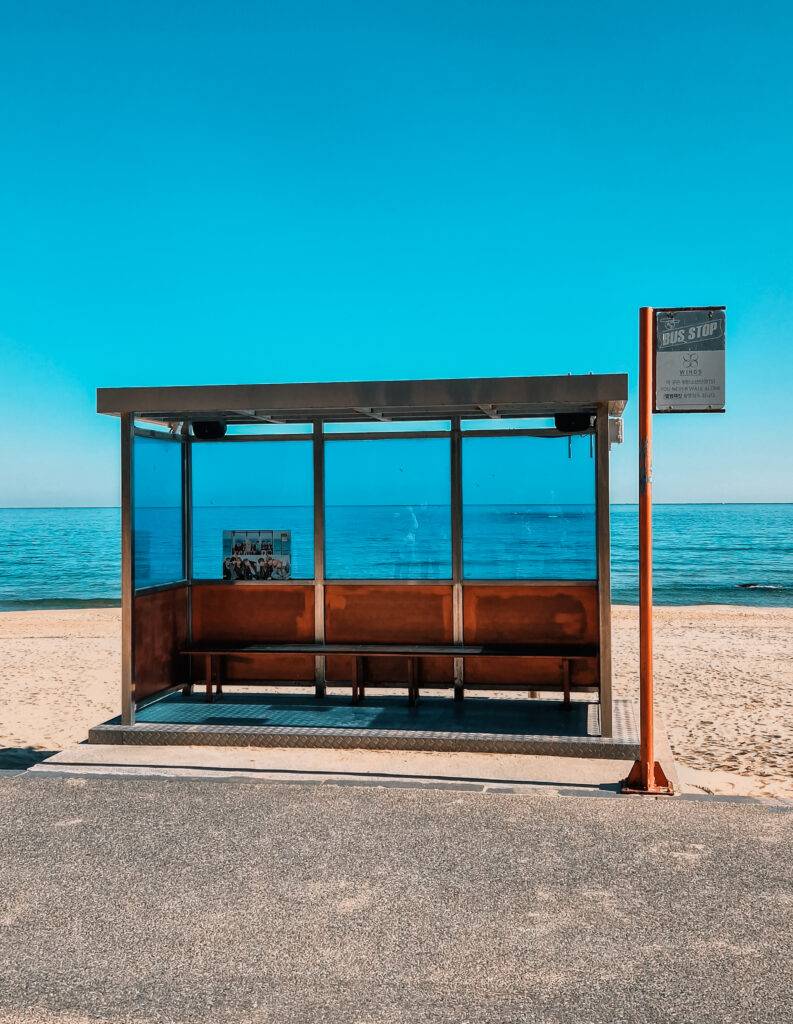
The famous group of K-Pop BTS filmed part of its clip Spring Day in the north of Gangneung, along a beach. Of course, the place has become very well known even though it is only a bus stop. On the spot, fans crowd to take photos at the place where the boys sat.
I do not advise to go there only for the bus stop, but also for the rest of the beach which is really very nice. Depending on the day and time you will go there, expect not to be alone in having had this idea. It is possible that you wait a little before having your shots. Take the opportunity to sit on the swings and benches available on the beach. Moment of total disconnection.
Maengbang Beach
➡️ Access: by car
Located in the municipality of Samcheok, not far from Gangneung, Maengbang beach is not the most well-known… Except maybe for the BTS fans. It is indeed there that the photo shoot for the single Butter was carried out. The beach remained exactly as the end of the shoot. The fans therefore come from photos on the famous deckchairs that appear in the group’s photos.
I am telling you about it because the beach of Maengbang is very nice for you to walk around. The parking is very large, so no problem to park your car!
Wonpyeong Beach
➡️ Access: by car
A little further south is another beach that I have greatly appreciated. Surrounded by pine trees, Wonpyeong Beach offers a guaranteed southern France atmosphere.
If you have a car, I strongly advise you to walk along the coast and stop at several beaches, Gangneung is obviously an opportunity to see the sea as close as possible. Right next door, you can go to the pier. Parking is free and easy.
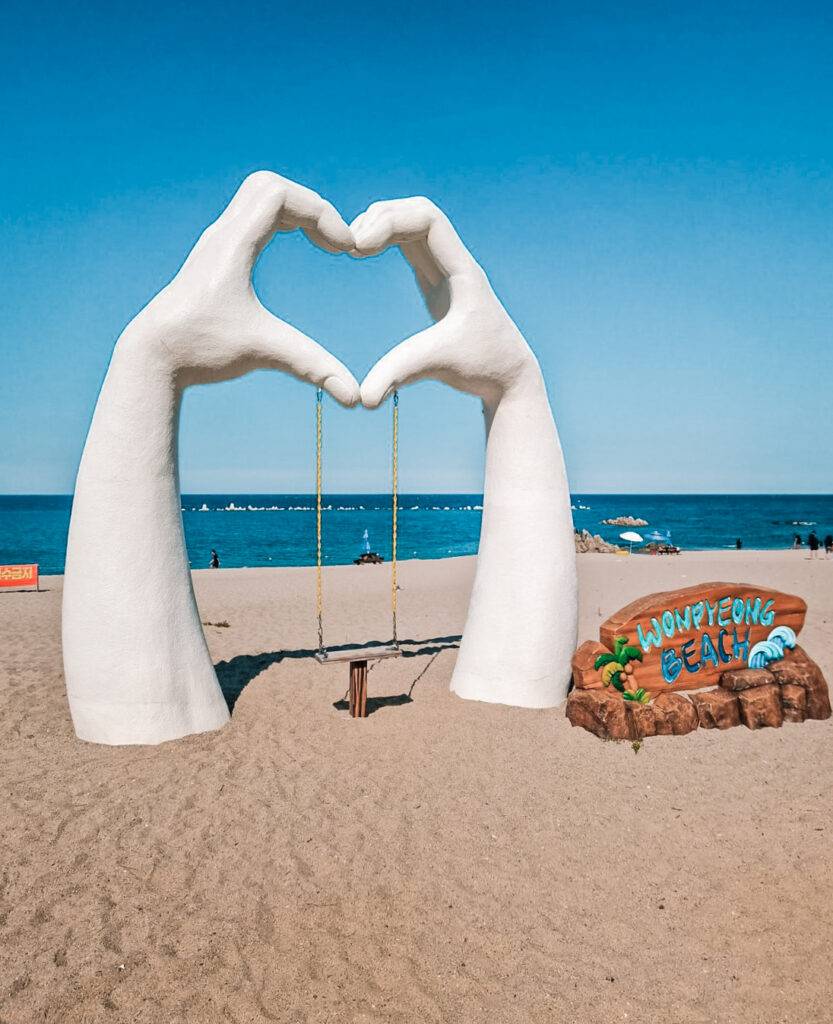
Naksansa Temple in Yangyang
➡️ Access: by car
In the case where you have rented a car, I can only strongly advise you to visit this magnificent cliff side temple along the coast. It is located north of Gangneung, in the small town of Yangyang. The Naksansa temple takes its name from the Naksan mountain just next to it. It was founded in 671 by a monk, whose main pavilion dates from 1925. One can see a 15-meter high statue made of white granite, representing the goddess Gwanseum-Bosal. The place is very pleasant to visit, possessing a calm and relaxing atmosphere due to the proximity of the sea in addition to the fact that it is a temple. The site is quite spread out, if you want to see everything calmly, count a good hour easily.


Where to eat in Gangneung?
Here are my recommendations of good addresses, tested and approved:
Restaurant Haeseulol Seongnaejeom
📖 Korean name translation: 해스롤 성내점
Located right in the center, this is a delicious restaurant offering a wide selection of really good sushi. At least, you will be in a typically Korean place with clients not used to foreigners. It’s in this kind of restaurant that we eat the best.
Adress : Gangneung Imyeongro 116 beon-gil 3-1.
Restaurant Mongyu
At 5 minutes from the previous address stands a very dear address to my heart. It is run by a duo of colourful restaurateurs. After having had their establishment for several years in Seoul, where I met them during my first trip to Korea, they have since moved to Gangneung. I went back to see them during my three months of travel in the fall of 2025. So I’ve known these people and their cuisine for four years since I’ve been there countless times.
It was then absolutely necessary that I come to see the Mongyu restaurant in Gangneung, and I was not disappointed! The restaurant is very large, with even private rooms as is the case in quite a few Korean establishments. Mongyu wants to be chill, the boss broadcasts on his giant TV clips from travel videos, a unique atmosphere for a delicious meal.
You will notably eat a kind of ramen “miso soba“, my favorite dish that I literally had to taste about fifteen times when they were in Seoul. This dish consists of a broth with bean sprouts, meat, noodles with a spicy and tangy taste, absolutely delicious. Gyoza are also very good for diving in Japan. Other more expensive dishes are offered as a fresh sashimi combo.
In short, an address that I recommend to you with my eyes closed. Say that you are coming on behalf of Laura and observe the reaction of the bosses ahah 😂 , he might try to speak French to you.
📍 Address : Gangneung Gyeonggangro 2018 beon-gil 35-1. Their Instagram account: @Mongyu2024
Handasot Restaurant
Specializing in seafood and fish, this restaurant near Gangmun beach offers mackerel and other varieties of the sea. The mackerel was very good and well served have rice, plethora of banchan (반찬): side dishes such as kimchi, japchae, vegetables.
Count 15,000 won for the mackerel dish with accompaniments. We liked it a lot.
📍 Adress : Gangneung Changhaero 375
deokdeok Coffee
📖 Name translation in Korean: 카페 덕덕
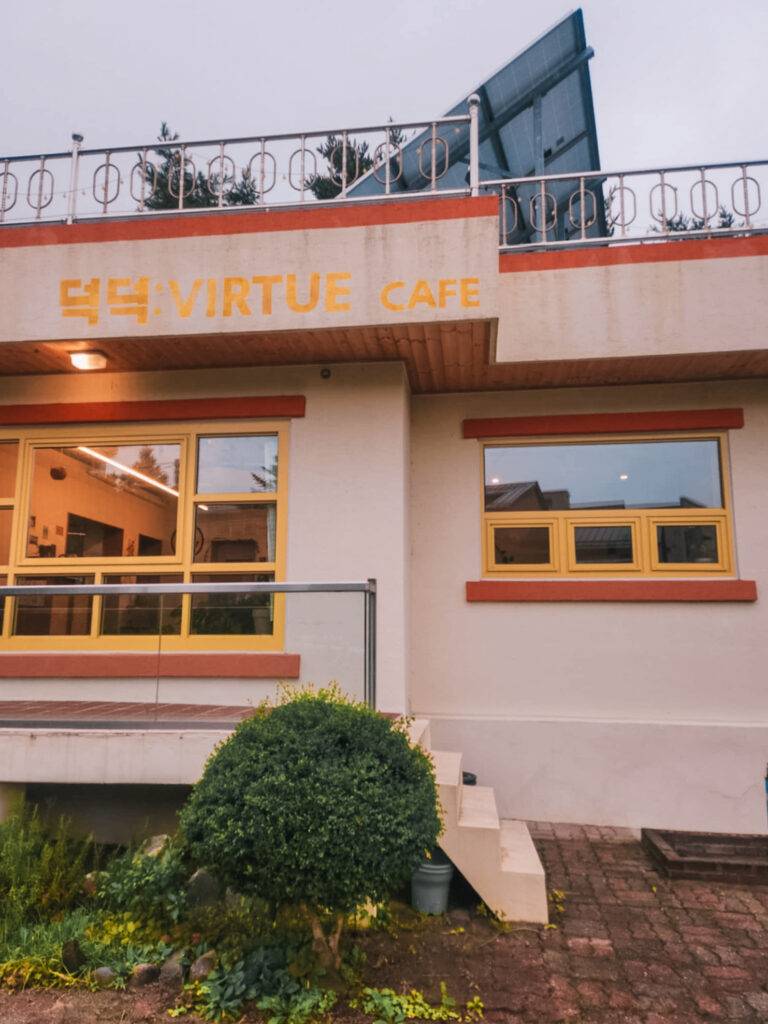
This much too pretty café offers good drinks and cakes in a small yellow house, close to the beach of Gangmun, it is located about 5 minutes from the previous address.
I had spotted it in advance because I love looking for good coffee addresses in Korea! We went there with my friends from the Mongyu restaurant. We tasted chocolate cake and milk tea. The bosses are very kind, which makes the moment even more pleasant!
📍 Adress : Gangneung Nanseolheonro 219 beon-gil 20-5.
Café Bossa Nova, with sea view
For stunning views of the renowned Anmokbeach in Gangneung, don’t miss out on Bossa Nova coffee! You can access it by bus from the city center (be careful with the schedule).
This establishment is built on several floors with a rooftop. There are different atmospheres: a Korean-style room (cushions on the floor and coffee tables), a room with ball-point poufs for a relaxation area, and the rest of the more traditional café with classic tables and chairs. You can face the window, for a direct view of the beach and the sea.
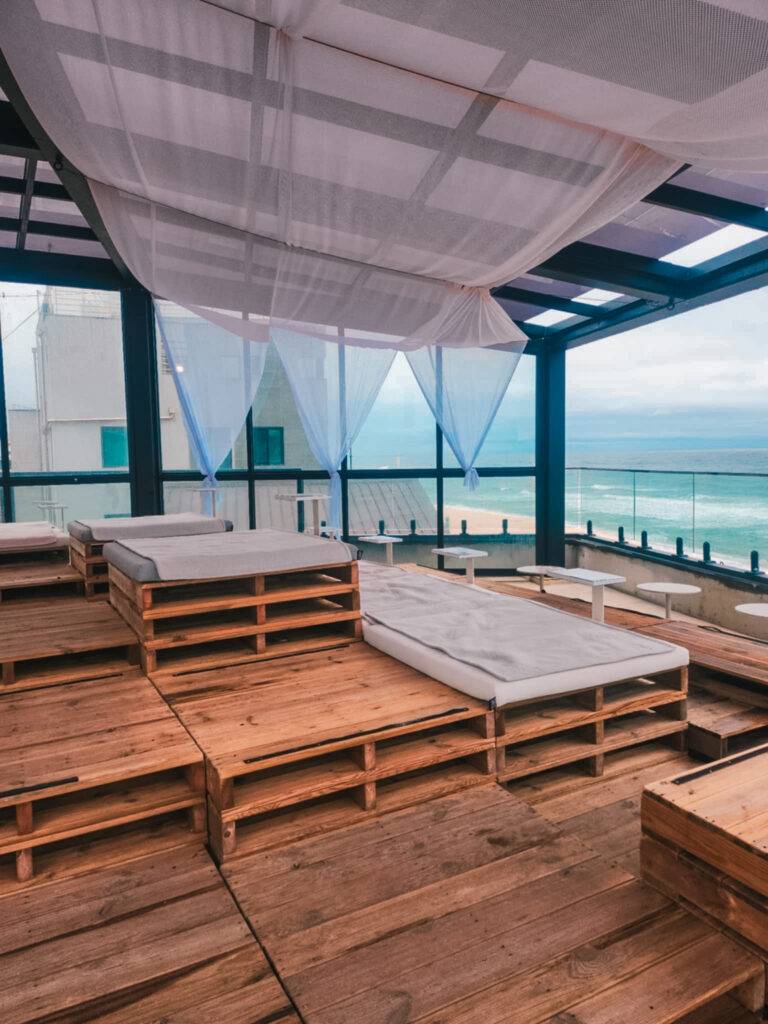
The menu is even translated into English, the choice is quite large and not so expensive. I really enjoyed this morning facing the sea! Although the weather is not with us, it was a very pleasant moment. Count about 6,000 won for a drink and 3,000/4,000 won for a pastry, which is about €5 for both.
📍 Adress : Gangneung Changhaero 14 beon-gil 28
Where to stay in Gangneung?
Right next to the train station
End of the 3-week itinerary in South Korea: return home 😢
Since the last stage of Day 20, Naksansa Temple in Yangyang, it takes 45 minutes by car to return to the Gangneung bus terminal, from where you will take a coach towards Seoul.
The bus ride that connects Gangneung to Seoul will take you about 3 hours for 25,000 won (15€). Note: depending on the departure time, the standard of the bus is not even (standard, premium, premium +). The price can then vary by a few thousand won, or a few euros.
I hope you enjoyed this 3-week itinerary in South Korea, with the visit to the East Coast of Korea . I have selected cities that I consider to be interesting like Gyeongju, former capital of the Kingdom of Korea, Pohang less known but offering pretty attractions, and Gangneung a must-see, as much for a Korean as for a foreigner. Three cities, three atmospheres that I hope you will like. On my side, they convinced me and I even went there several times!
A small week on the East Coast to add to your trip, according to your desires and possibilities to the two-week itinerary proposed some time ago. Note that the cities I am talking about in this guide are, in my opinion, less ‘indispensables‘ than the island of Jeju or Busan. On the other hand, they clearly have their interest at the historical, cultural, and tourist level.
My other articles on Korea
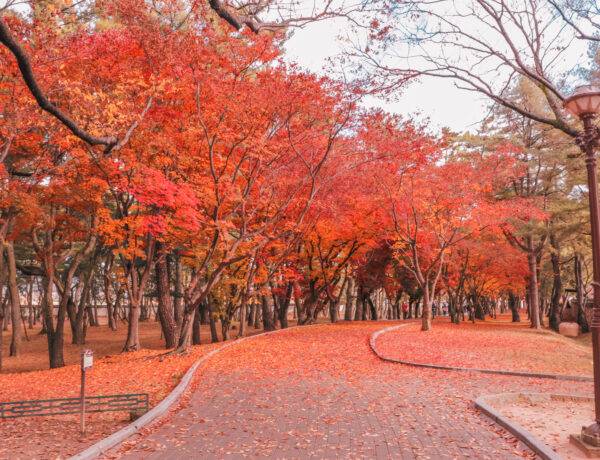
3-week itinerary in South Korea: what to do?
3-week itinerary in South Korea: what to visit to explore the country in depth…
23 April 2026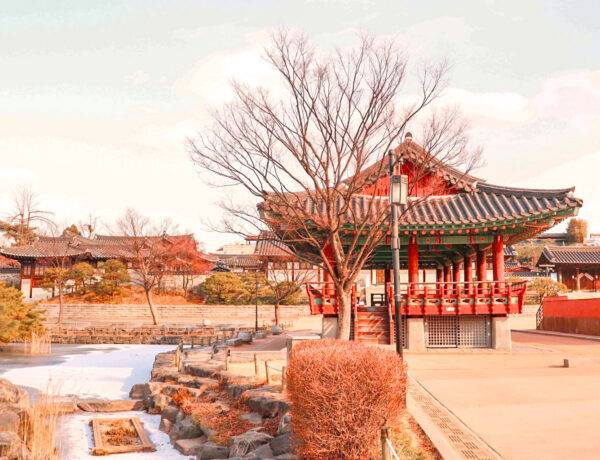
Visiting South Korea: 2-week itinerary
Visiting South Korea and its must-sees: 2-week itinerary South Korea is a country dear…
1 April 2026
Laura, voyageuse dans l’âme et particulièrement amoureuse de l’Asie et de la Corée, j’y ai fait un PVT entre 2022 et 2023. Depuis, je retourne régulièrement dans ce pays qui a eu mon cœur et je partage à ce sujet sur mes réseaux.


No Comments