


How to visit Angkor in Cambodia? All the information and my advice to organize his first visit
If you have come to this article, it is probably because you are about to experience one of the most intense moments of your trip to Cambodia and perhaps, who knows, of your life as a traveler: visit Angkor and its temples. Why such an introduction?
Because Angkor is not only a place: it is a door to another time, the colossal testimony of an empire that has disappeared and, even after centuries, has lost nothing of its majesty. Me, it’s Brice. I traveled for a year in Asia and spent many months in Cambodia during my various stays. I had the opportunity to visit the Angkor site several times, and in this article, I will share my tips to best prepare for your first visit, while conveying a bit of my passion for the Khmer Empire.
Are the temples of Angkor worth it?
To be totally transparent, and you will have understood if you have already read my other articles on Cambodia, I will not be completely objective here. The site of Angkor is for me much more than a simple historical visit. It is the very essence of Khmer culture, a place where nature and history intertwine in a ballet of stones, giant roots and millenary bas-reliefs. I had the chance to go through it several times, and each visit always marked me as much as the previous one.
👉 Discover my guide: What to do in Cambodia? Itineraries of 2and 3 weeks
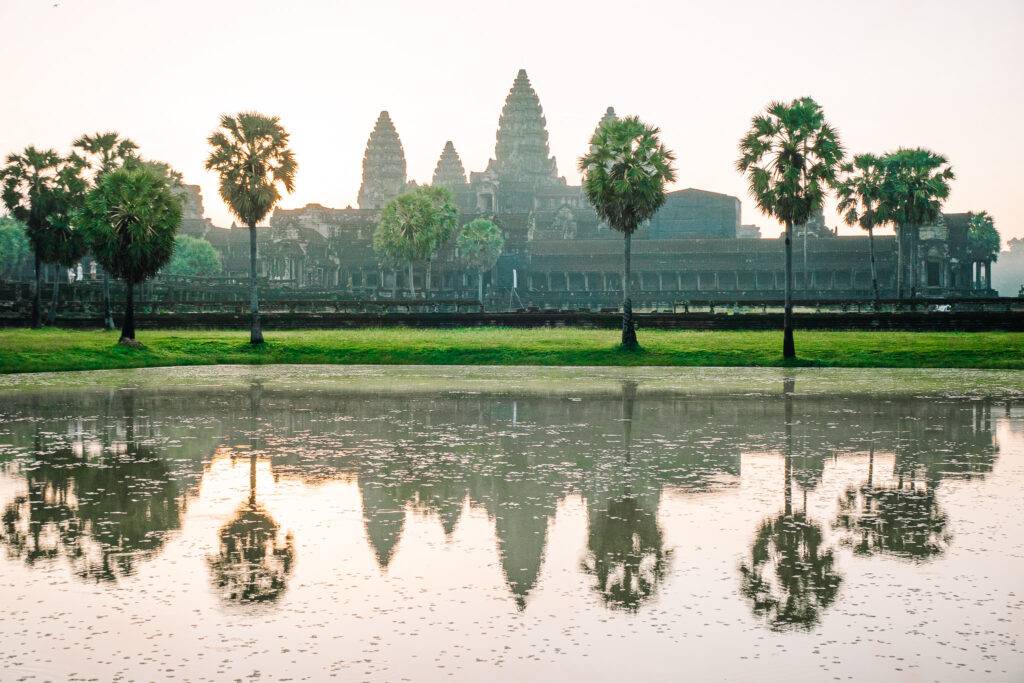
Much more than just a archaeological park, Angkor is a real city, a labyrinth of temples and jungles that invites you, at every step, to slow down, listen to the silence and let yourself be overwhelmed by the magnitude of the site. Prepare to sweat in the sun, get up at dawn to admire the sunrise at Angkor Wat, and maybe get lost a bit. But believe me, it is by moving away from the crowds and exploring the most remote temples that magic really works.
This guide is the result of my experiences on site. I share everything I know: practical tips and numerous advices. It is especially aimed at those who will visit Angkor for the first time, in order to have as much information as possible before starting this adventure.
📍 Itineraries to visit Angkor in 2 or 3 days
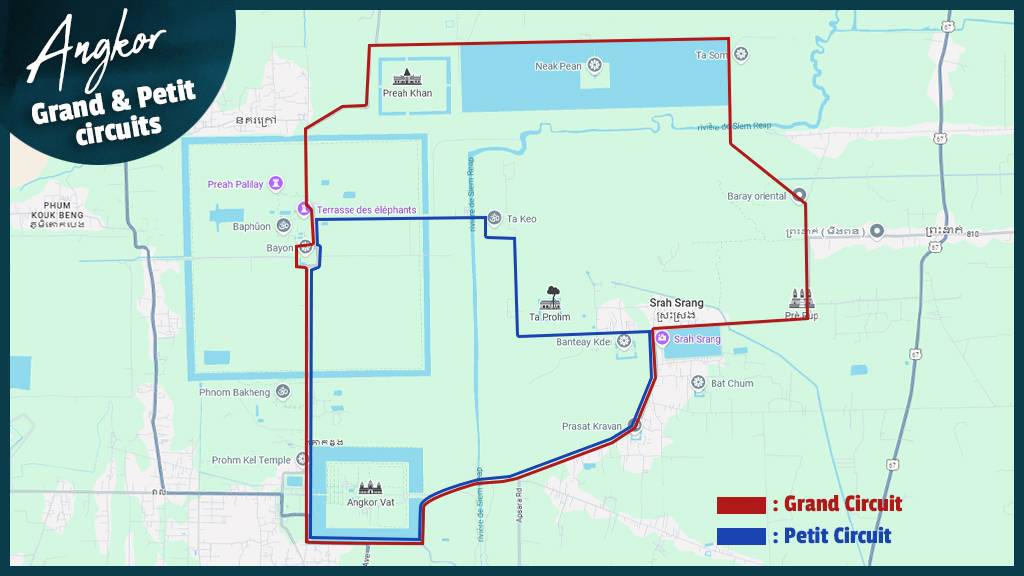
I will detail these two routes later in this article, but know that it is customary to start with the Small Circuit on the first day, then to discover the Large Circuit the next day.
Why? Simply because the Petit Circuit is the best way to take in the incredible Khmer Architecture, familiarize yourself with the bas-reliefs and visit the most emblematic temples of Angkor. It is the most frequented circuit, but its richness is incomparable and will allow you, the next day, to deepen your knowledge with more distant temples, just as majestic!
🎟️ How to buy a pass and which one to choose?
The Angkor Pass (or Angkor Pass in English) is the only ticket to buy to access the entire archaeological park of Angkor. It exists in three different forms:
- 1-day Pass : 37$
- 3-day Pass : 62$ (valable 10 jours)
- 7-Day Pass: 72$ (valable 30 jours)
The big advantage of 3 and 7-day passes is that the days of visit to Angkor do not need to be consecutive. You can thus intercalate rest days, visits to Siem Reap or other activities in the surroundings without ‘spoiling’ a pass day.
⚠️ Attention: the 1-day pass only covers one day, so plan your schedule carefully, as it cannot be postponed.
Where to buy the Angkor pass?
There are two main ways to get the pass to visit Angkor :
↪️ Online shopping (simplest method):
This is the fastest and easiest option, which I recommend to you if you don’t want to waste time. The Khmer government has considerably modernized the ticket option system in recent years and I must admit that it is very convenient!
You can therefore obtain your tickets on a single and unique site : click here. All the other sites are not official and there are some scams so be careful to go through this one only!
You fill out the form, upload your ID photo (make sure it meets the requested formats to avoid any issues), make the payment, and you receive your e-pass by email. Your pass is then ready to use on your phone, and you can go directly to the temples without wasting time!
↪️ The purchase at the Official Counter (the classic option) :
If you are not comfortable with the online procedures, purchasing on site remains quite possible! It’s also the option I often prefer (even if it’s not the fastest), just to keep the paper version of the ticket as a souvenir.
The official counter is the “Angkor Enterprise” on Google Maps. It is located northeast of Siem Reap. The office is open from 4:30 AM to 5:30 PM and payment is made in cash (dollars or riels) or by credit card.
💡 My advice for buying your Angkor pass
If you choose to buy your pass at the ticket office, do it the day before your first day of visit, between 4:45 PM and 5:00 PM. You will thus avoid the morning rush, and if you opt for a 1-day pass, admission will be offered to you for the sunset of that same day !
⏰ How long to visit Angkor?
If you hesitate between the different passes, prefer, if you have time, the 3-Day Pass. Having three days to visit Angkor (often non-consecutive) allows you to avoid the race against time and really soak up the atmosphere of the place. The visit is tiring: to fully enjoy it, it is wise to spread it comfortably over time.
🛺 Which means of transport to choose?
Once you have your pass, the big question is: how to move around the site of Angkor? The park is too vast to explore on foot (even if there is a marathon every year!), the sun hits hard and the humidity is more intense than anywhere else in the country. Choosing the right mode of transport is essential to fully enjoy your visit, especially if it’s your first time.
There are three main options for visiting Angkor :
The Tuk-Tuk (The best option for a first visit):
The tuk-tuk is the emblematic mode of travel in Southeast Asia and Cambodia. For a first visit to Angkor, I highly recommend this option. Installed at the back, you are in a front row to observe the landscapes and cool off in the air when the tuk-tuk rolls. It is also the best way to take breaks between each temple visit.
In Siem Reap, hundreds of tuk-tuk drivers are waiting for you. They know the tours by heart and are used to managing the flow of tourists. They wait for you quietly at the exit of each temple, ready to continue the walk. Many now have coolers filled with fresh water for their customers (a real pleasure in the heat). Some even turn into improvised guides, sharing anecdotes and tips on the best spots.
In addition to enjoying all these benefits, you contribute to the local economy by choosing a tuk-tuk driver to visit Angkor. Sincerely, if this is your first visit, you will not regret it! Prices vary according to the negotiation, the circuit and the driver, but count between $15 and $25 per day.
Scooter :
The scooter is the best option for total freedom. You choose your route, you stop whenever you want, and you can access areas that some tuk-tuks do not reach. It is also the fastest way to go from point A to point B, provided you have a good mastery of driving in Asia. In Siem Reap, you can expect to pay on average between $8 and $10 per day for a rental of a two-wheeler, but make sure you know how to drive: traffic in Cambodia has absolutely nothing to do with that in France!
💡 My Practical Tip: If this is your first trip to Cambodia, leave the scooter aside and opt for the tuk-tuk. You will thus avoid heat fatigue and the concentration necessary for driving. Let your mind relax and focus on wonder: that’s the luxury tuk-tuk offers you!
Bike :
For the more athletic and courageous among you, it is possible to rent a bike for about $2-4 per day. It is the solution the least expensive and the most ecological, but also the slowest and the most challenging. In the jungle of Angkor, heat and humidity are your main enemies, especially if you visit the country during the green season (monsoons). It is essential to drink very regularly, and cycling can quickly become an ordeal if you are not in shape. So be careful before choosing this option!
⚠️ The Grand Circuit is reserved for experienced cyclists.
➡️ Visiting Angkor, with or without a guide?
Many choose to discover Angkor without a guide. It is quite possible and even pleasant, especially if you have a paper guide with you to quickly read the stories of each temple. Otherwise, you simply risk going from temple to temple without delving into anything.
Even if explanatory panels are present, they remain very minimalist. Without a guide, bas-reliefs are only beautiful images; with a guide, they become tales of battles, myths and rituals. When I spent 7 hours in the Bayon, I was with a guide and, without him, I would not have perceived even 10% of the wealth of the temples and sculptures.
If you wish to visit Angkor with a guide, count about $30-$40 for an English-speaking private guide and $50 for a French-speaking private guide by the day. Note that this rate is per group, not per person, so if you are several, it is very easy to pay a quarter of this price. The advantage is that the guides around Angkor are all certified by the State. You will learn a lot more than if you were alone, and they will also make you discover certain passages and more hidden places. In addition, you directly support a local professional by calling on a guide.
💡 My opinion: take a guide to discover the must-see temples of Angkor
For your first visit, take a guide for the first day (Petit Circuit) : it will be a huge plus for your experience. If your budget allows it, it is also very interesting to have one for the Grand Circuit, but it is not essential. In Siem Reap, many people are constantly looking to form small groups of 3 or 4 to reduce the costs of tuk-tuk and guide. If you can, do not hesitate to socialize in the city to visit Angkor in the best conditions and at lower cost!
I give you a guide contact that I warmly recommend below.
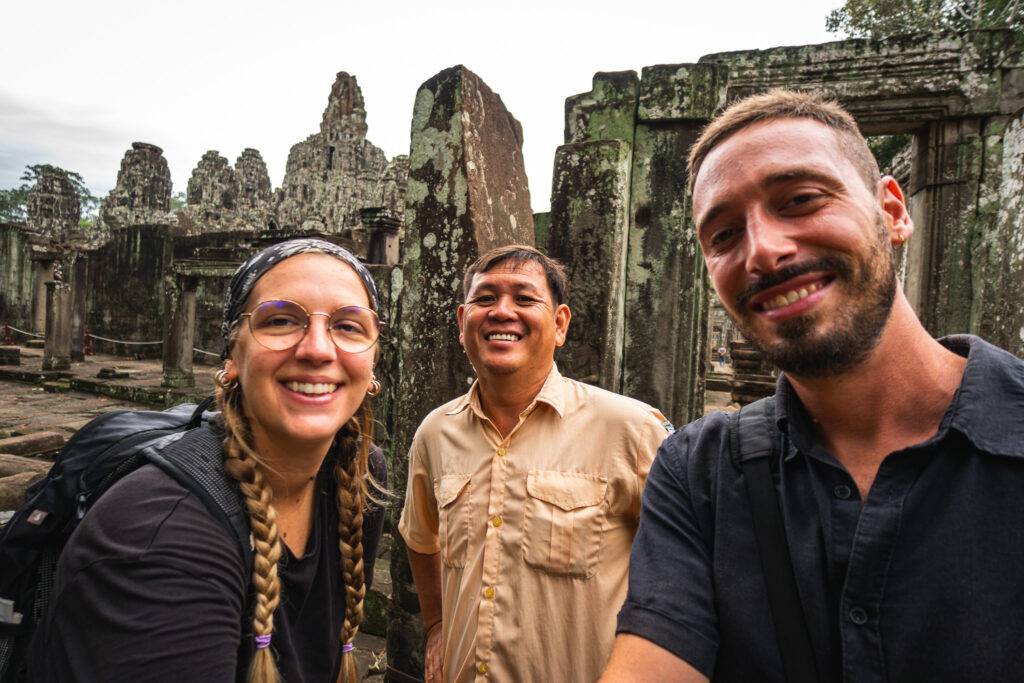
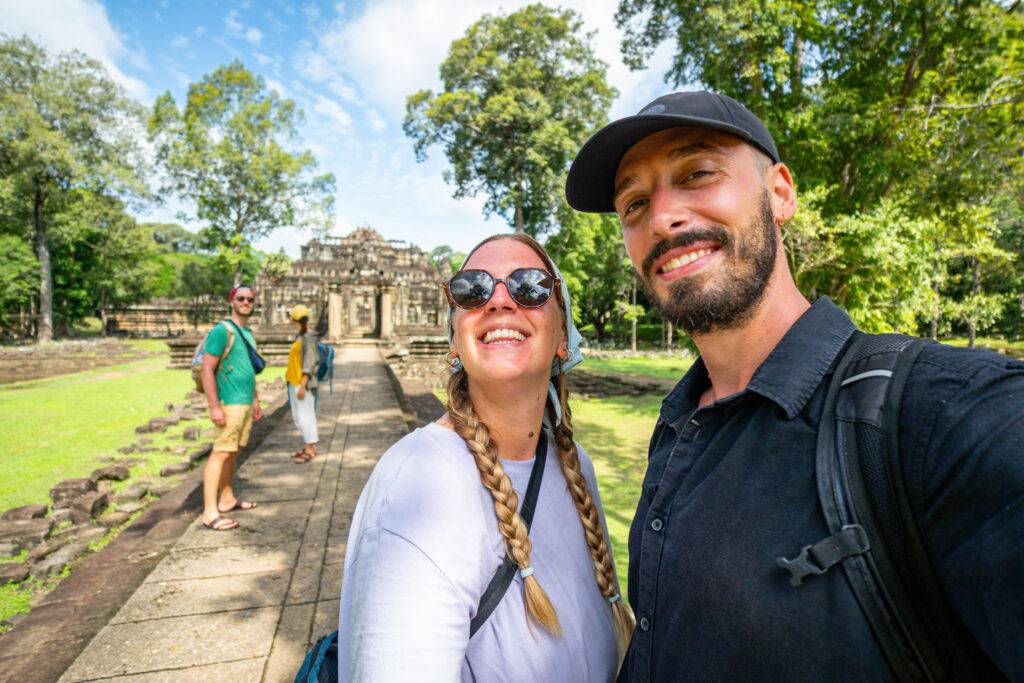
Forgive our heads in the photo: after 7 hours spent in a temple in the middle of the rainy season, we were no longer very fresh! I take this opportunity to warmly recommend Ratana. It is a guide who speaks perfectly French, has infinite knowledge and will be delighted to accompany you on the site of Angkor and everywhere in Cambodia. His WhatsApp number: +855 92 831 653.
📌 The itinerary of the Small Circuit of Angkor
Let’s now move on to the visit! As I told you previously, the first day is often dedicated to the circuit called the “Petit Circuit” or “Small Tour”. The full loop is between 17 and 18 kilometers and it usually takes a whole day, or a very big half-day, to complete it.
This is the ideal itinerary for a first visit. Get ready, because it includes the most emblematic monuments of the Angkor era and requires a departure at dawn for the highlight of the show: Angkor Wat.
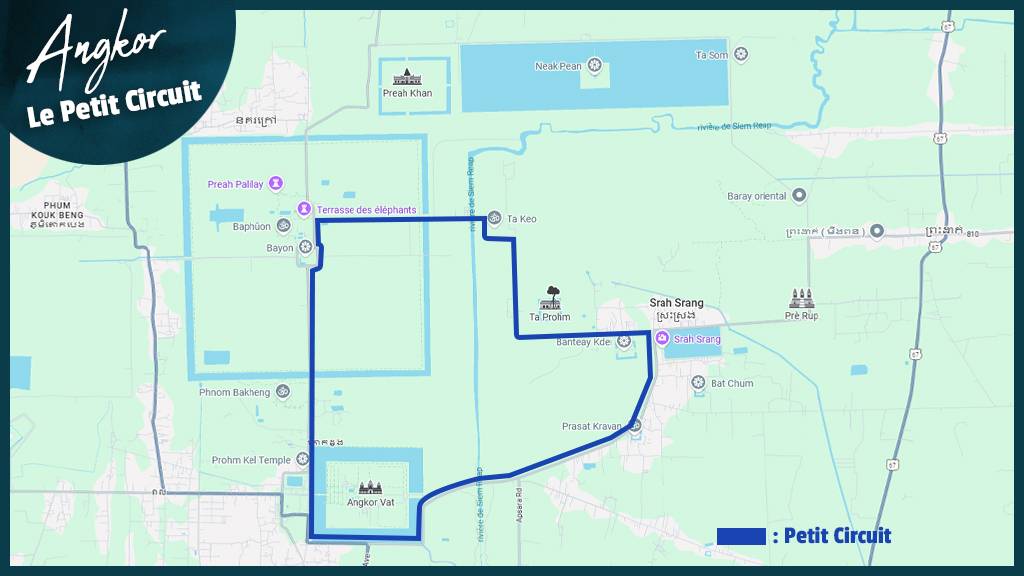
I am not going to describe all the temples of each circuit to you, because that would be too long and I certainly don’t want to spoil your surprise. Here is however the general progress of this day, ideally with a departure at dawn:
The must-see Angkor Wat
More than a temple, Angkor Wat is the emblem of Cambodia. It is quite simply the largest religious building ever built in the world.
Commissioned in the 12th century by Suryavarman II, it represents the apogee of Khmer architecture, dedicated to the Hindu god Vishnu before being progressively converted to Buddhism during the reign of Jayavarman VII. Its iconic silhouette, with its five lotus-shaped towers, is so essential that it features in the center of the Cambodian national flag. It’s the only building in the world to appear on a flag! It embodies both the past power of the empire and the current resilience of the country.
📍 The Sunrise on Angkor Wat 🌅
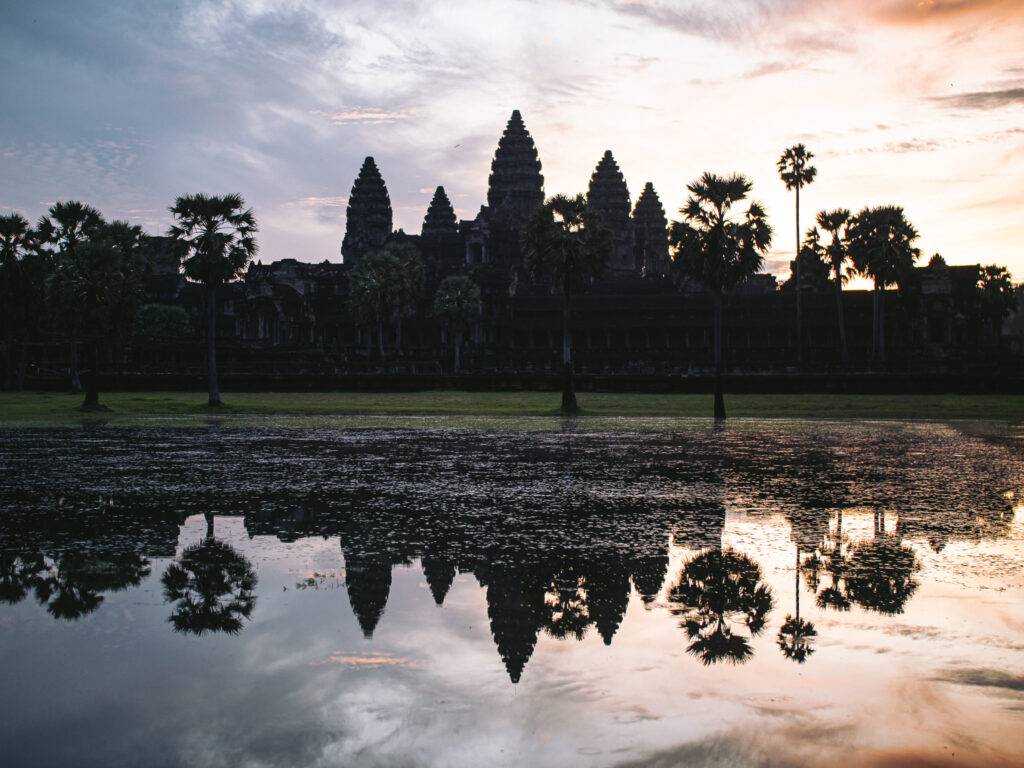
For the Little Circuit, you will often have two options. The first is to leave in the morning at a reasonable time and browse the site throughout the day. The second, very popular in Cambodia, is to get up at dawn (very early in the morning, depending on the season) to attend an incredible show: the sunrise on the largest religious monument in the world.
Prepare yourself for your tuk-tuk driver to pick you up between 4:30 and 5:00 in the morning at your hotel gates. Believe me, it is an experience not to be missed. You will stand at the edge of the basins that surround the temple, first in darkness, then you will gradually see the five towers of Angkor Wat standing out in the sky, changing from black to orange, pink and purple hues. The emotion is very strong the first time one attends this show, even surrounded by a huge crowd at certain times of the year.
💡 My Practical Tip: The main basin, to the left of the entrance driveway, is the most prized. If the crowd is too dense (which will often be the case), you can fall back to the basin on the right or move a little further along the path to enjoy a more serene atmosphere. Note: if you wish to attend the sunrise, you will need to add between $10 and $15 to the price of your tuk-tuk for the day.
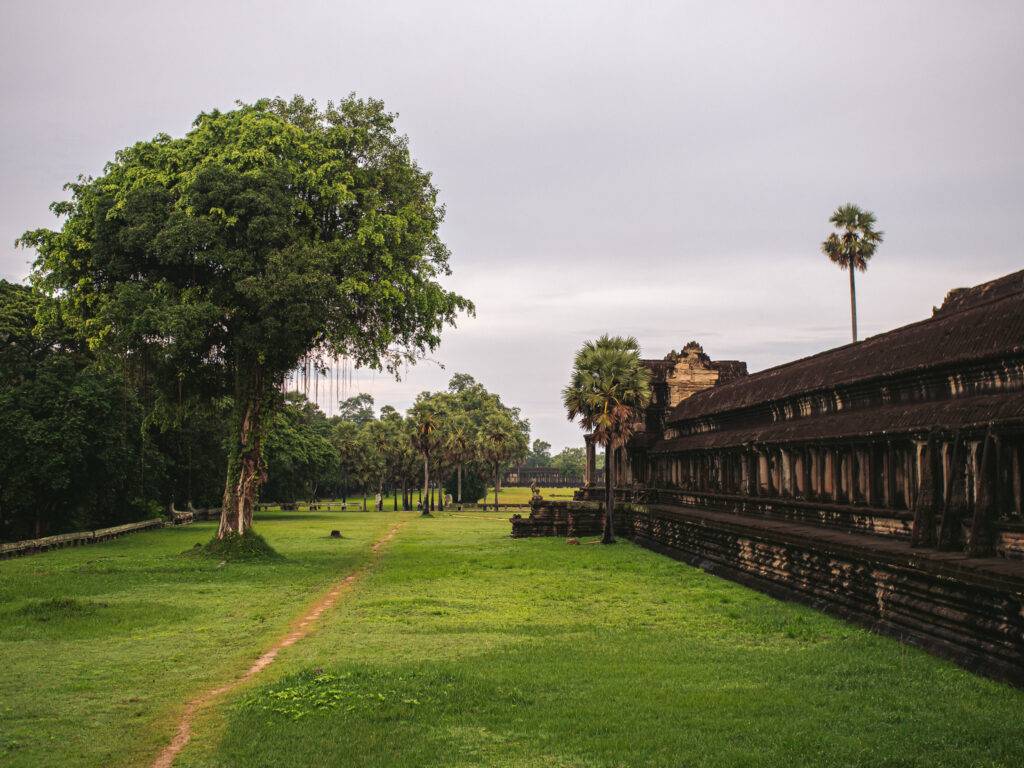
📍 What to do in Angkor Wat?
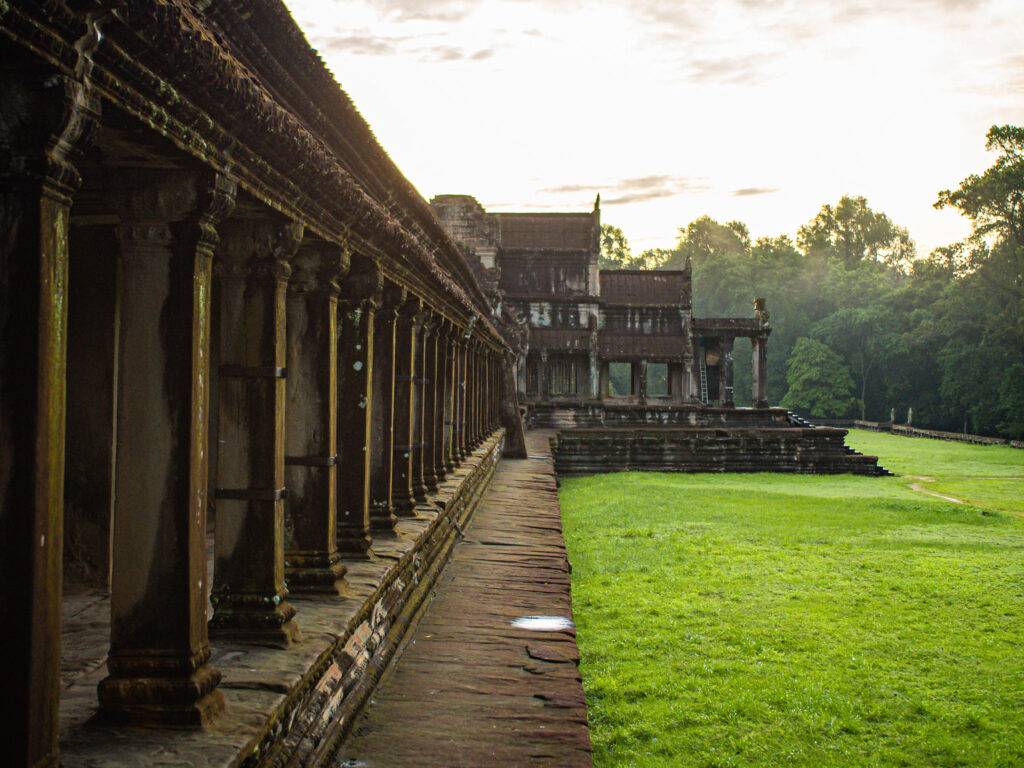
Once the sunrise is over, you can discover the immensity of Angkor Wat by walking through the different galleries. For my part, I have always found it incredible to be able to get lost in the temples of Angkor without restriction (except sometimes due to works). The hundred-year-old stones are literally crowded and almost all the galleries are open to visitors. Even if the site can be very crowded, it is quite possible to be alone in some places, as Angkor Wat is immense.
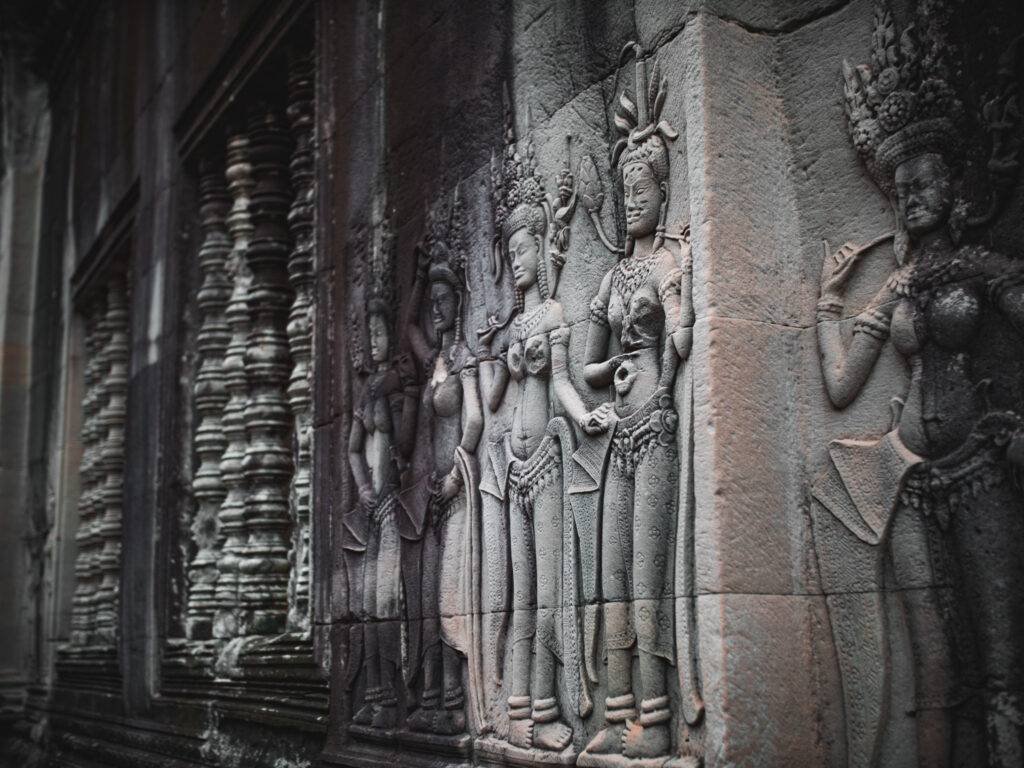
While visiting Angkor Wat, take some time to explore the galleries of the first level. Over more than 800 meters, the walls are covered with bas-reliefs of incredible finesse. They tell the great Hindu epics and, even more fascinating, the military processions and scenes from the lives of kings. It is a real book carved in stone. For the more curious, you will also be able to observe in places the religious transition of the temple: it’s fascinating!
Not to be missed: the fortified city ofAngkor Thom
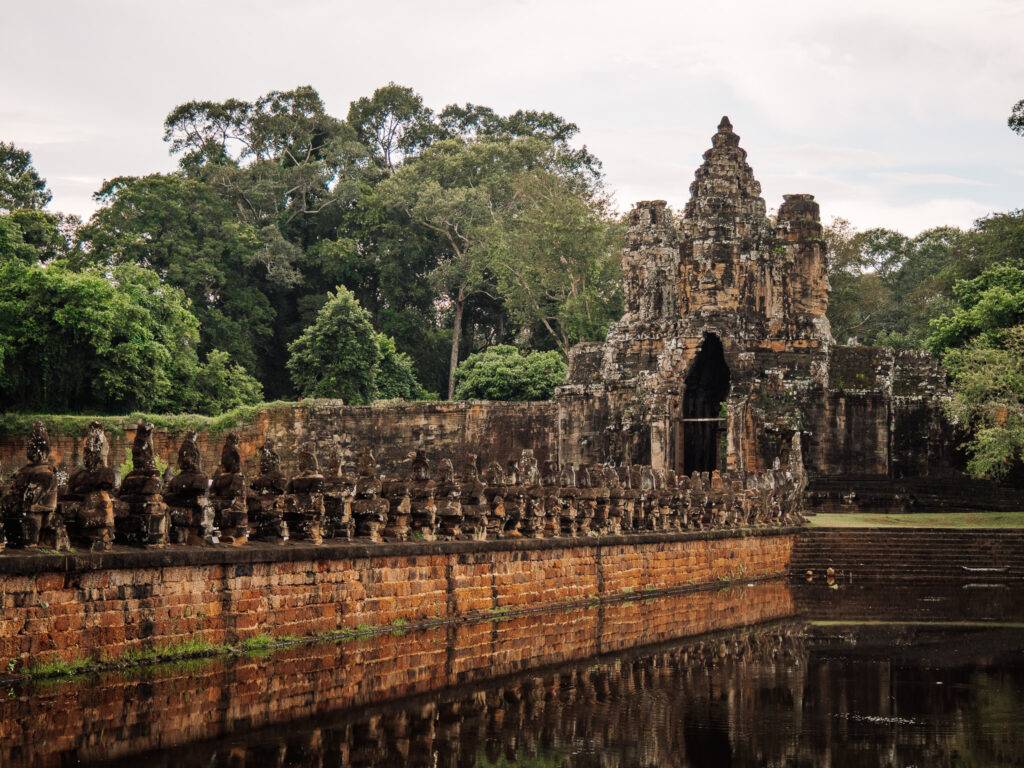
After spending several hours at Angkor Wat, your tuk-tuk will then take you north to cross the imposing South Gate (South Gate). It is the entrance to the walled city of Angkor Thom, which extends over 9 km2 and was erected at the end of the 12th century by the Buddhist king Jayavarman VII. The gate itself is a sight, with its gods and demons pulling nagas along the railings.
📍 The Bayon (Angkor Thom)
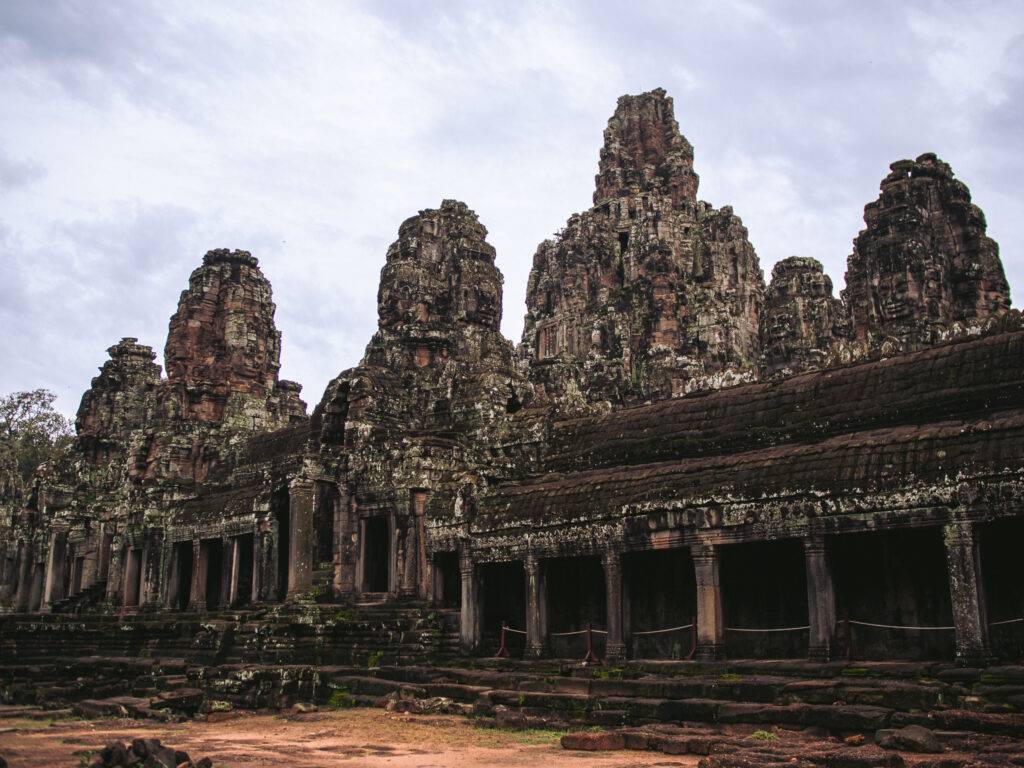
When you have passed the southern gates, you will arrive in a few minutes at Bayon, the second most iconic temple of Angkor. It is a real forest of stones. This is not a classic pyramid-shaped mountain temple, but a labyrinth of terraces and galleries, adorned with more than 200 giant smiling faces, sculpted on 54 towers.
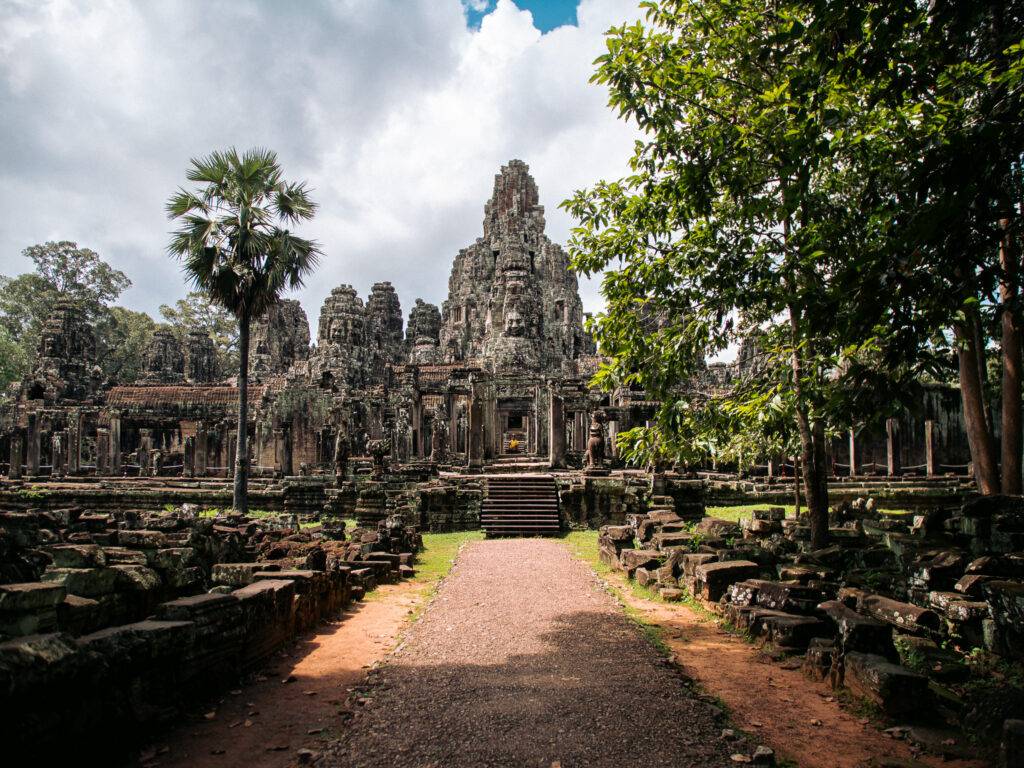
What makes the Bayon so special is the unique emotion it provides. His faces, many of which represent the Bodhisattva Avalokiteshvara (compassion) and others the deified King Jayavarman VII himself, observe you from every angle. The effect is both mysterious and deeply calming. One has the feeling of being at the center of the world, under the benevolent and omnipresent gaze of a god. The first time I saw the Bayon, I didn’t even know what to say anymore, as I was both blown away and crushed by this incredible monument.
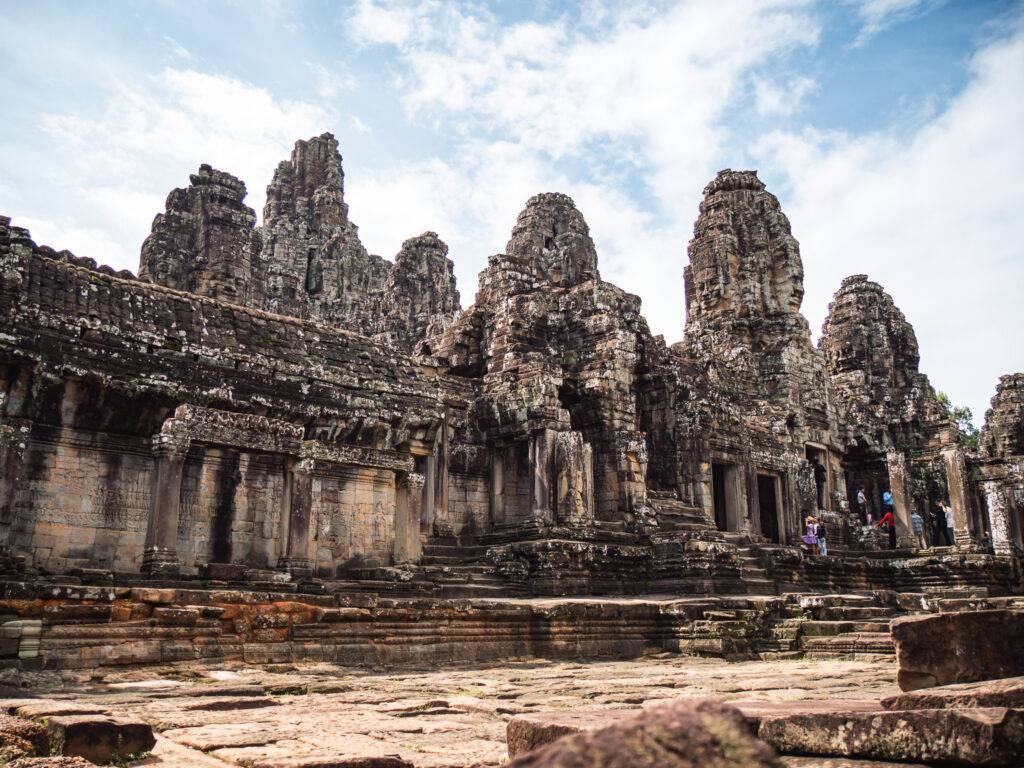
When you visit the Bayon, don’t limit yourself to towers and faces! The bas-reliefs of the outer galleries of the Bayon are exceptional, because they do not only tell myths: they also describe the daily life of the Khmer of the time.
You will see market scenes, cockfights, fishermen, and even a representation of the Khmer navy in battle against the Chams. It feels like reading a comic from the era, and if you pay attention, every detail tells a story. During my last trip to Cambodia, I stayed 7 hours in the Bayon (you have to be passionate, I grant you 😂) to observe every detail of the frescoes and try to understand their stories.
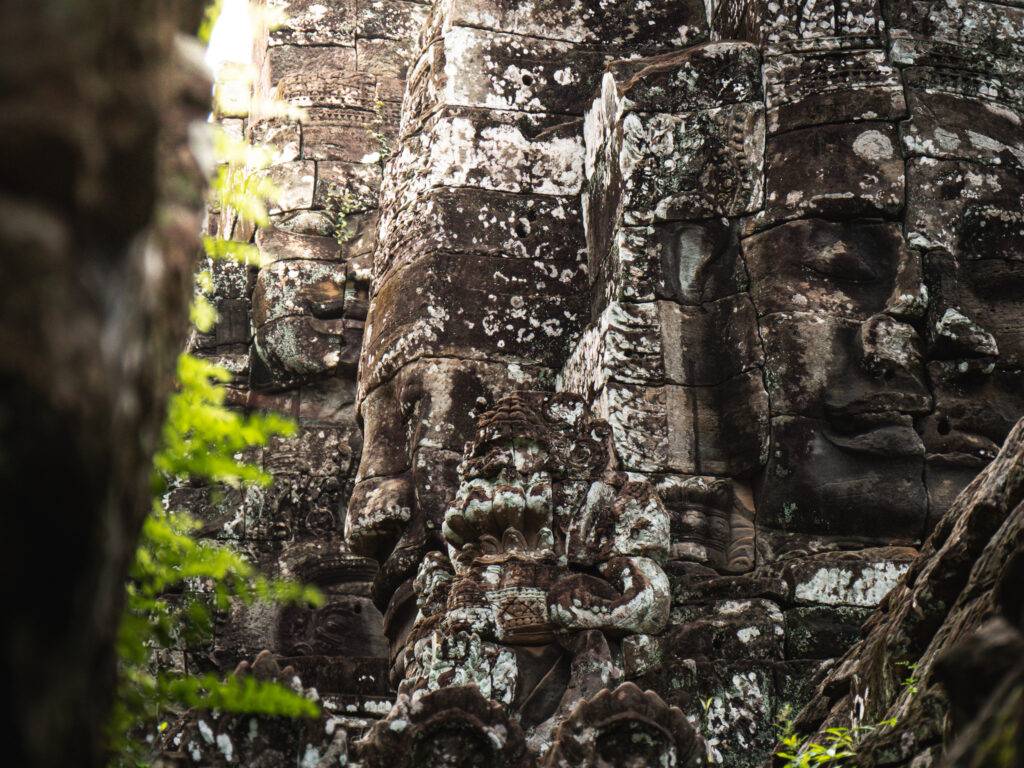
💡 My Practical Advice: Visit the Bayon by level. Do not rush into the central temple and take time to observe the details of the outer walls before being surrounded by the famous smiling faces at the top.
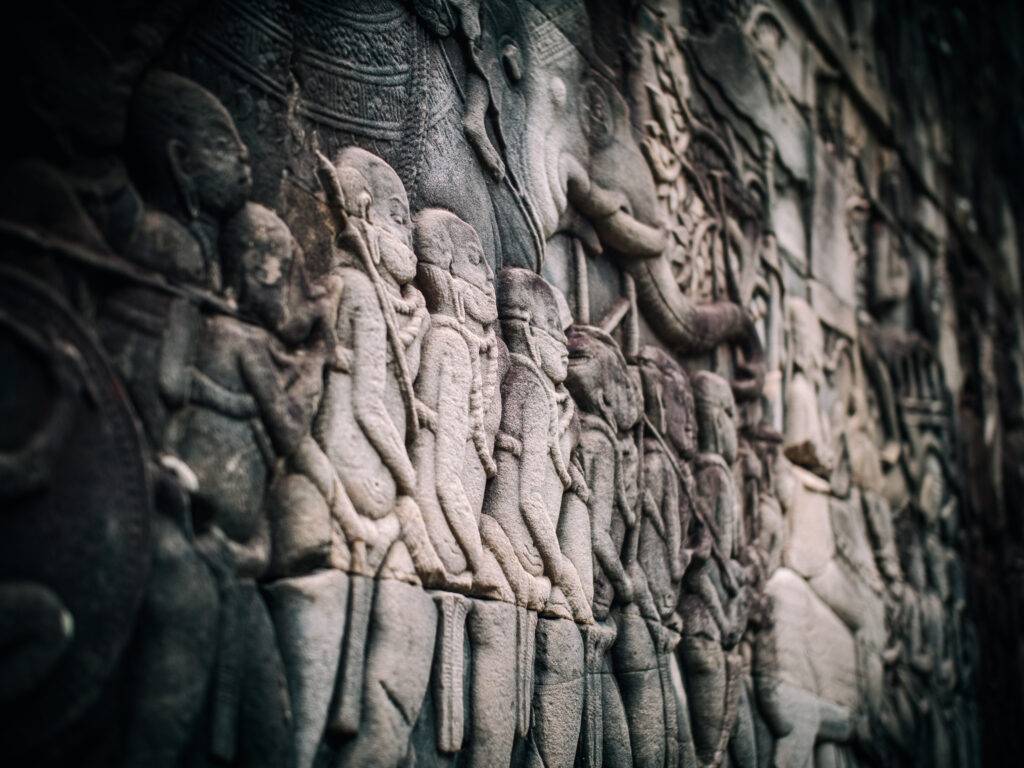
📍 The Royal Terraces (Angkor Thom)
Upon leaving the Bayon, the next step will be the two royal terraces : the Elephant Terrace and the Leper King Terrace. The first was an ancient tribune for the king and owes its name to its long frieze carved with dozens of elephants. The second, for its part, presents very well-preserved sculptures , including apsaras (Khmer dancers) and deities. His name comes from a statue in bad condition that was believed to represent a sick king (when it is not the case!).
Ta Prohm : the unmissable temple of Tomb Raider
After the lunch break, the most unmissable afternoon stop awaits you: the temple of Ta Prohm, built in the 12th century by Jayavarman VII. And you will see it, it is unique!
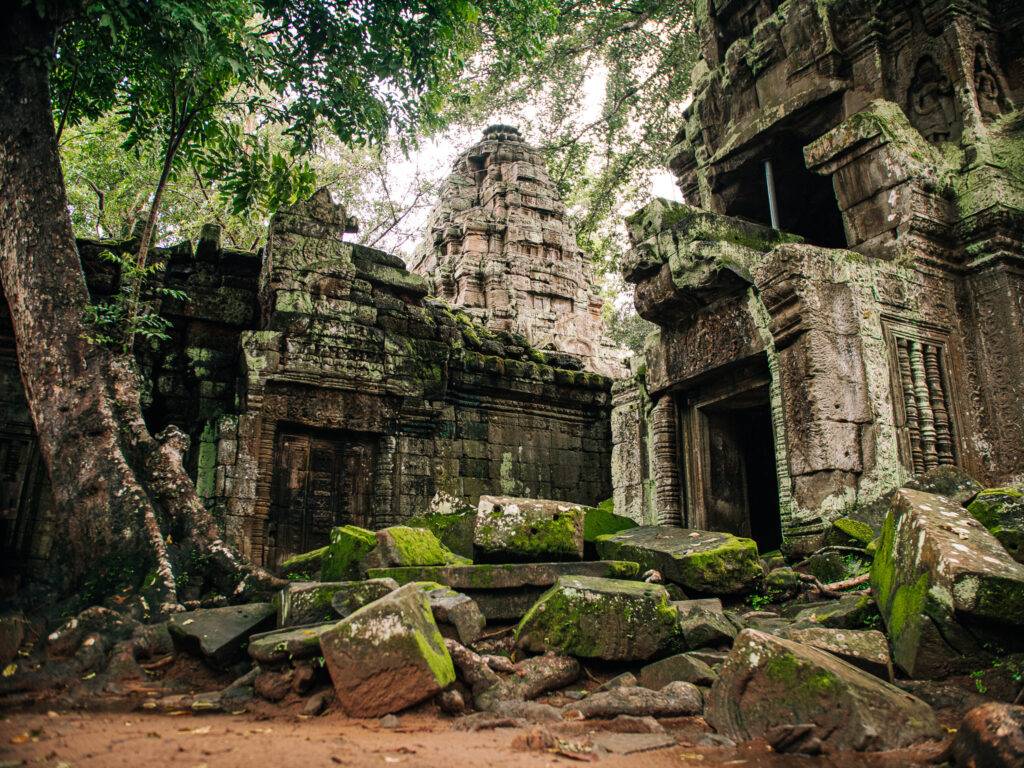
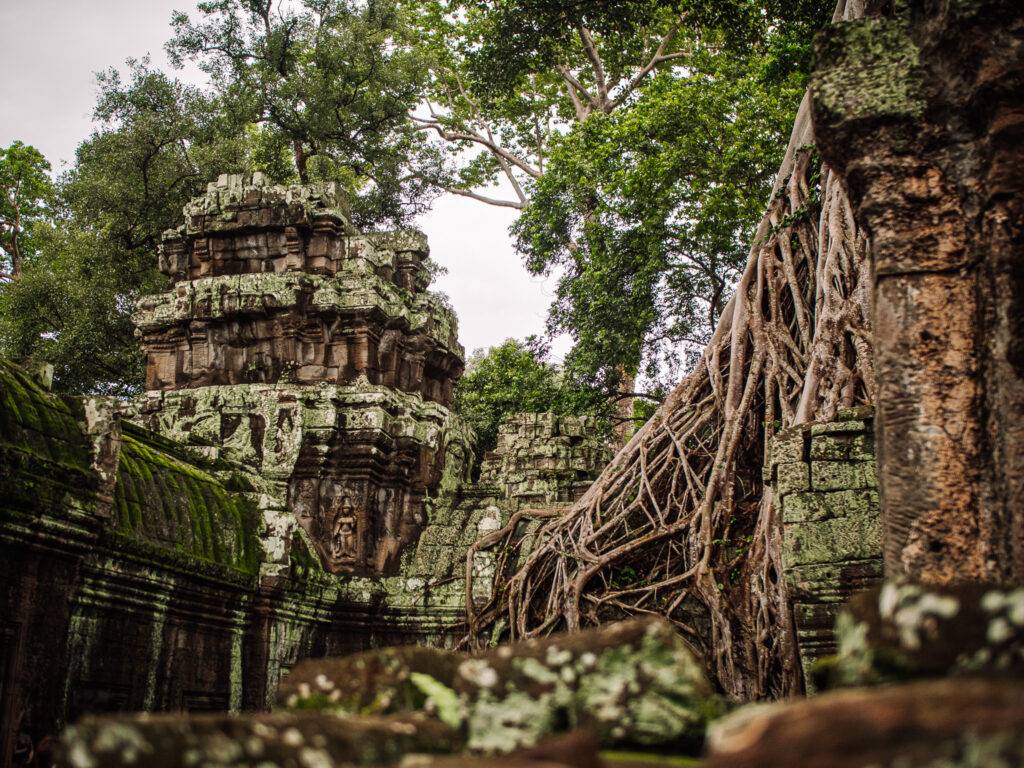
Unlike Angkor Wat or the Bayon, Ta Prohm was intentionally left in a semi-restored state by archaeologists. The idea is to bear witness to the all-consuming power of nature and show the site as it was rediscovered by the West.
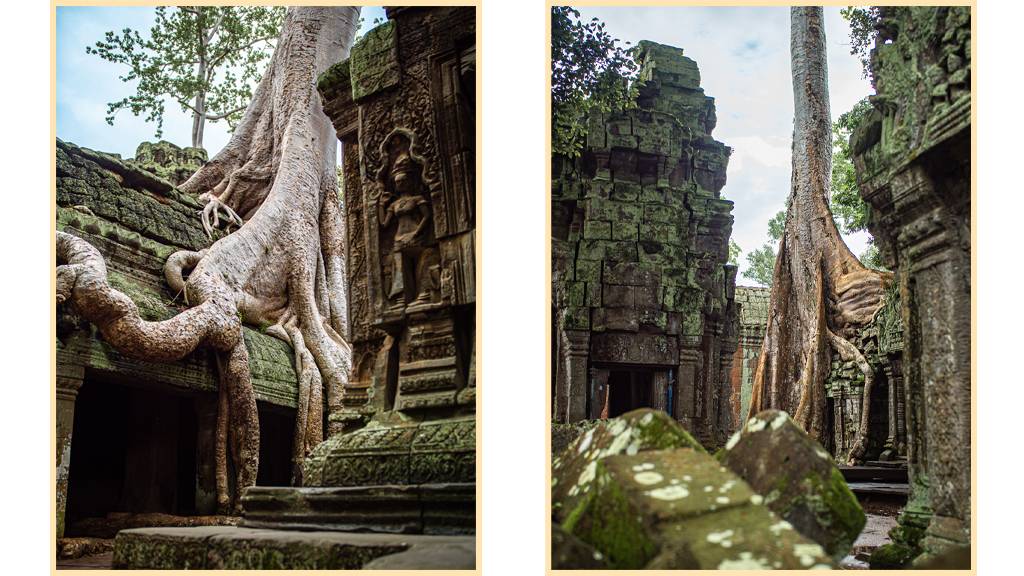
The major characteristic of Ta Prohm lies in the immense roots of the cheese trees (Tetrameles nudiflora, or Spung in Khmer) and ficus that enclose the walls. These impressive roots slip into the smallest cracks of structures. They have long contributed to preserving and protecting the temple, but today they unfortunately have the opposite effect and slowly dismantle the stone.
How did these giant trees settle on rooftops? The most likely theory is that the microscopic seeds were carried by birds, which deposited them in the crannies of the stones via their droppings. Humidity and light then did the rest!
💡 My Practical Tip : In the afternoon, Ta Prohm is often the most crowded temple on the circuit. Try, if possible, to visit it at the opening or at the end of the day. Moreover, the paths can be slippery and rough: bring good shoes to sneak around everywhere.
Banteay Kdei & Ta Keo : temples to visit in Angkor
In addition to other temples throughout the circuit, you will come across two temples at the end of the loop that I really like!
The Banteay Kdei is a Buddhist temple, with smaller doors than the others. I particularly appreciate this place, because it is often quieter and more serene than its more famous neighbors. It is smaller and less restored, which gives it a certain charm, we must admit!
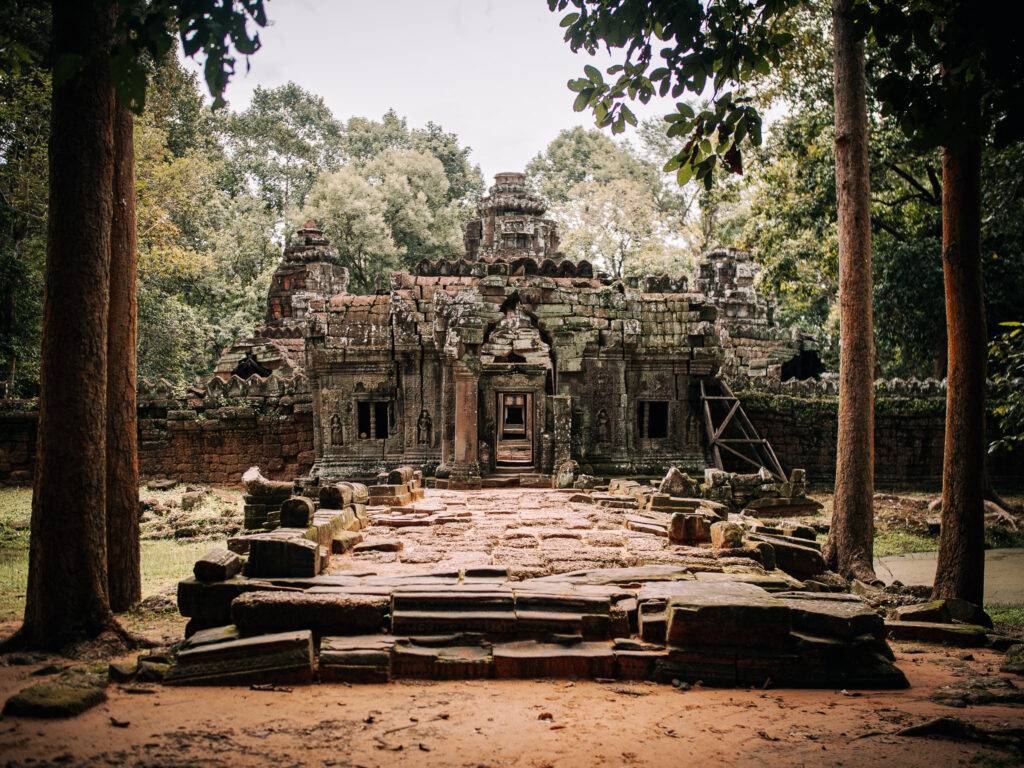
Then, the superb temple Ta Keo. It is also a mountain-temple, but left unfinished. It is said that the work was interrupted at the time due to a bad omen: lightning would have struck on it. Its steps are among the steepest of the site of Angkor, but if you still have the courage to climb them, you will be rewarded with a magnificent view of the surrounding forest.
📌 The itinerary of the Grand Circuit to visit Angkor differently
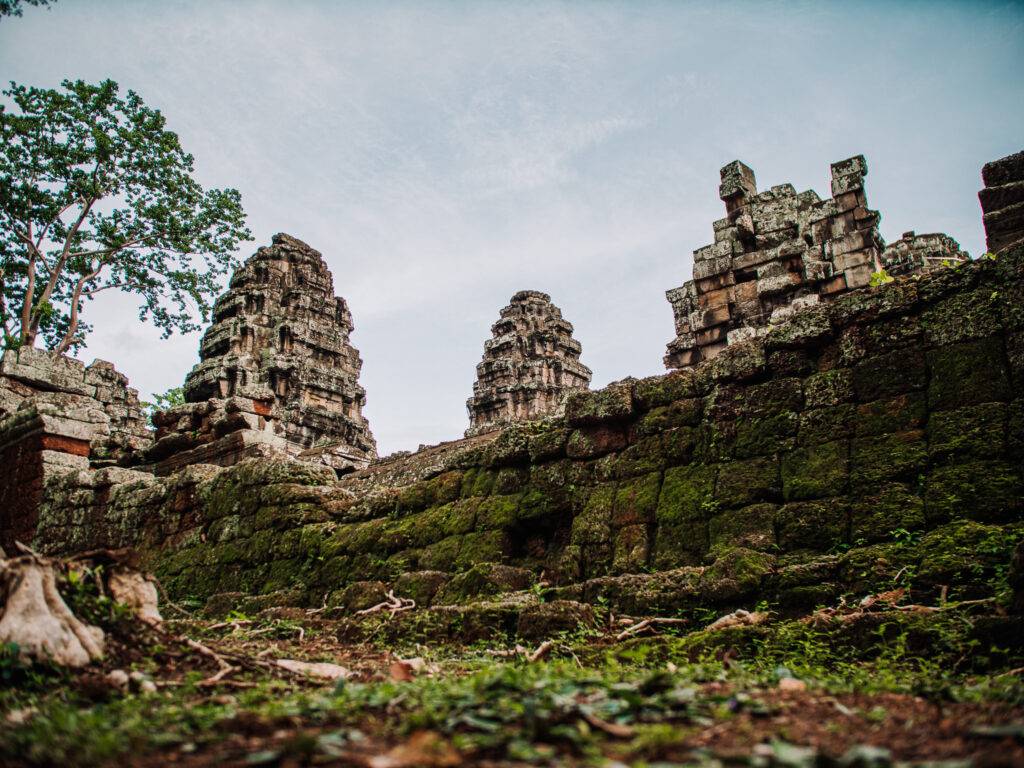
If the Petit Circuit is known for its unmissable, the Grand Circuit, it consists of impressive temples and often less frequented. The total loop is about 26 kilometers and it takes a full day for the big loop, with a pace generally more relaxed than the day before. The temples there are generally more distant from each other, which allows more time to rest and enjoy the walk.
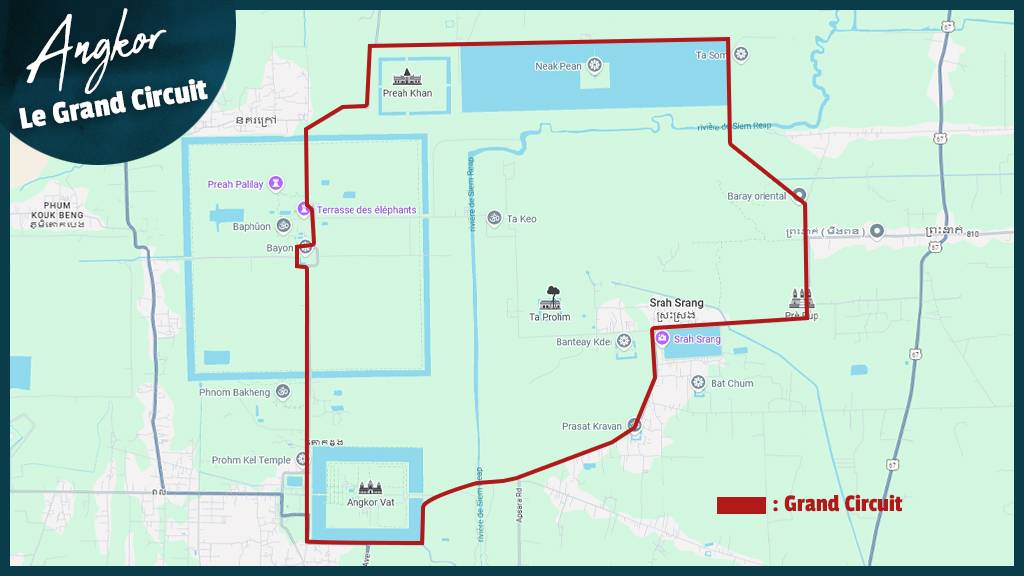
As for the Petit Circuit, I will not present each temple here, but rather give you an idea of what this new day at the archaeological site of Angkor, in Cambodiawill look like.
The temples of the Grand Circuit not to be missed 😍
The Temple of Preah Khan
Built by Jayavarman VII in the late 12th century, Preah Khan was originally a city, temple and Buddhist university. It is an immense complex surrounded by moats, but above all a vast labyrinth! Its galleries intermingle and one has the impression that they will never end during the first visit. It’s very impressive to discover and, often, there are fewer people here : I have often found myself almost alone!
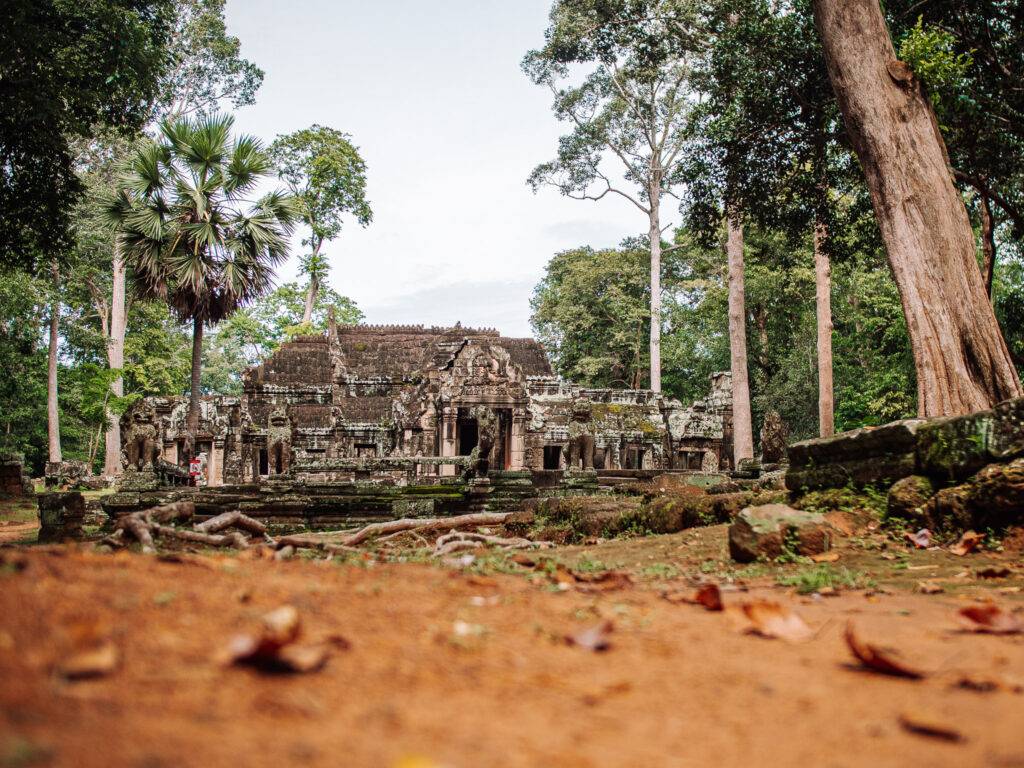
In the manner of the Ta Prohm temple, it is half restored and half overgrown by trees, but on an even larger scale. The first time I visited Preah Khan, I really felt like I was losing myself in the maze of alleys!
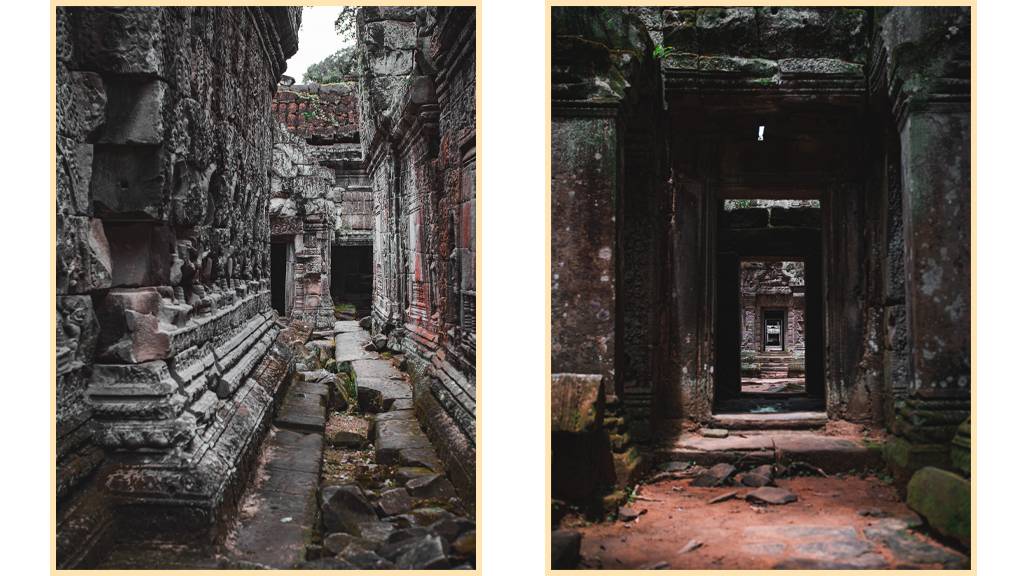
Neak Pean : an unusual temple on the Grand Circuit
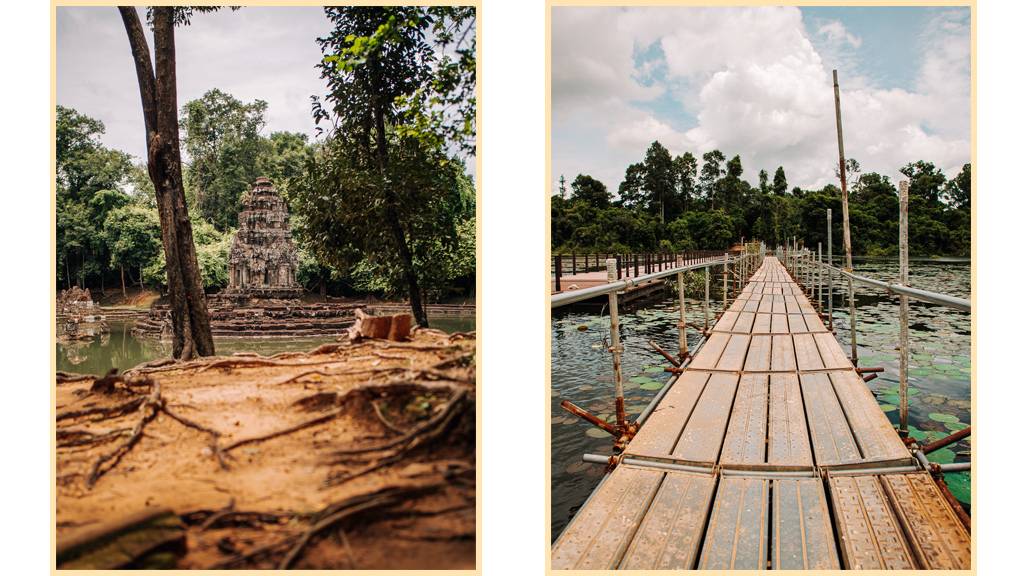
After the labyrinth of Preah Khan, you will discover the Neak Pean. It is a small temple-hospital built on an islet in the middle of a large baray, these artificial basins which mark the site of Angkor. Its design was based on Hindu medical concepts, with a central basin and four smaller basins. At the time, it was believed that these waters could cure diseases.
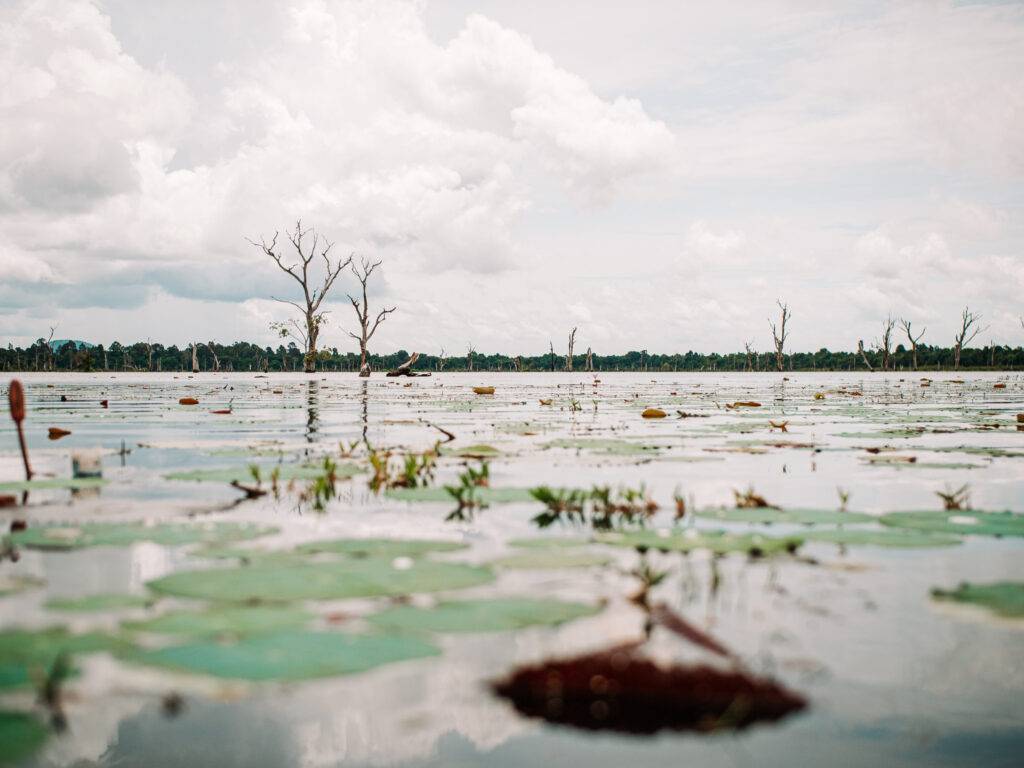
But what is great, in my opinion, is especially its access. To achieve this, it is necessary to cross a long wooden footbridge that spans the large basin. The walk is magnificent and allows you to admire hundreds of lotuses! It is also an opportunity to see with one’s own eyes the hydraulic prowess of Khmer and to understand the main reason why the empire of Angkor prospered for so long: its formidable management of water.
The Temple ofTa Som
The Ta Som is another charming but often quickly visited Buddhist temple. What catches the attention here is a small scene that looks like it comes straight from a movie. To the east, a monumental cheese tree completely covered the door, enclosing it in its roots. The effect is spectacular and offers a unique perspective on the fight between nature and stone, one of Angkor’s trademarks.
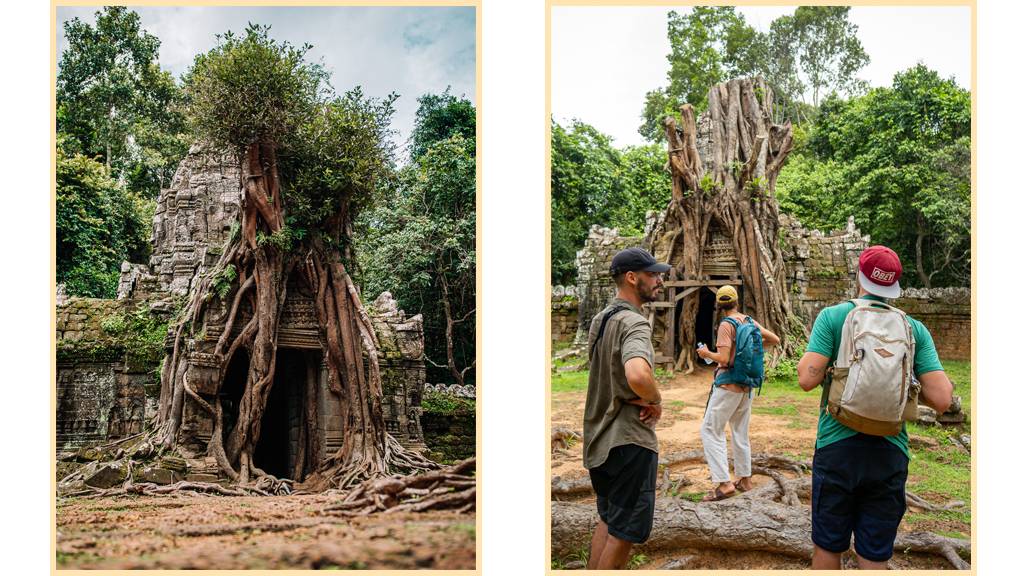
Unfortunately, to protect the temple, the large tree is often cut down. If you are lucky, it will stretch high; otherwise, it will be pruned, as in the photo on the right.
East Mebon : one of the oldest temples of Angkor
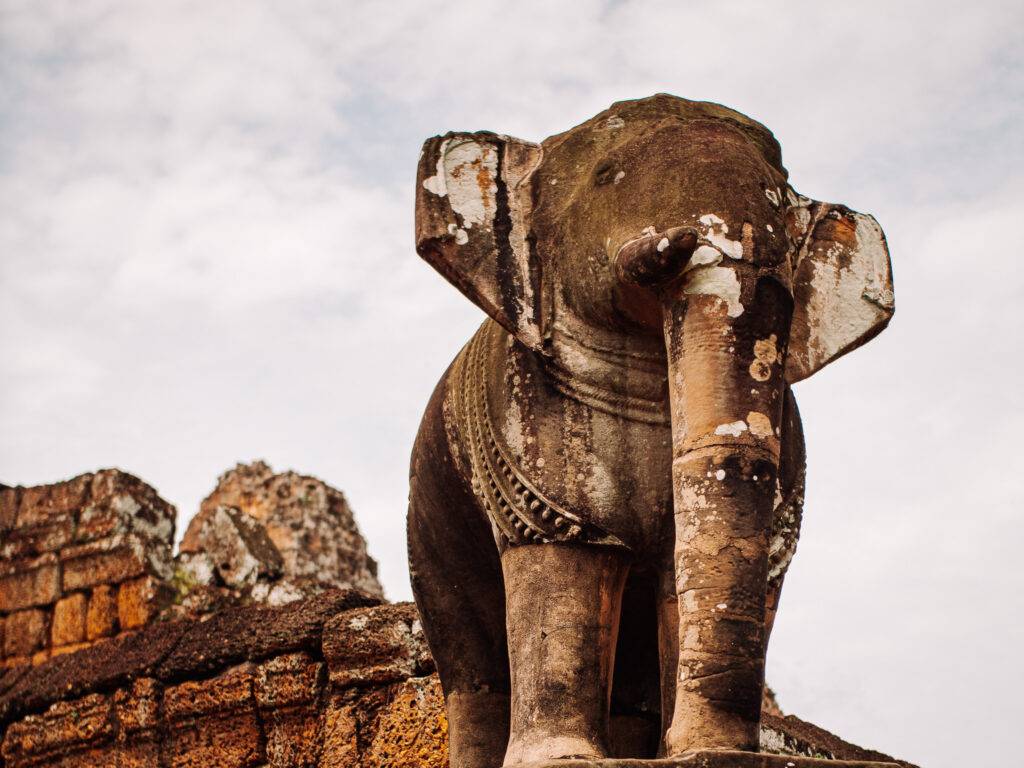
East Mebon is one of the oldest temples you will visit on this loop of the Grand Circuit. Originally, the temple stood on a artificial island in the middle of the gigantic Eastern Baray, today dried up. Imagine the effect at the time: the king only went to the temple by boat to honor the deity in the middle of the sacred waters. Today, it is dry in the middle of rice fields, but remains very beautiful and its architecture clearly distinguishes itself from the rest of the temples of Angkor.
Unlike the others, the East Mebon temple is built of brick. It is particularly magnificent when the sun is low, its orange hues then stand out even more. This pyramidal temple is distinguished by a unique architectural detail: its statues of elephants in stone, life-size, placed at the four corners of its terraces. They are extremely well preserved!
Pre Rup: the last step of the great loop at Angkor
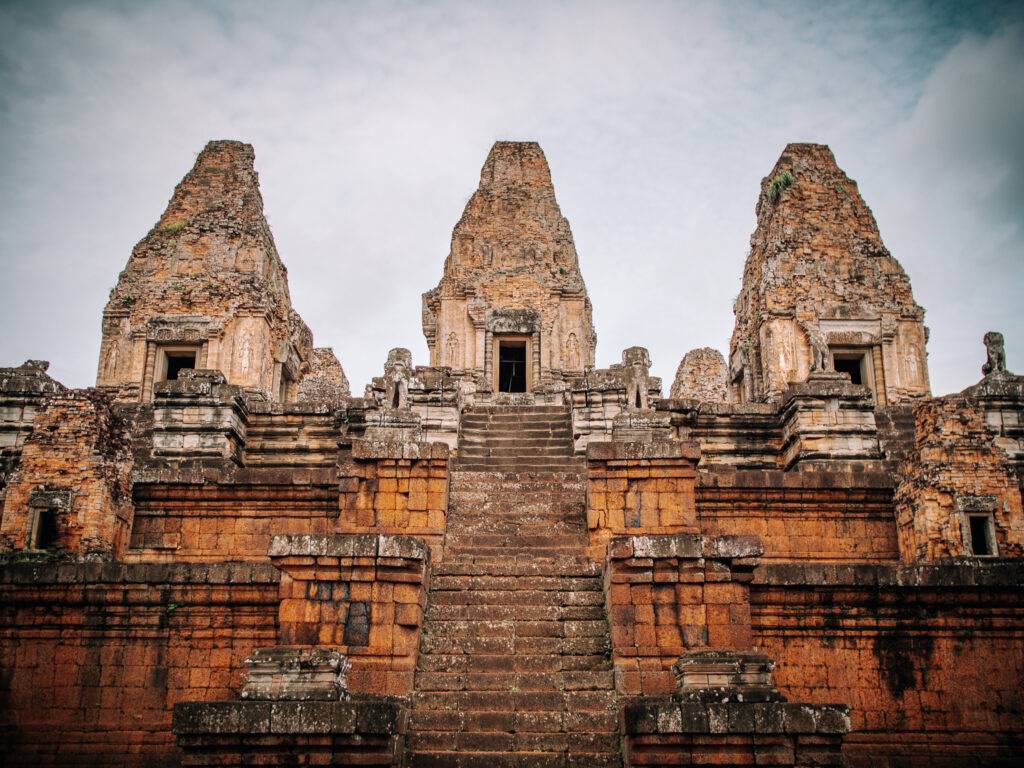
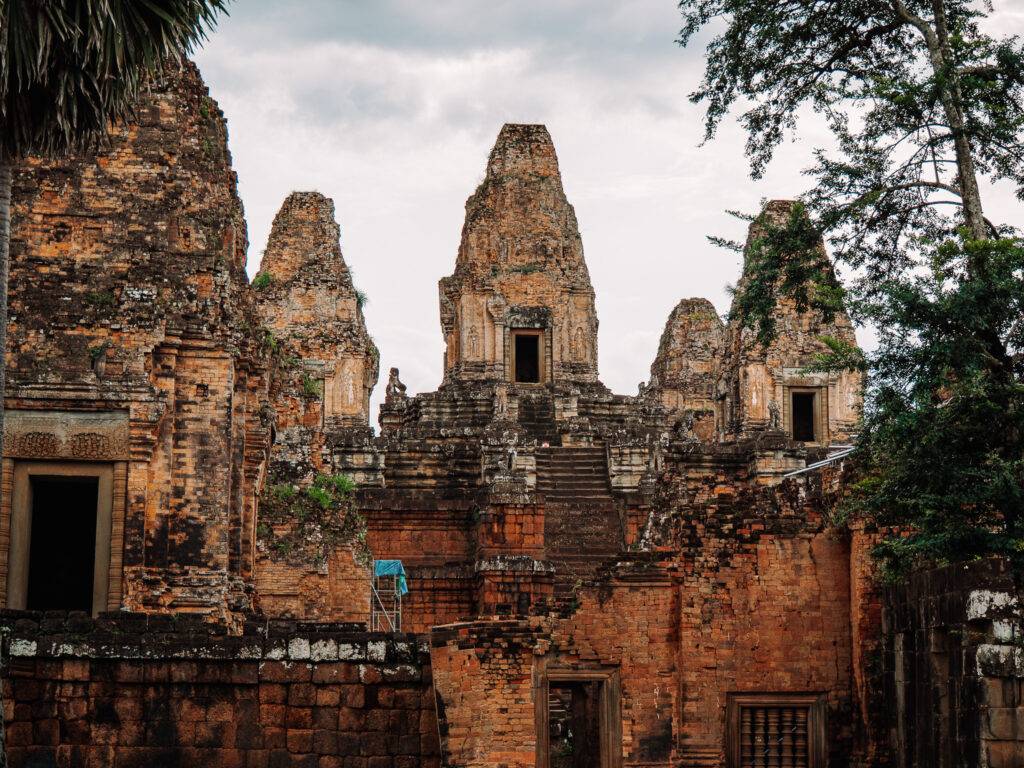
You will finally complete the loop with the imposing Pre Rup, a Hindu temple built in the 10th century by the same king as the East Mebon, Rajendravarman II. The Pre Rup is immense, built on three levels, in brick and red-orange laterite. It is also known as the best place to enjoy the sunset in Angkor. This is the ideal and meaningful conclusion to your day on the Grand Circuit !
The temple of Pre Rup served as royal crematorium. The ashes of members of the royal lineage would have been transported directly to the main tower sanctuaries. I love this place: even if the stairs are very steep, the view from the top is magnificent on the surroundings!
A bit of history before your stay 📝
To conclude this guide in style, here are some historical explanations. If Cambodia fascinates me so much, it is because its present is intimately linked to the splendor of its past. The story of Angkor is not a simple chronological frieze; it is that of a civilization that has pushed the limits of what is possible, forever marking the culture and soul of Cambodia. At the time of its heyday, the Angkor empire was one of the most powerful in the world.
The history of the Angkor empire
The story begins around 802 with King Jayavarman II, who invents the concept of King-God. Each king then had to build his own temple-mountain, replica of the cosmos. The apogee of the empire is between the 9th and 13th centuries, thanks to the mastery of water via a colossal hydraulic system including the barays. This allowed the empire to prosper, feed millions of inhabitants and finance grandiose constructions, notably the masterpiece Angkor Wat in the 12th century.
The last great builder was Jayavarman VII, in the late 12th century. He built the immense city of Angkor Thom and the iconic temple of Bayon, with its famous smiling faces. It was also he who initiated the religious transition of the empire, from Hinduism to Mahayana Buddhism. From the 15th century, the capital is gradually abandoned and slowly swallowed by the jungle. It is this abandonment that today offers us the magical spectacle of temples invaded by roots, like Ta Prohm.
If the knowledge of Angkor has never completely disappeared locally, the Western world officially rediscovered it in 1860 thanks to the French naturalist explorer Henri Mouhot, who stumbled by pure chance on the ruins of Angkor buried by the jungle while he was hunting butterflies.
💡 FAQ: my other tips for visiting Angkor and its temples
Here are some other tips, a bit in bulk, for well visit Angkor :
During the dry season (from November to March), it is less hot, but the jungle and vegetation have a more arid aspect, almost “burnt”. I have always visited Angkor during the green season (rainy season) and it was an incredible sight. Certainly, it is heavy and hot, but discovering the site in a lush atmosphere is a real plus. Against all odds, I would therefore tend to recommend you to visit Angkor between June and October, hoping that the rain is not too present.
Angkor is one of the new wonders of the world, so there are many people. In the rainy season, as I advised you above, the number of tourists decreases quite impressively. If you choose this period, you already have a huge advantage.
Otherwise, in the high tourist season, know that the peak of affluence is often located after sunrise, between 6:30 and 9 am. The best time to visit is midday, between 11 AM and 2 PM: it’s warmer, but the majority of tourists are then busy with lunch.
It is important to follow several golden rules when visiting Angkor. It is an active religious site, so you must necessarily respect the worship that takes place there.
Regarding the dress code, it is necessary to cover your shoulders and knees: no tank top, no shorts, because it is very frowned upon by Cambodians. The advantage of covering up: you will also be protected from the sun and mosquitoes, which are legion! Also plan for good shoes, you will need them.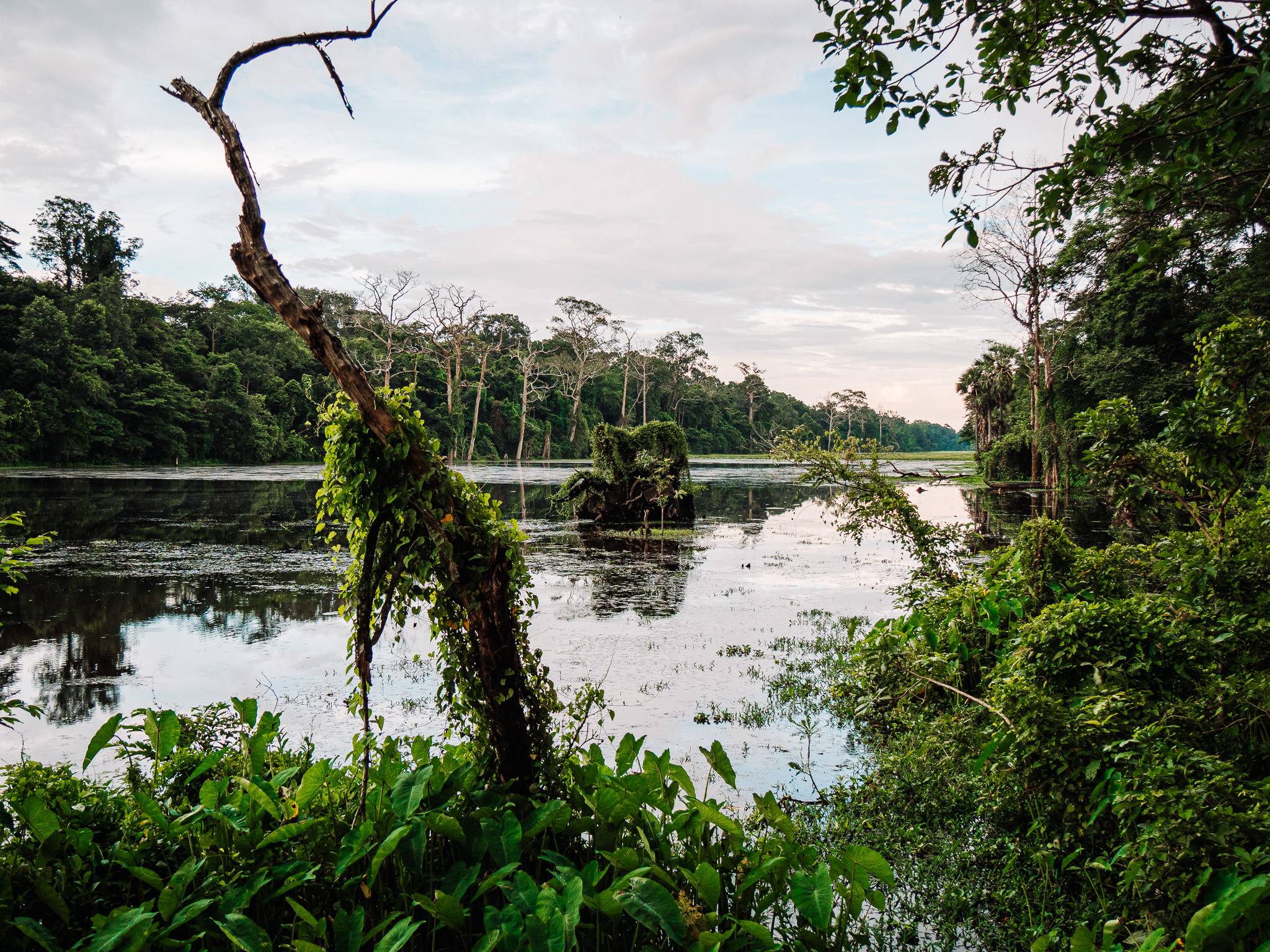
If you have a 3-day pass or a 7-day pass, you can extend the experience of Angkor by visiting more distant temples but still included in your ticket.
Among them, there is the Banteay Srei (the citadel of women), located about 35 km northeast of Siem Reap. He is best known for the finesse and depth of his engravings. Despite the distance, it is very popular, so prefer an early morning visit. Off the main site there is also the Bakong temple. It’s one of my favorites! We can also note Beng Mealea or even Kbal Spean. Finally, know that the site of Koh Ker, which I presented to you in my article on destinations off the beaten track in Cambodia, is not accessible via the Angkor pass. You will need to pay for your own pass.
There are plenty of places to eat in Angkor. If you take a tuk-tuk driver, he will surely have a partnership with a restaurant on the site. Beware, these are often quite expensive restaurants and not necessarily very good. You can politely refuse and prefer to eat in one of the many stalls present everywhere. They are often found just outside major temples and large parking lots. You will pay a small price for a meal that will be 100 times more delicious than in the ‘tourist traps’ of the site.
Several rules, other than dress code, apply. Here are a few:
Behavior : Avoid overly strong displays of affection and poses deemed irrespectful, such as imitating a religious statue.
Drones : The use of drones is formally prohibited in the entire Angkor Archaeological Park, except with special and extremely rare permission from the Apsara authority. The airspace is protected and sacred. Do not attempt this, under penalty of confiscation of equipment and a stiff fine.
Do not touch : Never touch bas-reliefs, walls or statues.
Do not climb : It is strictly forbidden to climb on walls, roofs or fragile ruins, even for a photo.
No smoking : Smoking is prohibited inside the temples.
Clean toilets (often western style) are generally available at the entrances of major temples (Angkor Wat, Ta Prohm, Bayon, Preah Khan, etc.) as well as at rest areas. My advice is to take every opportunity to take a bathroom break when you see one. Sometimes, we can not cross for several hours depending on the circuit!
You will walk, it’s inevitable! Even with a tuk-tuk, there are long distances to travel inside each complex. Plan to walk an average of 5 to 10 kilometers per day of visit, in addition to the trips by tuk-tuk between temples. The paths between the major temples are flat and tarred. On the other hand, the interior of temples is often irregular, with very steep stairs at times.
Plan a lot of water, take your time, never rush. That’s why I recommended the 3-day pass, to really take the time to admire the temples and never have the feeling of having to go fast. The heat at Angkor is treacherous and fatigue can happen all at once.
And there you go! We are reaching the end of this guide dedicated to the Angkor Archaeological Park. I hope that this immersion in the wonders of Cambodia not only enlightened you on logistics, but above all gave you the keys to live your own adventure among these millenary stones.
As you have felt through these lines, trying to remain purely factual in the face of the magnificence of Angkor Wat or the spectacular embrace of the jungle on Ta Prohm is never easy, emotion often takes over! A huge thank you to Aurélie and Yann for offering me this space to share this unique experience. It was a pleasure to dissect for you the largest religious site in the world.
If you would like to see these temples come to life, my partner and I continue to share our journeys, including that of Angkor, in video on our YouTube channel: Tales of adventures.
See you soon, and may your trip to Cambodia be unforgettable!
prepare your trip to Cambodia
What to do in Cambodia ? 2 or 3-week itinerary
Before starting this article, I prefer to play the card of transparency: it is…
19 June 2026
Cambodia off the beaten track: Where to go and what to see?
Trip to Cambodia off the beaten track After presenting you with 🔗 2 and…
23 December 2025
Adepte du slow travel, je ne vois pas le voyage comme une simple liste à cocher. J’aime prendre le temps de m’immerger dans un pays, de m’imprégner de sa culture et de son essence. J’ai récemment passé plus d’un an en Asie du Sud-Est avec ma compagne, notre plus belle aventure à ce jour ! En parallèle du voyage, je suis professionnel de la communication, spécialisé en graphisme, photographie et montage vidéo.


No Comments