


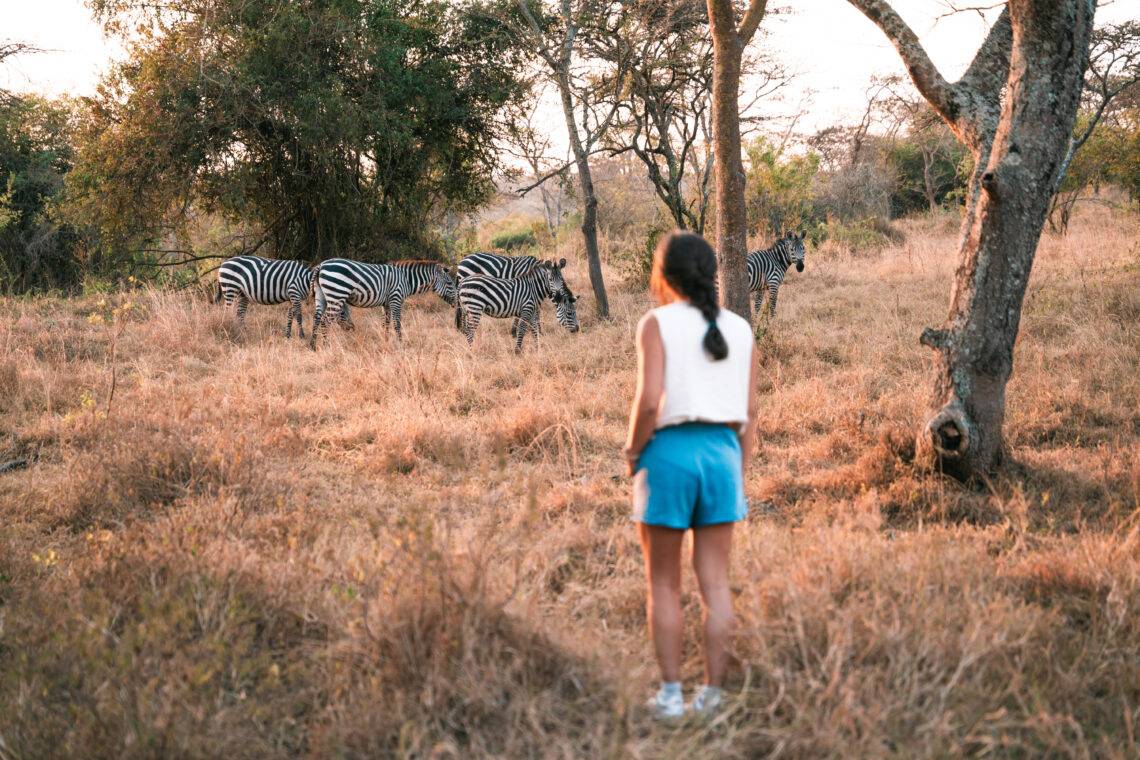
I’m delighted to be back to share the story of my 2-week road trip in Uganda. This East African country, nicknamed “The Pearl of Africa,” gave us an unforgettable trip. Between the lush green landscapes, swimming in the Nile, safaris to encounter the Big Five and various savanna animals, the hospitality of its people, meeting the mountain gorillas in Bwindi, and watching the chimpanzees of Kibale, we came home from this trip with our heads full of memories!
In this article, I’ll walk you through our 2-week itinerary to visit the must-see places in Uganda, as well as my impressions and practical tips. To find out everything about safety, budget, visas… see you at the bottom of the page!
My thoughts on the trip to Uganda
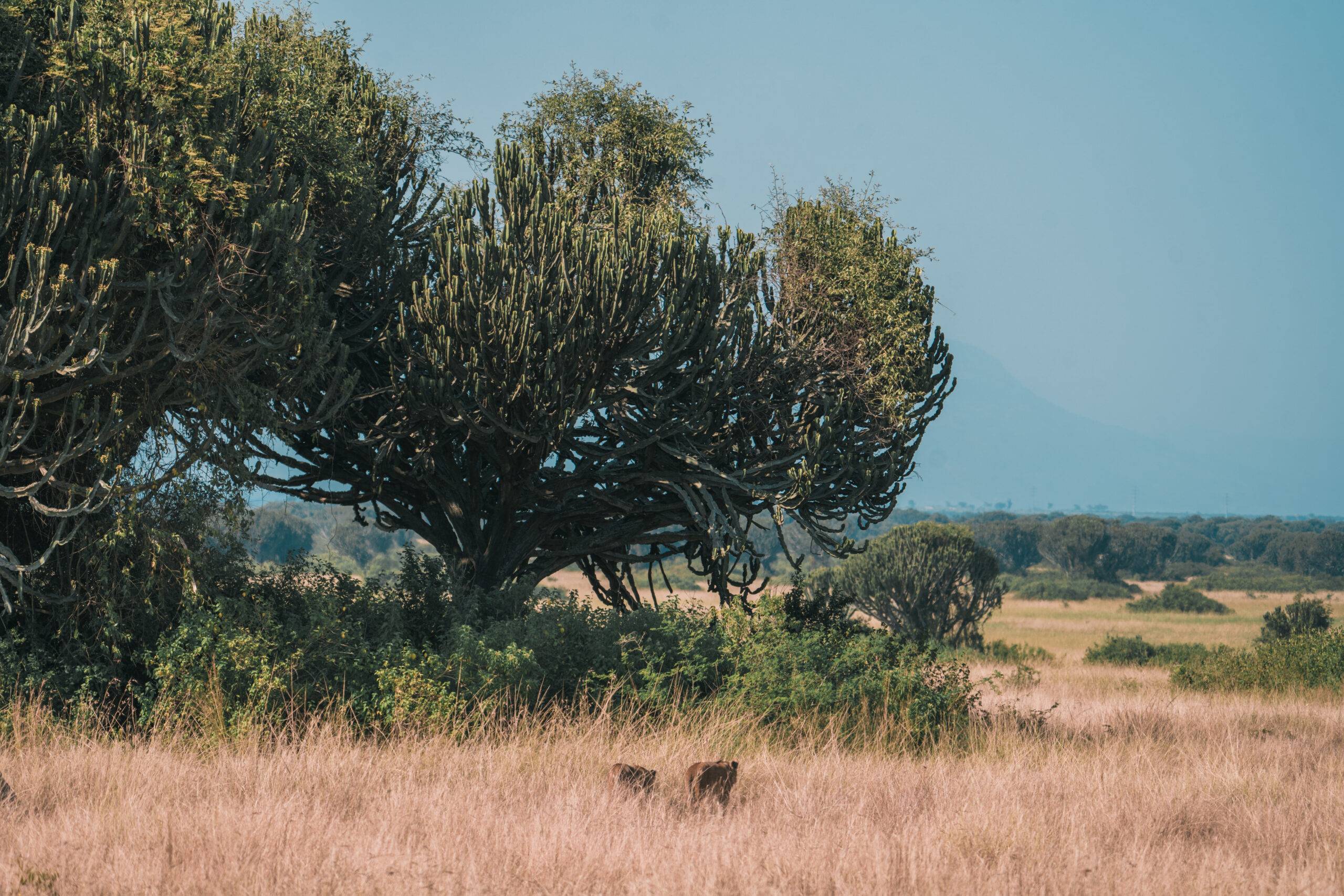
If you love animals like I do, especially savanna wildlife, then Uganda is the destination for you! One thing that really surprised me compared to other African countries I’ve visited is just how dense the vegetation is there. The landscapes are incredibly green: it’s a feast for the eyes.
This country lets you go on safaris, hike through nature, discover rich cultures, and observe both chimpanzees and mountain gorillas. That last point is really Uganda’s strong suit and what sets it apart from other destinations!
Is Uganda a safe country?
Overall, yes: we felt safe during the road trip and we had a local contact in case of any problems. There’s some risk of corruption (police, parking attendants), which is why I recommend traveling with a Uganda travel agency.
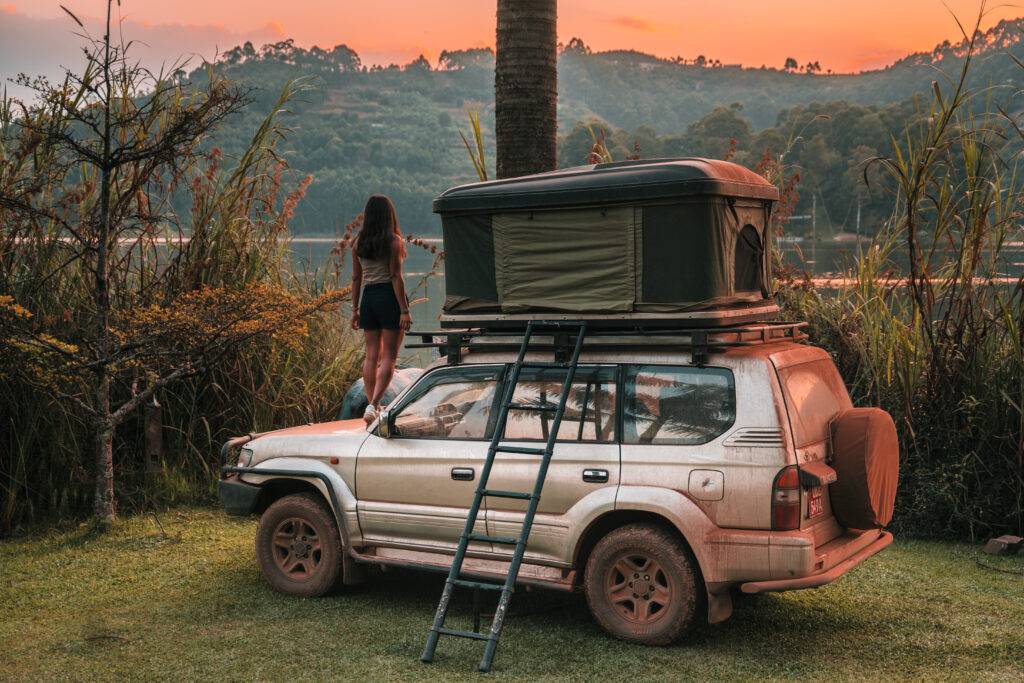
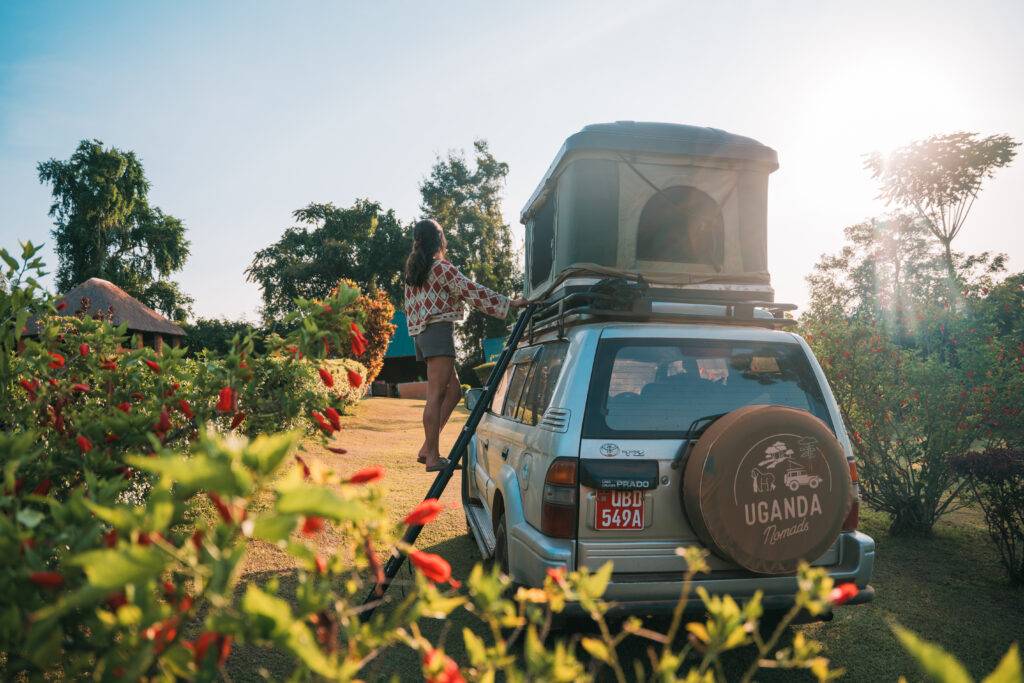
For my part, I chose Uganda Nomads, a trip organized by Travelbase. There are two options for this destination: sleeping in a rooftop tent or in a lodge (with or without a driver-guide). We chose the rooftop tent option without a guide, to live the adventure to the fullest!
If you’re a regular reader of this blog, you already know I’ve traveled with them many times before: Iceland, Jordan, Namibia, Kyrgyzstan… Every single time, it was an incredible experience! The concept is simple (and I love it): these are semi self-guided trips. Which means:
- Uganda Nomads takes care of organizing the itinerary, booking accommodation (or campsites), the car rental, and finding you a guide if you want one…
- You get access to a paper road book and the Travelbase app with all the info, an interactive map available offline, and live chat with the agency’s team
- A local contact is on hand to help you in case of car trouble or anything else.
In short, you don’t have to worry about a thing, other than soaking it all in as you follow the itinerary created by the agency. Zero mental load, pure bliss.
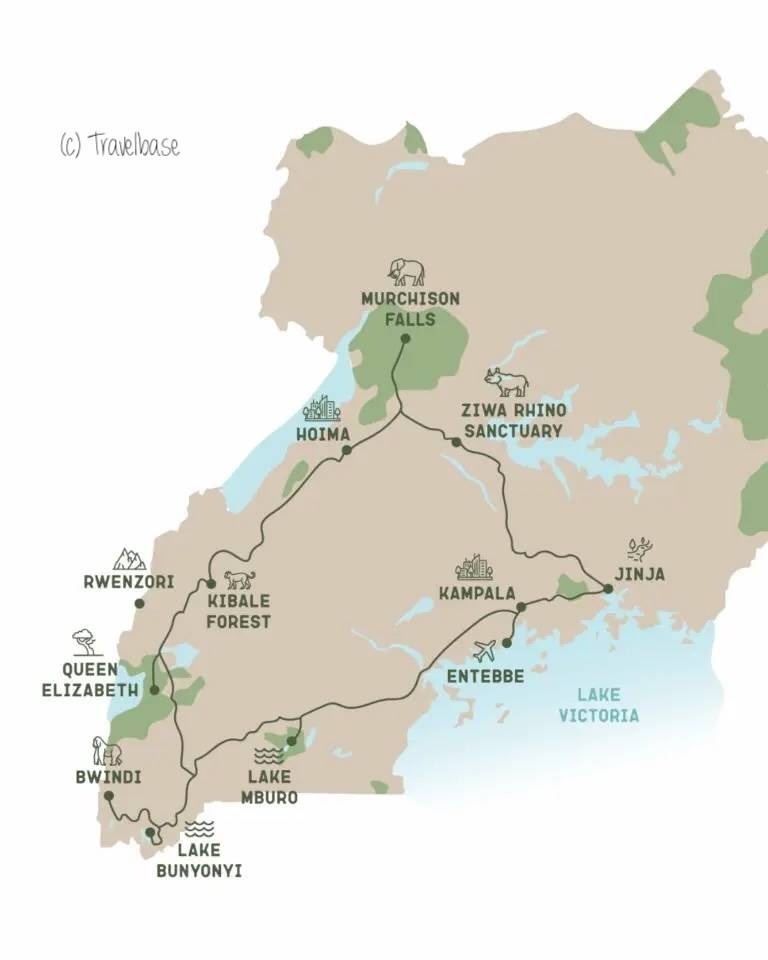
Here we go, let’s look together at the 2-week Uganda trip itinerary with the stages and iconic places to visit in the country. As a reminder, this road trip is available with a rooftop tent or a lodge, with or without a driver-guide.
Self-driving in Uganda
The first thing to know is that people drive on the left in Uganda, with the steering wheel on the right.
Second, know that traffic is rather chaotic in the capital. Between the boda bodas (= motorbikes) coming from everywhere, cars, trucks, and pedestrians crossing without looking, you’ll need to pay close attention when leaving Kampala. But don’t worry, everything will go fine if you stay focused!
In the rest of the country, traffic is much smoother and calmer. However, we did think several times that Ugandans put a lot of faith in God on the road, with failures to yield, people crossing in the middle of “highways,” and rather dangerous merges. When you’re behind the wheel, stay extra alert to other road users.
Third, you must absolutely avoid driving at night. The planned itinerary doesn’t require any nighttime travel anyway. Three main dangers:
- First, the many pedestrians walking along the roadside. You’ll see plenty of them, both day and night. Naturally, there’s no street lighting, so you’ll only be able to see by your headlights at night, and you might not spot pedestrians in time.
- Second, wild animals. Elephants, warthogs, antelopes… aren’t found only inside national parks, and road accidents involving animals are common
- Third, the many potholes in the road, some of them very deep. More like craters than potholes sometimes 😂. So it’s really better to travel by daylight!
In the road book, you’ll find plenty more info on driving in Uganda!
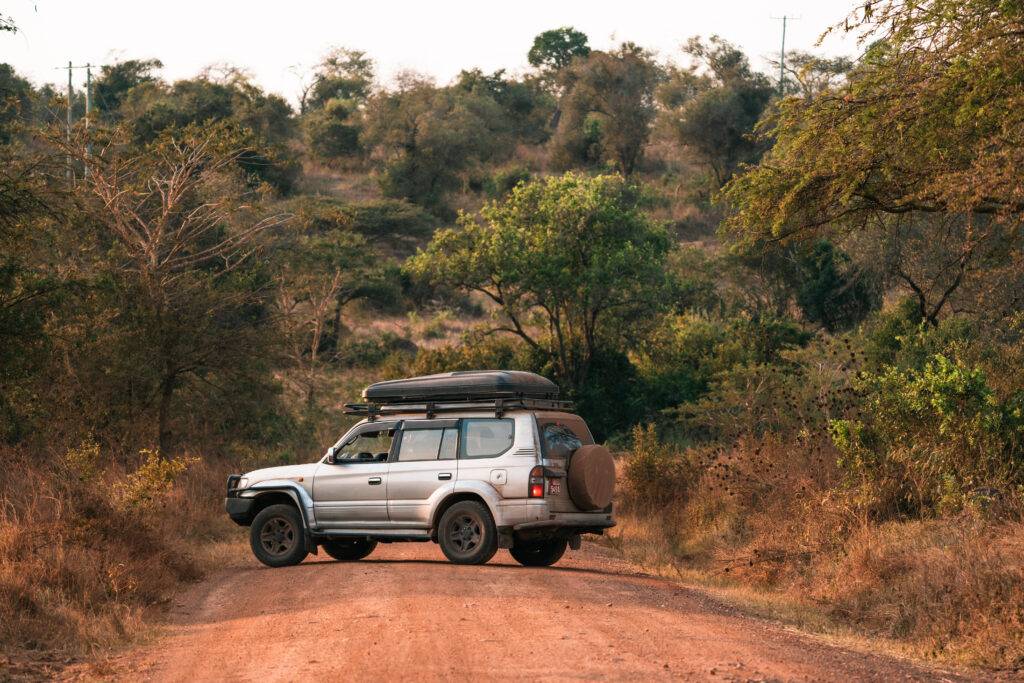
Day 1: Arrival in the Pearl of Africa, at Entebbe Airport
As for getting to Uganda, we flew from Nice to Entebbe, with a short layover in Istanbul with Turkish Airlines.
After the late landing, the agency’s shuttle was waiting to take us to a hotel near the airport. The real adventure starts tomorrow, as soon as we pick up our car with rooftop tent in Kampala, the country’s capital.
By the way, don’t worry about jet lag, there’s only a one-hour time difference between France and Uganda!
Where to sleep in Entebbe?
If you’re traveling with Uganda Nomads, you don’t need to worry about booking accommodation. Otherwise, you can book your hotels on booking.com by clicking here.
Day 2: the start of the road trip in Uganda
After a good night’s sleep and an excellent breakfast, a shuttle will take you to the car rental agency.
If you’re self-driving like us, take photos of your vehicle just in case and check that everything is OK before hitting the road.
If you’ve hired a driver-guide, you just have to sit back comfortably in your seats, like a pasha!
Alright, you’re now ready to set off on Uganda’s wonderful roads.
Ecotourism: visiting Tukulu village
I suggest diving straight into the local culture, spending time at Tukulu Eco Village. This sustainable project, created by the local community, was designed to help residents — young and old — through various sustainability initiatives. This visit is included in the Uganda Nomads trip.
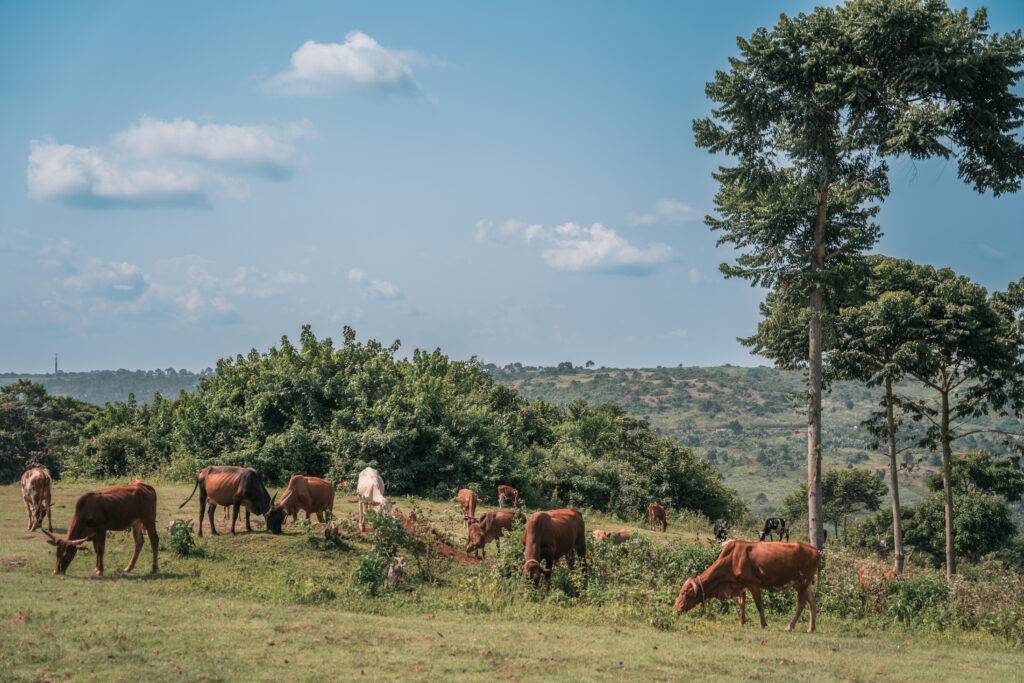
We had a wonderful time with the residents and the children. Marco played football, and I got to see how the women prepared the local lunch we then enjoyed on site. We also toured their coffee plantations and prepared that same coffee to enjoy together, while the children sang and danced to cheer us on.
This experience was authentic and full of discoveries — I recommend it without hesitation.
Here, you’re free to take photos and videos. But I choose not to feature children who never asked for it in my content. What I can tell you is that they were gorgeous and fully invested in the cultural songs and dances! 🤩


The road to Jinja, the source of the Nile
I’m sure this title has caught you off guard (unless you’re really good at geography). Yes indeed, the Nile does run through Uganda, and this is actually where it rises, from Lake Victoria. CRAZY, right?!
Before reaching tonight’s camp/lodge, you can stop in the town of Jinja to do some shopping if you want to cook and you’re in a rooftop tent. All the necessary gear is provided in the trunk. If you can’t be bothered, no problem, every campsite along the way will have a restaurant.
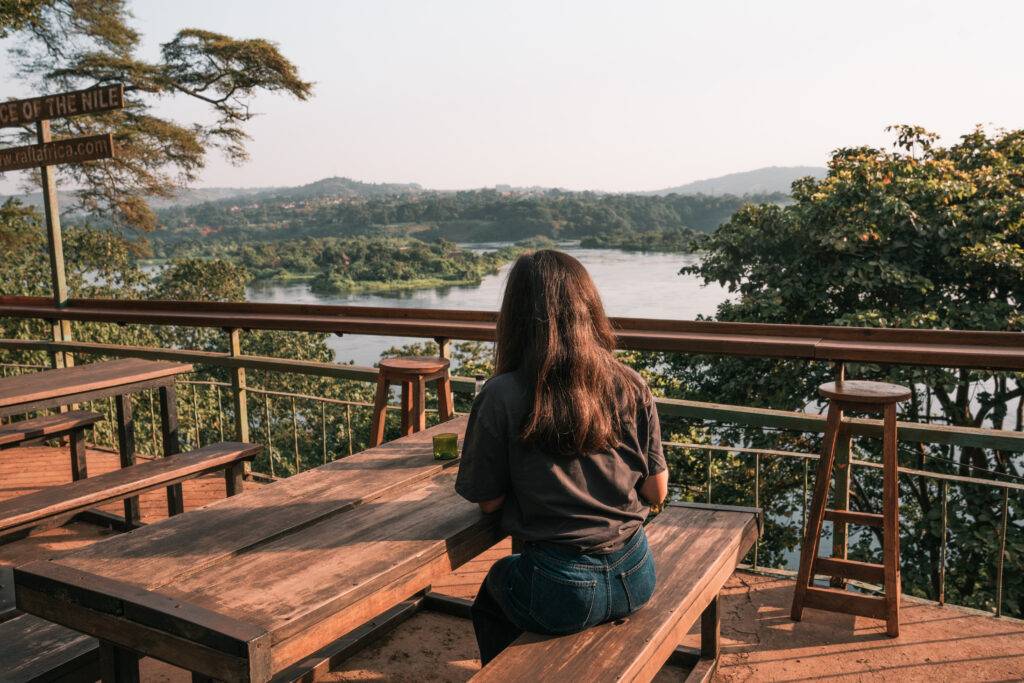
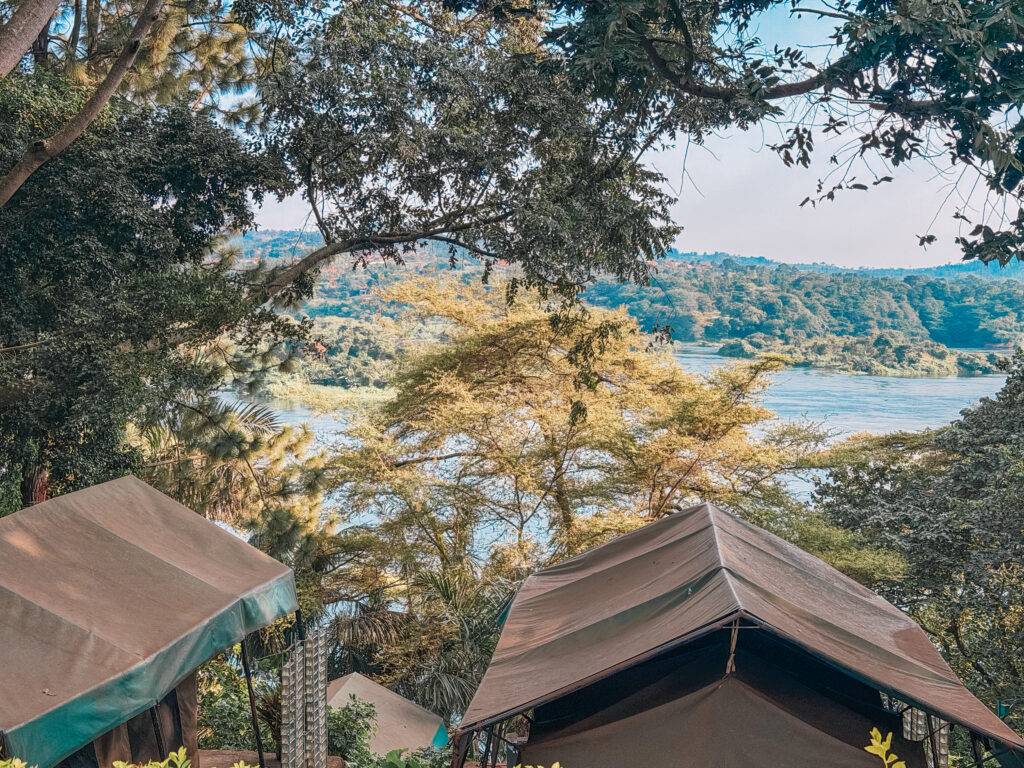
This first sleeping spot was truly gorgeous, right on the banks of the Nile.
Day 3: unmissable activities to do on the Nile in Uganda
Today’s program offers several options. The first is organized by Uganda Nomads: a full day of white-water rafting on the Nile. You can add this option when you book on the website. We’re not big rafting fans, so we skipped it!
Kayaking and paddleboarding excursion on the Nile
We chose to go for a little kayak ride for Marco and paddleboarding for me. Accompanied by a guide, we got to enjoy the beautiful scenery from the water and even took a swim. In this spot, there are no dangerous animals like hippos or crocodiles, so you can take a dip worry-free!
For this activity, no advance booking needed. You can simply ask at the campsite’s reception desk to have them arrange it for you. We paid 300,000 UGX (Ugandan shillings), which is about €35 per person for 3 hours of kayaking + paddleboarding with a guide.


Craving adrenaline?
In the area, you can also go bungee jumping or river tubing on the Nile. If that sounds tempting, ask for info at reception!
Visiting the town of Jinja
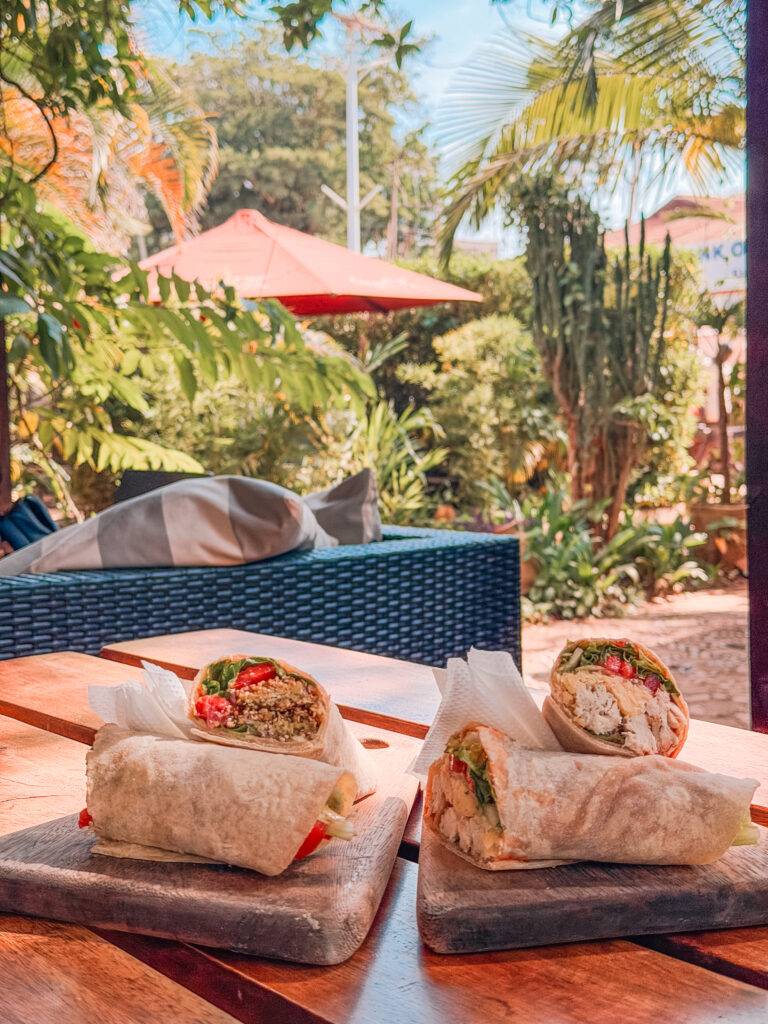
In the afternoon, we went into town to withdraw some cash, do a bit of shopping, and have lunch at The Deli restaurant, recommended in the road book. It’s clearly a tourist spot, but the food was great and the terrace is fantastic.
Sunset boat trip to the Source of the Nile
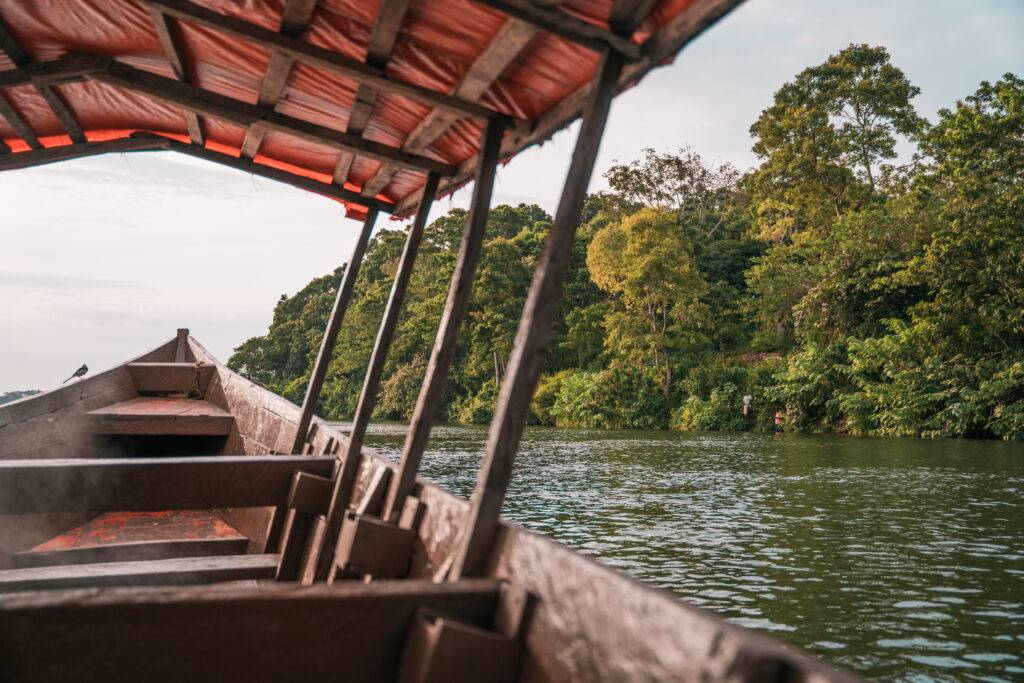
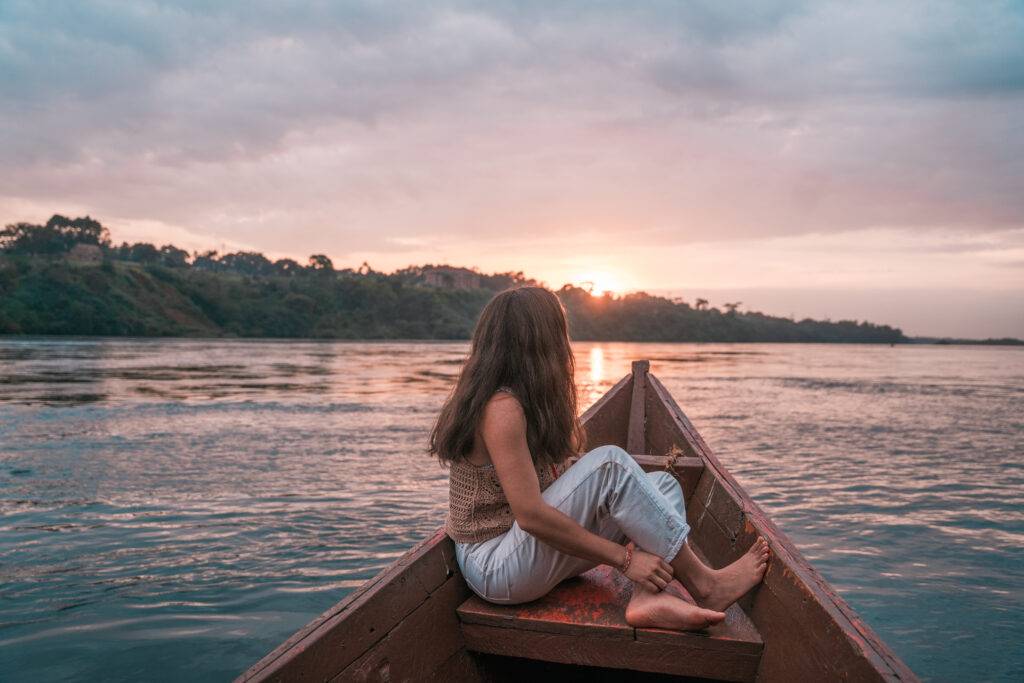
In the evening, we were offered a sunset boat trip on the river. We said yes right away, without asking the price… We made that mistake once, not twice 😂.
Well, it was a really lovely moment, but it actually followed the same route we’d done by kayak that morning. For two hours on the boat and a plate of tapas included, we paid €90!!! The price surprised us, we were expecting a lot less (and honestly, we should have asked beforehand, so it’s on us).
That’s when we realized that tourist prices had absolutely nothing to do with local living costs. Just so you know, Uganda isn’t necessarily a cheap destination. Let’s just say we really savored those tapas at that price!
Anyway, all this to say I’d recommend choosing between the kayak and the boat trip. Doing both isn’t really worth it.
Day 4: On the road to the first national park of the road trip in Uganda
This will be an intense day of driving, because you’ll need to cover 400 km to reach Murchison Falls National Park. Long hours on the road await, so pack water, snacks, and your best playlist. Trust me, it’s worth it!
On the way, you’ll pass through the Luwero Triangle, a farming region. If you like, you can stop at a roadside stand to buy fresh fruit. But above all, there’s one unmissable, memorable stop to make…
Watching white rhinos at Ziwa Rhino Sanctuary
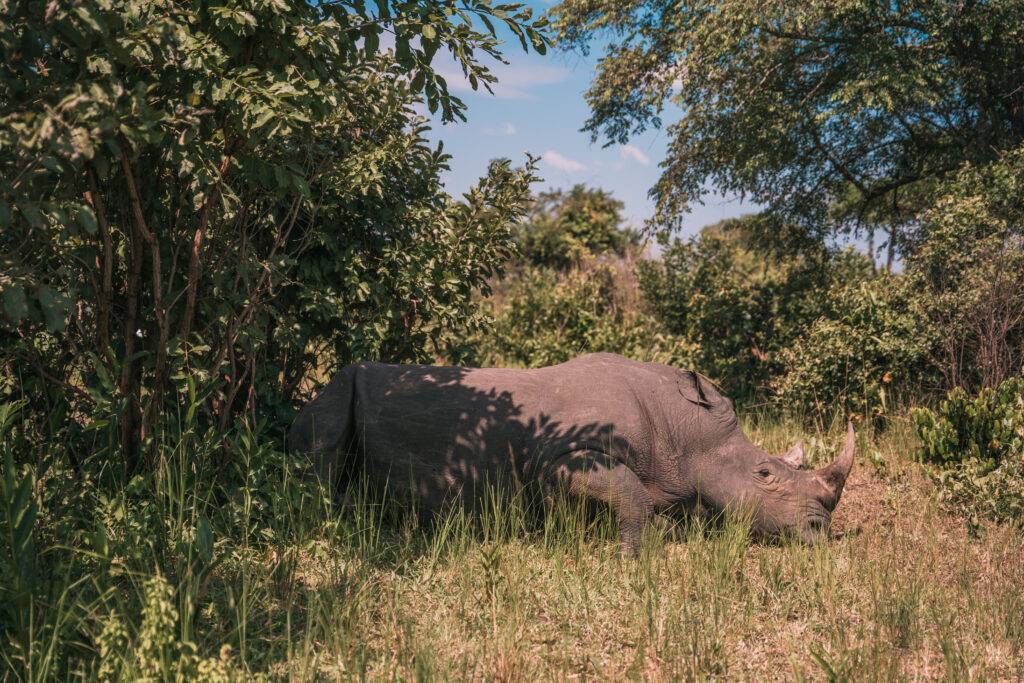
The small Ziwa reserve is home to about fifty white rhinos. This species nearly went extinct due to poaching. This center helped prevent that. Starting with just 2 individuals, they managed to bring nearly 50 rhinos into the world!
This place’s ethics are beyond question — it’s not a zoo at all. The rhinos live in complete freedom, protected by rangers around the clock, and they’re gradually being reintroduced into the wild. The goal is to keep the species going, not to exploit it for tourism.


Entry to Ziwa Rhino Sanctuary is fairly pricey: $60 per person. Personally, I think it’s worth it. Not only do you help fund the initiative, but you also get to approach them on foot, accompanied by a ranger, to admire them. An exceptional experience! Note that this will be your only chance to see rhinos during this 2-week Uganda itinerary. In the national parks we’re about to visit, there aren’t any.
Did you know?
The white rhino isn’t white at all (it’s actually gray). This name comes from a mix-up between the English and the Dutch, who used “wijd” to mean “wide” (broad-mouthed). The English misheard it as “white” 😂.
Entering Murchison Falls National Park
Now head to the Kichumbanyobo gate to get your tickets. I recommend arriving around 3:30/4pm, because you’ll need to cross the park for about 2 hours to reach tonight’s lodge/campsite.
I’m not sure why, but we waited over an hour at the ticket counter to get our passes, when it had always been really quick at the other parks. The lady reminded us of Flash from Zootopia (I hope you get the reference).
As for pricing, expect $45 per day per person (≈ €39) + 30,000 UGX per vehicle (≈ €7). For two days, that came to €165 for the two of us. But don’t worry, I’ve planned a full budget breakdown at the end of the article!
The top of Murchison Falls
Unfortunately we didn’t have time to stop at this viewpoint (thanks a lot, Flash). But if your timing is better than ours, I’d recommend this stop — it looks amazing! Murchison Falls are the emblem of the national park. Here, the Nile squeezes through a gorge just 7 meters wide with impressive force.
The waterfall, more than 40 meters high, is one of the most powerful in the world.
Entry to the viewpoint costs $10 per person.
A well-deserved rest right by the park
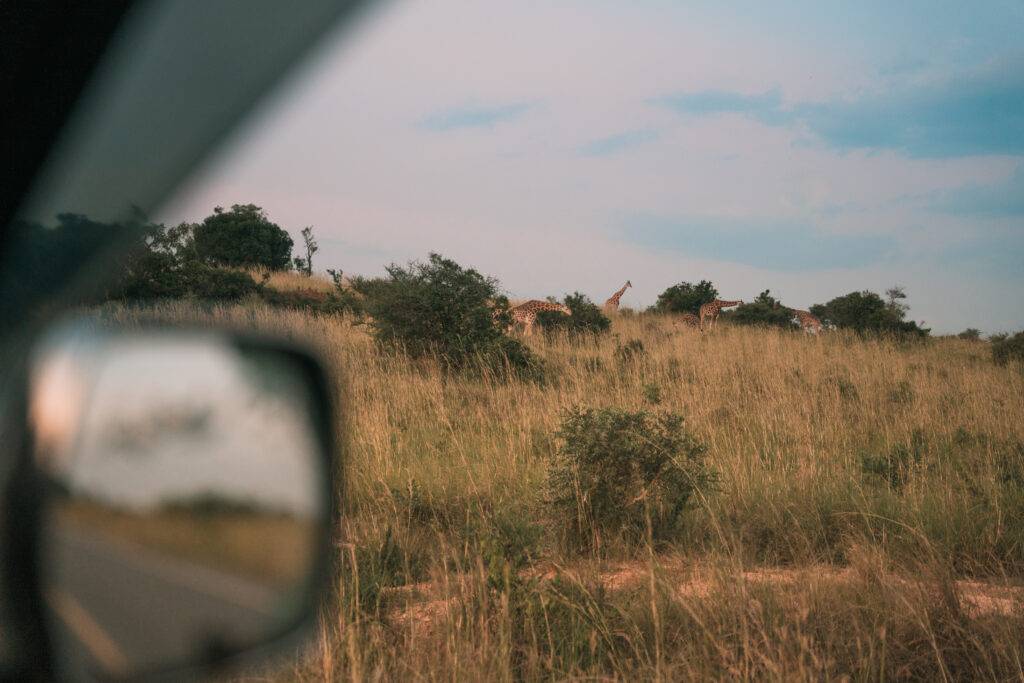
On the road to the camp, we’d already crossed paths with plenty of animals: elephants, giraffes, baboons, antelopes… A perfect appetizer for the two days of safari ahead!
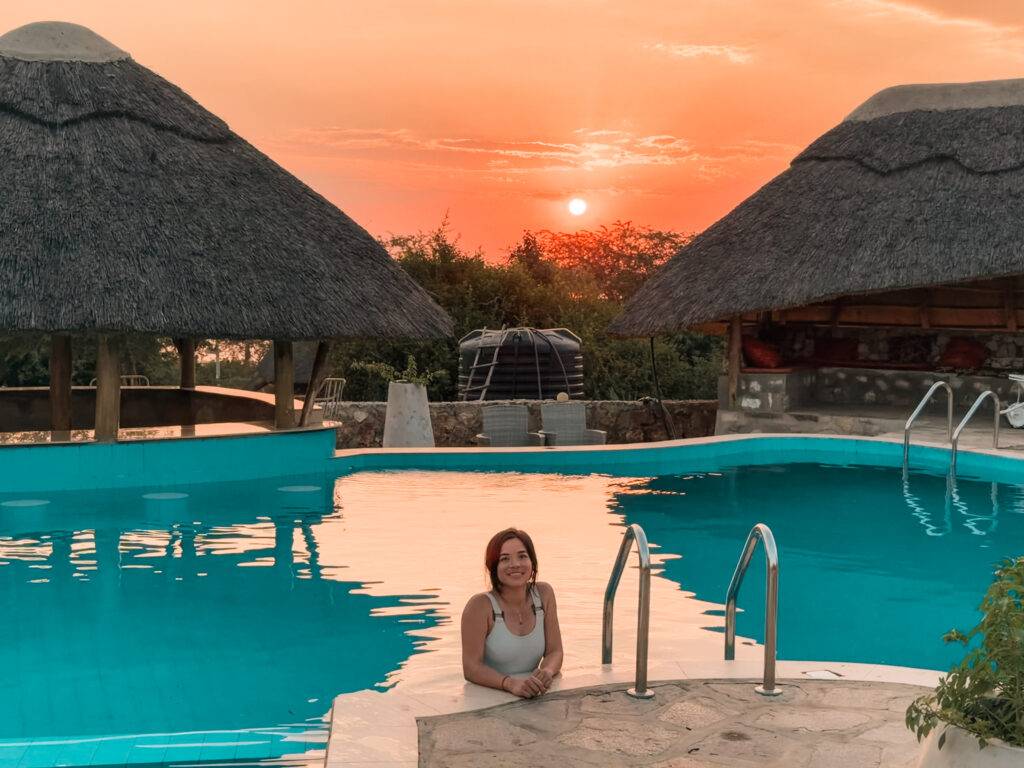
Tonight’s accommodation was our favorite of the entire trip to Uganda. If you’re sleeping in a rooftop tent, you’ll also get to enjoy the lodge’s gorgeous pool. The showers were great and super clean, and the restaurant was excellent too. We got a really warm welcome!
Get to bed early tonight, because tomorrow it’s an early wake-up for your first Ugandan safari.
Day 5: self-drive or guided safari in Murchison Falls National Park
Set your alarm for 5am (ouch!) to head out onto the roads of Murchison Falls National Park. Why so early? Simply because animals are active at two times of day: very early in the morning and in the late afternoon, before sunset. In between, they rest because it’s hot. So it’ll be easier to spot them during these windows.
The night before, make sure to order a packed breakfast from the lodge. That way you can eat on the road whenever you want.
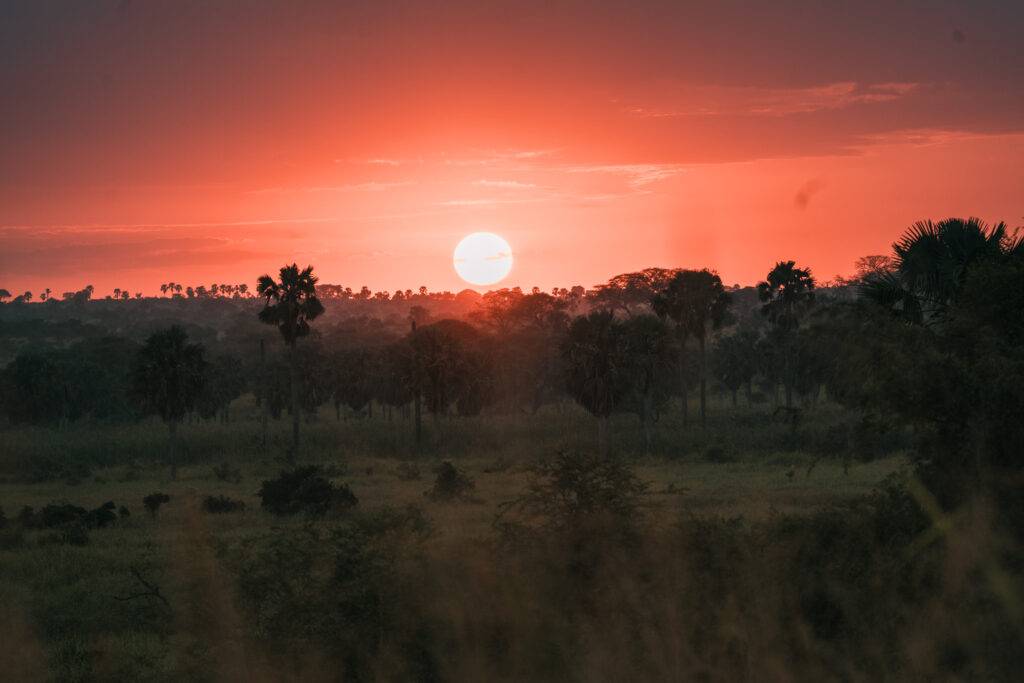
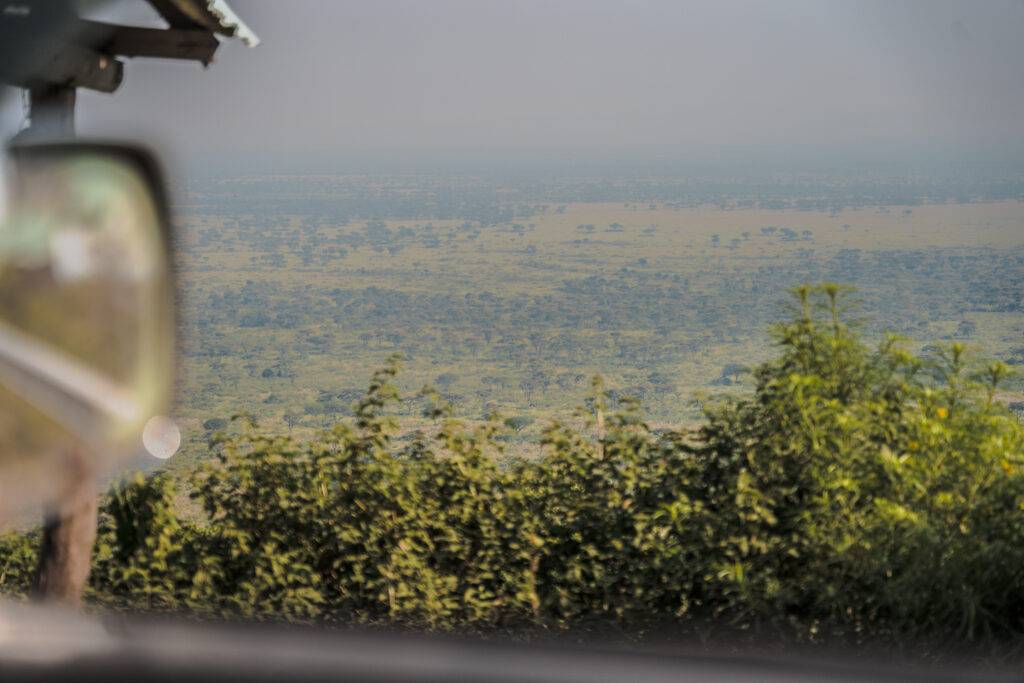
Here’s your reward for getting up early: a magical sunrise over the savanna.
Is it possible to do a self-drive safari in Uganda?
Absolutely. That’s what my husband and I did throughout the whole trip. He drove, while I tried to spot the animals. The trick is having really good eyesight, which isn’t the case for me. 😂 So instead, we mostly paid attention to cars stopped in certain spots, since that meant there was definitely something to see!
Some guides were super kind and gave us info on the location of certain big cats: leopards and lions being the best at camouflaging themselves. I don’t think it’s necessary to hire a guide if you’re driving your own car, but of course you can choose to hire one for the day or half-day. To do so, head to the national park office!
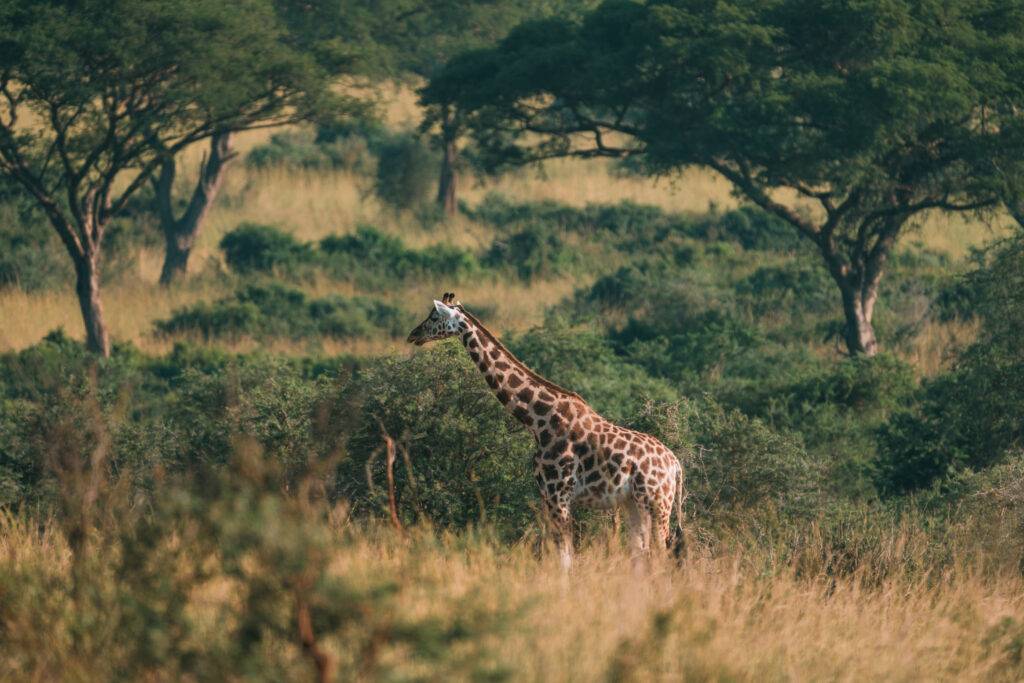
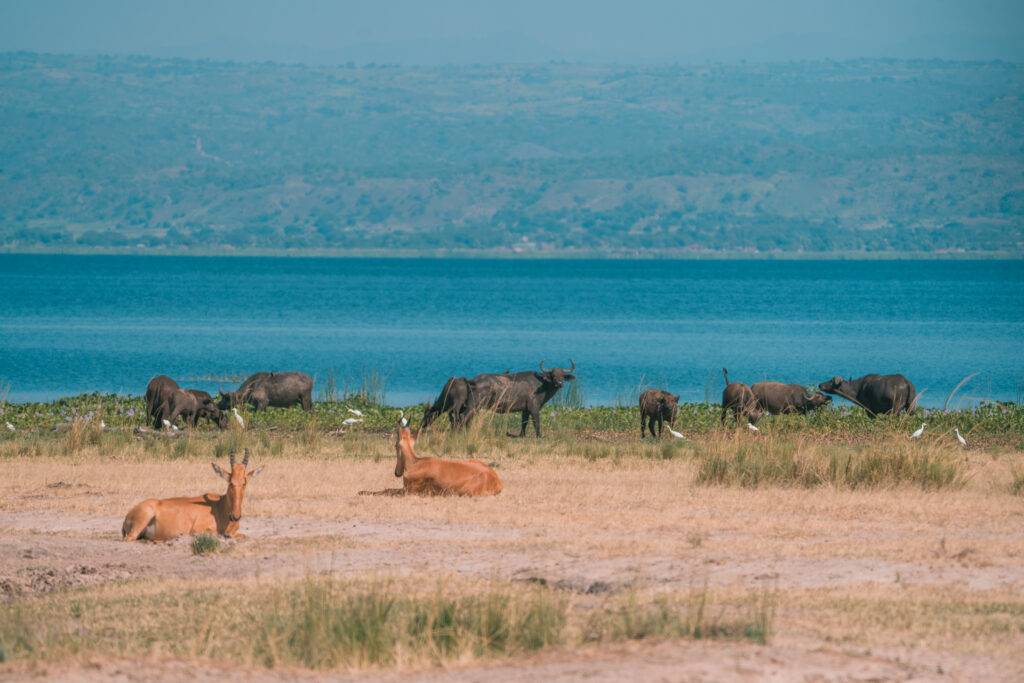
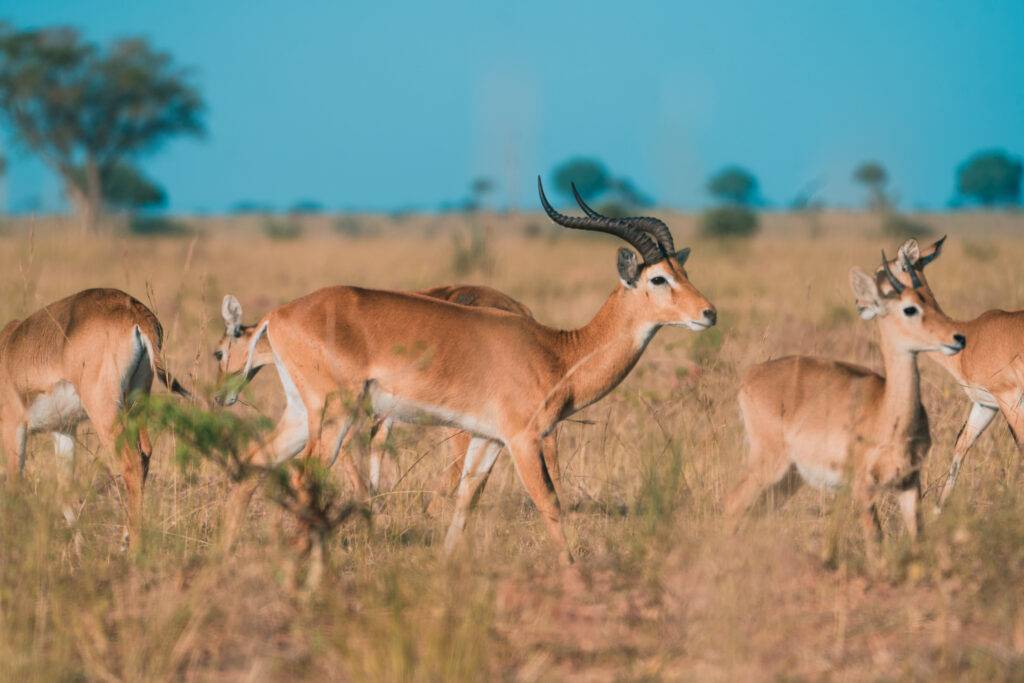
At Murchison Falls, if you’re lucky, you might see lions, leopards, plenty of antelopes, buffalo, giraffes, elephants, warthogs… The park is crossed by the Nile, which adds even more beauty to the scenery. The vegetation there is very dense, which is gorgeous, but it can make spotting animals trickier.


A good spot for lunch
After several hours of safari, we stopped at Red Chili Rest Camp (on the recommendation of the famous road book) for lunch. It was really good and not overpriced. It cost us about fifteen euros for the meal plus several drinks.
Boat safari on the Nile
In the afternoon, we boarded a safari cruise to see even more animals and get closer to the famous Murchison Falls. Hippos, crocodiles, birds, elephants… we got quite the show!
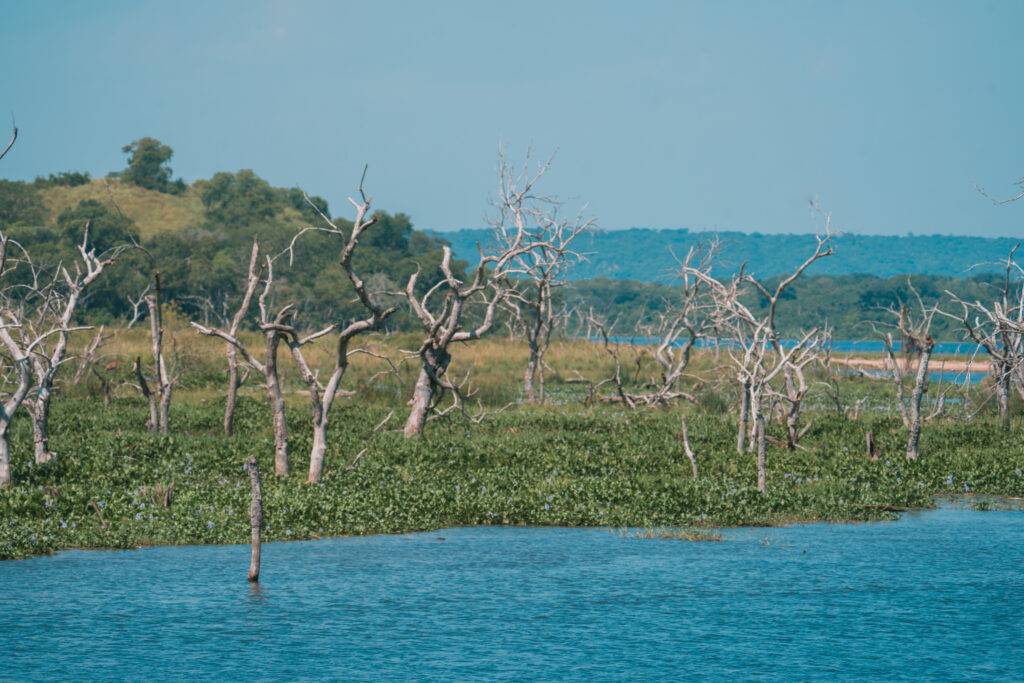
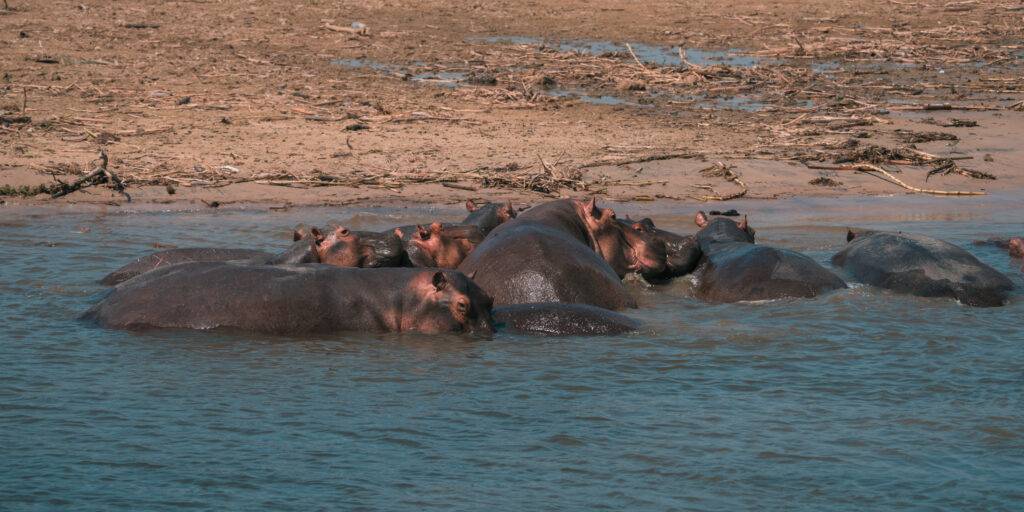
The scenery was wonderful, and I have to say the waterfall is well worth admiring.
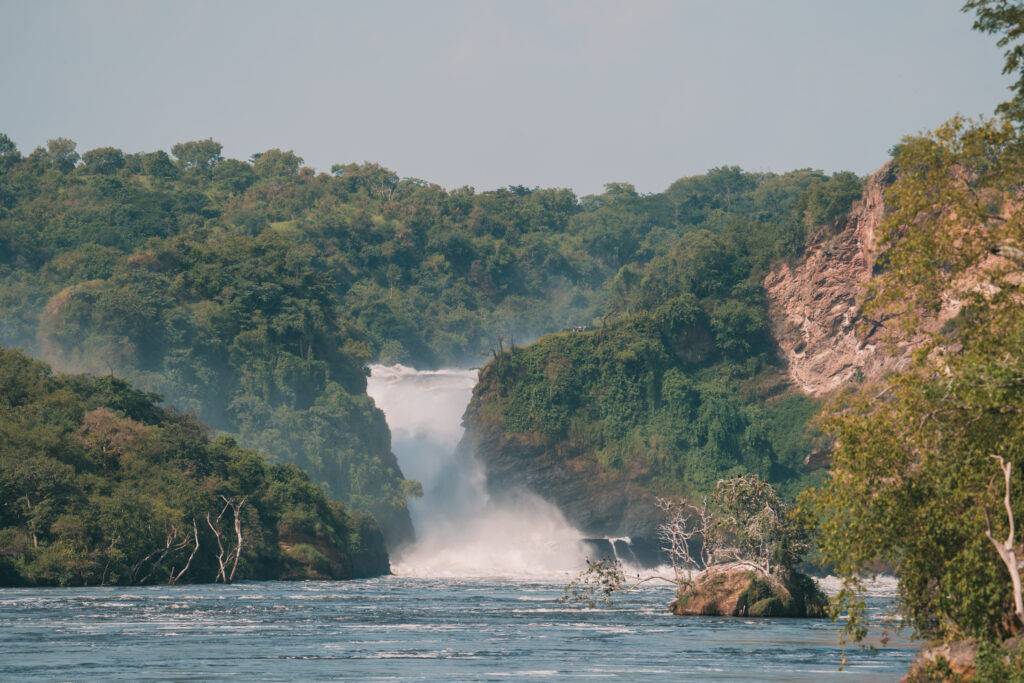
This activity is included in the Uganda Nomads trip 🔗 – click for more information.


After 3 hours on the water, we headed back to the lodge to enjoy the pool and relax a bit. If you’ve still got energy, you can stay in the park until sunset to see even more animals.
Day 6: on the road to Kibale Forest
This morning you have two options: get up at the crack of dawn again for another safari in Murchison Falls National Park, or sleep in a little longer. Fair warning, today’s drive will be a long one, with around 370 km to cover.
Although the final destination is exceptional, the journey there is just as much so. You’ll pass through several villages and farming areas. Thanks to the fertility of Ugandan soil, fields of tea, bananas, pineapples, and coffee will stretch out as far as the eye can see. You’ll also notice that pineapple is particularly delicious in Uganda. They serve it at nearly every breakfast: it’s very sweet, with a light touch of acidity.
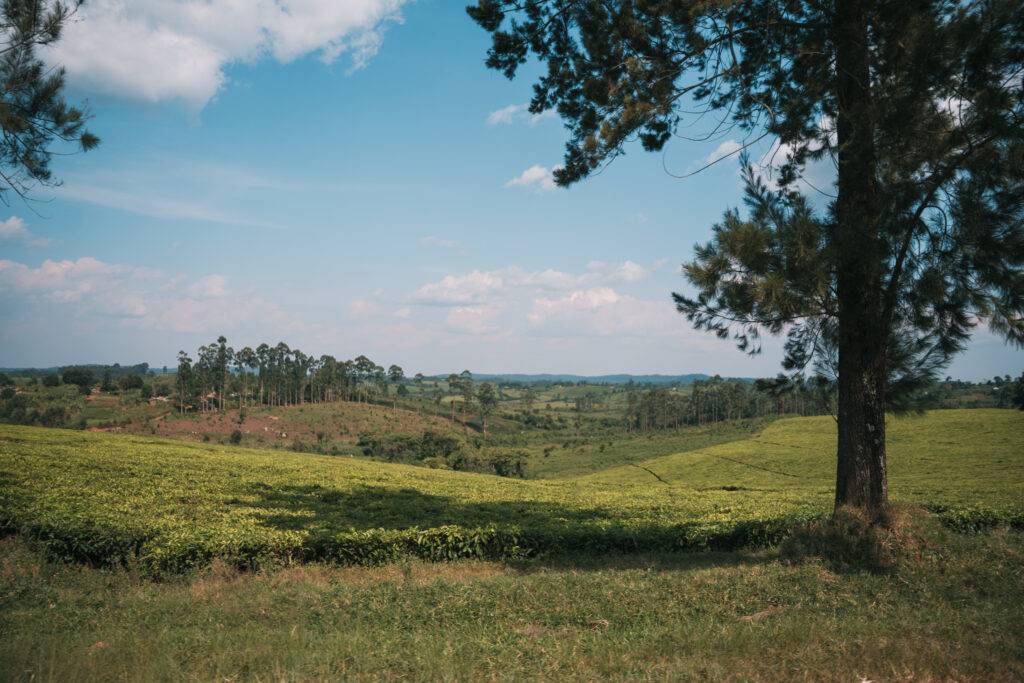
For a lunch break on the road, some spots are recommended in the road book. Look up the restaurant names on Google Maps beforehand (that’s the co-pilot’s job) and pick whichever one appeals to you most.
Don’t forget to fill up as soon as you reach a big town. There might not be a gas station again for a long stretch after that!
Our two nights in Kibale National Park
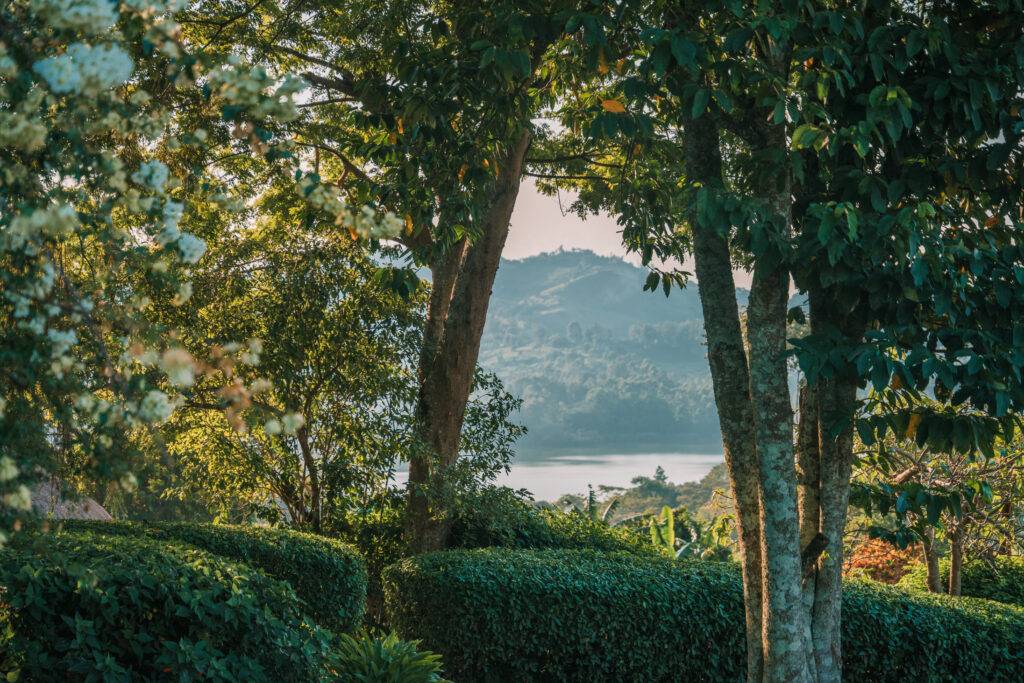
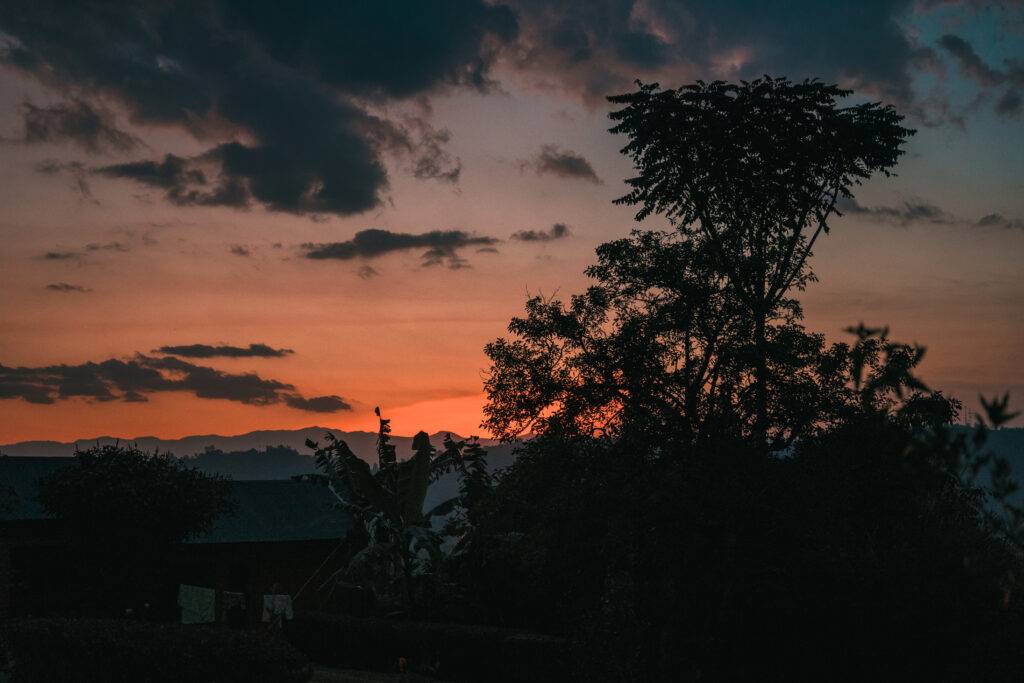
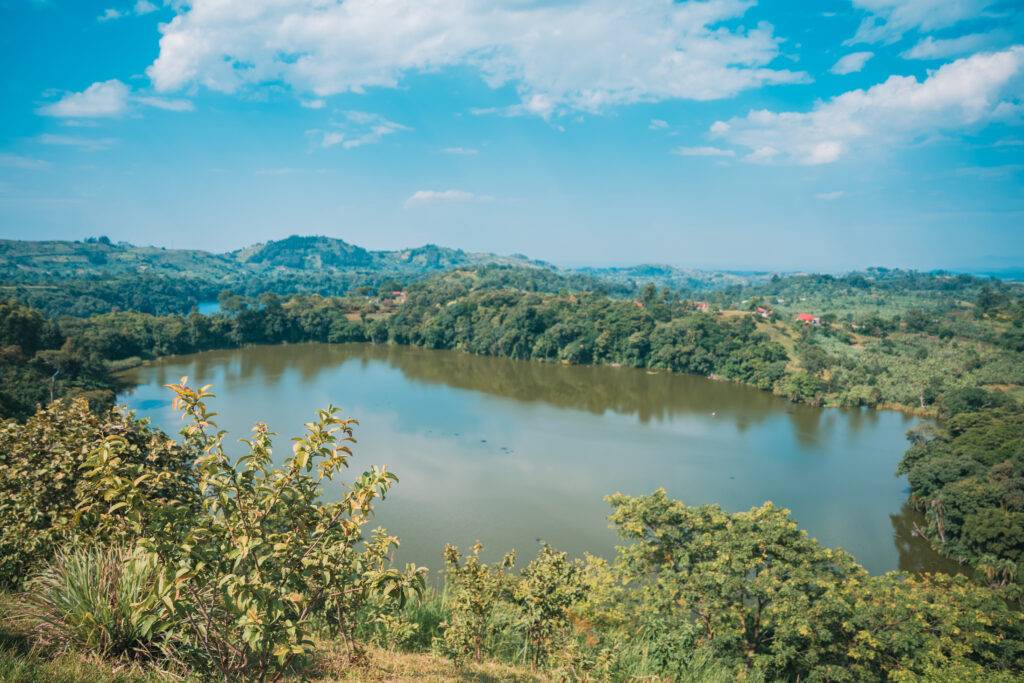
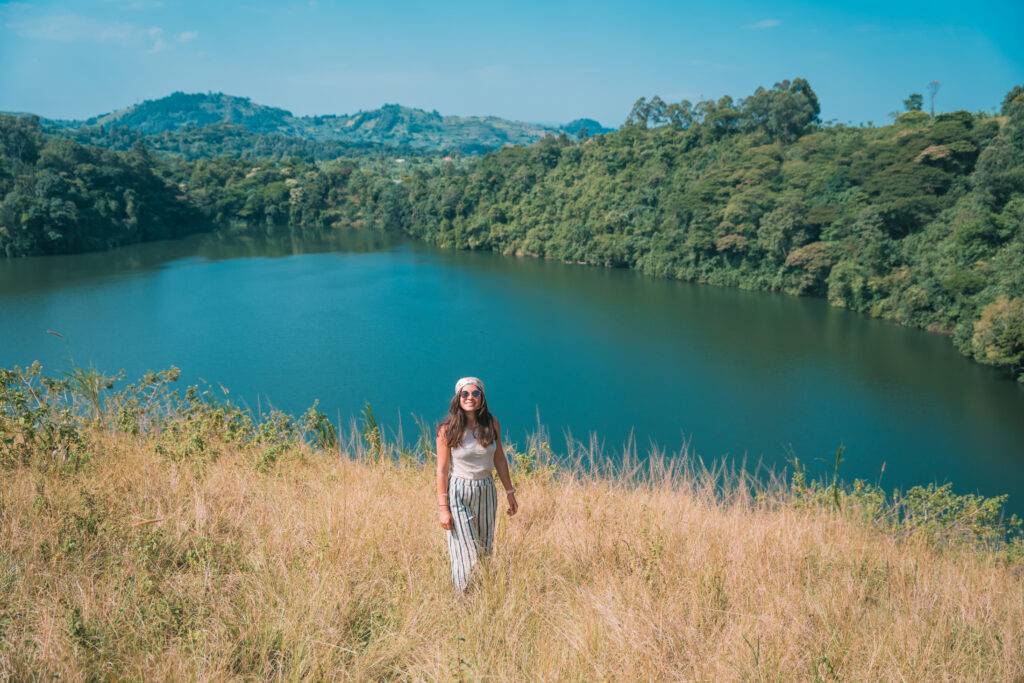
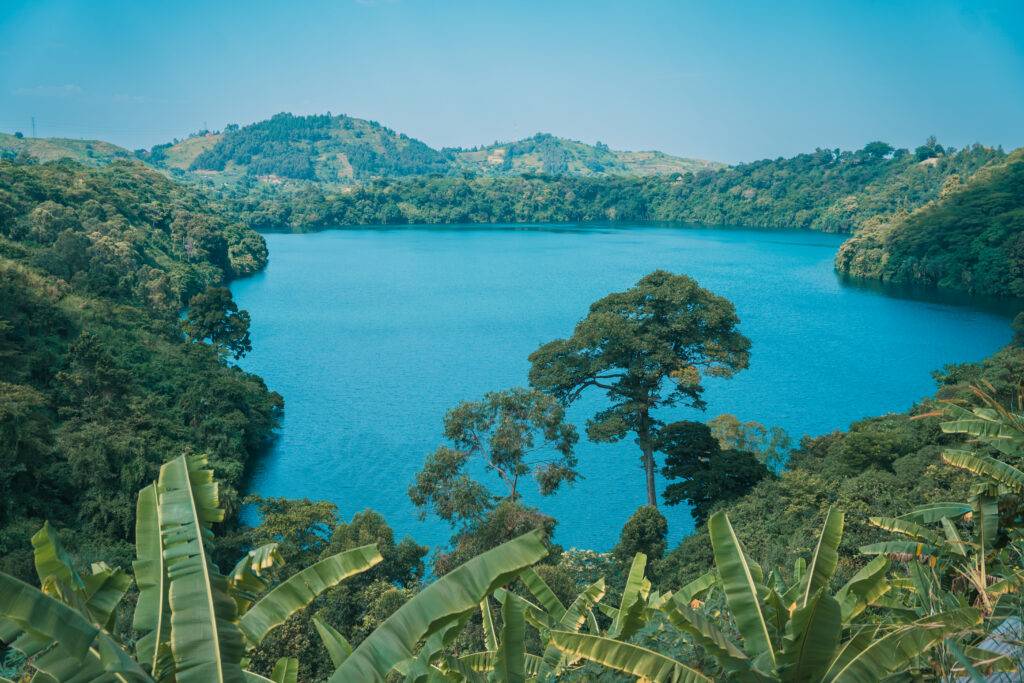
The campsite was perfectly located, near one of the many crater lakes of the Kibale region. Surrounded by vegetation and all alone in the world, we slept really well here. At this altitude, evenings are a bit cooler, so pack a light sweater, as my grandmother would say.
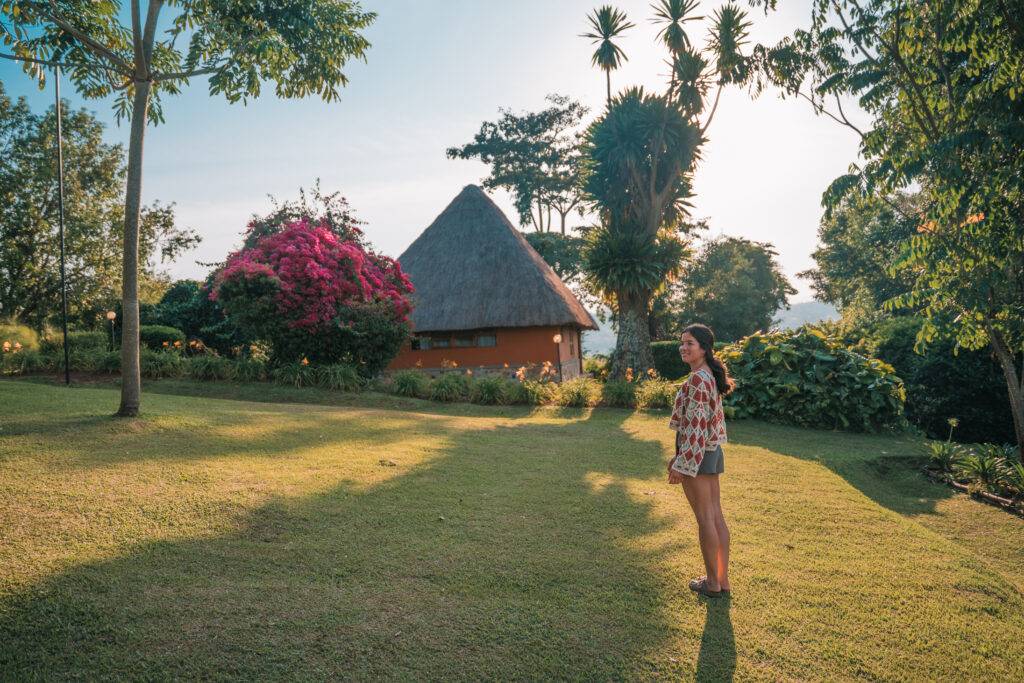
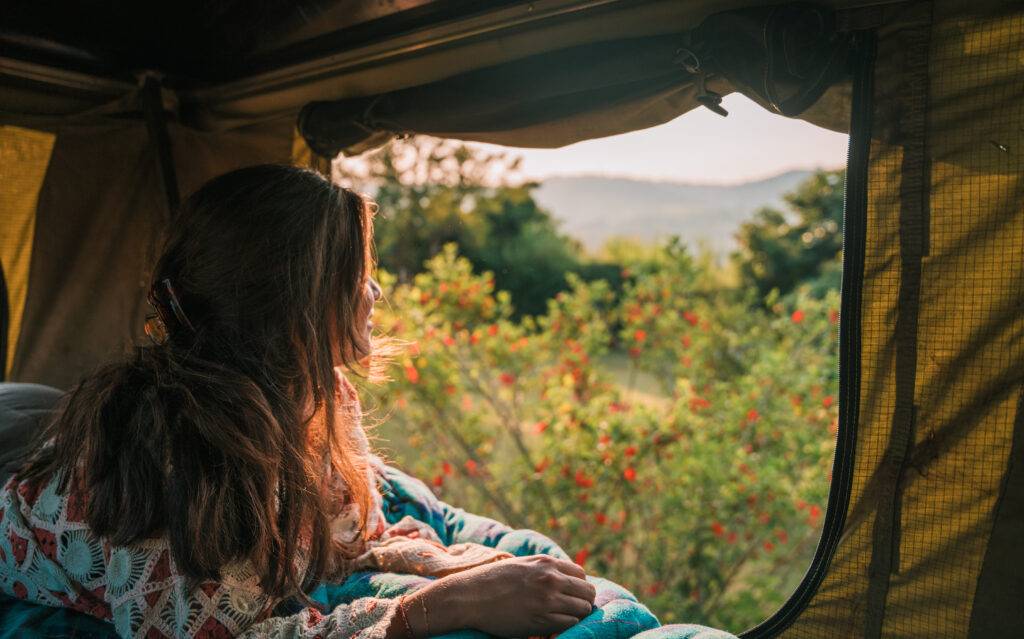
Day 7: crater lakes and chimpanzee tracking in Kibale Forest
We loved this day from start to finish! Kibale is best known for its chimpanzees, but the region has plenty of other charms to offer. The scenery, for starters, is breathtaking. Looking back, I think this is my favorite part of Uganda.
Exploring the volcanic lakes by boda boda
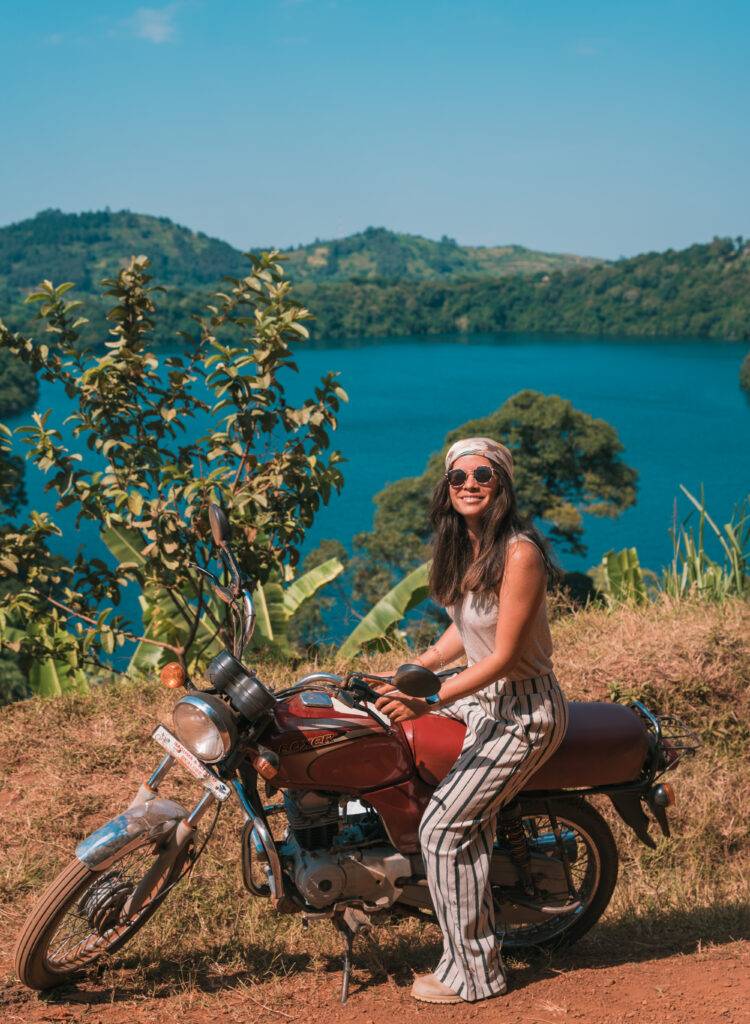
Boda bodas are motorbike taxis. They’re everywhere in the country, and we were actually really struck by how many two-wheelers there were compared to the few cars. The explanation? The cost of imported cars is unfortunately far too high for most local salaries. Motorbikes are more affordable and need less maintenance. They also let you zip quickly along dirt tracks or through traffic jams.
With the context set, let me tell you about the wonderful excursion we did. The number of a great guide was in the Travelbase app, and I contacted him the day before on WhatsApp. For about 3 hours of touring on 2 boda bodas, the price was $25 per person, which seemed reasonable to me. With our guide, we wound our way through the small local paths to admire the many crater lakes: it was so beautiful!
I’d strongly recommend this activity if you’re passing through the area.
Chimpanzee tracking in Uganda
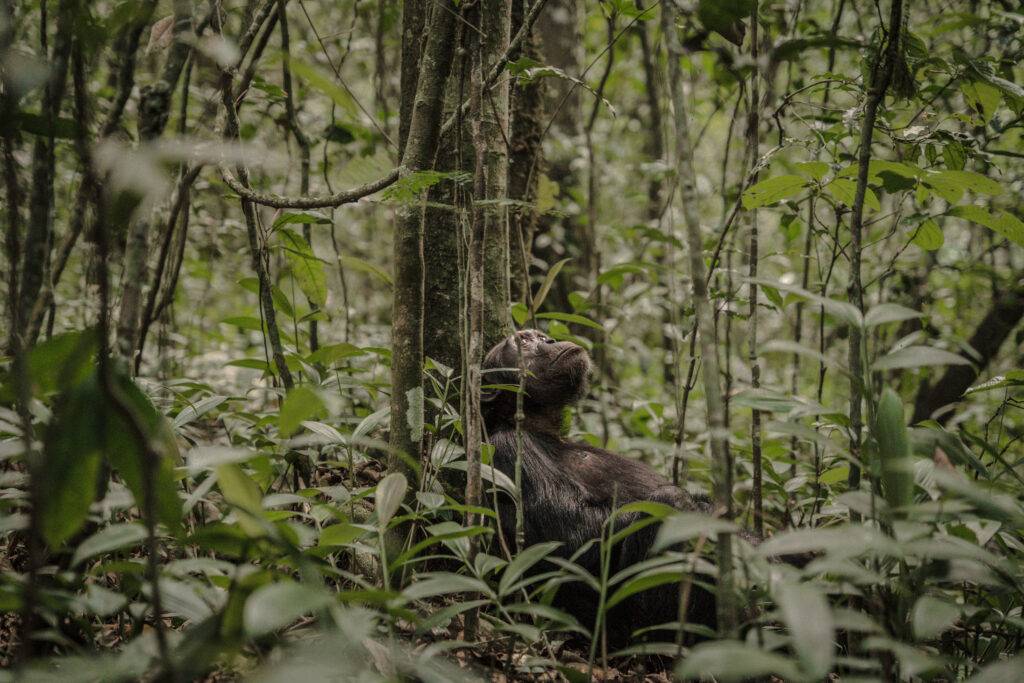
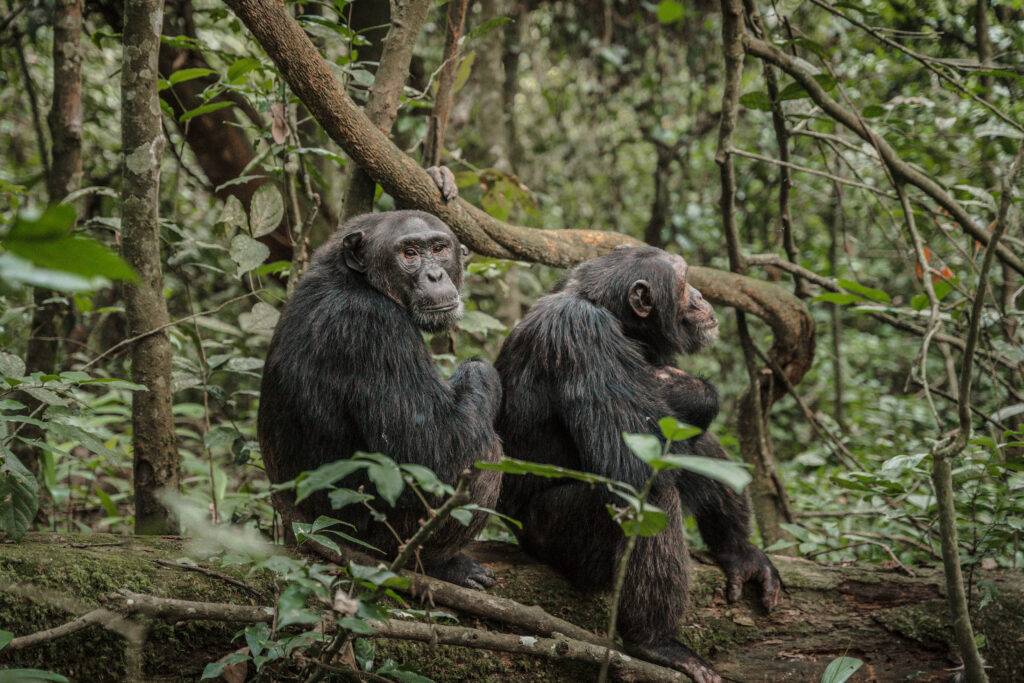
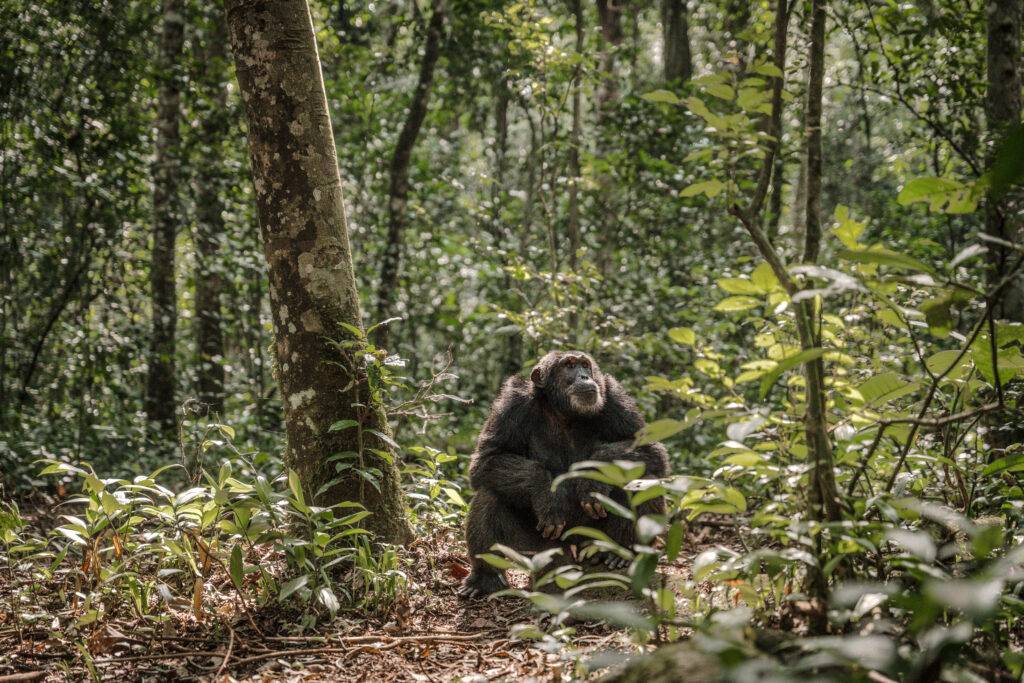
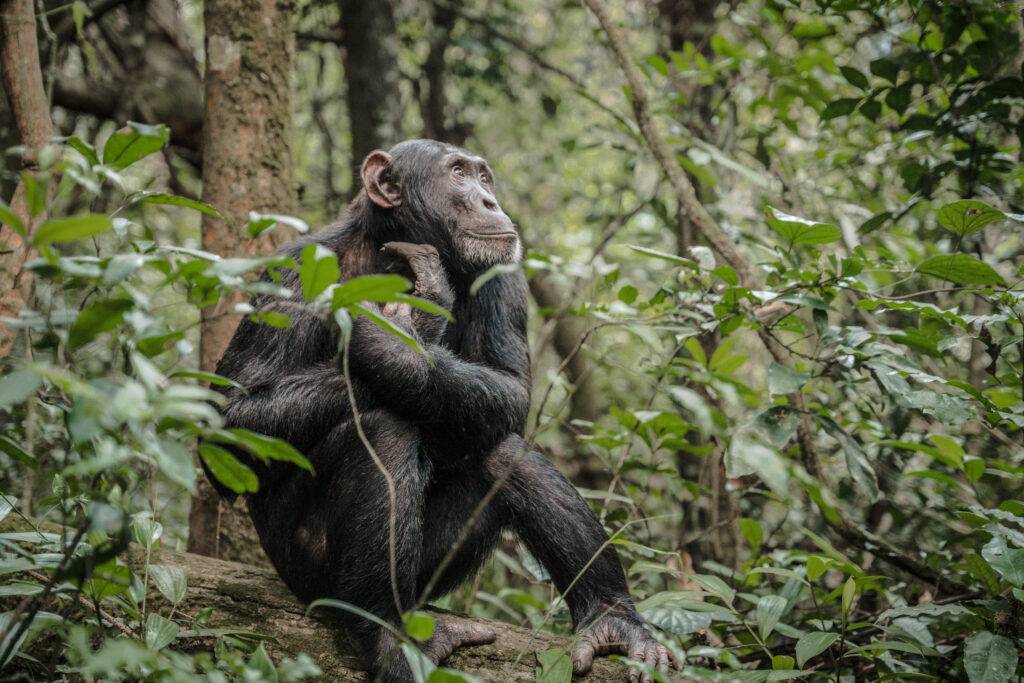
The afternoon was reserved for an exceptional experience: walking through the forest to observe the chimpanzees of Kibale. They call it “trekking,” but I’d say it’s more like a leisurely walk. There’s no real difficulty, other than that it can take several hours. In total, we probably walked 4 or 5 km at most. Within just a few minutes, we came across the first chimpanzees. Their beauty took my breath away — I even shed a little tear…
Kibale National Park is one of the best places in the world to observe primates. There are of course the chimpanzees, but also 12 other species. From the road book, I even learned that it’s the most primate-rich forest in East Africa! Note that “contact” with the chimpanzees is limited to a maximum of 1 hour to protect them.
Logistically, you can simply add this to your Uganda Nomads trip when you book. The price is €250 per person and I promise you it’s absolutely worth it. 🙌🏻
Is chimpanzee tracking dangerous?
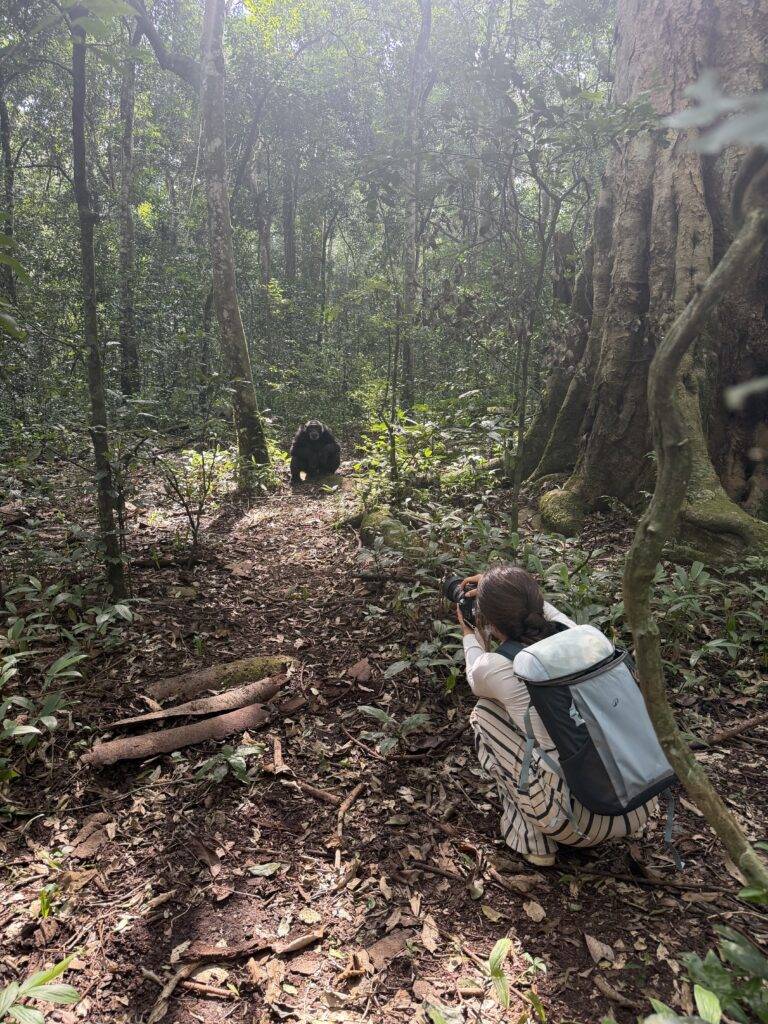
Throughout the activity, you’ll be accompanied by a guide and an armed ranger. The primates aren’t dangerous as long as you respect them. During the briefing, you’ll be told which behaviors to avoid, like mocking or imitating the chimpanzees. That said, I think all the rules to follow are pretty much common sense, and I’m sure you, reading this, would never have thought to behave that way anyway.
If the ranger is armed, it’s mainly in case of an encounter with a buffalo or forest elephant. These animals aren’t inherently dangerous either, but they may charge if they feel threatened. And then, ouch, that could get messy. To avoid any accidents if you cross paths with these magnificent mammals, rangers fire warning shots into the air to try to scare them off.
Day 8: On the road to Queen Elizabeth National Park, a safari must-do
From Kibale to Queen Elizabeth, expect about 140 km and 2.5 hours of driving. You can take your time and sleep in a bit more than usual. Along the way, the road book recommends stops in Fort Portal for lunch, fuel, and shopping if needed.
Just before arriving, you can snap a souvenir photo straddling the two hemispheres, on the Equator line. On site, you’ll see guides doing demonstrations with water in big bowls, as in every country crossed by the Equator. They’re supposed to show that water spins in a different direction depending on which hemisphere you’re in. Sorry to disappoint you, but I checked, and it’s completely false ❌. There’s absolutely no scientific evidence for this…
Sunset safari at Queen Elizabeth, Uganda’s second-largest park
In the late afternoon, around 4:30pm, we decided to drive the roads of Queen Elizabeth National Park for a safari. As with the first national park, head to the ticket counter to get your access. We bought a one-day pass only (= 24-hour access). The rate is $40 per person.
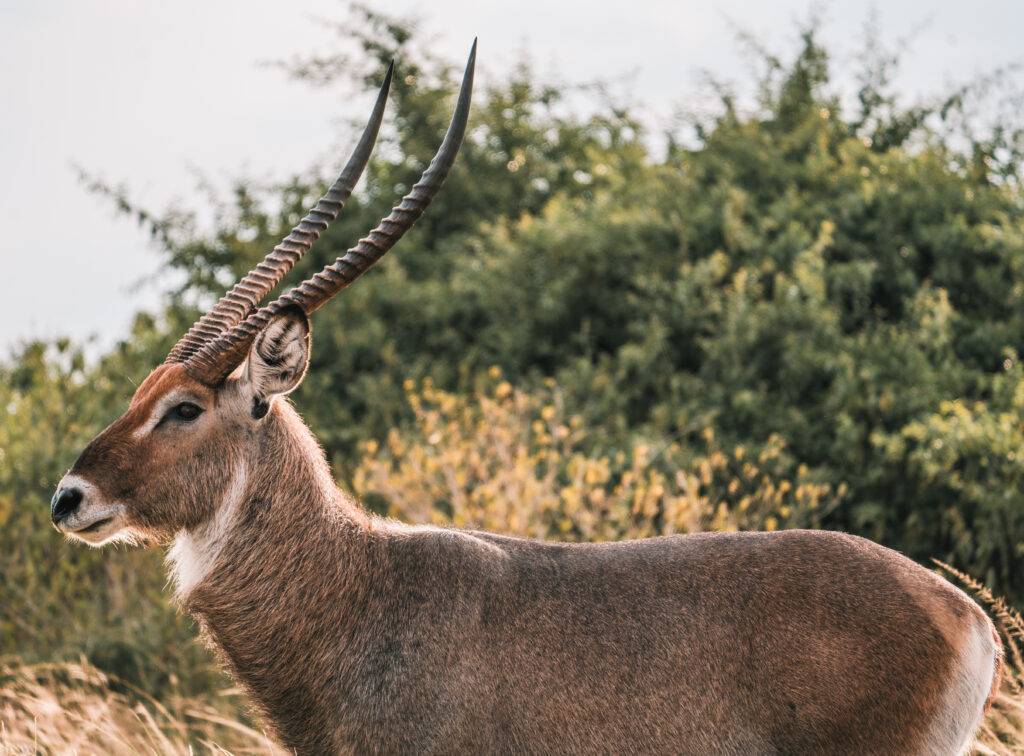
You might get lucky and see leopards, lions, hippos/kobs/baboons/warthogs galore… There are also elephants, but we mostly spotted those outside the park.
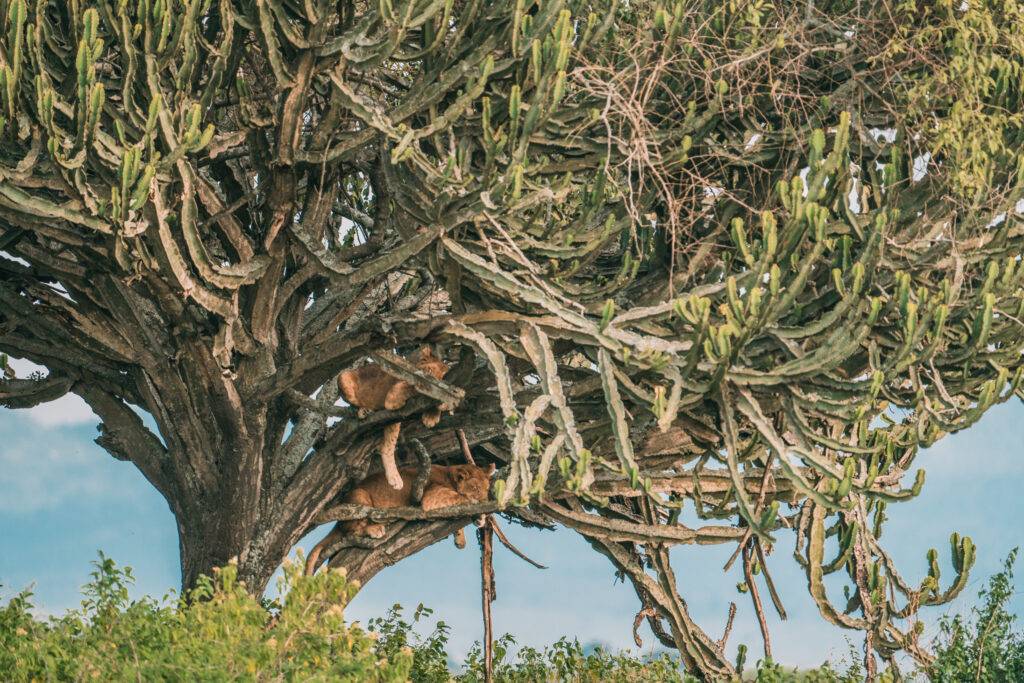
The tree-climbing lions of Queen Elizabeth
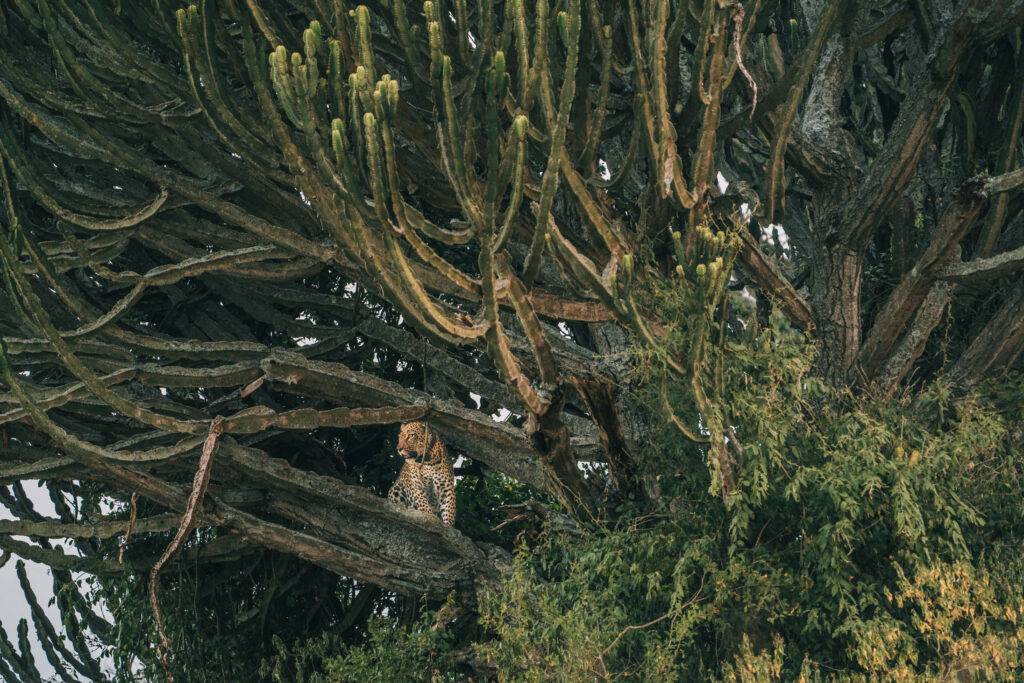
This national park’s specialty is its tree-climbing lions. Just so you know, they’re very rare and just too cute — a bit like my cat climbing his cat tree (ALMOST, I said).
In the afternoon, these lions climb trees to escape the heat and insects, and, incidentally, to scope out their future dinner. They’re generally found in sycamore or acacia trees, so keep your eyes peeled.
Just a few minutes after entering the park, we came straight upon 2 tree-climbing lions napping in a tree. We didn’t spot them thanks to any sniper-like skills — nope. There were simply 2 cars stopped there, so…
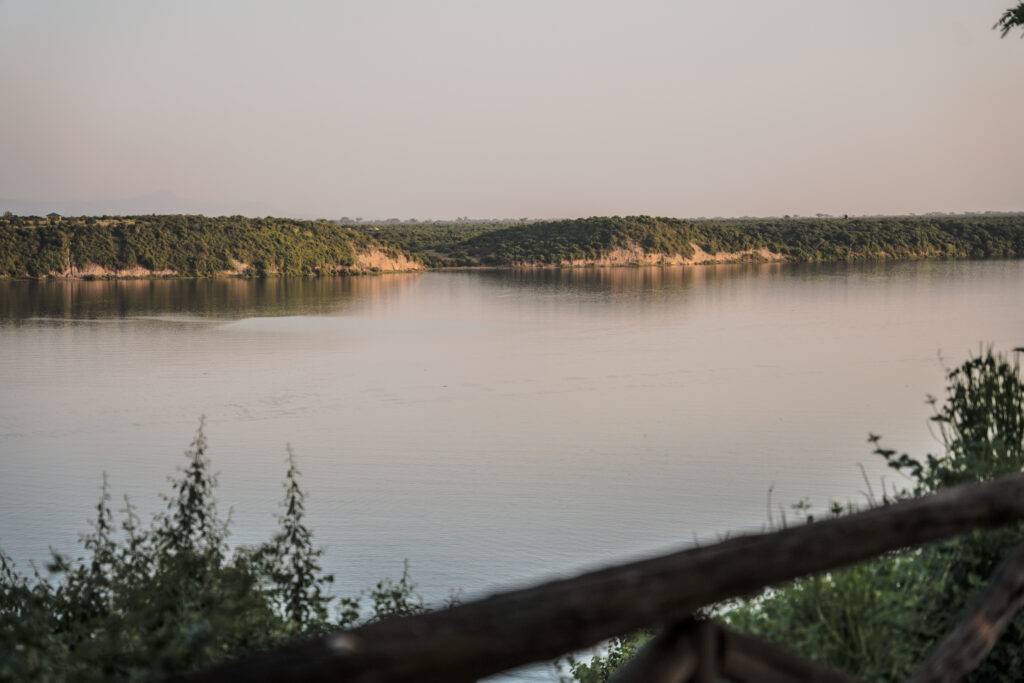
Night by the Kazinga Channel
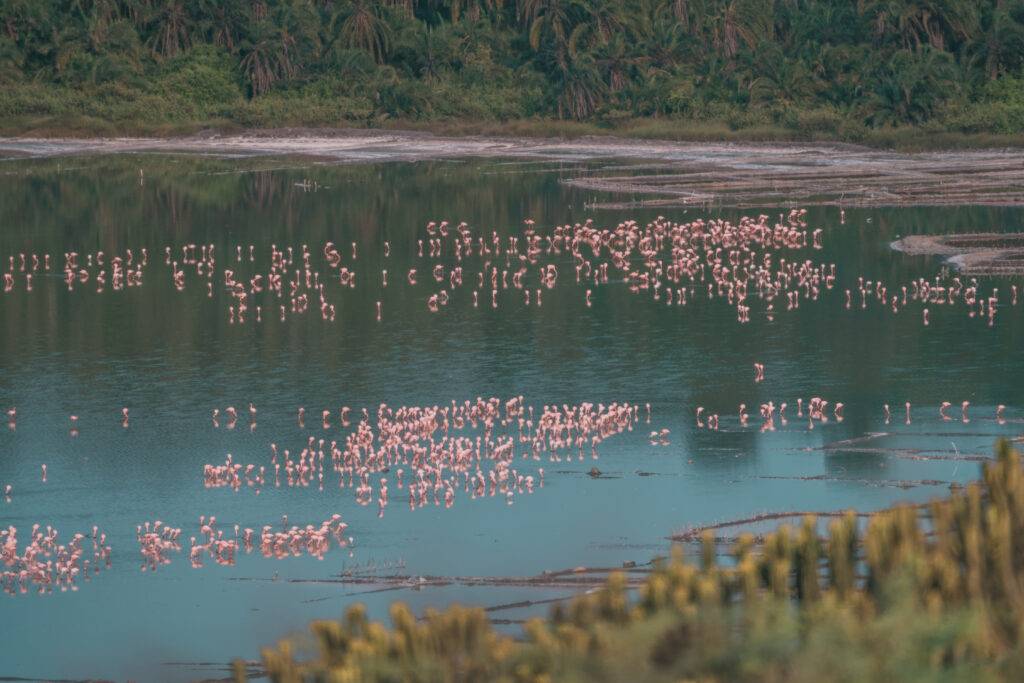
For the next two nights, you’ll be staying just 5 minutes from the park entrance, along the Kazinga Channel. This channel runs through Queen Elizabeth Park and links Lake Edward to Lake George over 32 km. It’s exactly at this campsite/lodge that we had the privilege of dining with hippos.
If you missed my Instagram videos, here’s the quick version: we were peacefully playing Skyjo and eating pasta when suddenly, I saw a shadow move in my peripheral vision. At first I thought it was just a person, but then the sheer size and bulk of the shadow made me look twice… Turns out it was a hippo happily munching on its favorite blade of grass. If this ever happens to you: whatever you do, don’t panic. Let the lodge’s guard know so he can check it out, and definitely don’t approach the big guy. Hippos are the deadliest herbivores in Africa, so stay calm! He’s just there because it’s his home and he wants to eat (not you — just grass). At least there’s no need to mow the lawn…
Day 9: Safari & cruise at Queen Elizabeth National Park
Today, you’re the master of your own schedule (unless you’ve got a guide, of course). I’d still recommend getting up before dawn to start your safari and give yourself the best chance.
In the Travelbase app, recommended routes are suggested within the national parks so you can follow the smaller trails. Yes indeed, you shouldn’t stay on the main road the whole time.
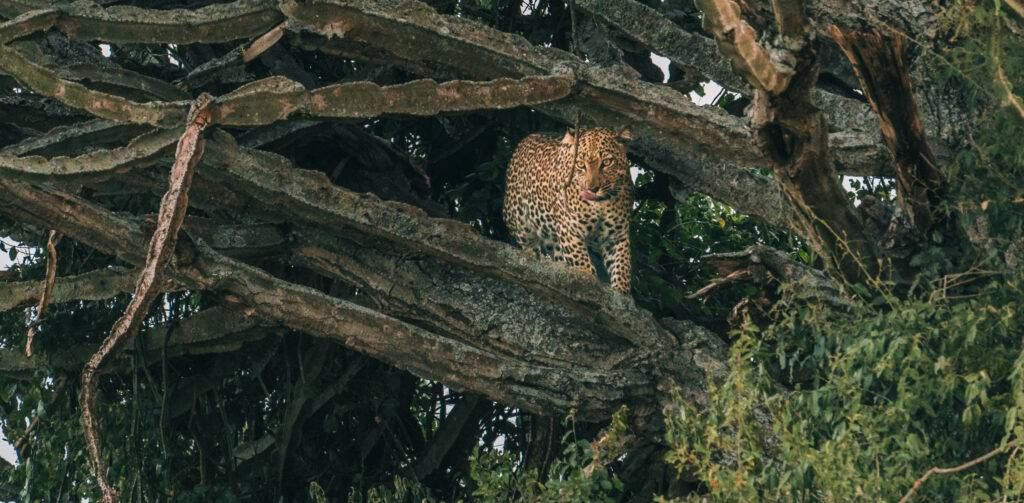
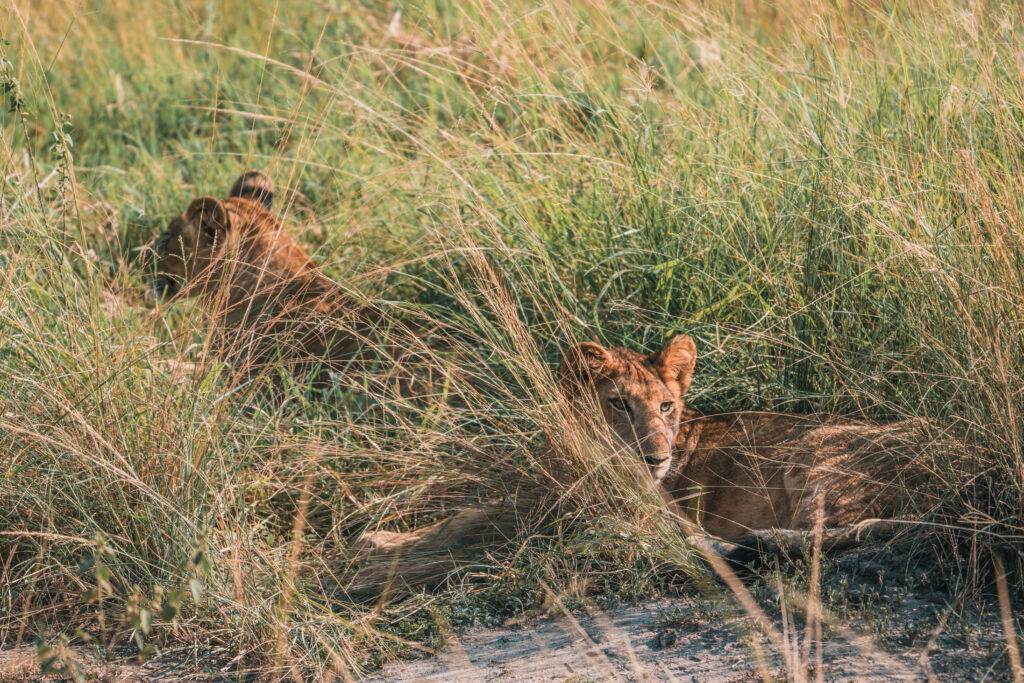
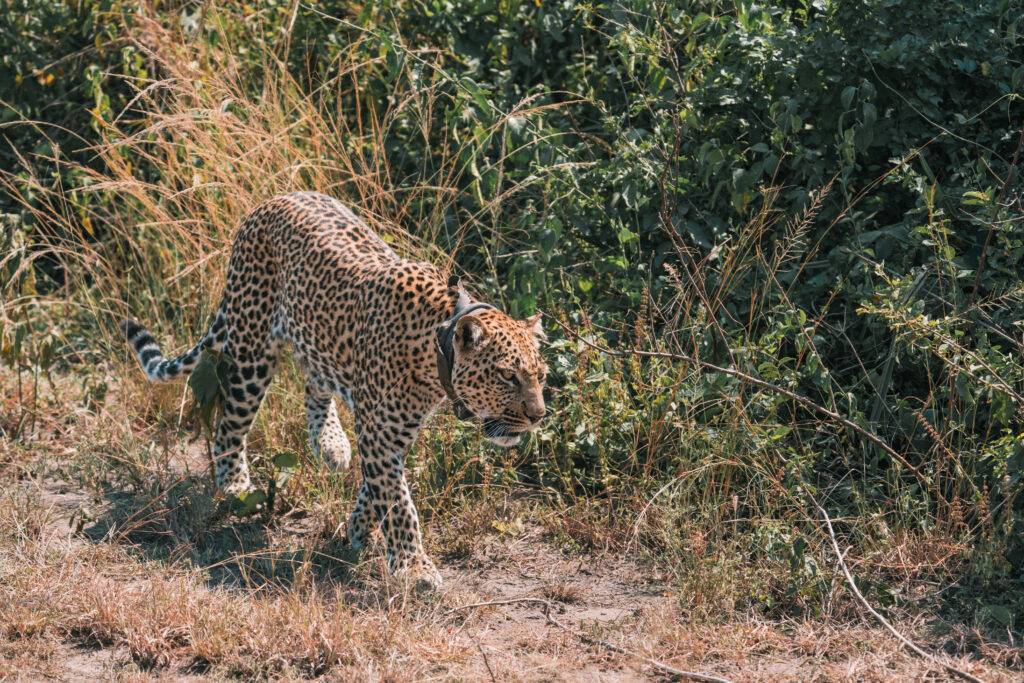
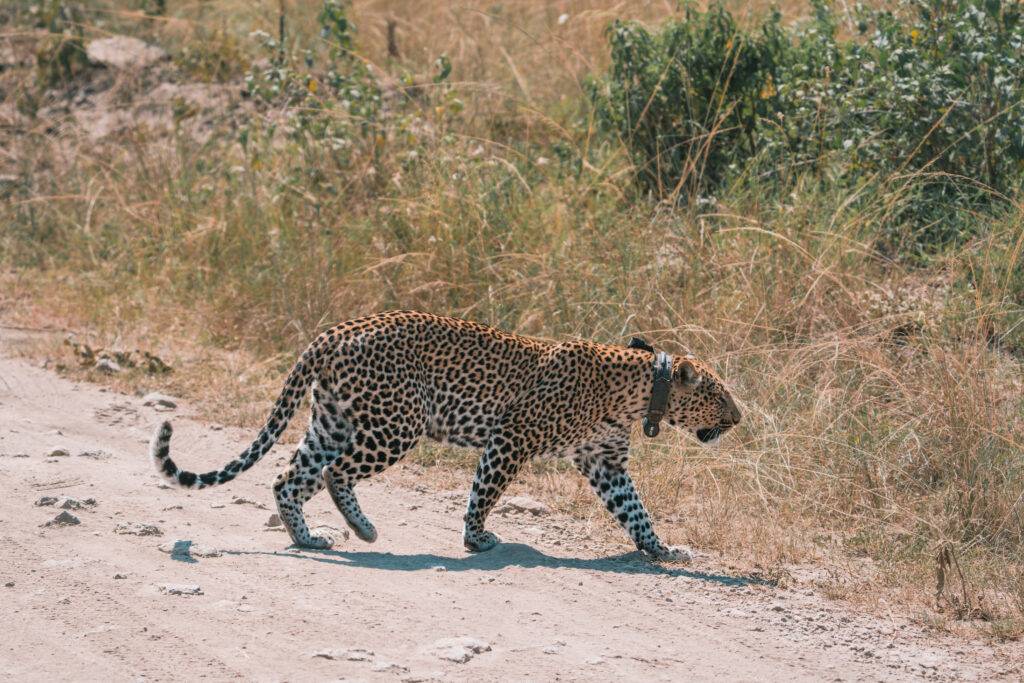
During this morning, we got to watch young lions and a mother leopard. I stared at them for so long that I think I got sunburned 🥵. But no matter, I’m a big fan of felines. I find them majestic and beautiful, true jewels of nature.
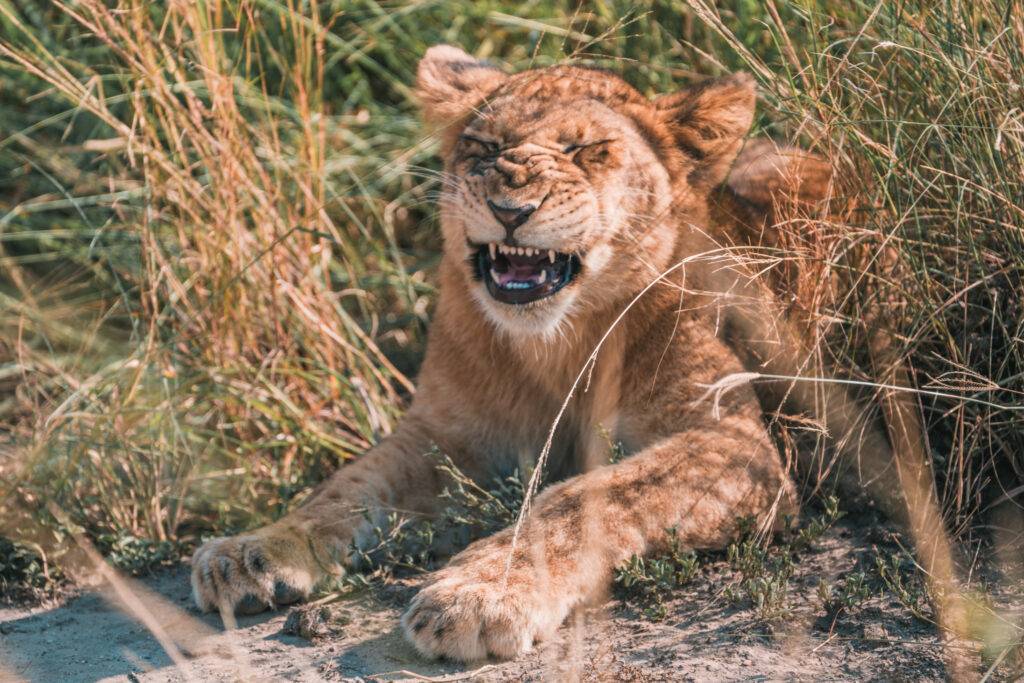


You’ll notice in the photos that mother leopard wears a GPS collar. This device is used to protect her and her cubs from poaching. The Uganda Wildlife Authority does exceptional work in the country to safeguard wildlife from the cruelty we humans are capable of.
Boat safari on the Kazinga Channel
Activity included in the Uganda Nomads trip
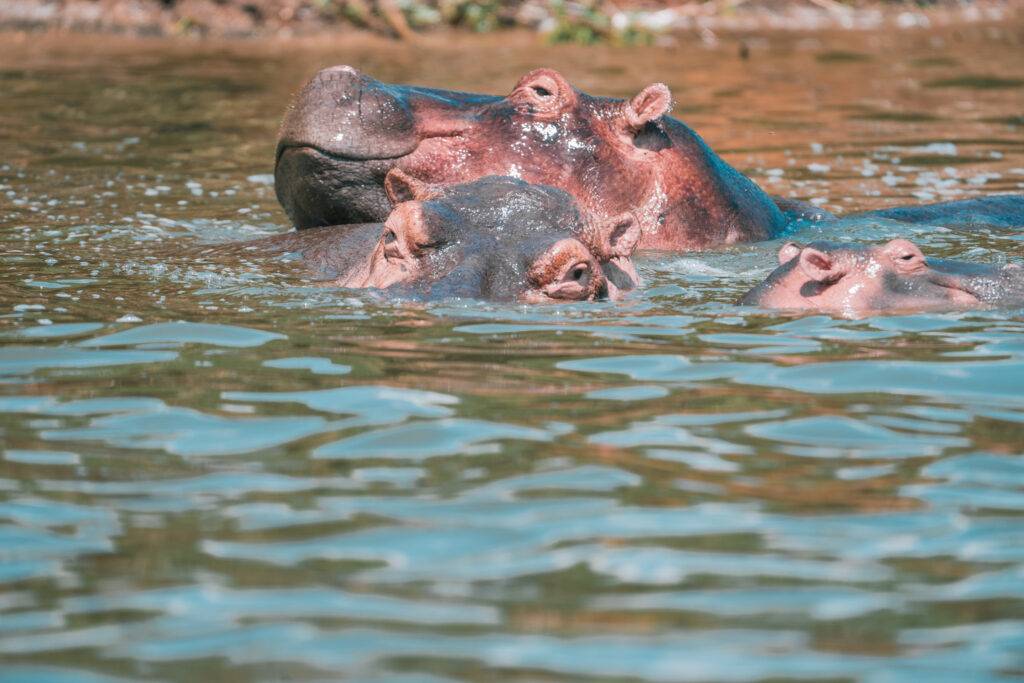
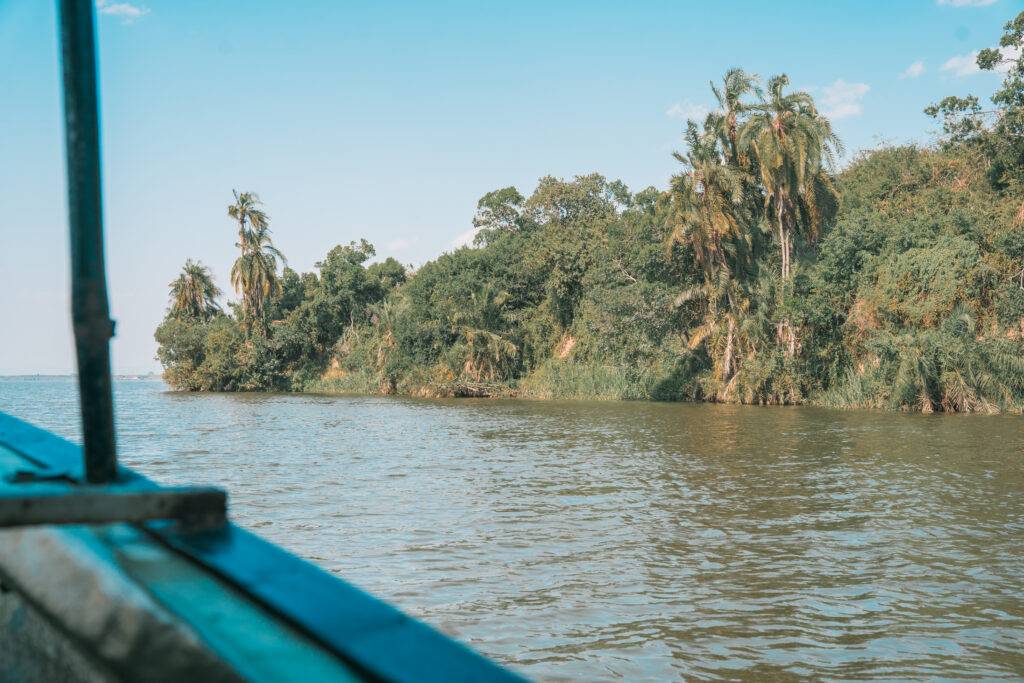
The Kazinga Channel is renowned as one of the best places in Uganda to observe animals from the water. Temperatures rise in the afternoon, so they come to cool off and drink at the water’s edge.
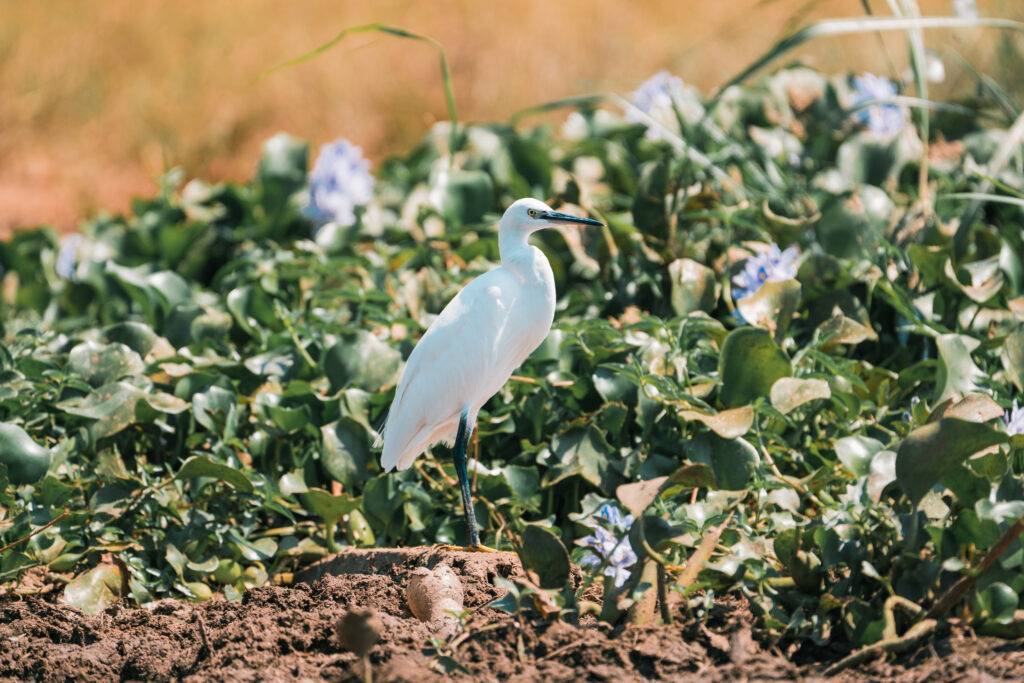
Elephants, crocodiles, hippos, countless bird species… Your eyes will likely be spoiled by this water excursion. 🤩
The safari cruise is truly a must-do during a trip to Uganda.


Day 10: On the road to Bwindi Impenetrable Forest
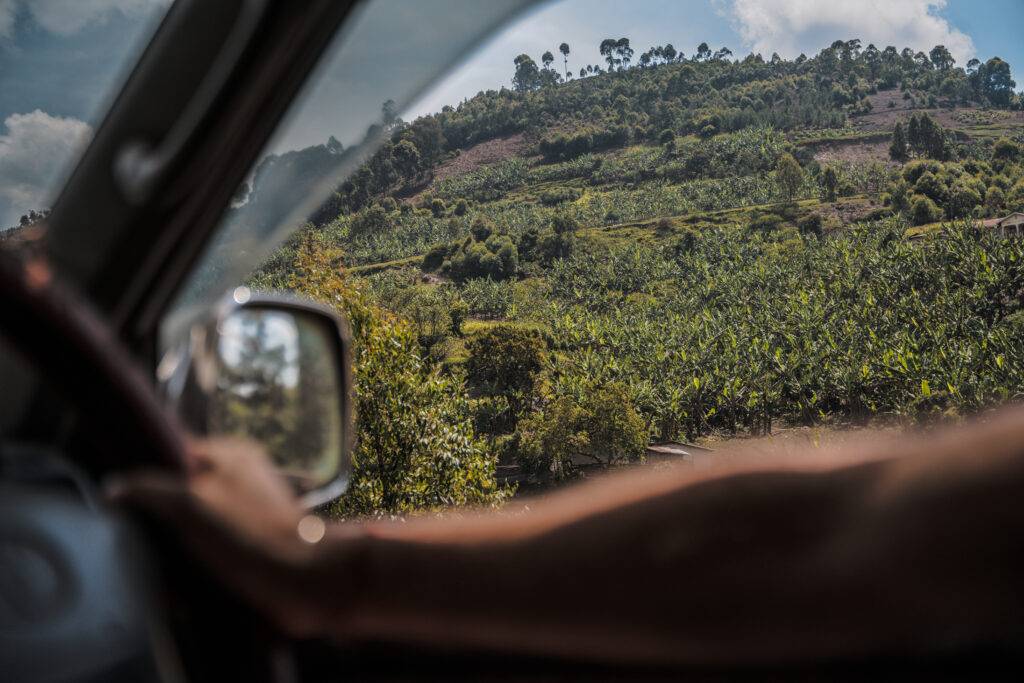
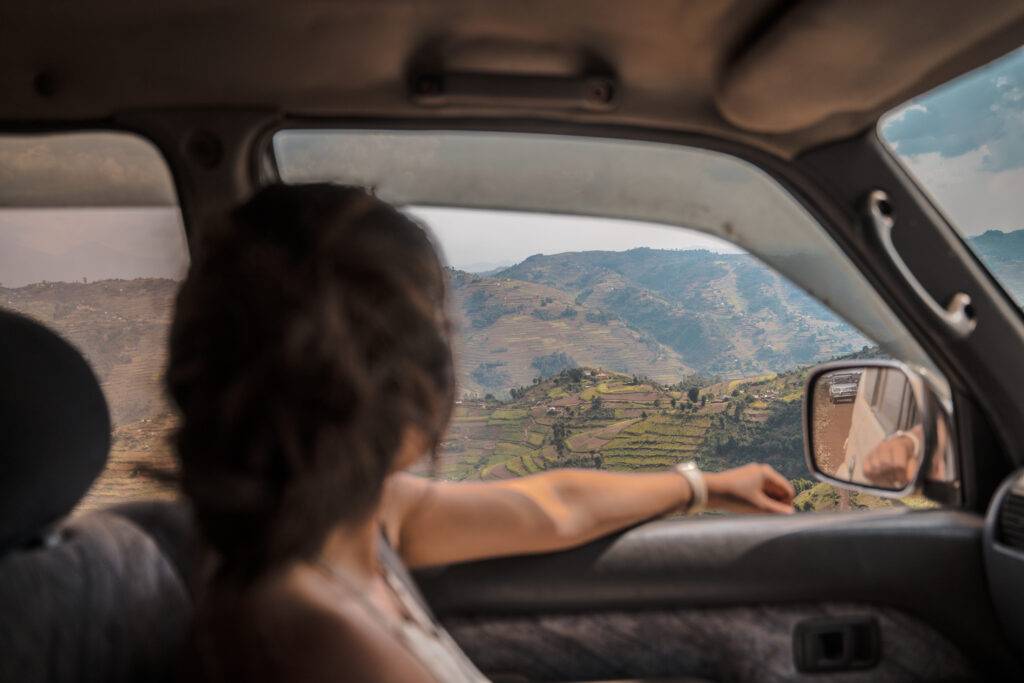
You’ll need about 6 hours to get from Queen Elizabeth to Bwindi. In the final kilometers, the paved road turns into a rather rough track, so adjust your speed to avoid any accidents. Along the way, the road book recommends stops at scenic viewpoints and the town of Kabale for lunch. As Bwindi sits at higher altitude, you’ll see the landscape gradually change: steeper, but still just as lush.
Don’t forget to bring a light sweater (or jacket) with you, as the nights are chilly! The thermometer dropped to 13°C when we were there.
What you should know about Bwindi
The Bwindi Impenetrable Forest area is world-famous for mountain gorilla tracking. This is truly the unmissable experience of a Uganda road trip. Honestly, I have somewhat mixed feelings about this place.
On one hand, meeting the gorillas was, of course, unforgettable, exceptional, extraordinary. I’ll tell you all about it below.
On the other hand, in my opinion Bwindi is a cash cow for tourists. When I say that, I’m not at all talking about the price of the gorilla trekking permit, which I find completely fair and justified. I’m talking about everything else around it:
A budget to plan for
The EXCESSIVE prices at the lodge restaurants (the only option for eating if you’re not in a tent). To give you an idea, we paid $15 per person for breakfast and $20 for a wrap-type takeaway meal for the gorilla trek. Compared to other places in Uganda, even in lodges, I can tell you it’s at least 4x more expensive.
The community walk at Bwindi
The “community walk” we did isn’t really one. On paper, the goal of this walk is to meet the residents, visit a school, and learn more about local culture.
In practice, the guide took us to buy hand-woven items (gorgeous craftsmanship, I’ll admit) and led us into a Batwa community home for 10 minutes. This indigenous people once lived self-sufficiently in the forest and were forced to give up that way of life in order to protect the gorillas and their habitat. At the start of the activity, the guide tells us that tips aren’t mandatory but are appreciated. Let me tell you: the tips ARE mandatory. You can really feel that this whole thing is set up solely for that purpose, and I find that a shame.
As much as we loved the experience at Tukulu on the first day, we felt that the one at Bwindi was purely commercial.
The traditional dance performances
At Bwindi, a community of women come around to share traditional songs and dances everywhere. The first time, it’s wonderful to watch. They’re stunning!
Except within 24 hours, they showed up in front of us several times, and naturally you’re expected to leave a tip. It doesn’t bother us at all — my husband and I aren’t stingy at all. It’s just that, adding it all up, it felt like a bit much in such a short time.
Is this normal for a touristy spot?
If anything, Bwindi is the only place in Uganda where we felt like walking ATMs for the whole stay.
That said, I completely understand why the locals have set up this whole system. They’re capitalizing on the tourist appeal of the gorillas, and rightly so. I’m not telling you this at all to complain or criticize anyone, but rather to give you a heads-up about the impressions we had while there. That way, you know what to potentially expect.
Lastly, this is just my point of view, and impressions naturally vary from person to person.
Day 11: Trek to observe mountain gorillas in the Bwindi Impenetrable Forest
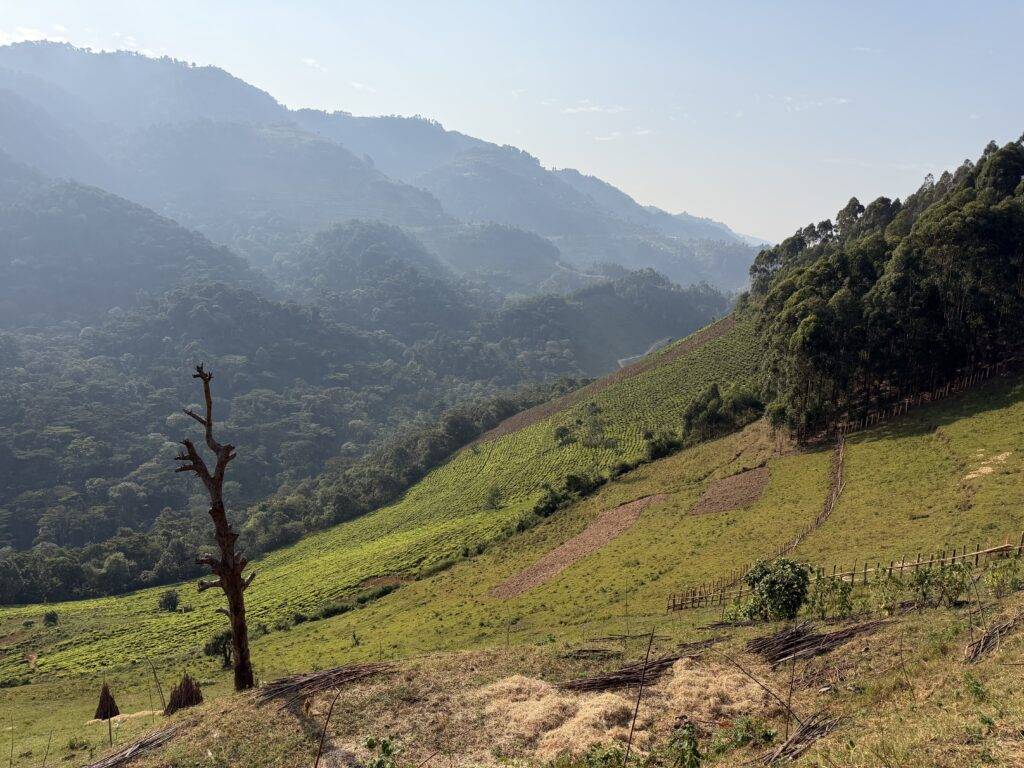
There are very few destinations in the world where you can observe gorillas in the wild. Uganda is the ideal destination for this unforgettable encounter. Indeed, the country enjoys stable domestic politics and offers safe travel.
As mentioned earlier, measures have been put in place to protect wildlife and nature: developing national parks, redistributing part of the revenue to local communities to prevent deforestation, protecting animals, training rangers… If you’re wondering whether gorilla trekking is an ethical activity, I can tell you that in Uganda, it is.
How much does the gorilla trek cost in Uganda?
This activity can be added to your Uganda Nomads trip when you book.
We paid €800 per person for the trek and gorilla observation. The agency handles everything, of course — you just have to pick up your paperwork when you collect your vehicle.
This rate might seem steep at first glance, but there are several things to factor in. You’ll see for yourself on site how essential the work of the rangers and trackers is. These people track the gorillas around the clock to protect them from poaching, treat them if needed, and make sure everything’s okay for them. So this labor comes at a cost. Also, 20% of the revenue goes back to local communities to offset the constraints imposed by the national park rules on them, which have led to lost income for farmers.
What if my budget is limited?
If the €800 price tag is too steep for you, know that chimpanzee tracking — which costs €250 per person — is already an incredible experience.
Even though gorillas are bigger and more imposing, we were actually more impressed by the chimpanzees than by the gorillas. So why is that?
During our chimpanzee trek, the primates were very active because they were fighting over a female. They moved around a lot, climbed trees, drummed on tree trunks, shouted… all that commotion was fascinating!
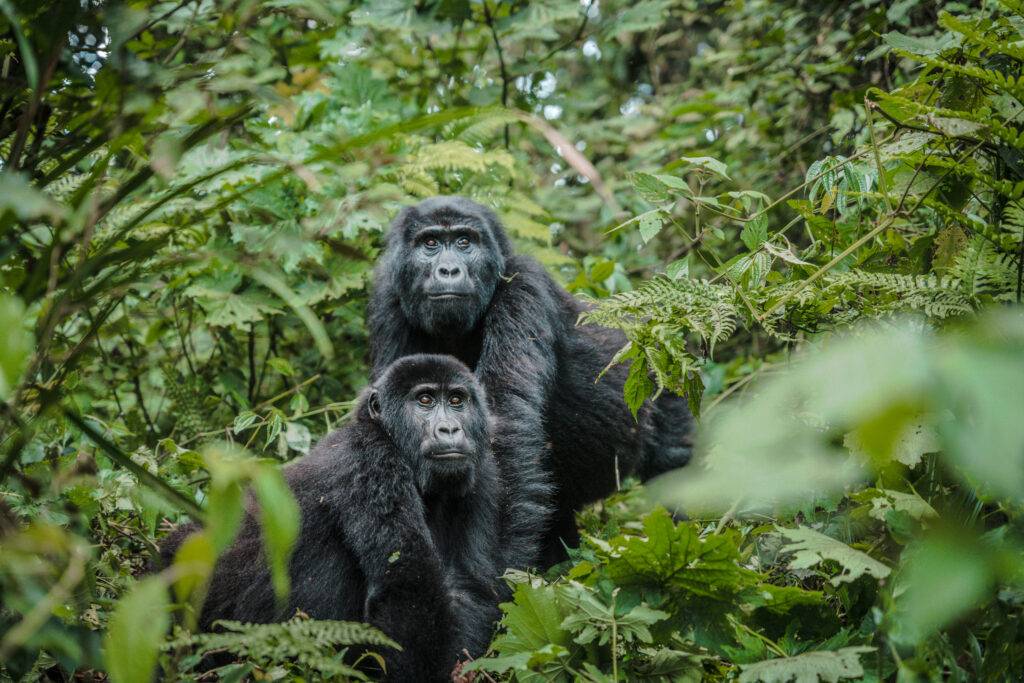
By contrast, the gorilla family we met was completely relaxed. Very slow movements and a quiet, mutual watching of each other. The experience was still incredible because gorillas are majestic, but they’re more still than their cousins. This is of course just our experience — encounters likely differ from day to day.
If you have the budget to do both, then go for it. But if you’re traveling on a tighter budget, I’d recommend booking the chimpanzee trek at the very least.
How does gorilla tracking work in Uganda?
So you can picture it, let me walk you through how the activity unfolds. There are two available time slots for gorilla treks: one in the morning at 8am and one in the afternoon. Check your permit for your assigned time.
Several gorilla families live in Bwindi Forest. Once on site, you’ll be split into small groups (maximum 8 people) and set off, accompanied by rangers, on the trek. Each visitor group visits only one gorilla family, to avoid over-exposing them to human contact. On top of that, the encounter is limited to 1 hour.
The rules to follow are the same as for the chimpanzees:
- Don’t get too close to the gorillas (the ranger will tell you the minimum distance)
- Wear a mask throughout the hour of contact (bring one in your bag)
- Don’t shout, run, or make sudden movements that might scare them
- Don’t imitate them or show them disrespect
- Don’t use flash photography.
Basically, behave like the civilized people you are and keep your mask on so you don’t pass any illnesses on to them. Easy as pie!


Do you need to be physically fit?
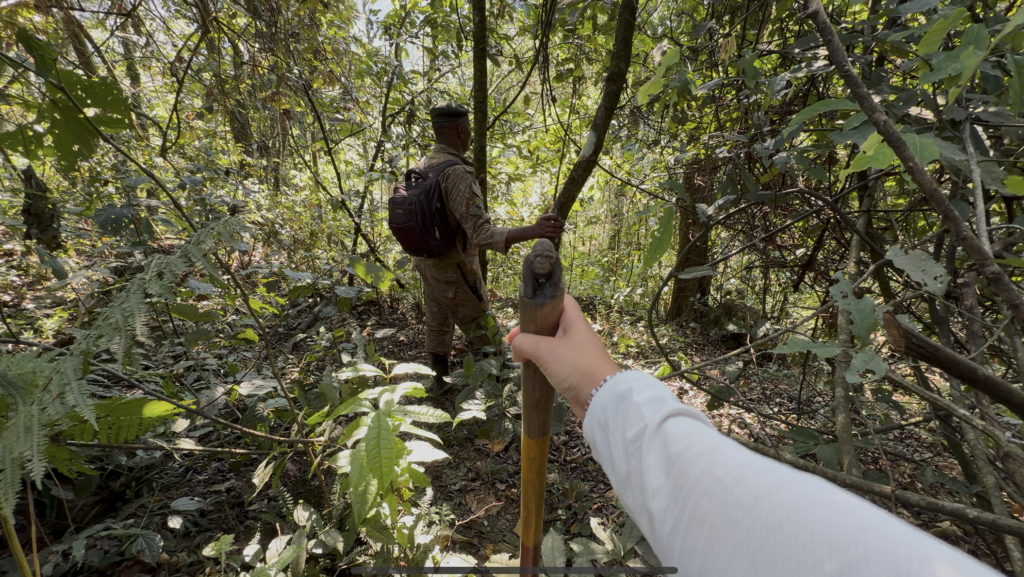
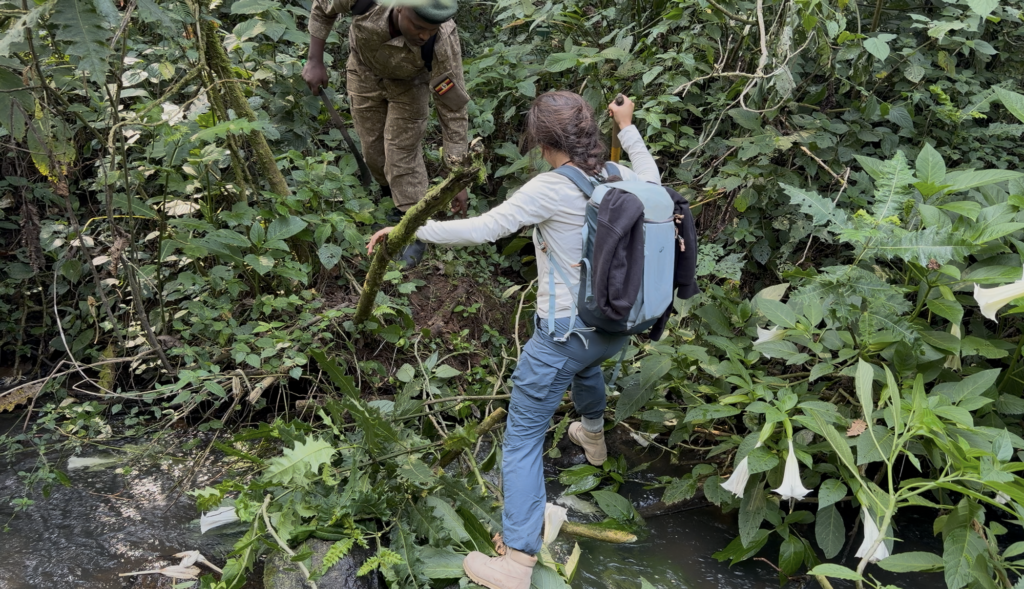
I’d say the gorilla trek in Uganda requires a minimum level of fitness. It can last between 3 and 6 hours, depending on where the gorilla family happens to be. The walk takes place through the jungle, sometimes with some elevation gain and uneven terrain. There are a few small streams to cross, trees, branches… it’s not a marked trail.
For us, it took 4 hours total and we walked 6 km, which isn’t much. But some people in our group found the trek difficult. For us, it was fairly easy.
If you have other questions about this activity, feel free to ask me in the comments section at the bottom of the article 👇.
Days 12 and 13: Relaxing at Lake Bunyonyi
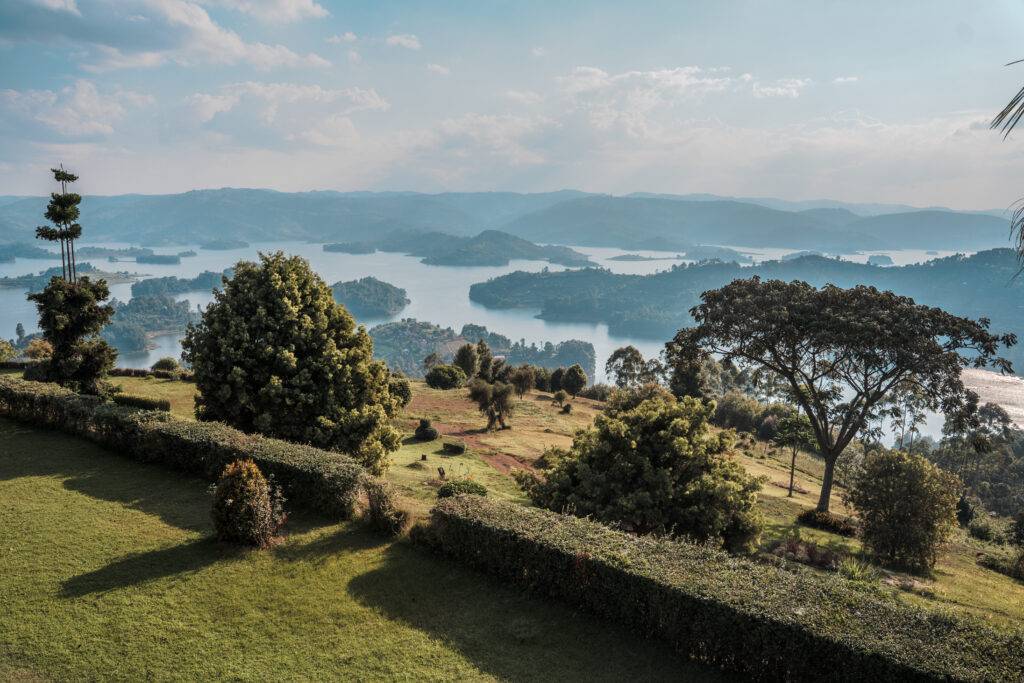
It’s now time to leave Bwindi and head to Lake Bunyonyi and its 29 islets. It’s about a 4-hour drive from there. Along the way, you’ll pass through the town of Kabale again if you want to fill up on gas, eat, and/or go shopping.
After all these adventures, I can tell you that 2 days of chilling by a lake did us an enormous amount of good. This lake is one of the deepest in Africa and offers plenty of activities.


What to do at Lake Bunyonyi?
For our part, we’d already spent a fair bit on the trip, so we didn’t do anything in particular apart from resting, reading, playing Skyjo and Yahtzee, grabbing a coffee… real life, basically!
That said, here are the must-dos at Lake Bunyonyi:
- Swim: there are no dangerous animals here, so you can take a dip.
- Hike: there are several trails around the lake
- Bird watching
- Rent a kayak to get closer to the islets
- Take a dugout canoe trip to Punishment Island: not the most cheerful history, since it used to be where unmarried pregnant girls were abandoned, but it’s still lovely to see
- Go zip-lining.
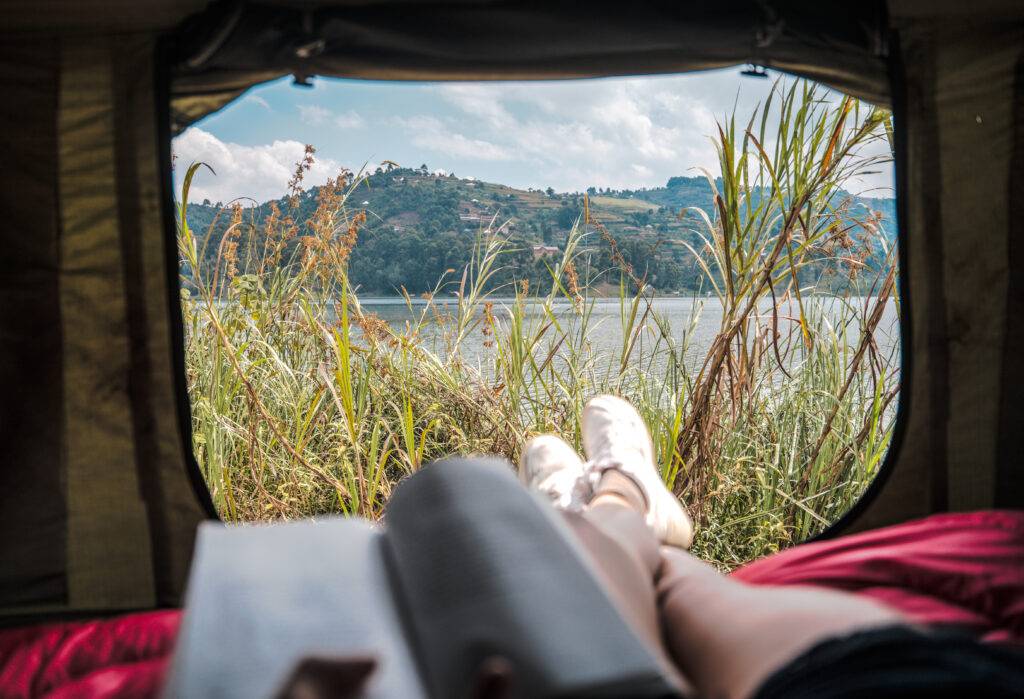
If you’d like, there’s a gorgeous viewpoint reachable on foot in 45 minutes (it’s uphill) at Arcadia Lodge. We drove up for a coffee. You can also have lunch or dinner there, but be warned, the prices are steep.


Day 14: Safari at Lake Mburo, Uganda’s smallest national park
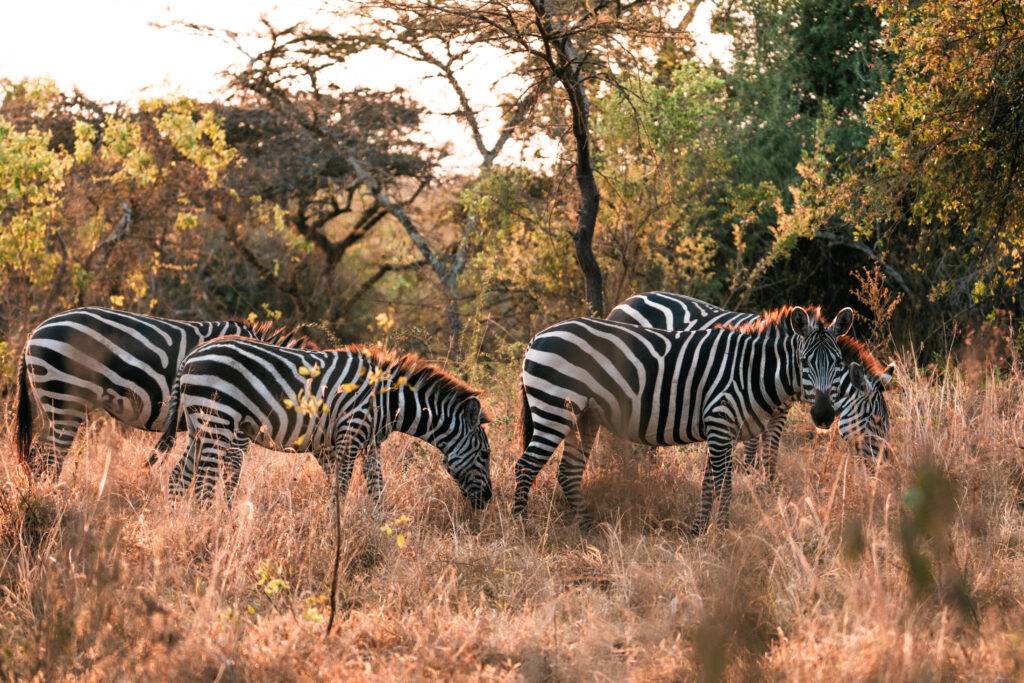
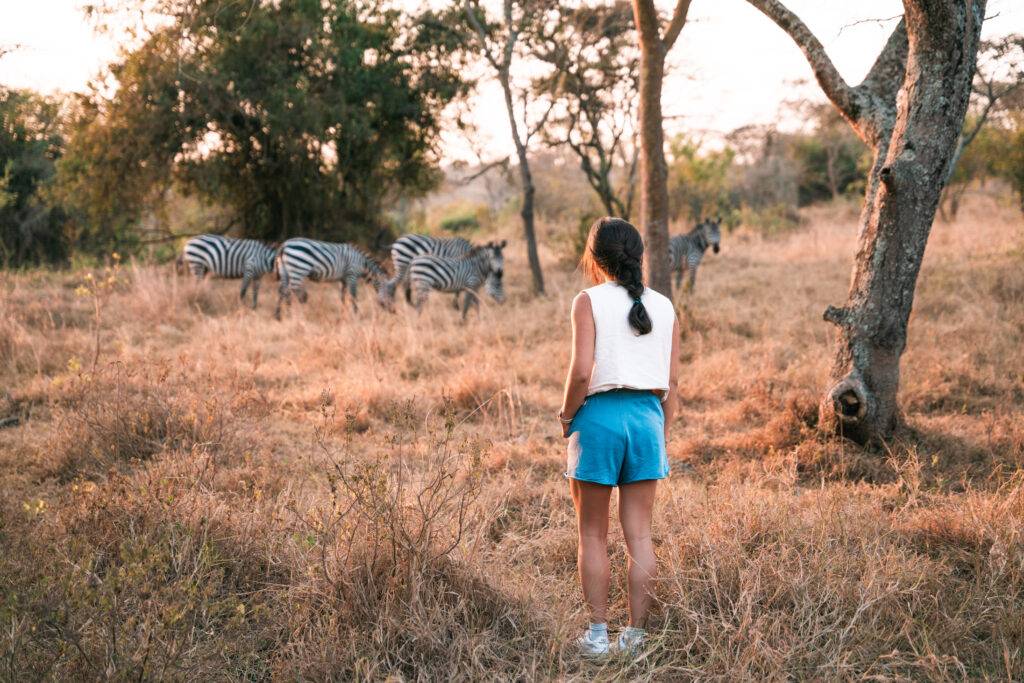
The end of this 2-week trip in Uganda is approaching fast… But before leaving, how about one more safari? Of course you’ll say yes, because we haven’t seen any zebras yet!
As usual, head to the ticket counter for your one-day pass to enter the park. The price is $40 per person for 24 hours + $7 per vehicle for self-driving (i.e., without a guide).
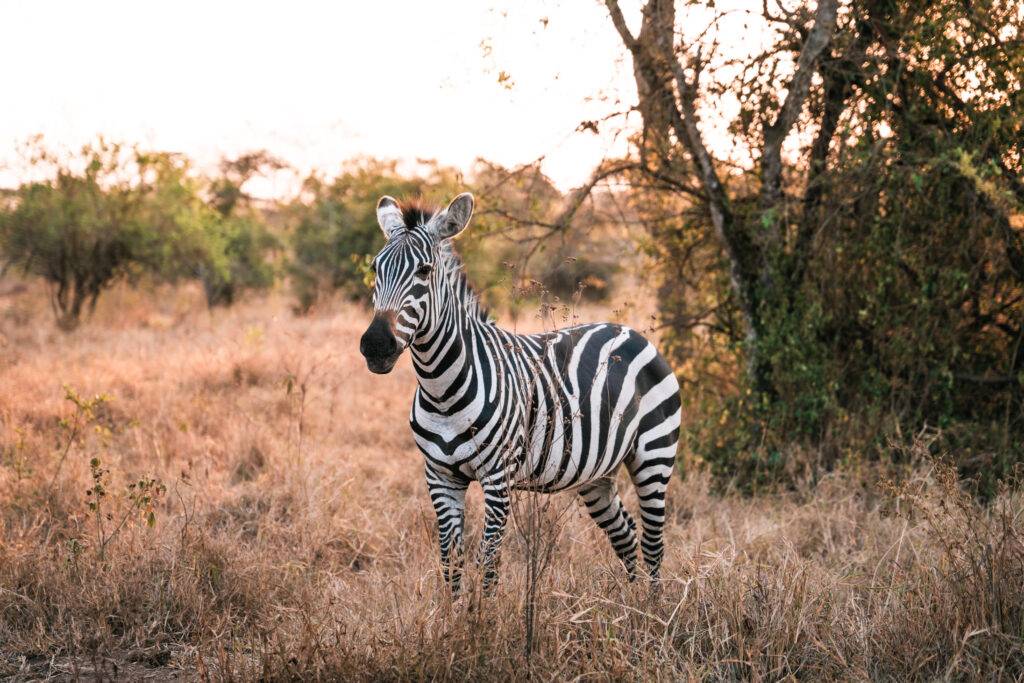
Lake Mburo National Park is certainly small, but it’s home to the largest population of zebras and impalas in the country. You can also see buffalo, hippos, warthogs, giraffes… We took advantage of the lovely late-afternoon light to drive through the park and take in the Ugandan savanna one last time.
Note: if you like, you can do a walking or cycling safari in this park. Its unique feature is that there are no predators here. Ask at the ticket counter when you buy your passes if this interests you.


Day 15: Return to Entebbe
In the morning, it’s time to hit the road again toward the car rental company to return your vehicle. Along the way, the road book will point you toward some spots for lunch and a rest stop.
As you get closer to the capital, you’ll notice traffic getting heavier. Watch out for motorbikes and pedestrians that can appear out of nowhere. From the car rental office, a shuttle will take you to a restaurant for dinner, then on to the airport.
⚠️ Warning: that day, we got pulled over by a police officer for a supposed speeding offense. I won’t go into all the details, but basically, he tried to scare us by saying we’d miss our flight that evening if we didn’t pay the fine in cash. Of course, we went along with it (the guy stole $60 from us with zero proof!!!). So here’s my warning: never do that. Fines are absolutely never paid in cash in Uganda (ever). So if this happens to you, don’t cave like we did — just call the local contact without panicking.
Looking back, we thought about it and felt so stupid! Just writing this story down is getting me worked up all over again 😤.
One last thing: we got pulled over by police 3 times in total on the road for routine checks, and that was the only time it went badly.
And that’s it, that’s the end of this 2-week Uganda road trip itinerary! I hope you enjoyed it — now let’s move on to the tips and planning section.


FAQ: Practical information for your trip to Uganda
When to go to Uganda?
The best time to visit Uganda is during the dry season. It runs roughly from June to August and from December to February.
Handily enough, these are exactly the months you can travel with Uganda Nomads. Coincidence? I think not!
We went in June and it was perfect. We got very little rain, aside from 2 or 3 short showers while we were at higher altitude. As for temperatures, it hovered between 28 and 32 degrees. I didn’t find the air very humid — my hair thanks me.
During the rainy season, it’s also possible to travel to Uganda. However, expect heavy rain during your stay.
Do you need a visa?
Yes, you need to apply for a visa before traveling to Uganda. I’d recommend doing it online a while before departure. Between my application and receiving my visa, it took 3 days.
Here are all the steps to follow for each traveler:
- Go to the official website
- Choose the tourist visa and fill in the required information
- Pay $50
Once approved, the visa will be sent to your email address. Print it out to show to immigration officers upon arrival.
What health precautions should you take?
On this front, there are several things to keep in mind. First of all, it’s important to take out travel insurance when traveling outside the EU. As always, I recommend Chapka Assurances and its Cap Assistance 24/24 policy. You’ll be covered for a range of things such as lost luggage, the ability to have a French-speaking doctor available for teleconsultation at any time, medical and hospitalization expenses, repatriation assistance… Thanks to this blog’s special deal, you get 5% off your insurance when booking through this link.
Also, the yellow fever vaccine is mandatory. We weren’t checked, but get it anyway. Anti-malaria treatment is strongly recommended: I’ll leave that to you and your doctor to sort out.
Should you be worried about Ebola?
When we visited Uganda in June 2026, the Ebola outbreak in the country was under control. We decided to go ahead with our trip regardless, since we felt the risk was low.
That’s a personal decision, so do whatever feels right for you! I’m nobody to advise you on this front. In any case, this disease is spread through bodily fluids (sweat, blood, saliva, and others). So it’s best to avoid crowds and physical contact — which is entirely doable with this itinerary.
As for the numbers, as of the day I’m publishing this article, the toll stands at 2 deaths in Uganda with 20 confirmed cases. Next door, in the Democratic Republic of Congo, it’s over 1,000 deaths and 2,500 confirmed cases. So the risk really isn’t the same from one destination to the other.
What budget should you plan for a 2-week trip to Uganda?
Here’s the breakdown of my expenses for this road trip itinerary:
- 4×4 rental with rooftop tent, all camping equipment, itinerary + campsites/hotels: €1,390 per person
- Fuel: about €500
- Nile activities (kayak and boat): €160
- Visa: €88
- Food (groceries and restaurants): €800
- Chimpanzees: €500
- Gorillas: €1,600
- National parks: €315
- Ziwa Rhino Sanctuary: €100
- Tips and souvenirs: €200
Total = about €3,500 per person, excluding flights.
As you can see, you should plan for a sizable budget for a trip to Uganda if you want to do the same activities I did. That said, if you skip the gorillas and the boat excursion on the Nile in Jinja, which I think isn’t worth it anyway, you can already save €840 per person, which isn’t bad!
Can I withdraw cash locally? Payment information to know
The official currency of Uganda is the Ugandan shilling. There are of course ATMs in the towns where you can withdraw cash. For reference, 100,000 shillings = €23.
US dollars are also accepted.
Payment inside national parks is by card only.
If you can, try to bring a VISA card, as MasterCard is refused in some places.
How do you get internet on your phone?
To be able to use GPS and post your best Instagram stories, you’ll need to buy a SIM card or eSIM to get internet on your phone in Uganda. You can do this right at the airport.
I’d advise against services like Saily, Holafly, etc. for this destination, as they’re a lot, lot more expensive!
For 20 GB of data valid for 1 month, we paid €15 each with a local carrier. There are two providers at the airport, and you can choose either one.
Driving in Uganda
Good news: an international driving permit isn’t required. You’re allowed to drive with your French license.
Less good news: in Uganda, people drive on the left, with the steering wheel on the right. But I promise, you get used to it very quickly.
As for road conditions, it’s pretty hit or miss. Sometimes you’ll drive on great paved roads. Other times, it’ll be dirt tracks or roads in poor condition, with potholes and bumps. In those cases, really watch your speed!
⚠️ Warning: driving at night is very dangerous, and you won’t be covered by insurance in the event of a nighttime accident anyway. Between wild animals crossing and pedestrians walking along the roadside, I’d strongly advise against attempting it!
Is Uganda a safe country?
Overall, yes. We felt safe in Uganda, even without a guide. We had a couple of minor mishaps in the town of Kabale, but nothing that couldn’t happen anywhere else.
Ugandans are a very welcoming people, and it’s easy to connect with them. English is widely spoken, which also makes conversation easier. Even the police officer who scammed us was super nice!
What are the packing essentials?
Here’s a quick, unordered list of what I consider essential for a trip to Uganda:
- For chimpanzee and gorilla treks: long pants, long-sleeve tops, a rain poncho to tuck into your backpack, surgical masks
- Insect repellent, sunscreen, and baby wipes to clean off road dust
- A small speaker for music: we forgot ours and were so annoyed!
- Sunglasses
- A water bottle that keeps water cool. Note: tap water isn’t drinkable.
- A light sweater or jacket for evenings at higher altitude
- A clothesline to dry your clothes if you hand-wash them (we forgot ours and really missed it!)
- A power bank, your chargers, and a UK-style plug adapter (type G)
- A swimsuit
- Safari-appropriate clothing: avoid bright colors and stick to neutral tones
- Lightweight travel towels
- Photo/video gear if you’d like. Note: drones are prohibited.
Alright, I think I’ve said enough here. If you have any questions at all, feel free to use the little comment box below: I’d be happy to help!
Big hugs and see you soon,
Aurélie

Je suis Aurélie, co-créatrice du blog et de l’Instagram Amoureux du Monde. Désormais, je partage mes aventures sur mon compte Instagram perso @deavy.b.
Depuis 2016, j’ai eu la chance de visiter de nombreuses destinations et de me former à la photographie via ces expériences. Ce que je recherche en voyage, c’est l’apaisement devant un magnifique paysage, l’émerveillement devant la beauté de la nature et l’émotion devant un coucher de soleil.


No Comments