


Japan is a bit like the dream trip of many people, myself included. That’s why I decided to visit Japan in 2 weeks. Having had a fairly young interest in Japanese culture thanks to manga and then Japanese literature, I went three times to the land of the rising sun. I mixed the best of my three trips to concoct you this 2-week itinerary to discover Japan and its emblematic places.
The first time in 2019, I was only in Tokyo and Kyoto, a rather fast trip, too fast, but one that allowed me to discover the country’s must-sees. The second time in 2023, while I was on a Working Holiday Visa in Korea, this time for more than two weeks to visit new cities. The third time in the fall of 2025 when I only returned to Tokyo.
Is Japan worth visiting?
Of course, yes. The country was closed due to COVID for over two years and reopened its borders at the end of 2022, to my delight.
I’m not the only one who thinks that Japan deserves to be visited at least once in its lifetime. Because of its culture, which is fundamentally different from our Western culture, its unique history, its myths, and all its soft culture such as manga, anime, maid café, and so many other aspects that have been imported into Europe.
In Japan, you’re bound to find something you like. Whether it’s a gastronomy, history with the many temples to visit, the typical small streets that immerse you in an atmosphere of animation, art, with exhibitions and museums, the popular culture such as figurines, the very Kawaii look of Japan with unique styles and objects that you will only find there.
How long should you plan for a trip to Japan?
Whenever I talk to someone about Japan, I recommend that they plan at least 2 weeks. This way, you have time to recover from the jet lag, the accumulated travel fatigue, and to be able to enjoy on site.
Traveling to Japan is not just about seeing the capital in haste and Kyoto. In this article, I will propose an achievable program that won’t make you run around and fly over without seeing anything. My 2-week itinerary in Japan will immerse you in the Japanese culture with must-see places to visit in my opinion.
Of course, if you can stay for more than two weeks it’s even better, to enjoy each city even more and soak up the atmosphere. I’ve never done the Japanese campaign yet, which is my next goal.

What budget should you plan for a 2-week trip to Japan?
Japan has a reputation for being an expensive destination. It’s not entirely wrong, but it’s not entirely fair either. With a bit of organization, it’s entirely possible to travel two weeks in Japan without breaking the bank. Here’s how to estimate your budget.
The daily budget
Excluding accommodation, you should count between €30 and €50 per day to cover transportation, meals, site entrances, and reasonable shopping.
The good news: eating well in Japan is cheap. A ramen, fried chicken, udon soup or grilled mackerel can easily be found at between 5 and 6 €. The sushi is a bit more expensive, but very affordable compared to European prices.
If you want to treat yourself more, shopping, more elaborate restaurants, parties: plan instead €50 per day, or even a little more.
Accommodation
This is the largest expense item. Budget at least $100 per night for proper housing. Below this threshold, you risk unpleasant surprises: poor insulation, questionable cleanliness, humidity… Minimum comfort comes at a price in Japan, especially in big cities.
Prefer accommodation close to a metro station; it’s really the most important criterion for the convenience of your stay. In Tokyo, central neighborhoods like Ueno, Asakusa or Shinjuku are ideal, although a bit more expensive. Slightly off-center neighborhoods like Otsuka can also be suitable, provided they are well served.
Airbnb is legal in Japan but very restricted: make sure the listing is correct before booking.
National transport
This is the other big budget item to anticipate. Shinkansen (= high-speed train) trips between cities represent a significant budget over two weeks. By following my itinerary, count about €400 to €500 in trains for the entire stay. A large sum, but difficult to circumvent given the distances.
For travel in the city, the subway and bus remain very affordable: expect about 210 to 260 yen per journey (1.30 to 1.60 €), or about 1,000 to 1,200 yen per day of urban transport.
Budget Summary for 2 Weeks in Japan
Of course, there’s also the round-trip flight from France (usually between €700 and €1,200 depending on the time of year and how early to book), as well as travel insurance, SIM cards, and other contingencies.
| Item of expenditure | Estimate in euros |
|---|---|
| Accommodation (14 nights at ~100 €) | ~1 400 € |
| Internal transport (Shinkansen) | ~400 to 500 € |
| Urban transport | ~100 € |
| Meals and food | ~300 to 400 € |
| Site and activity entries | ~100 to 150 € |
| Shopping and souvenirs | according to your desires |
| Estimated total excluding flights | ~2 300 à 2 600 € |
In summary, a well-organized two-week trip to Japan has an overall budget of about $3,000–$4,000 per person, all included. A substantial amount, of course, but for an experience that, believe me, is worth every penny.
2-week itinerary in Japan: what to visit? (Map and quick summary)
In two weeks in Japan, you will obviously have to make choices about the places to visit.
You can’t do it all and see it has so much to offer! This itinerary focuses on the must-see cities to visit in Japan. This trip is more focused on cities, less on the countryside. It will require good shoes, a good camera (otherwise you’ll have to blame yourself, believe me) and a jacket, to avoid the change of weather and temperature differences.
Here is the long-awaited schedule:
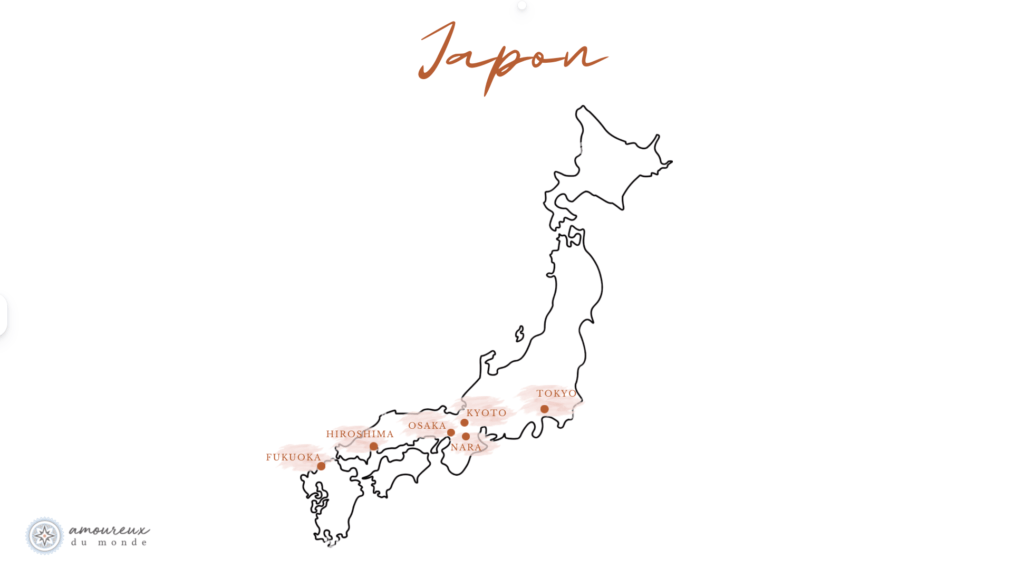
- Days 1 to 4 : Tokyo
- Days 5 to 7 : Kyoto
- Day 8 : Nara
- Days 9 to 10 : Osaka
- Day 11 : Hiroshima
- Days 12 to 13 : Fukuoka
- Day 14: Return to Tokyo and departure for France
I’ll talk to you about these destinations in more detail later in this article. For practical information (budget, when to leave, etc.), I give you all my advice and everything you need to know to organize yourself as well as possible. Go directly to
Days 1 through 4: Tokyo, the capital city
I think it’s worth visiting Tokyo first, though I don’t recommend staying for more than four or five days.
Where to sleep in Tokyo?
I recommend the Pearl Hotel Shinjuku Akebono-bashi: well located, close to Yotsuya sanchome metro station, about 340€ for 4 nights. It’s good value for money in Tokyo: just under €100/night, knowing that this is the minimum price to have a decent accommodation.
🔗 Rates & hotel availability: click here
Visit the capital of Japan in 4 days: Tokyo’s must-sees
Tokyo is a huge city, about 2,000 km2 or twenty times Paris. A very large and intense capital, which combines very touristic and emblematic neighborhoods, with much more residential and quiet corners.
Neighborhoods to explore and not miss:
I tried to mix trendy and attractive neighborhoods, like Shibuya and its famous Shibuya Crossing (the huge pedestrian crossing).
The Shinjuku business district should also be seen, but that’s not all! Akihabara, the electronics district, with more traditional places like Asakusa and its Senso-ji temple, or the Meiji-jingu shrine in Harajuku. Those we hear about and talk about again as well as others, slightly less known as the bookstore corner, Jinbocho.


For a neighborhood-by-neighborhood guide, with my specific transportation recommendations, my best addresses, and a detailed 4-day itinerary in Tokyo, Check out my article!
Days 5 to 7: Visit Kyoto: my recommendations
How do I get to Kyoto from Tokyo?
Get to Tokyo Central Station to catch the train to Kyoto, Japan’s must-see city.
I advise you to arrive at the station well in advance. There are a lot of people and the system is not very intuitive for buying tickets. Some places are not in English, others don’t accept credit cards, so it’s quite complicated. If you read my article on
To join Kyoto from Tokyo, you will need to take the shinkansen for more than 2 hours. The ticket price is about 13,000–14,000, or the equivalent of €85-90. You will have the choice between a reserved and non-reserved seat.
When you arrive at Kyoto station, if you cannot reach your accommodation earlier than the authorized time, you can leave your luggage in the lockers present at the station. Make sure you have some cash on you. To reach your accommodation, you can take the bus, which I did during my two trips there, but apparently large suitcases are not accepted… No one has ever made a remark to me, but if they do, try to find a taxi. On the bus in Kyoto, you can pay with the Suica card (I explain everything in the practical information at the end of the article) or in cash.
You will enter from the back of the bus, unlike in France, and you leave from the front by paying for your ticket directly in a box placed in front of the driver if you pay with cash; otherwise, you will type your Suica.
Where to sleep in Kyoto?
A good hotel address that I recommend without hesitation : Travelodge Kyoto Shijo Kawaramachi (click here). There is a left-luggage office on site to drop off suitcases if needed.
If you prefer a more traditional accommodation, you can find the “Minami-ku” on Airbnb, offered by host Komori. It is located southwest of the station. A large apartment perfect if you are at least four people, to test the Japanese way of life with futons on the ground.
I won’t lie to you by saying that I had the best nights of my life, but I will remember from experience: it’s certain! Moreover, the owner is absolutely adorable, he had received us and explained everything to us.
Day 5: What to visit and do in Kyoto? Temples, bamboo forest and emblematic neighborhoods
Here’s how to organize this first day in Kyoto! I hope you are ready, it will be busy today.
The Kinkaku-ji temple
First, head to the Ichiran ramen restaurant after a long trip, a safe bet! After eating, we went straight to the Kinkaku-ji temple, the gold pavilion. It is located in the Kita-ku (区 北) neighborhood, a district north of Kyoto. From the restaurant, it takes 40 minutes by bus.
Allow about 30 minutes to visit, as the site is quite small.
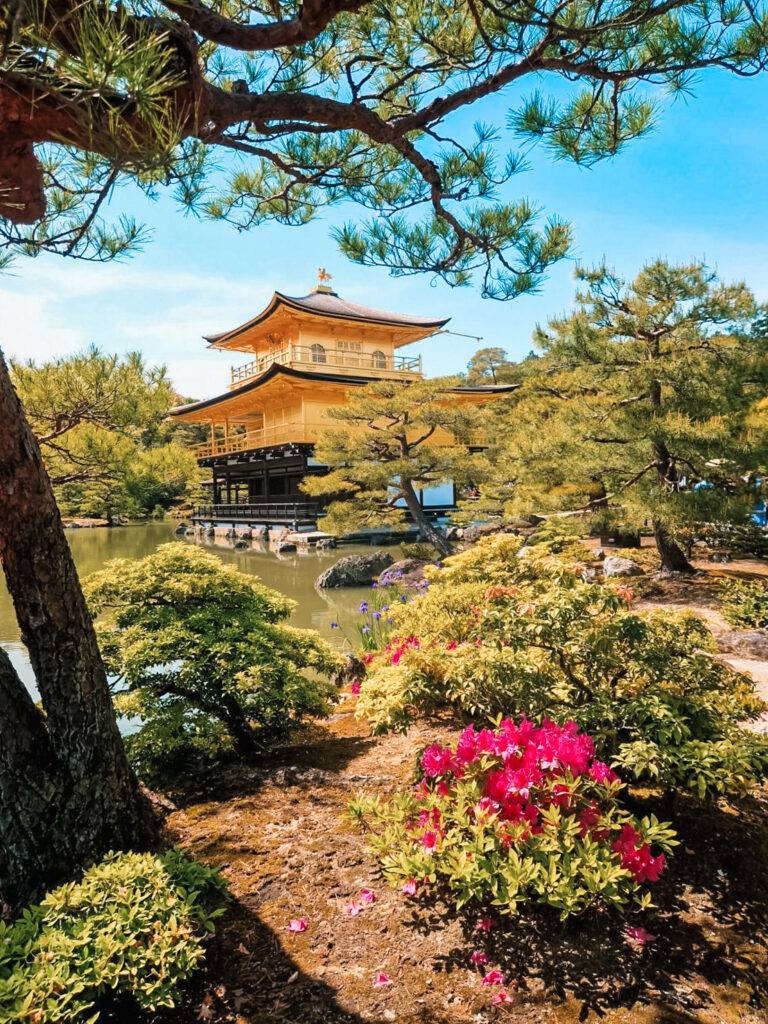
However, I loved seeing this pavilion with my own eyes. Kinkaku-ji has a rather special history. Indeed, it was set on fire several times, and only the gold pavilion survived until 2 July 1950. On that date, it was completely set on fire by a mentally deficient monk, an event that Yukio Mishima will recount in his eponymous novel. The current building dates from 1955; its historical inauthenticity drove it away from national treasures. However, it has been classified as a UNESCO World Heritage Site since 1994.
Kinkaku-ji Temple Park, meanwhile, is designated as a Special Historical Site of Japan and a special place of scenic beauty. You’ll have to struggle a bit to get a nice photo of the temple, especially if you want to be on it, but you’ll keep a good memory of it.
🎫 Ticket price: 500 yen (=€2.6). The ticketing is on site, so there may be a bit of a wait because there are still people in this temple.
A good ice cream address in Kyoto
At the exit, in front of the temple, you can find a vendor selling Italian-style ice cream. The scents are varied, including one with matcha or vanilla, with some species of gold leaves on top. Gold leaves have no taste, it’s just beautiful for a photo.
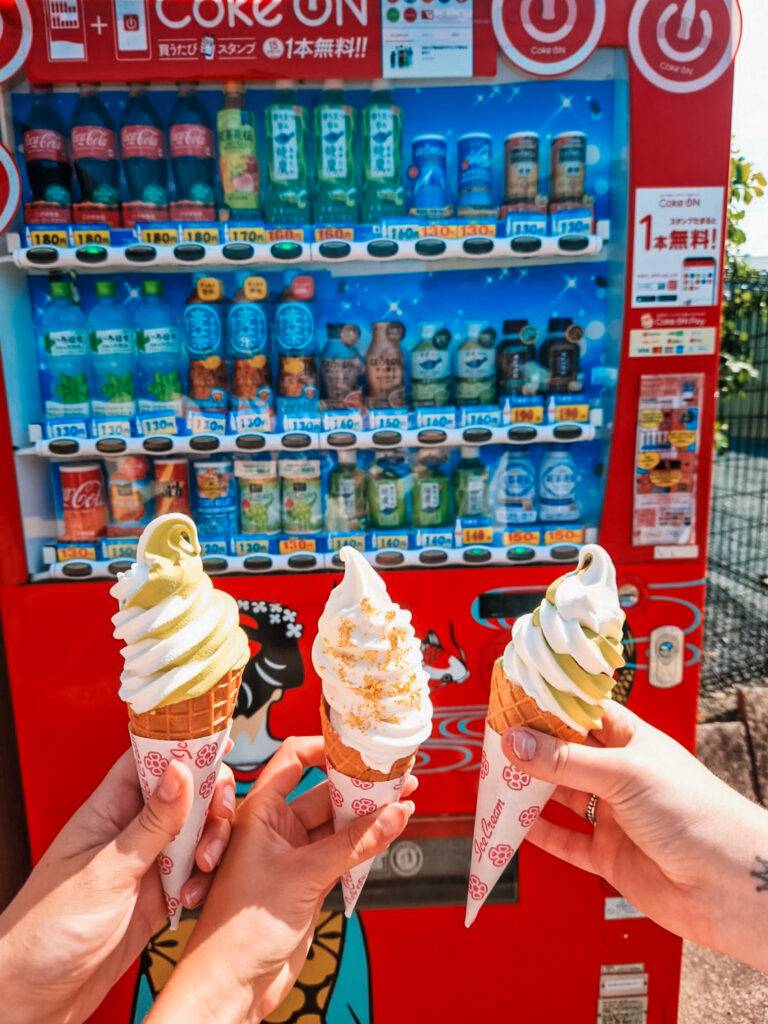
They’re expensive, but good. There’s not much to sit on, which is a bit of a recurring problem in Japan I think. Except in restaurants where you often have room to sit and stay for a while, cafés or other shops have a limited number of places, or it’s very small.
Other temples to discover in the Kita-ku neighborhood
Next, I highly recommend exploring the neighborhood of Kita-ku. There are an infinite number of more or less small Shinto shrine temples.
We came across some very nice shrines with no one, for example the Wara Tenjingu Shrine and the Hirano Jinja. Both located south of the Kinkaku-ji temple and within walking distance of it.
You can also visit the Kitano Tenman-gū, a large Shinto shrine, which costs about €5 to enter.


The must-have Arashiyama Bamboo Forest
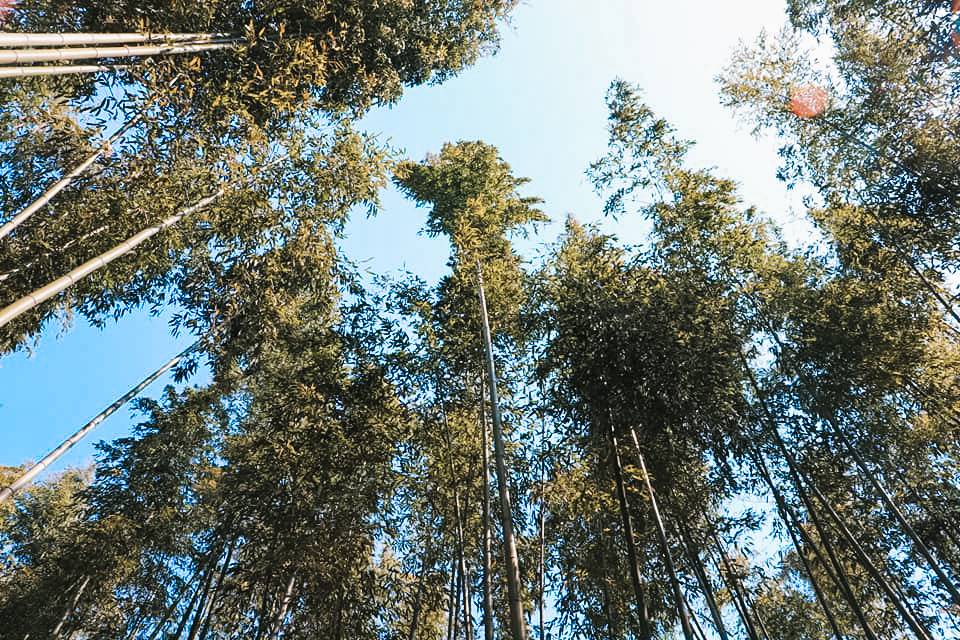
If this part of the itinerary to visit a few more temples doesn’t suit you very well, I can advise you to go to the famous Arashiyama Bamboo Forest. To get there, take the subway for about 50 minutes.
Known worldwide, this beautiful bamboo grove attracts many Japanese and foreign visitors.
My advice : Go there early in the morning, at sunset, or at night. These are times when you will have the least chance to face a large crowd.
Access is free, the site is open 24 hours a day. I had a great time visiting there, so make sure to plan for a good hour.
Arashiyama neighborhood
The rest of the Arashiyama neighborhood is very nice, too. It’s located by the Katsura River. A truly soothing place, which will completely change you from Tokyo.
I advise you to go there after visiting the Bamboo Forest. You will find small restaurants, cafes, and temples.
We ate at a place with several stalls offering various sweet and savory Japanese specialties. I can’t remember the name or the exact location, but from memory, it was around the Arashiyama subway stop. It was then the opportunity to taste my first Italian ice cream with matcha. I hadn’t liked it at all, but for matcha lovers, I advise you to try it.
Day 6 in Kyoto: Fushimi Inari, the Path of Philosophy and the Hidden Temples
The Fushimi Inari-taisha Shrine
This unmissable spot in Kyoto is precisely a Shinto shrine (神 社, jinja). By definition, it is a place of worship for traditional Japanese religion, shinto (or Shintoism).
Fushimi Inari-taisha is one of the most visited places in the city with about 2.7 million visitors per year. Go there early in the morning, at 8 a.m. or later if possible.
The sanctuary is absolutely amazing. It is made up of more than 5,000 torii—the famous orange gates—on which are engraved the names of the donors who donated them. We take a circuit of more than 4 km with +10,000 steps to visit it, but don’t panic: you don’t have to do it all! It is entirely possible to go back down or cut the path at any time to shorten the effort.


At one point, the path splits in two in the middle of the torii: one lane to stop and take photos, the other to keep moving forward. Throughout the course, you will come across an infinity of small altars, and in some places small stalls where you can buy water, ice cream or souvenirs. There are also the famous Maneki-neko, these little lucky cats found in many Shinto shrines.
At the bottom, before or after the tour, don’t hesitate to check out the food stalls: skewers, daifuku, mochi, or even the anpan, this little bread stuffed with sweet red bean paste—it’s a real treat!
⏱️ Hours: open 24/7.
🎫 Access: free.
⌛️ Visiting time: 2 to 3 hours at your pace.
The Ginkaku-ji—the Silver Pavilion
Then take the subway and then the bus, about a 45-minute ride to Ginkaku-ji, the Silver Pavilion. Open from 8:30 am to 5 pm, admission is charged (about 2 €).
The Path of Philosophy
Once your visit is over, go back down via the Chemin de la Philosophie, which runs along a small river in a very rural atmosphere. Along the way, you will come across many small temples, more or less well-known and frequented—ideal for getting away from the crowd.
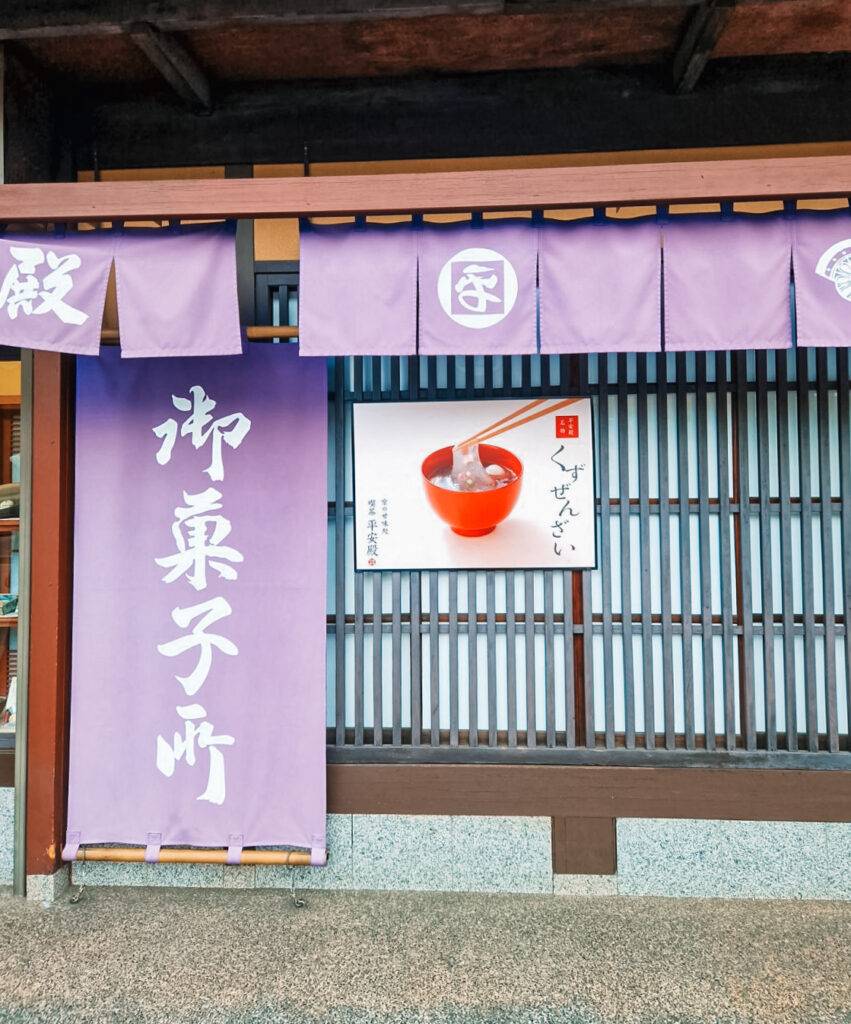
You will also find many cafes and restaurants. Be careful though: some people don’t accept credit cards, so remember to always carry cash; it’s really essential in Japan.
We found an Osaka okonomiyaki restaurant—a traditional recipe made with cabbage, dough, and meat, forming a kind of thick pancake. Unlike the version from Hiroshima where the ingredients are layered, here everything is mixed together.
The Eikan-do Zenrin-ji and Tenjuan temples
The first is little known but superb, especially in autumn with momiji (Japanese maple) leaves.
The Tenjuan temple is a bit larger, with a beautiful bridge over the pond. It’s very beautiful too.
🎫 Entry: about $3 for each.
Yasaka-jinja Shrine
Still on the Path of Philosophy, I strongly advise you to take a detour to the Yasaka-jinja, whose entrance is free. It is accessed by a large torii—the hallmark of a Shinto shrine—and then by steps that lead to the heart of the place.
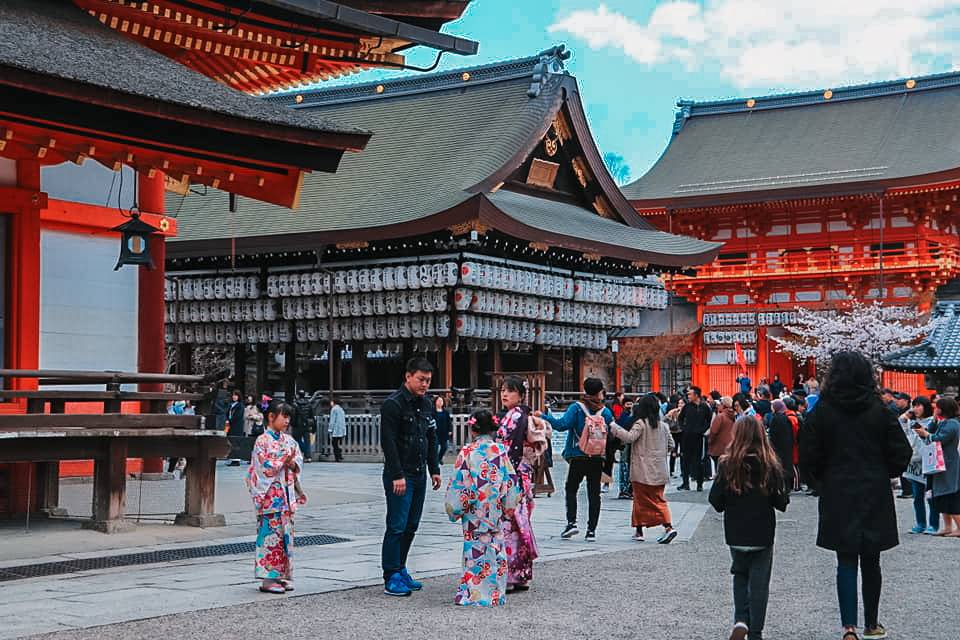
Built in 656 AD, it is home to one of Japan’s most famous festivals. It is a sanctuary that I particularly loved for its atmosphere, and for the beauty of the kimonos worn by women—and even some men. With cherry blossoms at that time, it was really beautiful. You will even find small food stalls there. Despite having more visitors than some temples in the Way of Philosophy, it is definitely worth a detour.
The Kiyomizu-dera Buddhist temple
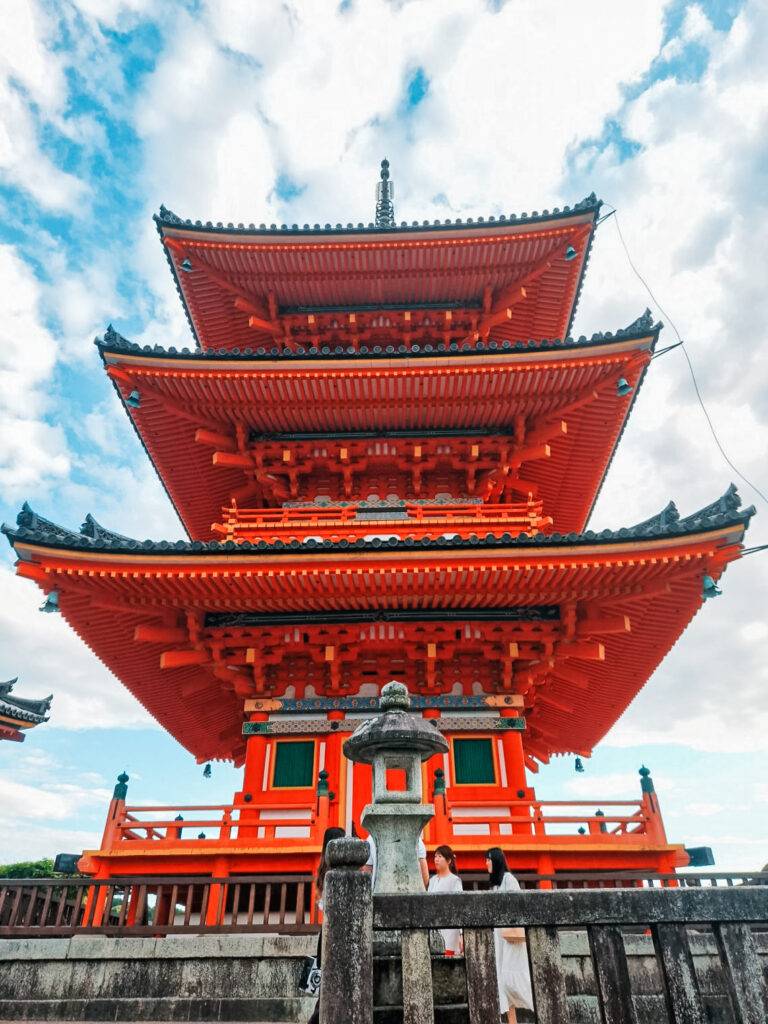
To end the day, you can stop by the famous Kiyomizu-dera, one of the most iconic temples in Kyoto, located right next to the historic district of Gion, geisha district. Between 3 and 5 million visitors flock there every year, just so you know: there will be many people.
Open from 6am until 6pm, only the very first hour will allow you to enjoy it in relative calm. The alleys leading to it are narrow and typical, lined with souvenir shops, cafés, pastries, kimonos, fans and matcha. Fortunately, the site is big enough for visitors to spread out a bit. It’s an experience worth doing at least once!
If you really don’t like crowds, go for a walk at Nishiki Market, Kyoto’s covered market instead: it will be much less crowded and the atmosphere is just as authentic.
Day 7 in Kyoto: Kyoto Tower, Imperial Palace, and Gion District
Kyoto Tower
Start your day at the 131-meter Kyoto Tower. You can climb to the top for a great view of the city.
🎫 Access : about $5. Book your tickets online by clicking here 🔗
Kyoto station
While you’re there, take a tour of Kyoto Station, where the architecture is definitely worth seeing. The new building, opened in 1997, houses a 10-story shopping mall , a beautiful open-air hanging garden, restaurants, a theater, and two museums—literally a small town within the city.
You don’t have to spend three hours there if you’re just passing by, but a quick tour is in order.
The Higashi Hongan-ji temple
On your way north, stop at the Higashi Hongan-ji temple. Very beautiful and not crowded.
🎫 Input: about $3.80.
The old imperial palace in Kyoto
A little further north, completely within walking distance, you can visit the former Kyoto Imperial Palace. This is clearly not the most spectacular site of the city, but the visit is pleasant, there are not too many people, and the gardens are frankly very beautiful. Note that the inside of buildings is not accessible.
It is also an opportunity to remember that Kyoto was the capital of Japan for more than a thousand years, from 794 to 1868, spanning the Heian, Muromachi, and Edo eras. It was then called Heian-kyō, which means “capital of peace and tranquility”. It is this exceptional history that explains the richness and density of its monuments. For my part, I much prefer Kyoto to Tokyo: the city is much more human-sized, and the sites are, in my opinion, much more beautiful.
Info: Admission is free. Open from 9:00 a.m. to 3:50 p.m., every day except Mondays and Tuesdays.
The Kamo-gawa River
Just to the east, the Kamo-gawa is the Kyoto River. This walk along the banks is very pleasant. A quiet and rejuvenating moment, far from the tourist hustle.
The unmissable Gion neighborhood
Even further east is the famous Gion district, known worldwide for its geishas. An important word, however: this neighborhood is unfortunately too often the victim of incivilities by tourists who indulge in completely inappropriate behavior towards geishas: following them, talking to them without being invited, or taking photos of them without permission. Please, abstain.
If you want to learn more about the Geishas, I recommend this activity: a Geisha show with questions/answers and opportunities to take respectful photos. Click here for more info 🔗


Since 2024, the authorities have also prohibited access to certain private streets for tourists. A fine of 10,000 yen (about €60) will be imposed on you for non-compliance. If you’re just here to wander around and follow the rules, there won’t be any problem, but it’s important to be aware of that.
The Kennin-ji temple
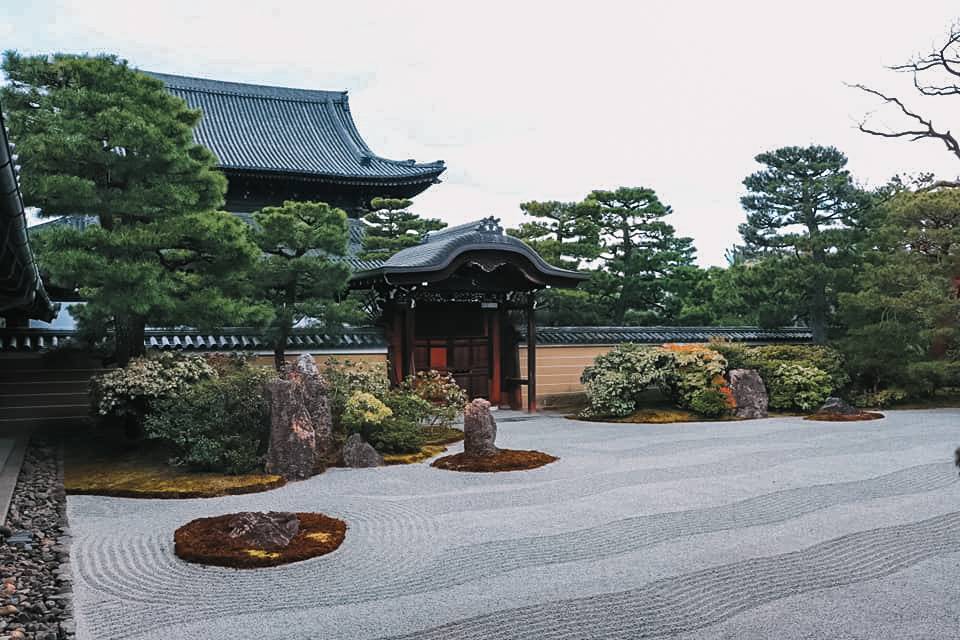
In the Gion district, don’t miss Kennin-ji Buddhist temple, one of the most beautiful and typical in Kyoto.
Indoors, you will need to remove your shoes to put on slippers, and food/drinks are not allowed. Photography is not allowed everywhere, please follow the instructions on site.
The temple consists of a Zen garden and traditional Japanese buildings. I personally have a very good memory of it. As in many temples in the city, some areas are subject to restrictions; pay attention to them.
Input : about $5. Plan for the species.
Day 8: Nara, the deer city
Is it worth visiting Nara?
Nara is a must-see city, well known for its free-range deer: the cervus nippon, a Japanese deer found only in Japan.
Since the city is close to Kyoto and Osaka, I highly recommend that you dedicate a day there.
How do I get to Nara from Kyoto?
For access from Kyoto, take the Kintetsu Kyoto Line: it takes about 37 minutes to get there for around 680 yen (less than €5). If you have any doubts about the platform, don’t hesitate to ask an employee at the station.
What to do and what to visit in Nara in a day?
Nara’s deer
As soon as you arrive, heading towards the great park, the temples, and the museum, you will immediately come across the free deer. You can pet them, but keep in mind that they are wild animals: stay vigilant.
Sellers offer dedicated treats for a few dollars, it’s a very fun experience! Some deer even bow to you: don’t get me wrong, it’s not to greet you in the Japanese way, but to beg for food. You will also see deer on the road, motorists patiently waiting for them to decide to cross.


The animal is king in Nara: it’s the human who adapts, not the other way around. We thus witnessed a memorable scene: the traffic was completely blocked for nearly ten minutes, while some deer deigned to finish crossing the pedestrian crossing. A moment out of time.
⚠️ Be careful though : if you have food on you, some people can become very insistent!
The Tōdai-ji Nandaimon—the Great Southern Gate
Next, I recommend heading to Tōdai-ji Nandaimon, a great double-roof gate completed in 1203, one of the most beautiful temple gates in Japan. Just before you get there, you will find several shops on your left. That’s where we each took a bite of a daifuku, this mochi filled with red bean paste with a strawberry inside. Absolutely delicious.
Tōdai-ji Temple itself is paid (about $4), but the outdoor area and gardens are available for free. On our end, we mainly enjoyed the quiet and friendly atmosphere of the park, without visiting the interior.
The Nigatsu-do temple
Next, head to the Nigatsu-do Temple, slightly up, in a quiet and secluded setting. On the way, you will still come across a few deer. The entrance is free, and the view of the city from the terrace is very beautiful.


After the tour, we went down for lunch to Todaiji Emado Chaya, a Japanese specialty restaurant offering udon noodles. Count between 900 and 1,100 yen ($6 to $7). We had a great time!
The Kasuga-Taisha Shrine
To complete the tours, take a tour at Kasuga-Taisha. The outside is free, the inside is paid for (about $3.80).
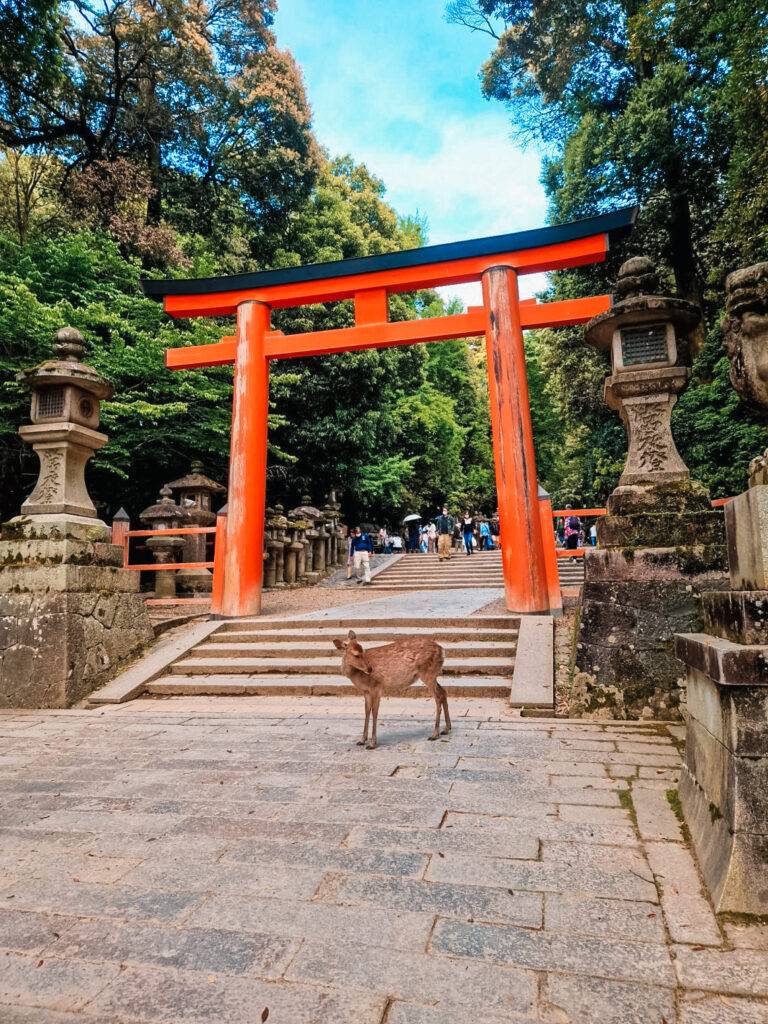
The path to get there climbs slightly, lined with deer throughout the ride. Some people were going in and out of shops, a scene that was both funny and completely typical of Nara.
The National Museum of Nara
If you’re not a temple enthusiast, the Nara National Museum is also a good option.
Before taking the train, take a walk in the shopping arcade along the station, on your left when you are facing it. You will find a few cafes there are more spacious than in Tokyo, ideal for a break.
Days 9 and 10: Osaka, the capital of Kansai
How to Get to Osaka from Kyoto
Because the two cities are so close, it’s a 20-minute train ride. Take line A to Shin-Osaka, Osaka’s main station. Be careful not to confuse with the Osaka station. The journey costs 580 yen, or less than 3.50 €. As both cities are very close, it takes barely 20 minutes by train. Take the A line towards Shin-Osaka, Osaka’s main station. Be careful not to confuse it with Osaka station. The trip costs 580 yen, which is less than €3.50.
Is it worth visiting Osaka?
Osaka is a city quite different from Kyoto: much less traditional, more rooted in pop culture and modernity. Japan’s third-largest city with over 2 million residents, it has a lot to offer: street food, vibrant neighborhoods, castle, museums. I recommend that you stay there for at least two days.
Where to sleep in Osaka?
I recommend hotel 剛田今里 : close to the train station, well placed and with a great value for money. Rates range from €40 to €80 per night depending on the season. Click here to book!
Day 9: Arrival and first visits not to be missed in Osaka
Upon arrival in Shin-Osaka, you can drop off your belongings at the station lockers if your accommodation is not yet available. Also take the opportunity to buy your shinkansen tickets for Hiroshima in advance: carry cash, it’s essential.
Osaka Castle
⏳ Allow about 40 minutes for transportation from the station.
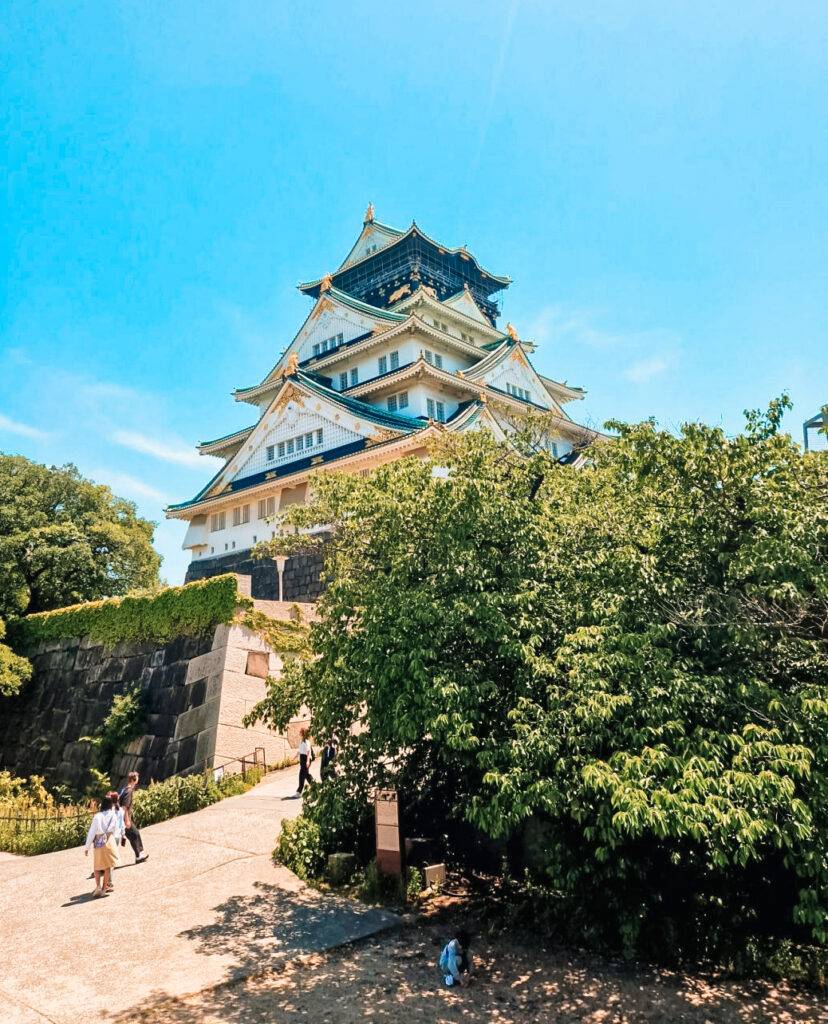
The castle is located in a large park. The walk to get there is pleasant and peaceful.
However, I advise against paying a visit from the inside: the exhibition is a bit outdated, and the view from the top is marred by fences that make it difficult to take photos. The castle is much more beautiful from the outside!
The Osaka Tenman-gu Shrine
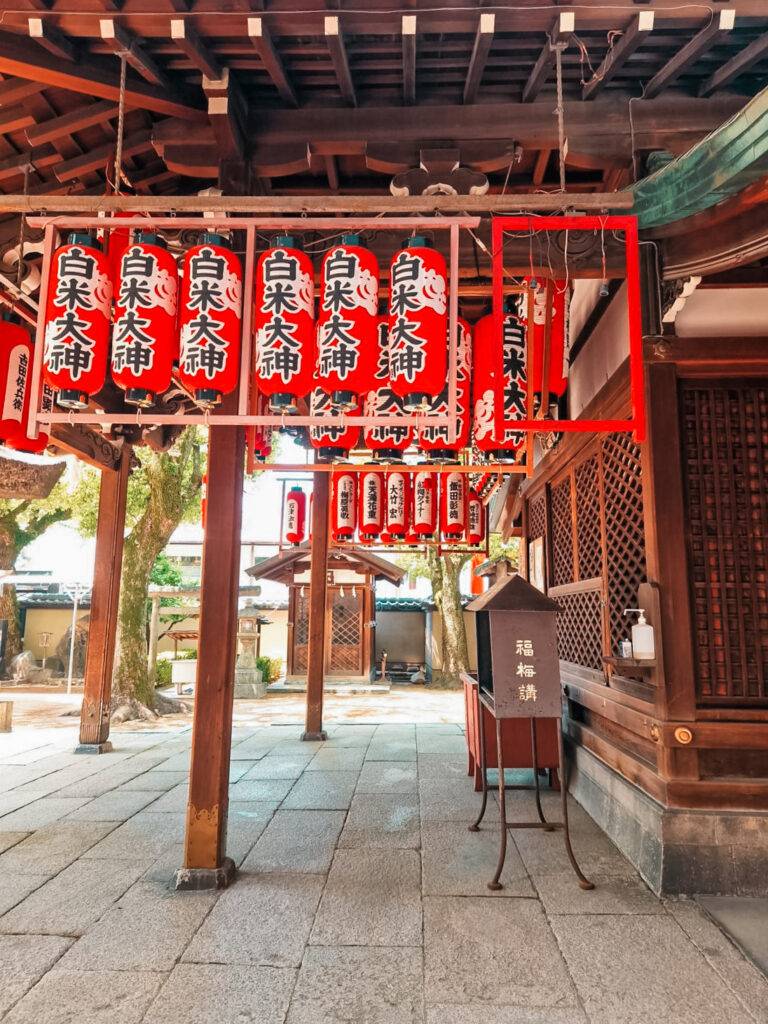
A little north of the castle, this Shinto shrine is free and open from 9 a.m. to 5 p.m. Built in the 10th century, it hosts one of the largest festivals in Japan every July: Tenjin Matsuri. Not huge, but nice.
Fujita Museum (optional)
If you are an art lover, this museum located a little further east is worth a visit. Unfortunately, I couldn’t go because of time constraints, but his typically Japanese outdoor garden is already a good enough reason to stop by.
Then pick up your belongings at the station (take about 20 minutes to get from the sanctuary) before heading back to your accommodation.
Party in Osaka’s iconic neighborhoods: Dotonbori and Namba
End the day in famous Dotonbori, Osaka’s tourist hotspot with its must-see athlete panel Glico.
Wander through the bustling alleyways, known for their street food and huge neon signs adorned with sushi and giant crabs.
Don’t miss Shinsaibashi-suji, an approximately 600-meter shopping arcade lined with cafes, restaurants, and shops. On the other side of the river, to the south, the Namba district extends the experience with its covered market (shotengai) and stores for manga and Japanese pop culture objects.


Day 10: Temples, tower and other areas of Osaka to visit
The Shitennō-ji temple
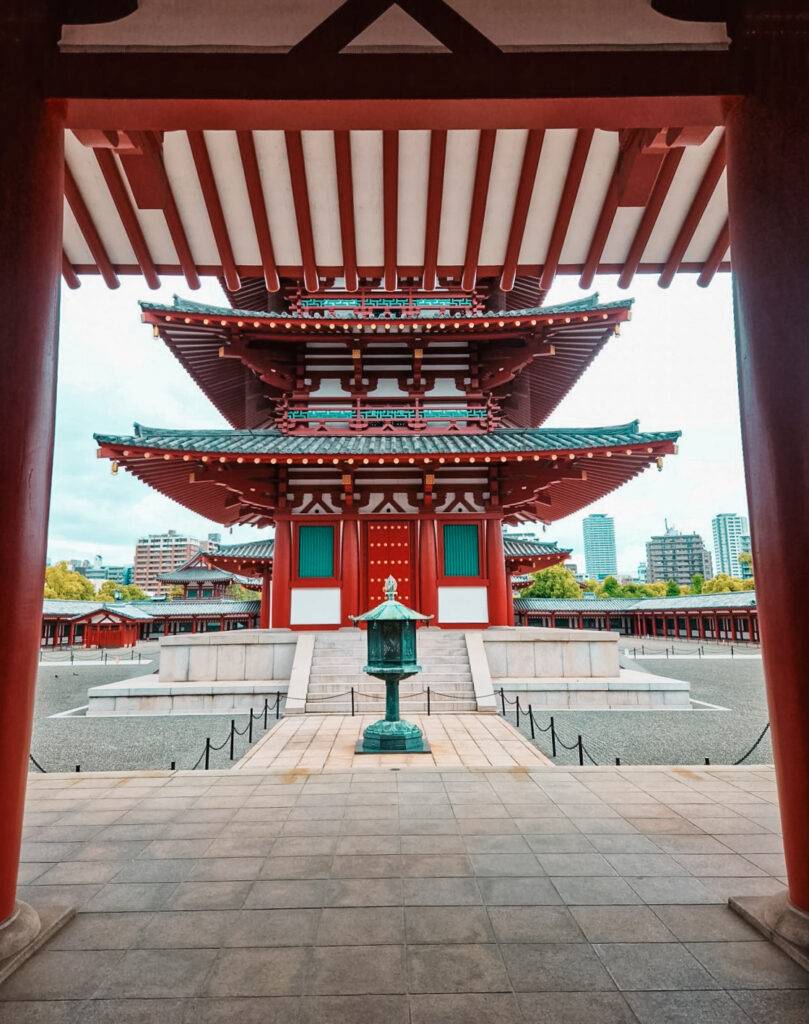
Start at Shitennō-ji, one of the oldest Buddhist temples in Japan, founded in 593. It is known for its five-level pagoda. The entrance is charged but very affordable (about €2).
When you go to the opening, you will enjoy a calm and serene atmosphere. I stayed there for less than an hour and have very fond memories of it.
Namba Yasaka-jinja Shrine
About a 30-minute walk away, discover this atypical Shinto sanctuary, known for its spectacular giant lion’s head which serves as the entrance to the main building. Very small but absolutely original: I highly recommend it.
🎫 Free admission. Open from 6:30 am to 5 pm.
The Tsutenkaku Tower neighborhood
Next, take a walk around the Tsutenkaku neighborhood, this 108-meter tower. I didn’t go up to the top, but the neighborhood itself is worth a visit: a Dotonbori atmosphere, with its restaurant facades displaying sushi and giant crabs. We go around quickly, but the atmosphere is very nice.
If you want to eat a local specialty, the Kitanoya restaurant is a good option. Otherwise, check Google Maps and check the reviews before deciding.


Tennoji park and surrounding area
Right next door is Tennoji Park (Kawazokoike), a quiet spot in Osaka and not very busy, with a body of water with sprinklers, the Municipal Museum of Fine Arts in Osaka, and a zoo. Ideal for a nature break in a quiet place.
Isshin-ji Temple adjoins the park. Its entrance is very special: it is decorated with Buddha sculptures made from crushed bones. It’s a destabilizing visual experience. Just opposite, you will come across a space composed of a multitude of golden Buddhas, a truly surprising sight.
🎫 Free admission. Open from 5 AM to 6 PM.
Day 11: Hiroshima, a day full of emotions
Go to Hiroshima from Osaka
From Shin-Osaka Station, it takes about 90 minutes on the shinkansen to reach Hiroshima. The ticket costs about 10,000 yen (54 €). Plan to arrive on site around 10 a.m. to fully enjoy your day. As everywhere, the instructions at the station allow you to drop off your belongings.
Hiroshima is a city infamous for the atomic bombing of August 6, 1945. It was a stage that we had deliberately chosen, because this city carries a history of capital importance. It won’t necessarily be the lightest day of the stay, but it’s an experience I recommend to everyone.
What to do in Hiroshima, the must-see places to visit
Hiroshima Castle—Hiroshima-jo
Start with Hiroshima Castle, nicknamed “Castle of the Carp. Built in 1589 by Mori Terumoto, it was completely destroyed by the atomic bomb in 1945, then rebuilt identically thirteen years later. A small exhibition is accessible inside.
I find it more interesting than the one in Osaka, and the view from the top is clearer there. On the other hand, as is often the case, the castle is more beautiful from the outside.
⏱️ Open daily from 9 AM to 6 PM (5 PM depending on the season, check on Google Maps).
🎫 Entry : 370 yen (about $2). Provide change.


Right next to it, you will see the ruins of the former headquarters of the imperial army, destroyed in 1945. Explanatory panels dot the site. You will also see a tree, the only survivor of the disaster.
The Hiroshima Gokoku-jinja Shrine
Across from the castle, this Shinto shrine is worth a stop.
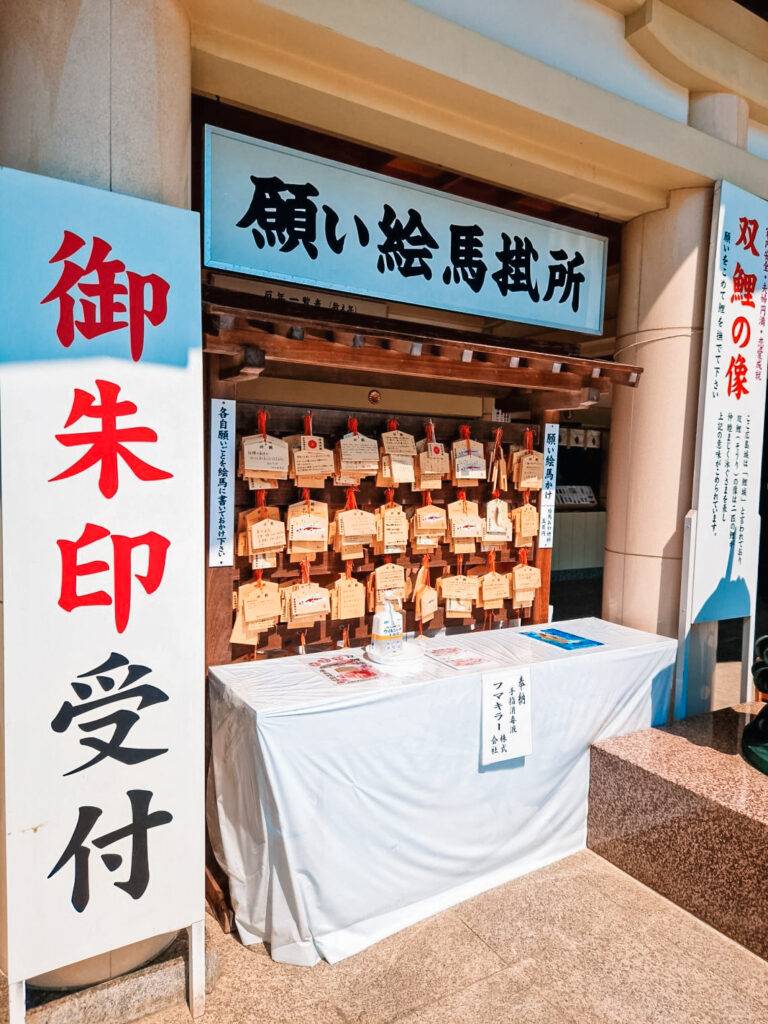
Entry is free, and you can leave a wish written on an ema: these small traditional wooden plates that hang in shrines. I really liked this place.
⏱️ Open from 9 AM to 5 PM.
🎫 Free Access.
Genbaku dome and Peace Memorial Park
Continuing south, you will reach the heart of the memorial. The Genbaku dome is the iconic building made of brick, steel, and copper that has remained untouched since the bombing. He is a global symbol of the duty to remember.
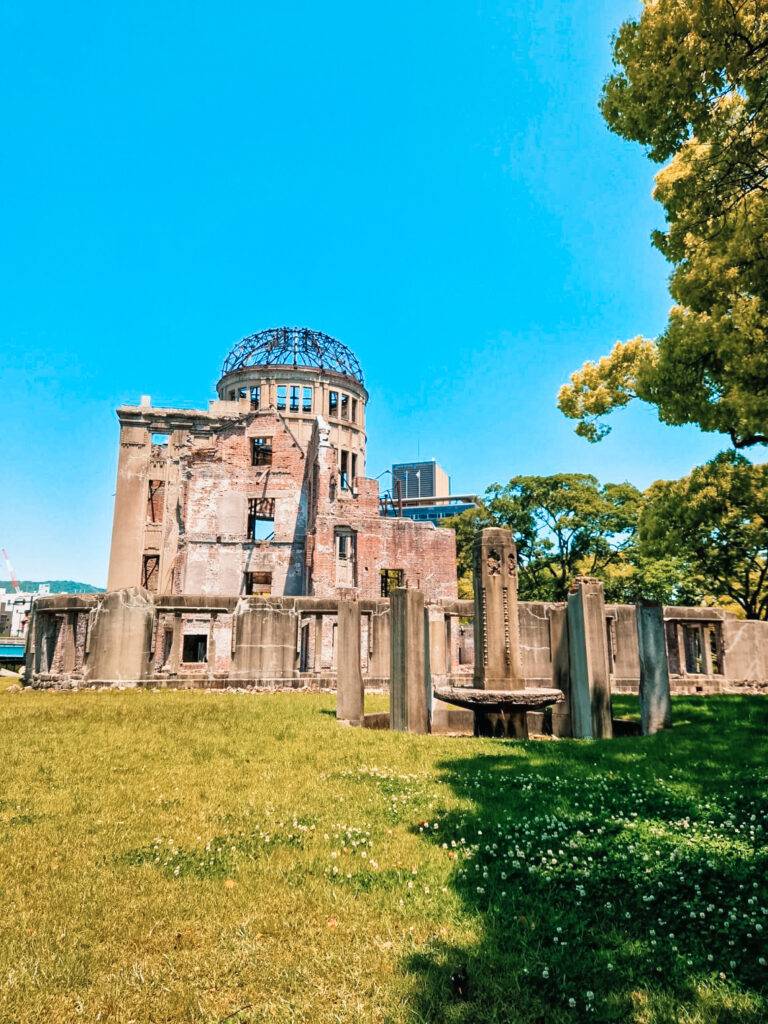
It was once a prefectural shopping center. It is thanks to its construction materials that it was the only building to resist the explosion. Seeing the scars of war with one’s own eyes is a deeply moving experience.
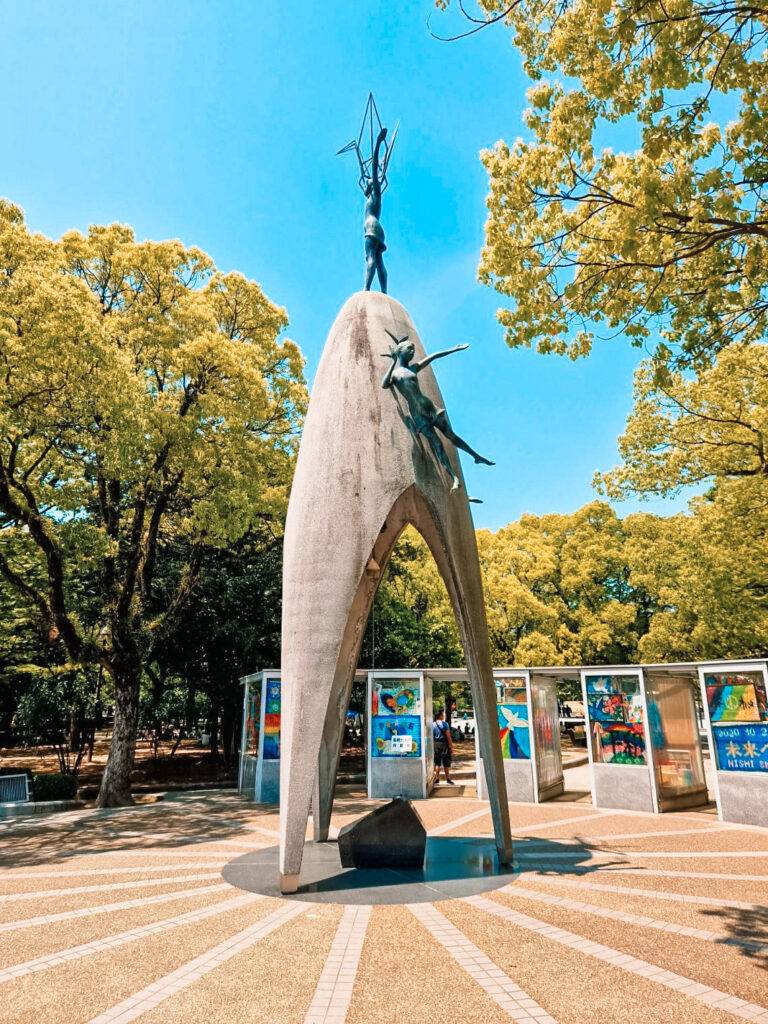
Next, make your way to the Peace Memorial Park, home to several landmarks including the Peace Monument for children. During our visit, primary school students paid tribute to the children who were victims of the bombing, through songs and drawings. A moment of great beauty and great sadness at the same time. We stepped aside to observe, our eyes moist.
The National Peace Memorial Hall
Right next door, this completely free museum allows visitors to see the faces of the victims and understand the extent of the tragedy: the bomb killed instantly more than 70,000 people, leveled almost the entire city, and the effects of radiation doubled this toll by the end of 1945.
⏳ Count on about one hour of visit, one of the most intense hours of the trip.
⏱️ Open daily from 8:30 a.m. to 6 p.m…
🎫 Free entry.
Miyajima Island—a calming alternative
If the memorial program seems too difficult to you, which I completely understand, I advise you to dedicate this day to the island of Miyajima, easily accessible from Hiroshima.
Here you will discover the famous red torii that stands in the water, and a magnificent sanctuary. A timeless day, which I really enjoyed during another stay.
Lunch in the Hondori neighborhood
After the morning tours, head to Hondori, downtown Hiroshima. The contrast is striking: twenty minutes from the memorials, a modern and lively city like any other major Japanese city.
That’s where you’ll easily find restaurants. We had udon soup: simple, good, and under $7.
The Afternoon in Hiroshima
The rest of the day was quieter. We strolled in Maruzen, a large bookstore on several floors (mangas, books, CD), before walking through the small streets of the neighborhood, pleasant in the evening.
Where to sleep in Hiroshima?
We opted for the hotell Grand Base Hiroshima Ekimae, located about a ten-minute walk from the train station. Check-in is via tablet. The value for money is good! 🔗 Click here to see the rates and availability
A Seven-Eleven is right next door, very convenient.
In the evening, we had dinner at a small typical restaurant, with jerseys from the Hiroshima baseball team on the walls. A delicious ramen for less than 4 €, friendly, typical, and truly memorable.
Days 12 and 13: Fukuoka, the gateway to Kyushu
How to Get to Fukuoka from Hiroshima
Fukuoka is located at north of the island of Kyushu, the southernmost island in the Japanese archipelago. From Hiroshima, expect between 2h10 and 2h30 by shinkansen. Several lines serve the city, including Nozomi, Mizuho, and Sakura.
Plan on approximately 15,500 yen ($95) for a reserved seat. Japanese trains are far from cheap, but they have impeccable punctuality and cleanliness. You pay for the technology.
Check-in is at Hakata Station, which of course has luggage lockers. If you want to send your suitcases directly to your next destination, the Takkyubin service is a convenient option. A friend tested him from Tokyo to Nagoya, his luggage had arrived before her.
Day 12: What to do in Fukuoka
Kushida Shrine
Start with Kushida Shrine, founded in 757, one of the city’s most important shrines.
⏱️ Open from 9 AM to 5 PM.
🎫 Free entry.
Every year from July 1 to 15, it hosts the Hakata Gion Yamakasa, Fukuoka’s biggest festival, whose highlight is a spectacular chariot race.


The Dazaifu Tenman-gu Shrine (excursion)
If you’re up for a quick excursion, I highly recommend the Dazaifu Tenman-gu, 50 minutes from Hakata station. The trip requires a change at Chojabaru station, follow Google Maps for platforms and connections.
This Shinto Grand Shrine is dedicated to the god of learning, and its plum-tree dotted gardens are absolutely stunning in the spring.
Upon arrival, a long, busy shopping alley leads you to the sanctuary. I really liked the atmosphere, even if you should expect a lot of people. I even had the chance to attend a wedding ceremony, which is quite common in Japanese shrines.
⏳ Expect about one hour of visit.
⏱️ Open from 6:30 am to 7 pm.
🎫 Free entry.


What to visit in Fukuoka when it rains?
You have two good options:
The Asian Arts Museum
It is very beautiful. I easily spent 1h30 there.
⏱️ Open from 9:30 AM to 6:00 PM or 8:00 PM depending on the day, closed on Wednesdays.
🎫 Input: about $1
The City Channel for shopping
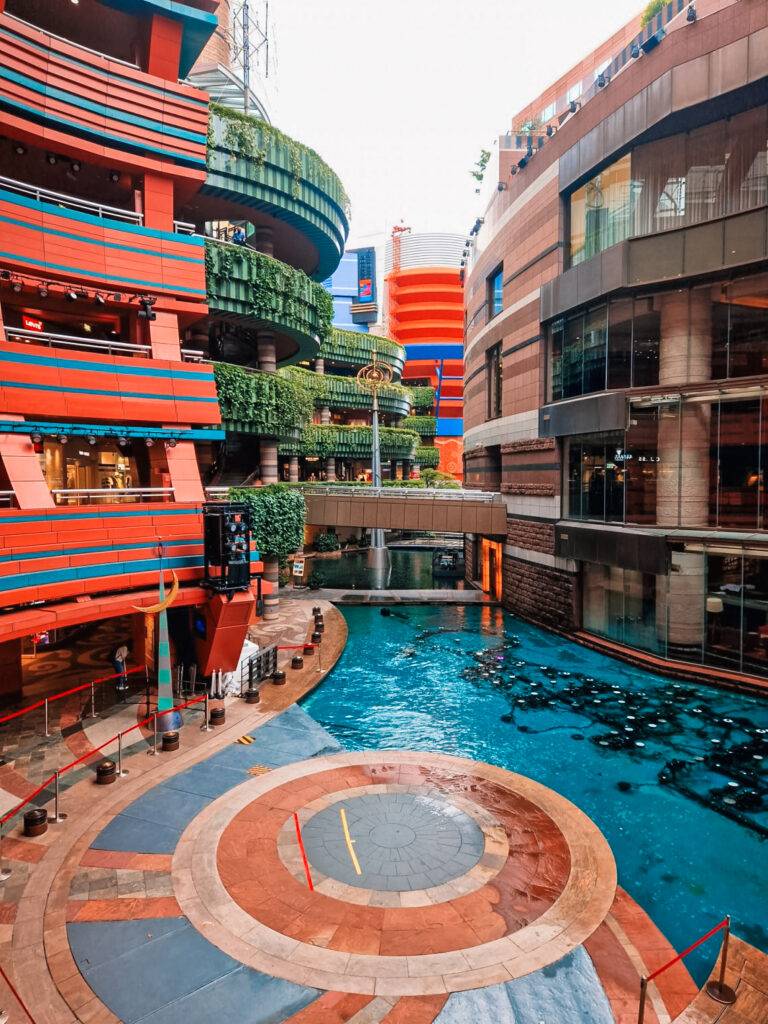
The Canal City is a large half-open-air shopping mall. It offers Japanese and international brands, as well as restaurants on level B1 to taste okonomiyakis, sushi and other Japanese specialties.
You’ll even find a large Muji with a coffee area.
Where to sleep in Fukuoka?
I recommend Quintessa Hotel Fukuoka Tenjin Comic & Books, an original 3-star hotel. The lobby is decorated with manga (some of which are available in English).
Comptez environ 80 € la nuit selon la période : click here to see availability and book.
A good place to eat in Fukuoka
For the evening meal, head to LA House restaurant for a delicious ramen at about €6, with possible supplements depending on the ingredients or size, as is often the case in Japan.
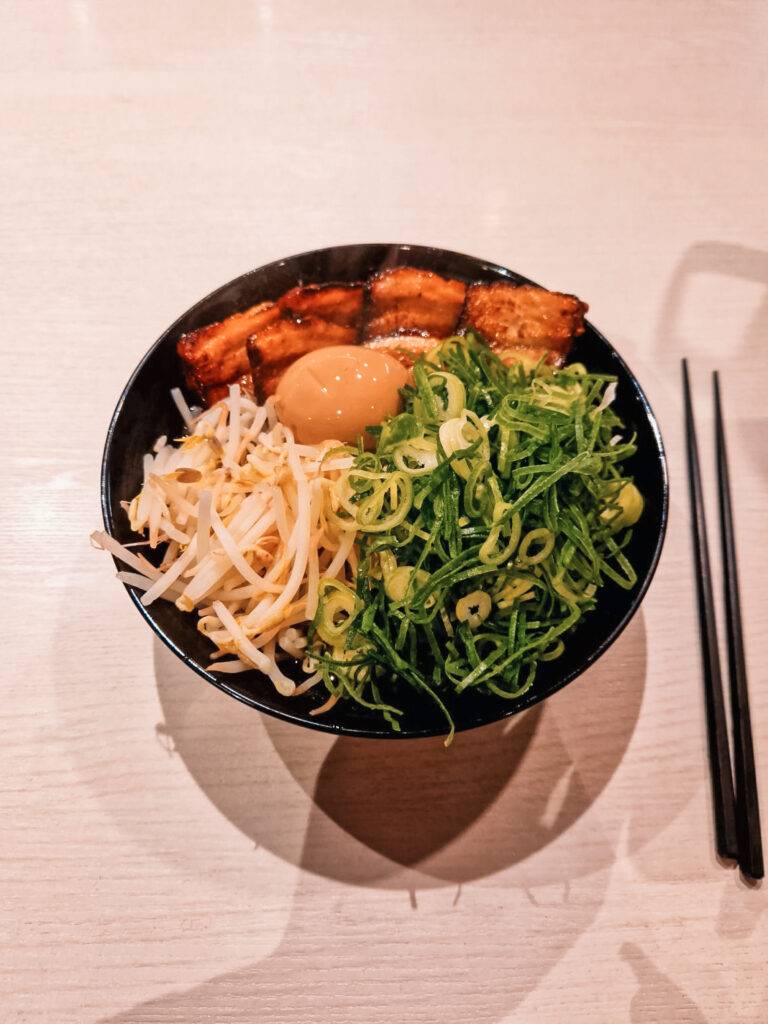
The setting is typical of a neighborhood restaurant, with manga available (all in Japanese, of course).
⚠️ Warning: The owner only accepts cash. I found myself leaving him my passport as a pawn while I went to withdraw some cash at the Seven-Eleven on the corner… a memorable story!
Speaking of Konbinis: take the opportunity to visit different stores. The food there is far from bad, on the contrary.
Day 13: The Nanzoin temple and back to town
The Nanzoin temple
Start your day early, ideally before 11 a.m., to reach the Nanzoin Temple, located in the countryside and forest on the heights of Fukuoka.
It takes about 45 minutes to get from Tenjin station, with a change to Kidonanzoin-mae station, and then about 5 minutes on foot.
Bring a jacket (it’s chilly at altitude) and an outfit covering the knees. Otherwise, you will be provided with something to tie on arrival.
Before you get to the Main Buddha, you’ll pass by several equally beautiful and interesting temples lined with a small river, a waterfall and statues. Then you will find yourself facing him: a Buddha lying in bronze 41 meters long, 11 meters high and weighing about 300 tons. This is the largest bronze Buddha statue in the world. It feels very small.


Selfie sticks are prohibited, outfits must be respectful, and silence is required.
On your way back, you will come across many small statues wearing hats and dressed in clothing: a tradition to wish good health to children.
⏳ Count on about 1.5 hours of visit.
⏱️ Open from 9:00 a.m. to 4:30 p.m.
Back to the city
Back in the center, stroll down the shopping street towards the Fukuoka Tower, then stop at Stereo Coffee for a well-deserved break. A nice café address, small but pleasant.
Day 14: Return to Tokyo and departure for France
There are two options for getting to Tokyo from Fukuoka :
- The shinkansen: it takes about 5 hours to travel (you can cross almost the whole country!) for about 23,000 to 30,000 yen (€125).
- The plane: about 1h50 of flight, from €34 according to airlines. A much faster and often cheaper option.
Then back to France. And there you have it, the end of a two-week itinerary in Japan !
Conclusion on my 14-day trip to Japan
This route is a first gateway to a country that has so much to offer. I deliberately skipped some steps, such as a day at Mount Fuji, which you can fully incorporate into your stay in Tokyo.
It’s hard to pick places over others, it all depends on what you’re into, how fast you go and what attracts you. I tried to compose an itinerary that could suit as many people as possible, whatever their tastes. I hope these leads will make you want to visit the land of the rising sun — and that you, too, will fall under its spell.
Practical information to prepare your trip to Japan
When to go to Japan?
The best times to visit Japan are spring and fall. In spring, you can admire the famous sakura, the cherry blossoms, national pride of the country. In autumn, the leaves take over, with an absolutely magnificent color palette.
The rest of the year, summer is very hot and humid, which can quickly become tiring during visits. If you don’t have a choice, bring sunscreen, plenty of water, a headgear and one of those small portable fans that you will easily find on site: trust me, they will save your life.
Winter is especially cold in some areas. In that case, I highly recommend stocking up on thermal clothing at Uniqlo; you’ll thank me.
Do you need a visa to go to Japan?
For French nationals, no. A valid passport is sufficient. Upon arrival, you will need to fill out a form with your personal information and the contact details of your accommodation on site (address and phone number). Prepare this information in advance.
Recently, it is also possible to register on the Visit Japan Web site before departure: you will receive a QR code after checking your file, which must be presented at customs control instead of using the paper form. Allow a few days to obtain it.
In any case, you will be asked for either one upon arrival. Note that there may be a bit of waiting at the airport; be patient.
How to get around Japan?
Japan’s public transportation network is impressive, but also quite complex.
Public transport by city
Here’s how I personally managed travel in each city on this route:
- Tokyo: metro only, and a lot on foot.
- Kyoto: mostly on foot and by bus, with two subway trips to the Fushimi Inari-taisha.
- Osaka: on foot and by subway. The network is relatively compact but well built.
- Nara: all on foot, the city is small and the sights concentrated.
- Hiroshima: all on foot, the city being of modest size and the visits well grouped.
- Fukuoka: mostly on foot, with some subway travel.
Small point: Contrary to popular belief, public transportation is not always on time in Japan. I saw it myself on my third trip, when the subway was late for five consecutive days
How to take public transport in Japan? The essential Suica card
The Suica card is essential and works on subways and buses in most Japanese cities. Campaigns aside, but that doesn’t concern us for this route.
How to buy it?
Directly at the kiosks before the gates in subway stations. The interface is available in English. Count on a 500 yen deposit (less than €3), to be paid in cash.
How do I reload it?
At the same terminals, always in cash only, the terminals do not accept bank cards.
💡 Good to know: Some buses outside major cities are only accessible in cash (coins). Always make sure to have some on you. In Kyoto in particular, the bus recently started accepting the Suica, which was not the case during my previous trips.
Upon return – You can return your Suica card at any point and collect your 500 yen deposit.
Which GPS application should I use?
Google Maps—as in France. The app works very well in Japan, and even shows public transport delays in real time. Follow the subway exit signs carefully: in Japan, taking the wrong exit can block you into a dead end corridor. Believe my experience, I quickly put aside my pride.
Before the trip, don’t hesitate to save your places to visit directly in the app; this greatly simplifies onsite navigation.
Internal routes: the Shinkansen
Japan’s rail network is fascinating, but complex. Several companies coexist, which can be confusing. For this route, you will mainly take the Shinkansen, the famous Japanese high-speed train.
Taking the Shinkansen at least once is an experience in itself: perfect punctuality, impeccable cleanliness, remarkable comfort even in standard class (wide seats, ample legroom), and speeds between 240 and 320 km/h. The seats automatically rotate to always be in the direction of travel; the Japanese have thought of everything.
A memorable detail: Just before departure, I could see flight attendants in pink uniforms getting off the train to carry out an express but meticulous cleaning of the train, before passengers could board. Five minutes flat, flawless.
Some practical tips for taking the train in Japan
- Never arrive at the last minute: incidents have already been caused by rushed foreign travelers, causing delays that have grown to great proportions.
- For the trip to Tokyo → Kyoto, sit on the right side if the sky is clear, you’ll have a good chance to see Mount Fuji.
- Recently, a mandatory reservation has been required for large suitcases. Check before you leave.
- For the trip to Fukuoka → Tokyo, the plane is a serious alternative: about 1h50 of flight from €34, against nearly 5 hours by train for €125.
The currency in Japan
Japan’s currency is the yen (¥). The price is currently very advantageous for Europeans: €1 is equivalent to about 185 yen. Specifically, you can very often eat for less than 1,000 yen (about €5.50).
The Japanese use liquid a lot, you will quickly have confirmation. You may end up with a lot of coins: keep them, especially the 100 and 500 yen coins, which are very useful on a daily basis. Current banknotes are 1,000, 5,000, and 10,000 yen (2,000 yen notes exist but are extremely rare).
How do I withdraw money?
The simplest solution is to withdraw from konbinis (Seven-Eleven, Lawson, Family Mart, Ministop) — all equipped with ATM machines. The Seven-Eleven even offers a French interface. Fees apply (110 to 220 yen per transaction, less than 1.50 €), regardless of your card. To limit the fees on the French side, a Revolut or BoursoBank card is recommended. The more you withdraw at one time, the more profitable it is; the fees remain fixed regardless of the amount.
You can also exchange Yen euros in France before departure or at the airport upon arrival, but the rates are often less advantageous.
Which SIM card should I choose?
Important when you go on a road trip abroad: plan to access the internet from your phone! We recommend that you order your cheap eSIM card on Saily to be connected anywhere in the world. Thanks to the eSIM, no hassle and endless queues upon arrival: it only takes a few seconds to activate. We’ll talk to you about it in detail in our article sur the best eSIM app.

Buy it a few days before departure and activate it directly in the customs queue—you’ll have plenty of time.
Do I need travel insurance?
As I say every time, I ALWAYS recommend that you take out travel insurance when you leave the European Union.
Mishaps don’t just happen to others, and it would be a shame if holidays turned into a nightmare if you didn’t have your back.
For the past 10 years, we have trusted Chapka Assurances, even before we started working with them. They are a reference to ensure all types of travelers! I recommend the Cap Assistance 24/7 contract which covers stays of less than 3 months.
FAQ: What you need to know before going to Japan
The Japanese don’t always speak English very well, but with a few basic words and a translation app, you’ll do just fine. Google Translate and Papago are your best allies. You can even use the microphone to translate spoken announcements in real time. Useful especially in the subway, where announcements are rarely translated into English.
Japan is a very safe country. You can leave your hands in the dedicated areas of the trains without worrying. Prying eyes are not common here: the Japanese are used to foreigners and, as long as you follow the rules, everything will be fine.
Yes, Japan does not use the same outlets as in Europe: an adapter is mandatory. You can find them in France before leaving, or on site at the Daiso, Can Do, Don Quijote stores, some tourist konbinis or large electronics stores.
Count about ten euros.
Some private establishments (cafés, bars, restaurants) may allow smoking inside.
Yes, Japan is generally very safe for women. The metro even offers carriages exclusively reserved for women at certain times.
Japanese society remains traditionally patriarchal, but in matters of public safety the country is ahead of many others.
Many are accessible 24 hours a day and free of charge, so take the opportunity to visit them early in the morning, away from the crowds.
Good walking shoes, a lightweight umbrella, a jacket (even in summer—air conditioning is often pushed full blast in closed places, which can cause thermal shock), and always some liquid on you.

Laura, voyageuse dans l’âme et particulièrement amoureuse de l’Asie et de la Corée, j’y ai fait un PVT entre 2022 et 2023. Depuis, je retourne régulièrement dans ce pays qui a eu mon cœur et je partage à ce sujet sur mes réseaux.


No Comments