


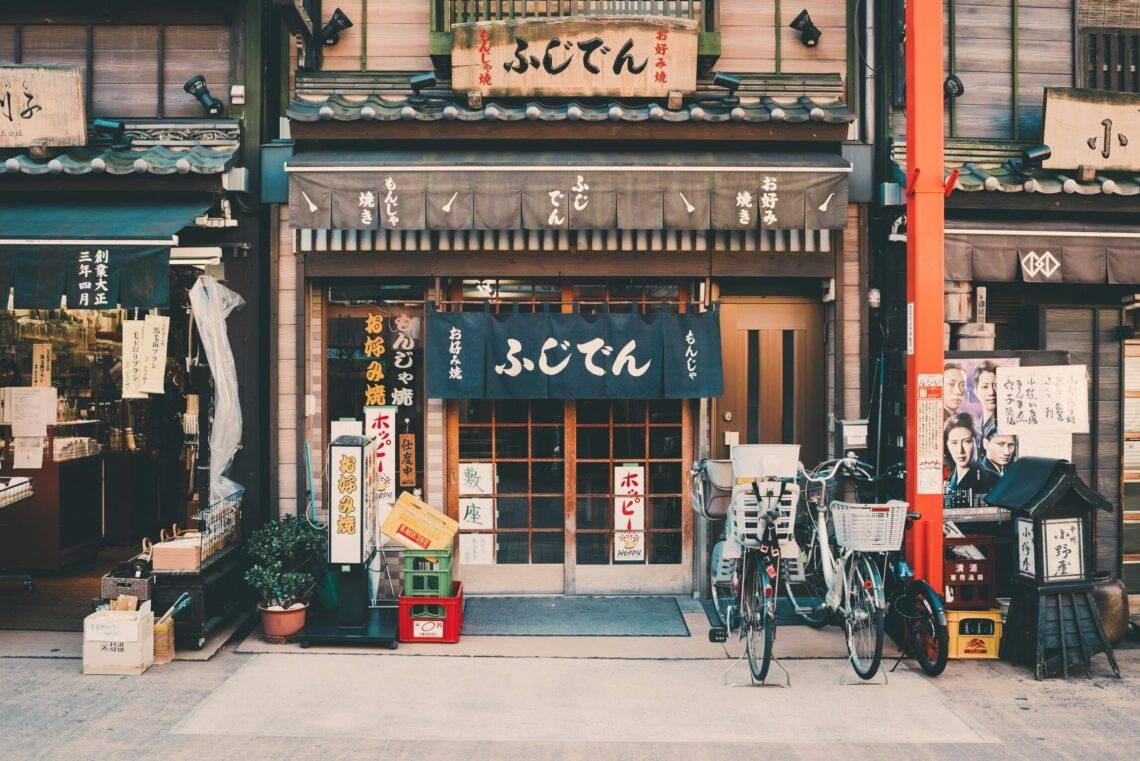
Tokyo is a sprawling city, much larger than capitals like London, Paris, or Seoul. So it’s completely normal to wonder what we’re going to be able to visit in just 4 days in Tokyo.
In Tokyo, you’ll need to take the subway regularly and have good shoes if you want to see as much as possible in as little time as possible. The goal is obviously not to exhaust you, but to give you a first glimpse of the city to then dig if you want to come back. Between the iconic towers of the city with the Tokyo Tower and the Tokyo Sky Tree, temples and must-see places, there’s really something to see.
What are the must-see neighborhoods in Tokyo?
The small bookstore neighborhoods, the major thoroughfares of Shibuya and Shinjuku, the Kawaii neighborhood of Harrajuku, the quiet park of Ueno, or even the wealthy neighborhoods of Roppongi, Omotesando and Ginza are must-sees in Tokyo! Don’t worry, we’ll look at all this in detail in my 4-day itinerary.
The phrase we hear a lot when talking about Japan “between tradition and modernity” is thus true, especially in certain neighborhoods of the capital.
How long to visit Tokyo?
I’d say at least four or five days to start, so you can see the iconic places in Tokyo. Some stay there a week, others even longer. But I think it’s a shame to stay so long, especially for a first trip to Japan, and if we can only stay in the country for two weeks. Because you’ll see, the capital is quickly suffocating, much more than Seoul.
👉 By the way, if you want to visit Korea, don’t miss my guide to Visiting Seoul in 5 days.
Itinerary to visit Tokyo in 4 days: must-see places and neighborhoods on a map
You are obviously free to visit the city as you like, but it is so large that to avoid going back and forth at the ends of the city, I have tried to group the surrounding areas together on a single day. The itinerary to visit Tokyo is therefore optimized as best as possible!
If you’re traveling longer, and want to discover places to visit in the country, I’ll let you check out my article itinerary two weeks in Japan.
Where to sleep in Tokyo? The best areas to stay
Ideally, I advise you to stay in the central districts, such as Shinjuku, Asakusa, Ueno… This way, you will be central and not very far from the points of interest.
In Shinjuku, I recommend the Pearl Hotel Shinjuku Akebono-bashi: well located, close to the Yotsuya sanchome metro station, about 340€ for 4 nights, a little less than 100€ per night knowing that it’s the minimum price to have a good accommodation.
Visit Tokyo in 4 days, what to do and what to see first? The perfect itinerary
For practical information about Tokyo: how to get there from the airport, when to leave, budget, etc. Go to
Day 1 in Tokyo: Shibuya and Harajuku neighborhoods
A one-day itinerary, ideal for your arrival! We dive directly into the Japan of excess and kawai.
If you don’t arrive too late in the day, I recommend going to Shibuya for a direct immersion in Tokyo culture. If possible, avoid the weekend, as there is a crazy crowd. That said, there are still many people who visit the Shibuya district, no matter the day… This is clearly the must-see neighborhood for any self-respecting tourist, and even for some Japanese who work in the area, or who also want to spend a moment there.
What to do in the Shibuya neighborhood?
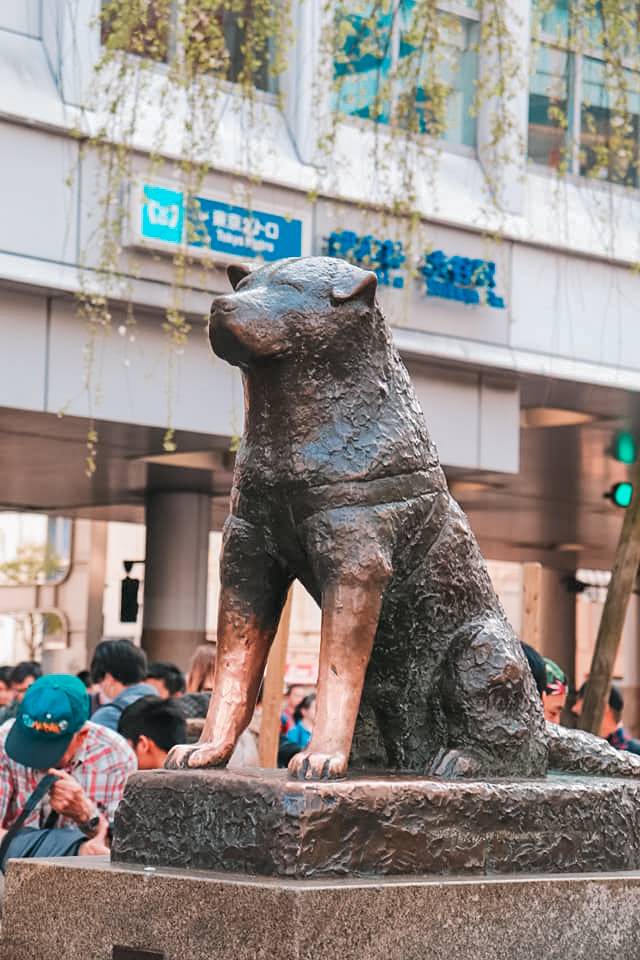
If you want to go see the famous statue of the dog Hachiko, follow the sign that will show you the exit with the same name. This statue was erected to tell the true story of an Akita dog who waited for his master every day in front of Shibuya station. After the death of his owner in 1925, the dog continued to go daily for nine years in front of the station. A story that will bring a few tears to your eyes.
Just opposite, you can see the famous Shibuya crossing, which is a bit disappointing in real life. The first time, I even had to check several times on Google maps that I was in the right place. True. However, it is a must, and you can tell your loved ones that you have done so.
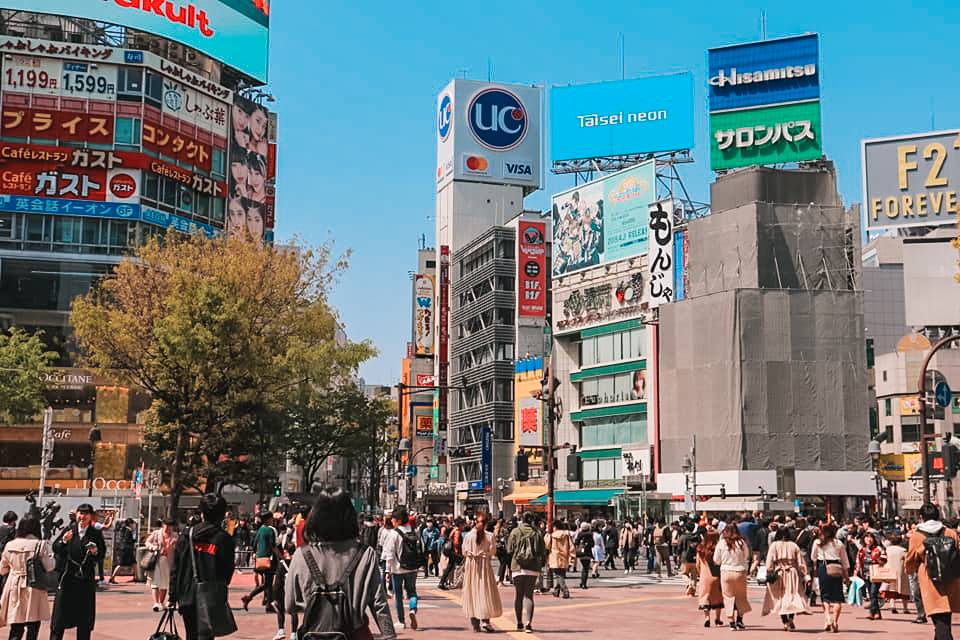
I advise you to take a walk in the neighborhood before going to explore the Don Quijote, open 24/7. This is a chain of low-cost stores with over 160 locations in Japan. A real institution to find anything and everything. The stores are usually on several floors and organized according to what they sell, skincare floor, food floor, figurines, and even some weird stuff…
My best addresses in the Shibuya neighborhood 📍
☕ If you want to sit down and take a break from the hustle and bustle of the neighborhood, I suggest you go for a quick drink at café L’occitane, with view of the Shibuya crossing. It’s a bit expensive but really nice.
You’ll quickly see that there aren’t many cafes in the neighborhood. In general, apart from the chains, they are small, and there aren’t many seats, to my dismay.
🎮 For fans of video games and pop culture, check out Nintendo Center located in the Shibuya Parco shopping mall. You will also find miniature shops, luxury boutiques, vintage boutiques. The ideal place for fans of anime, manga, Japanese culture and shopping! You can literally stay for hours in this mall and even more in the Shibuya neighborhood.
👾 For fans of figurines and anime, go to Mandarake, a huge underground store with manga, figurines, and collector’s items, open from 12 p.m. to 8 p.m.
🎶 For fans of Japanese and Korean music: Tower records, a huge multi-storey building offering international, Japanese, and Korean music, from modern to old. Cassettes, vinyls, albums… everything is available, and the staff speaks English.
🍜 To enjoy a good ramen, I recommend the “Shibuya menya musashi bukotsu gaiden,” (2 Chome 8-5 Dogenzaka Shibuya). You will have a plethora of choices in the neighborhood.
My tips for visiting the Shibuya neighborhood
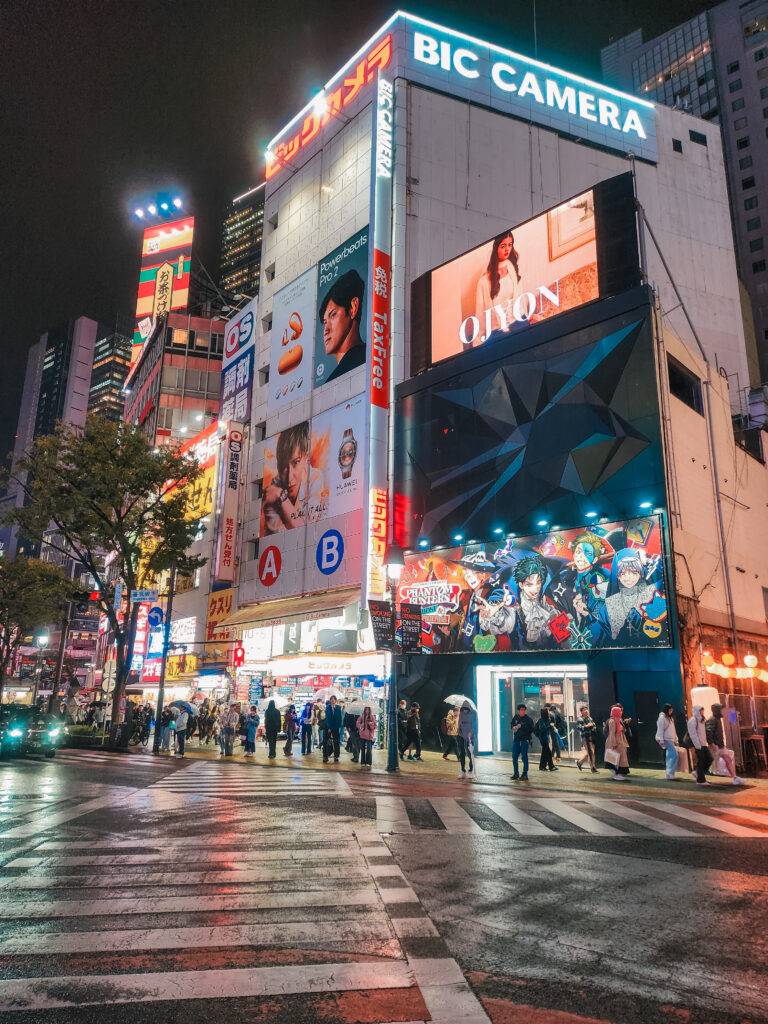
Shibuya is as good during the day as it is in the evening, the atmosphere is completely different, and I recommend both. However, it can quickly become suffocating to stay there for several hours, due to the constant crowd.
What to do in Harajuku?
Depending on the time you arrive in Tokyo, and if you are tired or not, I obviously advise you to go for a walk in the Harajuku neighborhood. Not far from Shibuya on foot, you will find the famous pedestrian street, “Takeshita street“, very touristy and full of people. You will understand here the very definition of the word “kawaii “, which in Japanese means cute. You will see young girls dressed in very colorful and flashy outfits in the style of lolita, decora or gyaru.
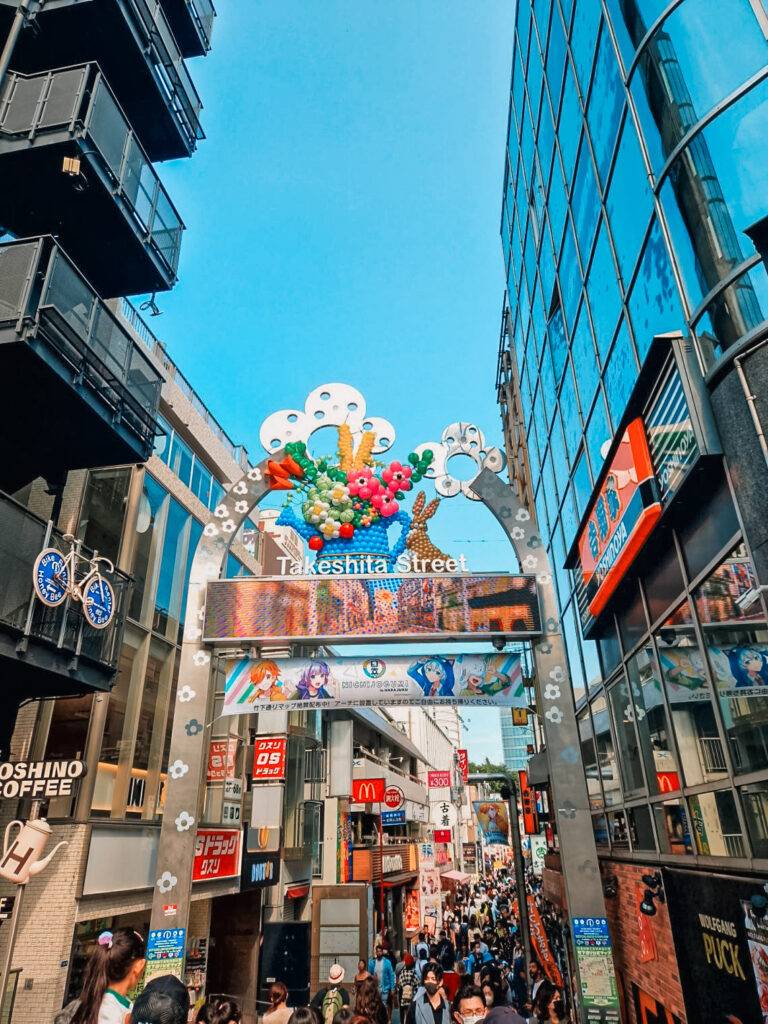
To get away from the crowds, visit the small Shinto shrine “Togo-jinja” and at the end of the day, the famous Meiji-jingu temple open 24/7, which is free.


My best addresses in the Shibuya neighborhood at Takeshita Street 📍
☕ In this street, you will find an art latte café “Reissue”, as small as any cafe in Japan.
🌈 Check out the Wiggle shop wiggle for a wonderfully Kawai vibe. Everything is very colorful, you can take nice photos inside. This brand sells everything and nothing on several floors.
In the same street, always full of people, you will find all kinds of shops, including one that I will always remember. It offers some kind of uniforms that you can buy or rent, if I understand correctly, to do more or less Catholic things. Oddly, Japan is a very prudish society, but for certain things like uniforms, they have a bit of obsessions that can quickly seem strange to us Westerners.
📚 For literature lovers, I recommend the “Aoyama book center,” a big bookstore with some titles in English, but don’t expect a huge selection.
👗 For fashion, I recommend this large thrift store: the “second hand clothing store jam harajuku” open until 8 p.m. Make sure to check the opening hours on Google maps as they can change.
Day 2 in Tokyo: the less touristy traditional neighborhoods and the Tokyo Tower
Visit the district of Jinbocho
Located near Chiyoda Park, this traditional neighborhood specializes in second-hand booksellers. You can find old and rare books there. I discovered it thanks to a novel, “La librairie Morisaki” by Satoshi Yagisawa, as well as the manga series “Jinbocho sisters”. Depending on the shop, you will find different literary genres.
😻 Special mention for the kawaii “Anegawa bookstores Nyankodo”, specialized in cats. You will find books, stationery, magazines, calendars, everything related to cats. The owner is such an adorable little grandpa. Just for him, I advise you to learn a few words in Japanese; he will be very happy. Please note: he does not accept credit cards, so you will need to pay in cash.
By writing “bookstore” or “bookshop” on Google maps, all the neighborhood bookstores will be listed, so you can adjust your schedule. Stores selling old books, art books or only magazines in French, or Italian books (Italia Shobo bookstore), you will have any style of literary specialties.


Have fun going into bookstores, searching, you will frankly find gems.
Since I love books, I took a lot of photos in the neighborhood. Jinbocho has such a unique soul that I had to. Some bookstores also put up signs to dissuade people from taking photos, such as the “Yaguchi Book store” because some of them make it difficult to pass in front of the bookstore. I myself was able to experience this problem, with a girl who stood in front of the entrance taking her photos…
Where can I find the best bookstores in Jinbocho?
Most of the neighborhood’s bookstores are located on a main street along the Toei shinjuku line, where they all align. But also, some are located in the perpendicular streets, so don’t hesitate to take a walk.
🍜 If you’re hungry, go to a good ramen shop, “Ebimaru.” Note that Japanese workers usually have one hour of meal break, often between 12 p.m. and 1 p.m. If you want to eat quietly, I advise you to go before or after.
The city’s emblem: the Tokyo Tower
In the afternoon, go see the famous Tokyo Tower 10 minutes by subway. Rising to 333 meters high, it was inspired by the Eiffel Tower. It is slightly larger than its French counterpart.
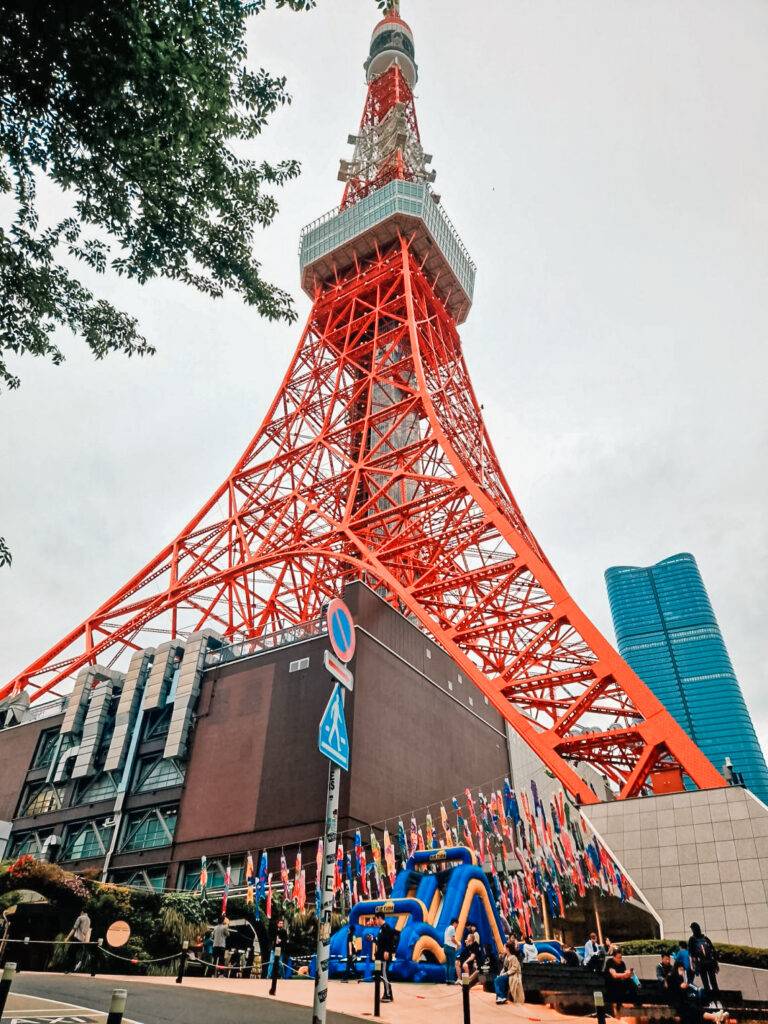
Inaugurated in 1958, it served as the base for radio and TV antennas. You will see that the structure indeed strongly resembles our French symbol, except that it is white and red. There is of course a observatory at the Tokyo Tower from where you can see the city. It’s a fun activity to do that I can recommend!
🔗 Book your admission tickets at the best price by clicking here.
How do I get to the Tokyo Tower observatory?
Open every day from 9:30 am to 11 pm, you can choose whether you want to go on the “main deck” for a view at 150 meters high or the “top deck” where you will have access to the view located at 150 meters as well as at 250 meters high. Tickets are taken directly on site.
The rest of the tower is made up of shops and things that are frankly not very interesting in my opinion.
Zozo-ji Buddhist Temple
Just below the Tokyo Tower is the beautiful Zozo-ji Buddhist temple. It’s rather well known in the neighborhood and I like it a lot. I’ve been there twice!
The second time, I was even able to see a spot that I hadn’t paid attention to the last time. I saw an infinity of small Jizo statues representing children. They are the symbol of protection for children and travelers. You will see that they are all dressed, to bring good luck.
A very nice visit that I strongly advise you to do.
🎫 Entry costs just under €4.
⏱ Open daily from 9 AM to 5 PM.


The Roppongi neighborhood and the Tokyo National Art Center
You can then walk to the Roppongi neighborhood, to stop at the “Almond roppongi” café, all pink. It is quite big and offers a good milk tea.
For art lovers, I recommend the nearby Tokyo National Art Center. I was able to see the Bulgari exhibition, organized by type of precious stones. It was incredible. It no longer takes place, but the exhibition Hanae Mori (a Japanese stylist born exactly 100 years ago), takes place from April 15 to July 6 of this year and looks frankly nice.
🎫 Some exhibitions are for a fee and others are free, and the person at the entrance of the hall will let you know if you can enter or not. I advise you to plan at least two hours if you take, in addition to the free visit, access to one of the temporary exhibitions.


Shinjuku
In the evening, I recommend you visit the Shinjuku district. Be careful, some streets near the station are strange. It’s a bit like the area of escorts and shady bars where yakuza hang out… If you see some slightly suggestive photos of women or young girls or men standing in front of establishments, you know what to expect.
The neighborhood of Shinjuku is not dangerous, but it’s not necessarily very reassuring when you know what happens there. If you ignore this street, it’s really a must-do area in Tokyo. It looks like Shibuya.
🏎️ Want to play Mario Kart in real life? Don’t miss out on a night go-kart experience in the streets of Tokyo! Click here for more information 🔗


Day 3: Visiting the highlights of Tokyo, traditional and typical
Senso-ji Temple in Asakusa
Get up early for this Senso-ji Temple Tour. I recommend being there at 8 a.m. maximum, as it’s very busy. It’s a bit like the must-visit temple in Tokyo, so much so that all tourists have the same idea. That’s why it’s better to prioritize an hour at the beginning of the day or, on the contrary, at sunset.
The main street leading to the front of the temple is called Nakamise-dori Street. It is a very tourist-oriented shopping street stretching over more than 250 meters, with lots of small shops.
🎫 Entry to the temple is free, and the outer section is accessible 24 hours a day, 7 days a week. The main indoor access opens from 6am until 5pm in spring and summer, and from 6:30am in autumn to late winter.
I strongly advise you to go for a walk at least in the outer part of the absolutely magnificent temple. On the other hand, be patient when taking photos, because the crowd had the same idea as you.


the Asakusa district
Also take the opportunity to stroll around the surroundings of Senso-ji Temple, to get a bit away from people, and to see something else.
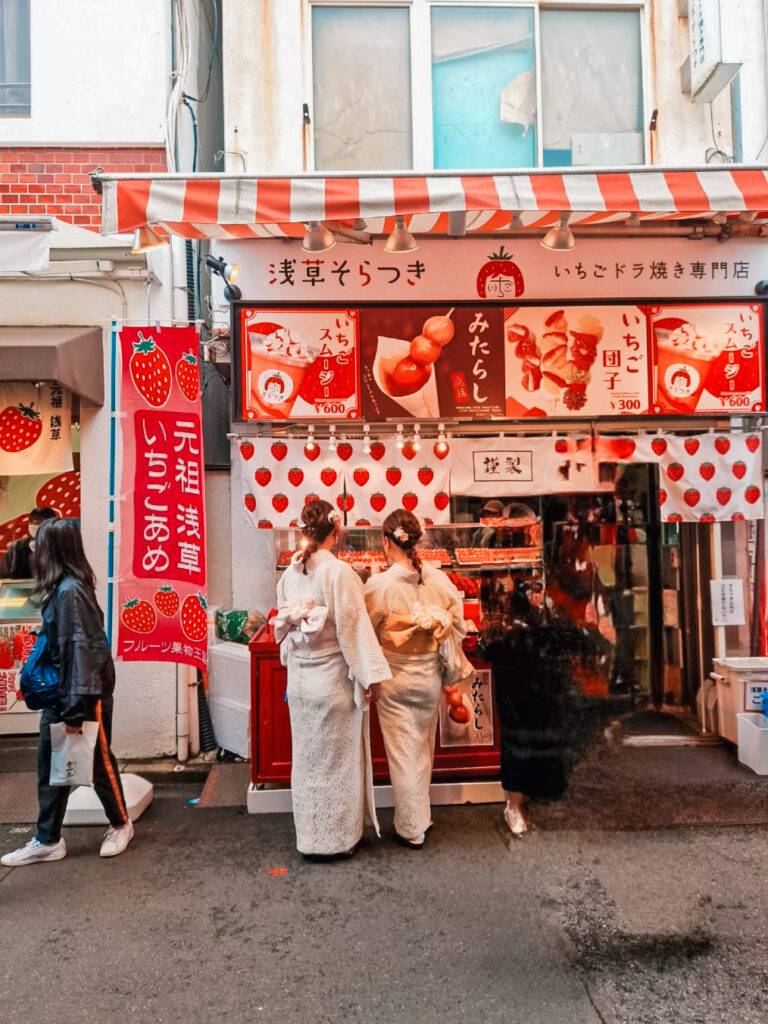
The small streets of Asakusa are really nice. Near the temple is a shotengai (= covered shopping arcade where you can find everything). I encourage you to check out what’s on sale there. Among traditional items such as chopsticks, kimonos, and dishes, you will find everything of fairly good quality.
The tallest tower in Japan: the Tokyo Sky Tree
Walk to the Tokyo Sky Tree, which is 634m high. It is located east of the Asakusa district and of the Sumida River.
There, too, you can of course have a 360°city view. For about €11 you can have an impressive panorama of Tokyo and see how sprawling the city is. If you’re lucky, you can even see a tiny bit of the top of Mount Fuji in the distance. The view is also very nice at night.
🔗 Book your admission tickets by clicking here!
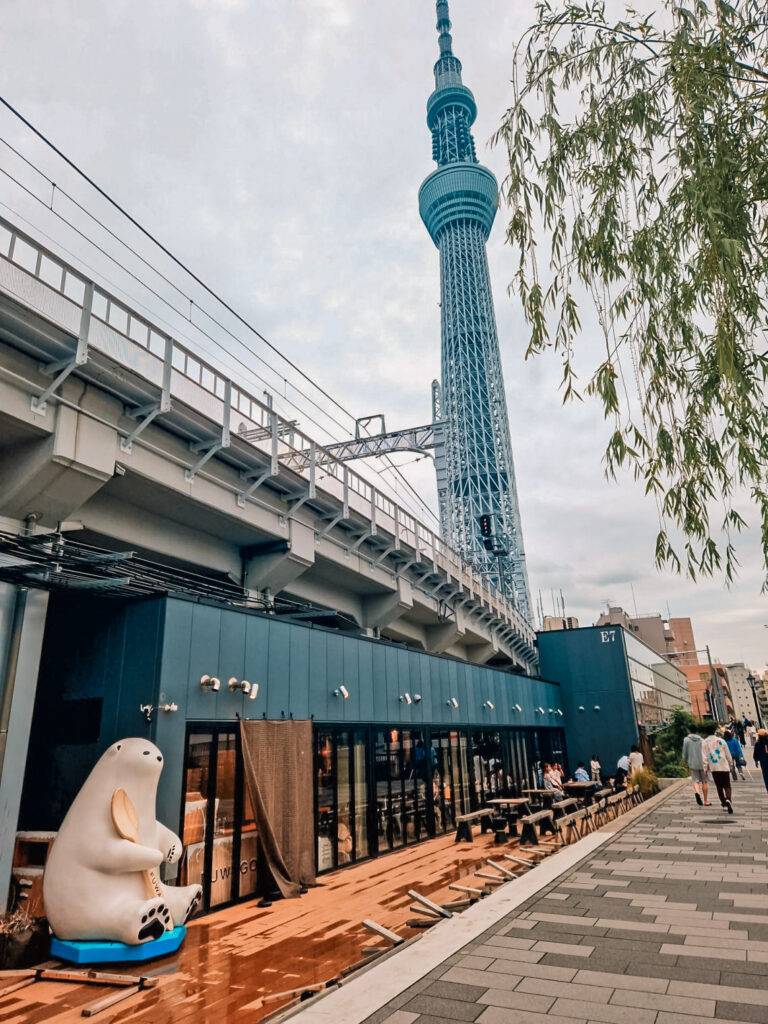
The rest of the tower might interest you if you want to go shopping, as much fashion, as souvenirs. The shops are more interesting than in the Tokyo Tower.
Ueno Park
On foot or by subway, join the Ueno park, where you will find a zoo (with pandas!), temples, a small lake, museums…
You can also take a walk in Ueno Park. The walk is always pleasant regardless of the season, especially in autumn with the beautiful colors of the trees, as well as in spring with the famous sakura, the cherry blossoms that attract all of Japan.


Go to Nezu-jinja Temple outside the park on the west side. It is a Shinto shrine with torii (= traditional Japanese portal erected at the entrance of a Shinto shrine, which represents the entrance to the temple). This temple has particularly many torii, is quite small and not too busy. The entrance is free of access.


Which museums to visit in Ueno Park
If you are well connected art, you will find gathered there:
- the National Museum
- the Museum of Western Art
- the Metropolitan Art Museum
- the National Museum of Nature and Science
- the Royal Museum.
🎫 All of them are paid for, but relatively affordable. Expect about the equivalent of €5. Some offer free exhibitions.
End of the day in the Akihabara neighborhood, between video games, manga, and anime
To end this day well, I strongly encourage you to spend a moment in the Akihabara neighborhood, which is a must. Very well known to the Japanese and tourists, it specializes in electronics. It is a hangout for lovers of video games, manga, or anime.
Located south of Ueno Park and accessible in about thirty minutes on foot, Akihabara is a must to soak up Japanese culture. Guaranteed “otaku” and “geek” atmospheres!


You will also find the famous maid cafés. The service is done by young girls dressed in soubrette, an experience I have never had but which still seems quite special.
If you’re not a big fan of geek culture like I am, I won’t advise you to stay more than an hour or two in this neighborhood. However, taking a little tour is still not bad for getting a glimpse of the unique and iconic place.
Day 4: Visiting the highlights of Tokyo, both rich and modern
Passage to central station
If you plan to visit the rest of Japan, I advise you to go buy your train ticket the day before your trip. Indeed, the Japanese railway system is very complicated. A friend told me about some rather funny situations that she was able to see, from Japanese themselves, who didn’t understand anything about the system.
So you will need to arm yourself with a little patience… That’s why I advise you to do it beforehand, because at least you’re sure you’ll have time to take it, and to have space on a train. If you want to buy your ticket in cash, you can buy it near the gates at the station, following the signs “Shinkansen”. That’s the term used to designate the Japanese high-speed train, which is equivalent to our TGV except that it’s on time, super clean, and very fast.
If on the other hand you only have a bank card, it will be possible to buy a ticket but outside the station, in a kind of tiny, barely visible place written “JR”.
Discover the district of Ginza
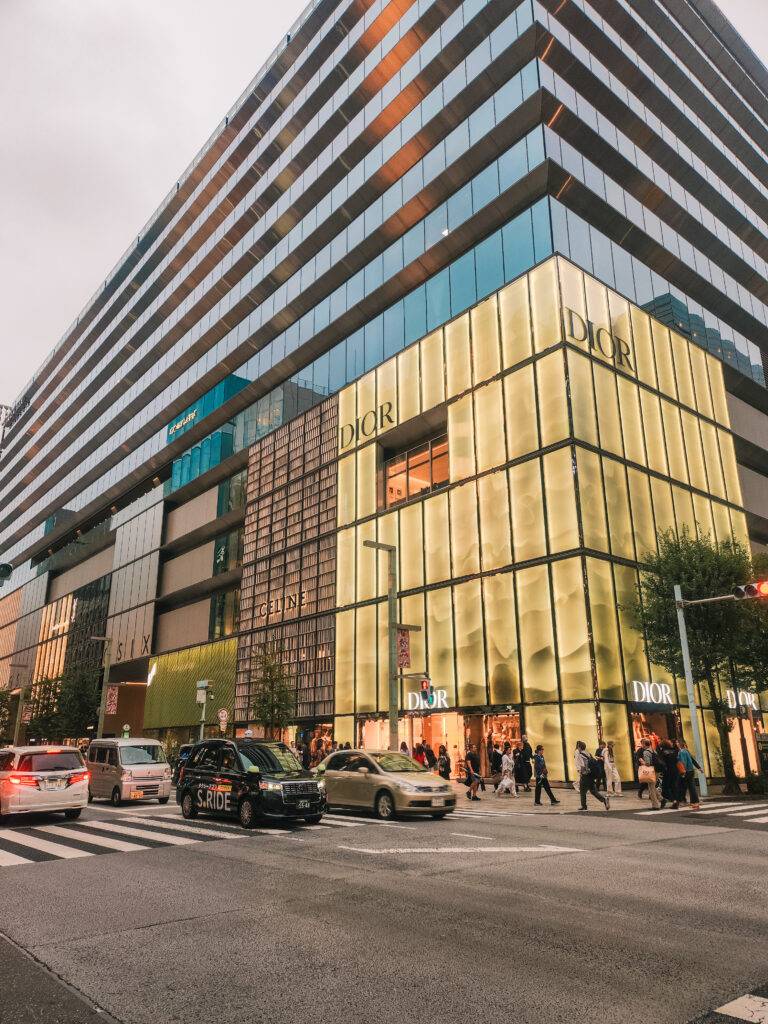
Not far from the station is Ginza, Quartier Riche where you can find all the luxury stores and high-end shopping malls that you want.
On our end, we’re going to stay soft, with a visit to the huge Uniqlo Ginza Flagship Store, which is spread over 12 floors with limited editions. The famous Japanese brand, known worldwide, presents its countless collection for men, women and children. Uniqlo is ideal for buying good quality basics. You will even find unique pieces, made in Japan.
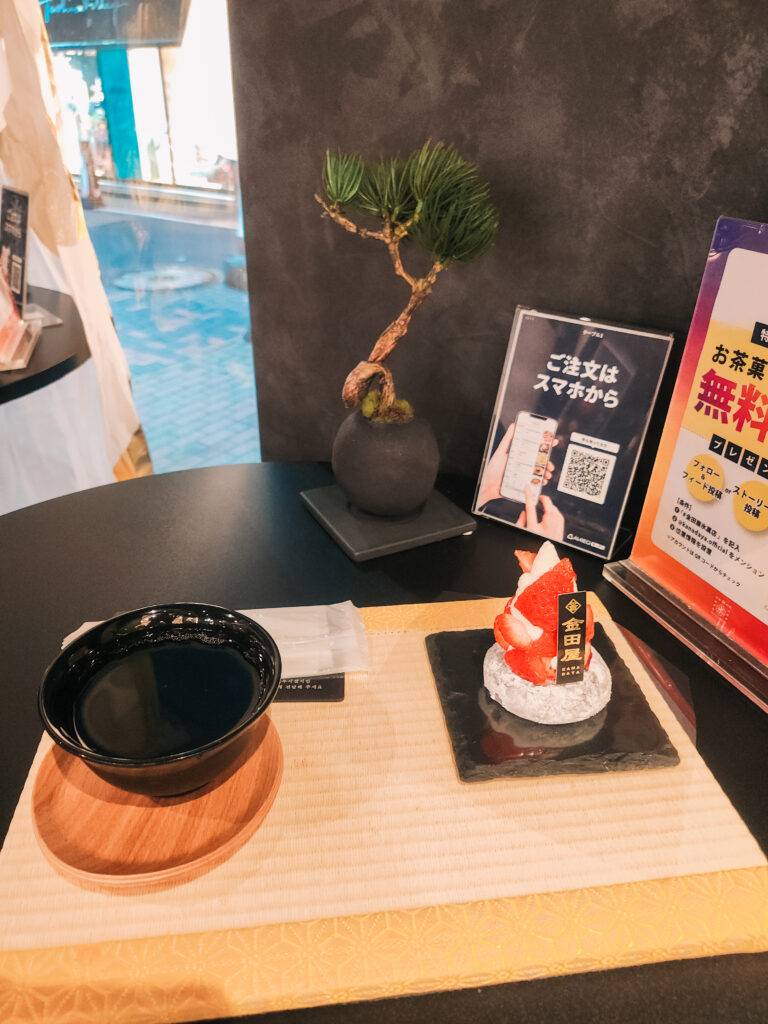
For a sweet break, right next to the Uniqlo is Tiles Aya, a Japanese candy store specializing in daifuku. These are mochis filled with red bean paste and strawberry. You will pay a lot for your sweet tooth, but believe me, the experience is worth it! Count 1100 yen, or 6€.
You can then choose to continue exploring the neighborhood, although it is very luxury-centric, or go straight to our next stop.
The Ikebukuro district
Ikebukuro is a kind of mini Shibuya, quite busy and dynamic. It is located about thirty minutes by metro from the district of Ginza, with the Marunouchi line.
There, too, you will see many malls like Parco (typical Japanese and kawai mode). Don’t forget to stop by Atmos (shoe store) and Adidas. You will be able to find exclusive models in Japan at attractive prices, especially for sneakers, generally around thirty euros less than in France.
The best bookstore in Tokyo
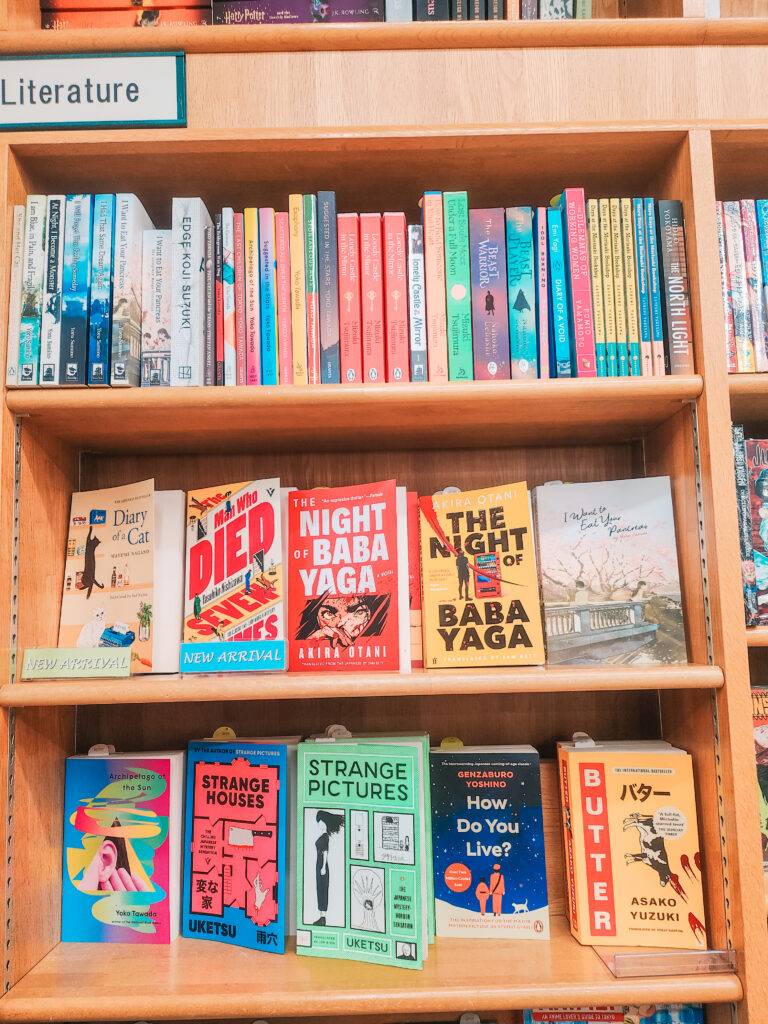
The huge Junku Ikebukuro bookstore is worth a look. On nine floors, it has many books in English (on the sixth floor), and even a coffee book corner. This is literally the first bookstore I made when I arrived on my last trip, but also the best and most complete. You can easily stay there for more than an hour.
For the payment of your purchases, go to the first floor, with automatic cash registers (not translated into English). An employee helped me, but you also have the classic cases with real people who cash you. Once again, have some change because the automatic checkouts do not take the credit card.
Where to eat sushi in expensive Tokyo 🍣
From Ikebukuro, it is very easy to reach the Otsuka neighborhood: count on a single subway stop between Ikebukuro and Otsuka stations, or about 25 minutes on foot. Once on site, you will find the Tenkazushi restaurant. You will have about ten sushi for 900 yen, which is about €5
.

The 4-day itinerary to visit Tokyo is now complete! I could have added other neighborhoods, but after a while you have to know how to stop. 😮💨
Practical information and tips for organizing your trip to Tokyo at mieux
Is health insurance required?
As I say every time, I ALWAYS recommend that you take out travel insurance when you leave the European Union.
Mishaps don’t just happen to others, and it would be a shame if holidays turned into a nightmare if you didn’t have your back.
For the past 10 years, we have trusted Chapka Assurances, even before working with them. They are a reference to ensure all types of travelers! I recommend Cap Assistance 24/7 contract which covers stays of less than 3 months.
When to visit Tokyo?
Ideally, the best time to visit Tokyo (and Japan) is spring or fall.
In the spring, you can see the wonderful sakura, the famous cherry blossoms that are the pride of Japan. While in autumn, we enjoy the superb diversity of colors.
The rest of the year, be aware that summer is very humid in Japan; it can quickly be unpleasant and tiring when you visit a country. If you go in the summer, bring sunscreen, plenty of water, enough to cover your head and a small portable fan that, believe me, will save your life.
Winter, meanwhile, is especially cold, especially in some parts of the country. However, if you have no choice, I advise you to take the right clothes accordingly.
How to get there?
From Paris, expect a 13-hour live flight to Tokyo. You will usually arrive at Haneda Airport. If you are flying from another French city such as Lyon or Marseille, count until 6 p.m. easily for a flight with a stopover. The arrival will often take place at Narita airport.
Regarding the price, it is very variable but count on a good €1,000 round trip at the moment. That’s why I always advise to stay at least two weeks or more in Japan. The trip is long, tiring, and expensive…
How do I get to downtown Tokyo from the airport?
When you arrive at the airport (Haneda for direct flights or Narita for stopover flights), there are several options available to take you to downtown Tokyo.
📍 Travel from Narita Airport to central Tokyo
Take the Keisei Skyliner train
The best solution in my opinion is to take the Keisei Skyliner. It is expensive but very fast: in 36 minutes you reach the center, up to the station of Nippori.
Note that the distance traveled is still 70 km. Expect 2,580 yen, or €16 for a one-way trip. There are very often departures from the airport, I took my ticket 10 minutes before the arrival of the Skyliner with a reserved seat. Look on the ticket for the car number, which will allow you to get in the right place on the platform. As much as subways can be delayed, trains much less so, the Japanese are very focused on punctuality.
Mine left two minutes late because there were at least forty of us riding, and announcements in Japanese and English told us to hurry…
Your ticket also lists your seat number, so don’t make a mistake.
You can also opt for a ticket without a specific seat, but you will need to sit in places where there is no one, and get up if someone arrives where you are temporarily sitting
Take the Narita Express
Another possible option is to take the Narita Express to Ueno station. The trip costs 3,070 yen, or €19.
Railway level, Japan is quite complicated. There are several companies managing the network, so it’s not at all easy to find your way around…
With the JR company, there are “JR Passes” valid for a certain period: one week, two weeks, etc., but you have to do your calculations carefully to find out if it is profitable.
With the itinerary I’m suggesting, this won’t be the case.
📍 Travel from Haneda Airport to downtown Tokyo
By train
Haneda airport is located much closer to the center than Narita, about twenty kilometers.
If you go all the way to Ueno, then the airport-center transfer is faster and cheaper. With the Monorail, you can reach the center in less than twenty minutes. The ticket costs 500 yen, or less than 3€.
You will need to change at Hamamatsucho station, and then go to another station like Ueno, Asakusa, Ginza, Shinjuku… Depending on where your hotel is.
The Keikyu company also offers its own transportation with trains and buses. Go see their site directly for rates and tickets.
By limousine bus
As in more and more large cities, the limousine bus service also exists in Japan.
Expect to pay about 1,200–1,300 yen (-€7) for travel to major city stations like Tokyo Central and Shinjuku. The bus ride from Haneda to Shinjuku station takes about forty minutes.
Where should I leave my luggage in Tokyo?
If you are unable to retrieve your accommodation right away or store your luggage there, I advise you to find a deposit on the Radical Storage app. Otherwise, all the stations of Tokyo have corners with lockers, where you can leave your belongings to go visit quietly. The price is reasonable, about 400 yen for a small locker and up to 900 yen for a large suitcase (between 2 and 5€). The payment is made in cash or with the Suica transport card, which I will explain in the next section!
How to get around Tokyo?
Public transport
Japan is very well known for having a large public transport network, but also quite complex, and not always on time, contrary to the clichés one might hear (I have experienced it myself).
In Tokyo, I only took the subway and my legs. I’ve never taken a bus or a taxi, so I can’t speak for those transports.
How to take the bus and the metro?
Buy the Suica card from any ATM before the gantries in the subway stations.
You can use it in all major cities across Japan. It is almost national, except in the countryside, where some places are not yet equipped with readers. But, for our itinerary in Tokyo, this does not concern us.
You must always have cash to pay for and top up the Suica card.
How do I get the Suica transport card?
At the stations, directly in the subway. The interface is available in English, you can buy it with liquid for 500 ¥, which is less than three euros.
How do I recharge my Suica transport card?
Always at the station, directly into the subway with some cash. You can choose how much to put on the card. Once you leave the country, you can even return the card. Your 500 yen deposit will then be refunded.
I advise you to pay at least 2,000 yen for 4 to 5 days in Tokyo (about €11), because it takes a long time: expect 210 to 260 yen per subway ride.
How can I get internet on my phone?
Important when going on a road trip abroad: plan to access the internet from your phone! We recommend that you order your cheap eSIM card on Saily to be connected anywhere in the world. Thanks to the eSIM, no hassle and endless queues upon arrival: it only takes a few seconds to activate. We talk to you in detail in our article about the best eSIM app.

Should you plan to withdraw money?
Yes. As I explained to you in the itinerary for visiting Tokyo, many shops do not accept credit cards.
Note that for ramen restaurants, you usually order from a distributor, where you have to pay in cash. So make sure you have tickets available.
Do I need a translation app?
Yes, absolutely! Some signs, menus, and other hints are in Japanese only.
Most distributors in restaurants write ramen that are available only in Japanese. A translation app is essential. If the restaurant is a bit foreigner friendly, you might have a chance that someone will translate you into English.
I can also recommend an address that is a friendly foreigner: the restaurant`in the Roppongi neighborhood.
I really hope that this article has helped you organize your trip to the unforgettable city of Tokyo. Don’t hesitate to ask me any questions in the comments section, or to read my article itinerary two weeks in Japan, and to follow me on my social networks!

Laura, voyageuse dans l’âme et particulièrement amoureuse de l’Asie et de la Corée, j’y ai fait un PVT entre 2022 et 2023. Depuis, je retourne régulièrement dans ce pays qui a eu mon cœur et je partage à ce sujet sur mes réseaux.


No Comments